

Living With Spina Bifida: Building Independence Day to Day
By Mobile Occupational Therapist • 3 November 2026 • 15 min read
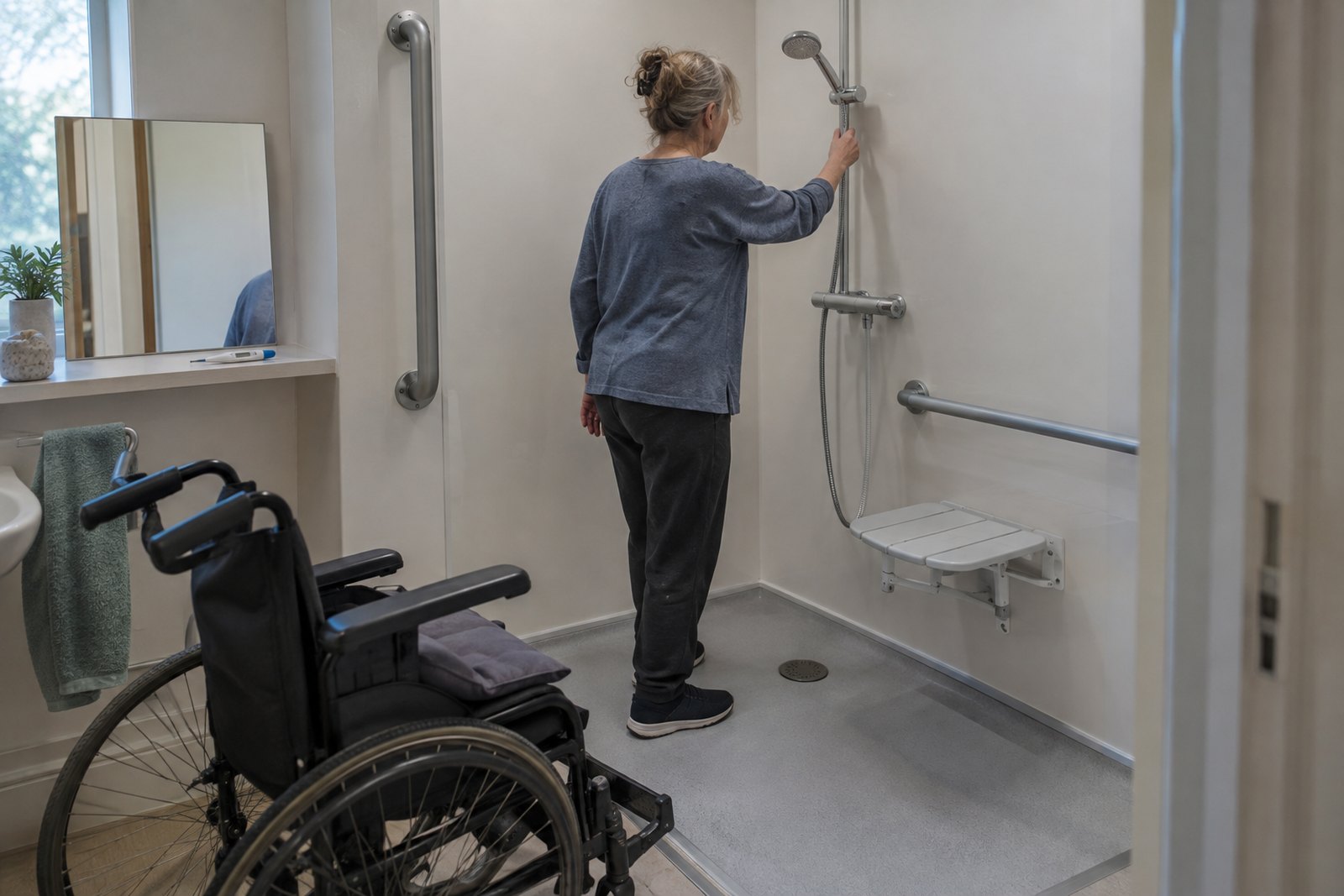
Living with spina bifida can mean juggling mobility, bladder and bowel care, skin care and sometimes hydrocephalus (with a shunt). But it can also mean a full life, with the right routines, the right equipment, and the right support at the right time. The aim is usually the same - as much independence as is realistic, with less stress for you and everyone around you.
This article explains spina bifida in plain English, then focuses on what helps in everyday life: building skills by age, protecting skin where feeling is reduced, setting up continence routines that fit school and work, and planning the move into adult services. It is general guidance. Your spina bifida team should always be the lead for medical questions.
what spina bifida is and how it can affect daily life
Spina bifida is a condition someone is born with where the spine and spinal cord do not develop in the usual way in early pregnancy. The effects vary a lot. Some people walk independently, some use sticks or splints, and some use a wheelchair full-time. Some people have very few day-to-day difficulties. Others need support with personal care, continence, skin care and fatigue.
It can help to think of spina bifida as a mix of strengths and support needs. Many of the practical challenges are not about the diagnosis itself, but about how your home, school or workplace is set up around you.
mobility, balance and fatigue
Spina bifida can affect muscle strength and control, usually in the legs and sometimes the trunk. You might see reduced balance, more falls, joint pain, or a walking pattern that uses a lot of energy. Some people use a wheelchair for longer distances to reduce fatigue, protect joints and keep up with friends or family.
Physiotherapy and orthotics often lead on strength, stretching, gait and splints. Occupational therapy tends to focus on what mobility means for real life: transfers, stairs, getting around at school or work, carrying things, and managing energy so the day is doable.
bladder and bowel (and why routines matter)
Spina bifida often affects the nerves that control bladder and bowel function. Some people need intermittent catheterisation, timed toileting, medication, or other medical support. Bowel routines can be just as important for comfort, confidence and school attendance.
A continence or urology nursing team usually leads on the medical plan. The practical challenge is making that plan work reliably in the places you actually have to be. That might mean a better layout at home, a school toileting plan, the right supplies stored in the right places, and a bit of problem-solving around time, privacy and fatigue.
If there is new pain, fever, burning when passing urine, new incontinence, blood in urine, or you feel generally unwell, contact your GP, NHS 111 or your specialist team the same day. If you feel seriously unwell or you think it could be sepsis, call 999. Urinary infections can become serious.
sensation, skin and pressure
Some people with spina bifida have reduced sensation (or no sensation) in parts of the body, often feet, legs or bottom. This changes everyday safety. You cannot rely on discomfort to tell you something is too hot, too tight, rubbing, or causing pressure.
That is why skin checks and pressure management are a daily-life skill, not an optional extra. If you need more detail on pressure, cushions and mattresses, see pressure relief cushions and mattresses.
hydrocephalus and shunts
Some people with spina bifida also have hydrocephalus, which is a build-up of cerebrospinal fluid inside the brain (usually in the ventricles) that can increase pressure. This may be treated with a shunt. If a shunt is not working properly, it can become urgent quickly.
Warning signs people are often taught include a severe or unusual headache, vomiting, drowsiness that is not normal for you, confusion, and a clear decline in how someone is functioning. Some people also get vision changes or seizures. If you are worried about a shunt, follow your neurosurgical team's advice for urgent contact and do not wait it out. If someone is very drowsy, hard to wake, having a seizure, or you think they are seriously unwell, call 999.
building independence by age: what to practise and when
Independence is not a switch that flips at 18. It is lots of small skills built early, repeated often, then adapted when bodies and lives change. Progress is rarely a straight line. Growth spurts, puberty, pain, fatigue, mental health, and changing equipment can all affect how someone manages.
early years: make routines predictable and hands-on
In the early years, focus on participation. Let your child do the last step, even if you do the first nine steps. The aim is not speed. It is learning the sequence.
- dressing: practise taking trousers on and off, pulling up pants, and managing fastenings with the time you actually have in the morning.
- washing: build a simple routine for face, hands, underarms and teeth, with everything set out in the same order.
- toileting awareness: even if your child needs medical support for bladder and bowel, they can still learn to recognise routine times, carry a small kit, and ask for the toilet.
- mobility: make safe movement part of play. If a wheelchair is used, get comfortable with it early, not just for appointments.
For some children, sensory differences, attention or anxiety can make self-care harder. You may find it useful to read paediatric occupational therapy for a plain-English overview of how OTs approach children's everyday skills.
primary school years: self-care, transfers and responsibility
As your child grows, the gap between what they can do and what is expected socially can widen. This is where practical coaching matters.
- transfer skills: practise moving between bed, chair, wheelchair and toilet as a skill, not a rushed moment. Good technique protects shoulders and reduces falls.
- wheelchair skills: braking reliably, managing small thresholds, turning in tight spaces, carrying a drink safely, and using a tray or bag set-up that works.
- skin checks: if sensation is reduced, introduce a daily check routine early. This can be part of morning or bedtime. Use a mirror if needed and keep it matter-of-fact.
- packing and planning: continence supplies, spare clothes, wipes, disposal bags, and a written plan for school if something goes wrong.
Schools can be brilliant at support, but they need specifics. "Needs help with toileting" is vague. "Needs access to a clean, private toilet at set times, with space for transfers and storage for supplies" is actionable.
teen years: practise adult life, not just school life
Teenagers often want privacy and control, and parents are understandably nervous. Both are normal. This is a good time to practise the skills that make adult life possible, in low-pressure steps.
- managing appointments: knowing what medications and equipment are used, what the bowel and bladder plan is, and how to ask questions in clinic.
- personal care planning: shower routines that are safe and realistic, period management if relevant, shaving, and skin care.
- cooking and drinks: safe ways to prepare food if balance or reach is affected, and strategies to reduce burns if sensation is reduced (for example, using a thermometer or asking someone else to check bath water temperature).
- out and about: what to do if a wheelchair tyre goes down, if a catheterisation plan is disrupted, or if fatigue hits unexpectedly.
If you need a starting point for what equipment exists (without being pushed into buying things you do not need), see occupational therapy equipment for daily living.
young adults: study, work, relationships and your own home
Adult life adds moving parts: commuting, long days, dating, shared housing, and less built-in support. Many adults with spina bifida do live independently, but it often works best when you design your environment around your energy, your skin safety, and your continence routine.
- housing set-up: step-free access if possible, a workable bathroom, enough space for transfers, and a bed and seating set-up that protects skin.
- work and education: reasonable adjustments might include an accessible workstation, a predictable break pattern for continence routines, a locker for supplies, and flexibility around fatigue.
- relationships: practical conversations about privacy, storage for supplies, and what support is helpful (and what is not) make life calmer.
Many adults also notice changes over time: increased pain, reduced walking tolerance, shoulder strain from years of wheelchair use, or increased fatigue. Do not assume you just have to push through. Ask for review.
practical home routines that reduce stress
Day-to-day life gets easier when the essentials are boring and repeatable. You are aiming for routines that still work on a bad day, not just on your best day.
continence routines that fit real life
If catheterisation or a bowel programme is part of life, the practical question is: where will it happen, when, and what makes it more likely to happen consistently?
- set up "stations": a small basket or drawer where you actually use it (bathroom, bedroom, downstairs toilet). Include disposal options and spare clothing.
- make timing visible: alarms, a paper checklist, or a calendar prompt can help when you are tired, distracted, or rushing.
- reduce steps: if the toilet is hard to transfer to, you will avoid it. The right height toilet seat, rails, or a different toileting set-up can make the routine realistic.
- plan for school and work: the best routine is the one that survives a timetable change. Build in a buffer, not a perfect schedule.
Medical decisions about bladder and bowel care belong with your continence, urology and specialist nursing team. But if the plan is good on paper and falling apart at home, that is exactly the kind of practical problem an OT can help you solve.
transfers and moving safely (for parents too)
Transfers are where many injuries happen, including to family carers' backs and shoulders. If you are lifting or transferring someone without the right training or equipment, stop and ask for a moving and handling assessment and training, as unsafe lifting can injure you or them.
Start with technique and set-up. Is the wheelchair at the right angle? Are brakes used? Is there enough space? Is the surface height similar? Sometimes a small change to furniture height or layout makes transfers safer and easier. If you are helping someone else, it is worth reading safe moving and handling for family carers.
If someone's mobility has changed, do not keep trying the old way. Ask for a reassessment through the NHS team, adult social care, or a private OT. Falls and shoulder injuries can set independence back fast.
skin checks and pressure management
If sensation is reduced, you need a plan that does not rely on pain as a warning sign.
- daily skin check: pick a time (often bedtime). Check bony areas and anywhere that rubs: heels, ankles, knees, hips, bottom, lower back.
- watch for early signs: redness that does not fade, a hot patch, swelling, shiny skin, broken skin, or an unusual smell. If you see these, stop the pressure and seek medical advice.
- pressure relief: change position regularly, use the right cushion or mattress if needed, and make sure seating is set up well. A cushion that is the wrong size or used wrongly can do harm.
- heat safety: reduced sensation increases burn risk from hot water bottles, car seat warmers, radiators, and baths. Use safer ways to keep warm and check water temperature with a thermometer or another person.
If someone is at higher risk of pressure damage, involve the GP, community nursing, or tissue viability services early. A small red patch can turn into a serious wound if it is ignored.
latex allergy: sensible precautions
Many people with spina bifida are told they may have a higher risk of latex sensitivity or allergy. You do not need to panic, but you do need to take it seriously.
- Tell healthcare staff about any known latex allergy or past reactions.
- Watch for reactions such as itching, rash, swelling or breathing symptoms, especially around medical procedures.
- Avoid casual exposure where possible (for example, some balloons and some household gloves contain latex).
If someone has symptoms of a severe allergic reaction (breathing difficulty, swelling of the tongue or throat, collapse), call 999.
school, education and reasonable adjustments
Spina bifida can affect school through mobility, fatigue, continence routines, pain, handwriting endurance, and time needed to move between lessons. The biggest difference often comes from practical adjustments that stop the day becoming one long obstacle course.
Examples of helpful adjustments include: step-free routes between classrooms, lift access with a reliable plan, extra time to get to lessons, a private and accessible toilet with agreed times, a place to store supplies, a plan for PE, and a safe space if someone is unwell.
In England, some children may need an Education, Health and Care Plan (EHCP) if support needs are significant and long-term. The process can be slow, and the paperwork can be draining, but the right plan can protect access to education. If you are at this stage, read EHCP: what it is, how to apply and what an occupational therapy report adds.
In Scotland, Wales and Northern Ireland, the named plans and processes are different. The principle is the same: your child should have support to access education safely and with dignity. If you are unsure what applies where you live, ask the school's SENCo (or equivalent) and check your nation's government guidance.
moving from children's to adult services
Transition can be a shock. Children's services often feel more joined up. Adult services can be more fragmented, with different eligibility rules and longer waits. Planning ahead helps.
- start early: ask your child's team what the transition pathway is and when referrals happen. Keep a written list of key contacts.
- build a "health summary": diagnosis, surgeries, shunt details if relevant, current bladder and bowel plan, equipment used, allergies, and what helps in an emergency.
- practise self-advocacy: booking appointments, ordering supplies, explaining needs to new people, and asking for adjustments.
- think beyond healthcare: housing, benefits, education support, and social care might matter more day to day than another clinic appointment.
If you are a parent, this stage can feel like you are expected to step back before you feel safe. It is reasonable to ask adult services how they involve families, and what consent is needed as your child becomes an adult.
where an occupational therapist fits
Occupational therapy is about day-to-day function: washing, dressing, toileting, transfers, moving around the home and community, school and work tasks, fatigue management, and making environments fit the person rather than the other way round.
An occupational therapist can help by:
- assessing how someone manages at home (including transfers, bathing, toileting, stairs and kitchen tasks) and making a practical plan
- recommending equipment and showing you how to use it safely
- problem-solving continence routines in the real world, alongside the nursing and medical plan
- supporting wheelchair seating and pressure management as part of daily life (often alongside wheelchair services)
- writing functional reports for housing or education when appropriate
Other professionals also matter. Physiotherapists usually lead on strength, stretching and gait. Specialist nurses lead on bladder and bowel medical plans. Tissue viability nurses lead on complex wounds. If there are shunt concerns, neurosurgical teams are the right contact. If someone is struggling emotionally, a GP is a good starting point for mental health support.
If you are looking for private, at-home support, you can read what to expect in what an occupational therapist does on a home visit. For children, see paediatric OT services. For adults with complex mobility or neurological needs, see neurological OT services.
Frequently asked questions
can adults with spina bifida live independently?
Many can, and many do. Independence is usually a combination of the right housing set-up, reliable continence routines, safe transfers, skin care habits, and the right support network. "Independent" can also include using support at the points that protect your health, like help with heavy housework, shopping or personal care during flare-ups.
does spina bifida always mean using a wheelchair?
No. Some people walk independently, some walk indoors and use a wheelchair outdoors, and some use a wheelchair full-time. Needs can change with growth, pain, fatigue, weight change, pregnancy, or ageing. The best mobility option is the one that keeps you safe and lets you participate in your life.
what are the warning signs of a shunt problem?
People are often advised to treat symptoms like severe or unusual headache, vomiting, increasing drowsiness, confusion, or a sudden decline in function as red flags. Some people also have vision changes or seizures. Follow the advice from your neurosurgical team. If someone is very drowsy, hard to wake, having a seizure, or you think they are seriously unwell, call 999.
how do we prevent pressure sores at home?
Build a routine: daily skin checks, pressure relief through position changes, and well-fitted seating. Avoid burns and rubbing by checking bath water temperature and watching for tight shoes, splints or clothing seams.
If redness does not fade or skin breaks down, seek medical advice early. For a practical overview of cushions and mattresses, see pressure relief cushions and mattresses.
can my child get an EHCP for spina bifida?
In England, a diagnosis alone does not guarantee an EHCP. The test is whether your child needs support beyond what the school can normally provide from its own resources. If continence routines, mobility, fatigue or safety needs significantly affect access to learning, it is worth discussing an EHCP with the school and your child's therapists.
is latex allergy common in spina bifida?
Many families are warned about a higher risk of latex sensitivity. The practical approach is to tell healthcare staff, watch for reactions, and avoid latex exposure where you can. If you think someone is having a severe allergic reaction (breathing difficulty, swelling, collapse), call 999.
Next steps
If you want practical help to make daily life easier at home, see our paediatrics or neurological service pages, or current guide prices, and choose your area below.

Talk to an occupational therapist near you
This guide is general information. For advice about your own situation - or someone you look after - a local occupational therapist can visit you at home and see it for themselves.
Choose your area: