

What Happens During an Occupational Therapist Home Visit?
By Mobile Occupational Therapist • 2 June 2026 • 5 min read
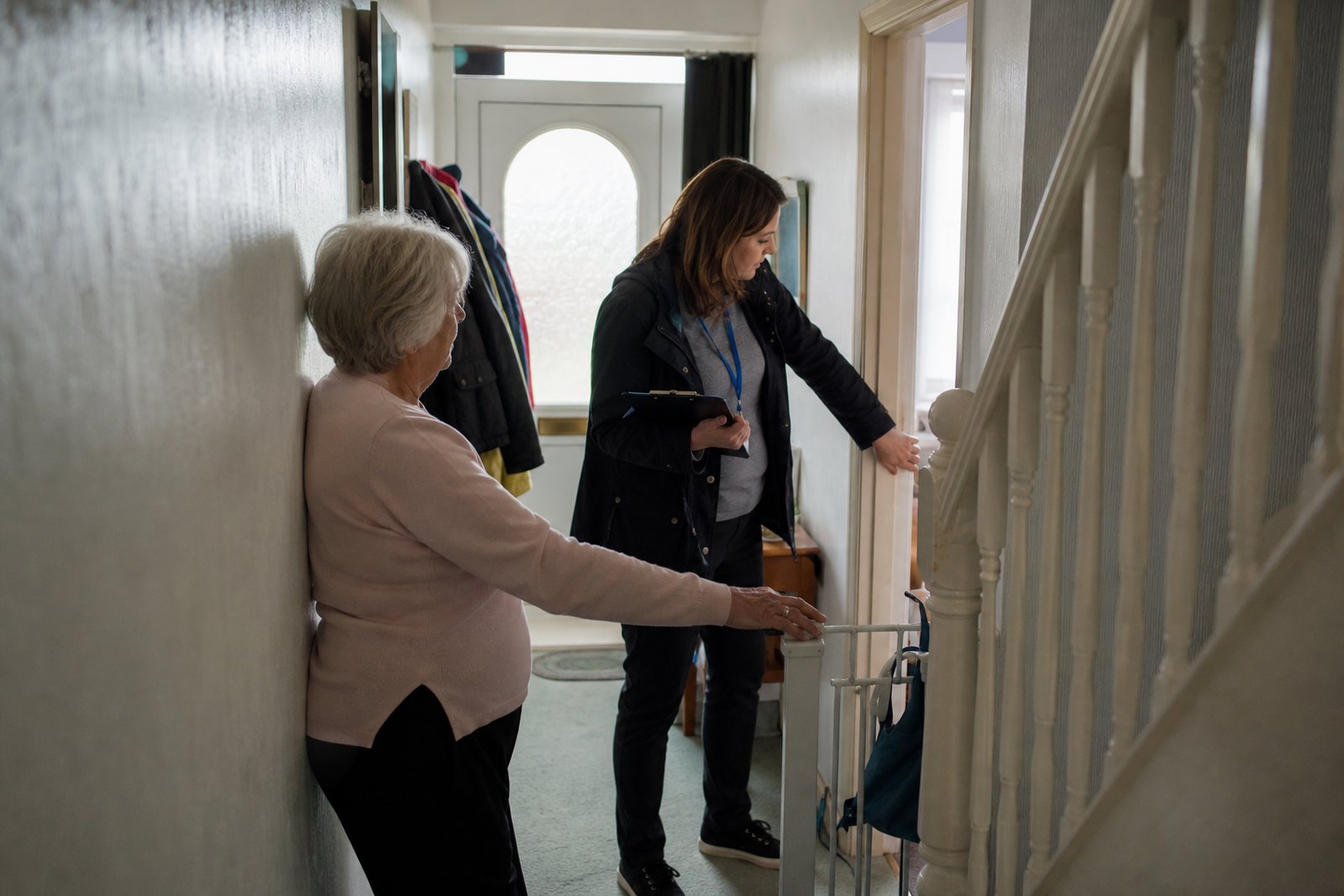
If you have never met an occupational therapist before, it is entirely normal not to know quite what to expect. Unlike a GP appointment or a hospital clinic, an occupational therapy (OT) home visit does not happen in a clinical room with a set script - it happens in your own home, looking at your own everyday life. This guide walks through what actually happens, from booking to follow-up, so there are no surprises.
What occupational therapy actually focuses on
Occupational therapists are HCPC-registered health professionals, but their focus is different from most other visiting clinicians. Rather than concentrating purely on a diagnosis, an OT looks at "occupations" in the broadest sense - the everyday activities that make up your life: washing and dressing, moving around your home, cooking, sleeping, working, and anything else that matters to you. The question an OT is really asking throughout a visit is simple: what is getting in the way of you doing the things you need and want to do, and what would help?
That focus on function, rather than on a condition in isolation, is what makes a home assessment different from most other appointments. Two people with the same diagnosis can have completely different needs, because their homes, routines and priorities are different.
Before the visit
Most visits start with a short phone conversation. This is where you explain, in your own words, what has prompted you to get in touch - perhaps a recent fall, a hospital discharge, a diagnosis, or simply a feeling that everyday tasks have quietly become harder. The occupational therapist will use this to understand roughly what to expect and to confirm that a home visit is the right next step. There is no need to prepare anything special, and no need to tidy the house into showroom condition - in fact, seeing your home as it normally is is exactly the point.
What happens during the visit
A first visit typically takes somewhere between 45 minutes and an hour and a half, depending on what is being looked at. It usually includes:
- A conversation first. Before anything else, the OT will want to understand your priorities - what matters most to you, what has changed, and what a good outcome would look like from your point of view.
- A walk-through of key areas. This often includes the bathroom, the stairs, the kitchen, the bedroom, and the entrances to your home - the places where daily tasks tend to happen and where small changes can make the biggest difference.
- Watching a few everyday tasks. Rather than simply asking how you manage, an OT will often ask to see you carry out a task - getting up from a chair, moving to the bathroom, managing the stairs - at a pace that is comfortable for you. This is not a test; it is the most reliable way to understand what is actually happening, rather than relying on description alone.
- Identifying practical options. Depending on what comes up, this might mean discussing daily living equipment, adaptations such as grab rails or a different bathing set-up, or simply some changes to routine.
Who a home visit is usually for
People get in touch with an occupational therapist for all sorts of reasons. Common examples include:
- Coming home after a stay in hospital and wanting the home properly set up - see our guide to hospital discharge support.
- Noticing that everyday tasks have quietly become harder with age, without any single triggering event - this is covered by support for older people and independence.
- Living with a neurological condition such as stroke, Parkinson's or MS, where fatigue, movement or cognition affect daily tasks - see neurological OT.
- A recent fall, or a near-miss that has knocked your confidence.
- A family member asking for an outside, professional opinion before making any changes.
None of these require a referral from a GP or hospital. Most people simply get in touch directly when they feel the time is right.
What you get afterwards
At the end of a visit, a good occupational therapist will not leave you with a vague list of suggestions. You should expect a clear, written summary of what was found and what is recommended, in plain language rather than clinical jargon. This might include immediate, low-cost changes you can make yourself, specific equipment recommendations, or a suggestion for a further adaptations assessment if something more significant - such as a change to your bathroom - would help.
Where equipment or adaptations are recommended, your OT should explain why, not just what. It is entirely reasonable to ask questions, push back on suggestions that do not feel right for you, or ask for alternatives. The best outcomes come from a genuine two-way conversation, not a list handed down from on high.
How pricing works
Each occupational therapist covering an area sets their own fee for a home visit, confirmed with you before you book - there is no hidden agency mark-up. See our prices page for current guide pricing, or get in touch directly to ask.
Arranging a visit
If you are wondering whether a home visit might help, the simplest first step is a phone conversation - most occupational therapists offer this free of charge, with no obligation to book anything afterwards. Visit our areas we cover page to find your local occupational therapist, or contact the office if you are not sure where to start.
A home visit is, at its heart, a practical conversation about your life and your home, carried out by someone qualified to spot the things that are easy to miss - and to help you do something about them.
Talk to an occupational therapist near you
This guide is general information. For advice about your own situation - or someone you look after - a local occupational therapist can visit you at home and see it for themselves.
Choose your area: