
Children's OT
Private paediatric occupational therapy focused on self-care, sensory needs, motor skills and participation at home and school.
This is a specialist service offered where your local occupational therapist's training and scope of practice cover paediatrics - check availability for your area on the county page.
What it is
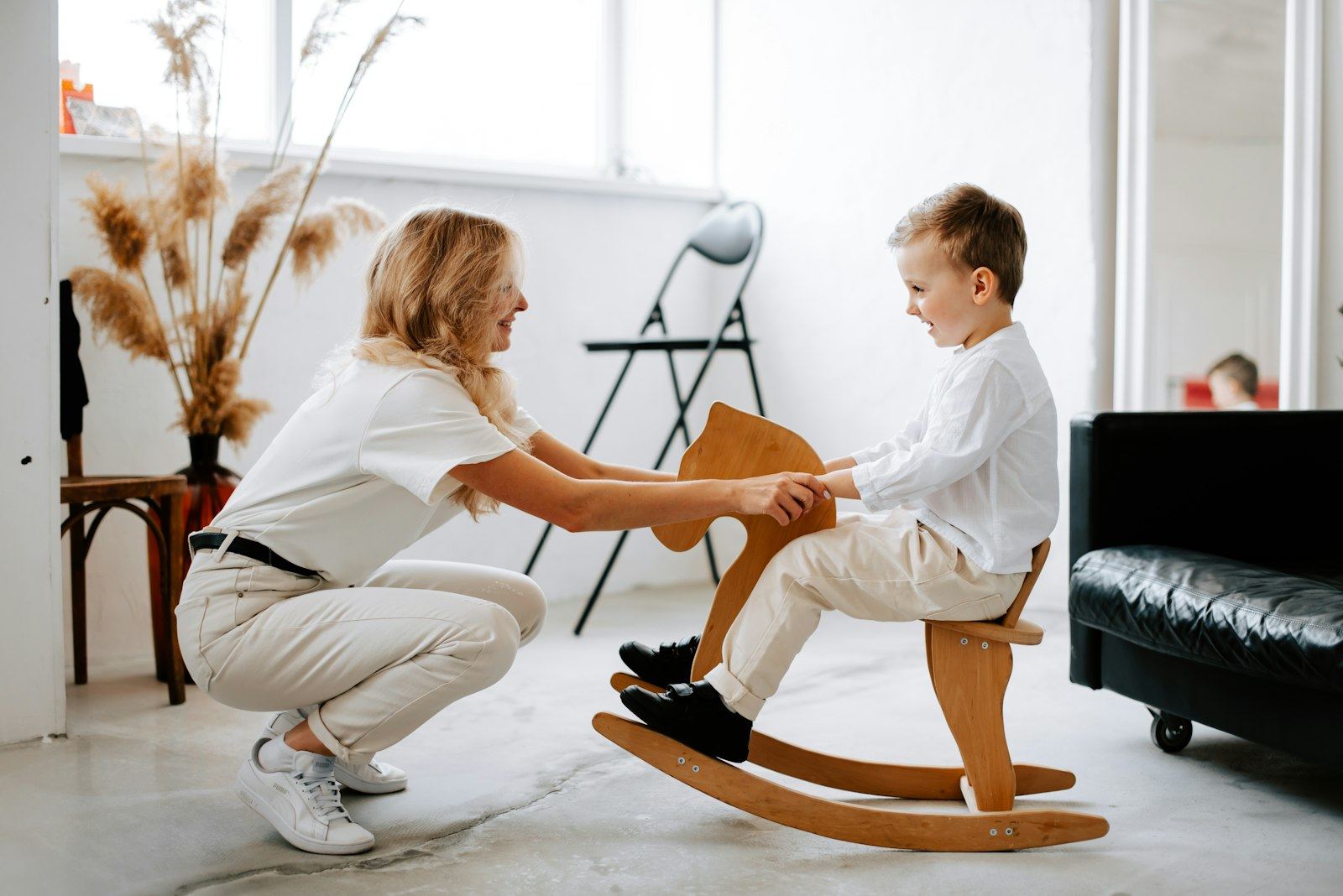
Children's occupational therapy looks at how a child manages the everyday activities of childhood - self-care like dressing and eating, play, motor skills, and participation at home and at school. Visits happen in the child's own home, working with families on practical, realistic goals rather than a one-size programme.
Who it helps
- Children finding self-care tasks such as dressing, eating or toileting harder than expected for their age
- Children with sensory processing differences affecting daily routines
- Children with a developmental delay affecting motor skills, self-care or participation
- Those working on fine or gross motor skills for handwriting, play or school tasks
- Families wanting practical strategies to support participation at home and school
What a home visit involves
- A conversation with parents or carers about priorities and daily routines
- Observing the child in familiar surroundings, at their own pace
- Practical strategies and activities families can build into everyday life
- A written summary, and - where appropriate - liaison with school or other professionals involved
The work is aimed at the activity, not at the diagnosis
Occupational therapy does not treat autism, ADHD, dyspraxia or any other diagnosis, and it is not trying to. What it works on is participation: getting dressed in the time the school run allows, sitting at the table long enough to eat with everyone else, holding a pencil without the hand aching, coping with the noise of the dining hall, sleeping in a bed that is actually comfortable.
That distinction has a practical consequence families often find reassuring. Two children with the same diagnosis can need entirely different things, and two children with no diagnosis at all can need the same thing. So a diagnosis is not a prerequisite for a useful assessment, and a diagnosis on its own does not tell anybody what to do on a Tuesday morning.
Diagnosis itself sits with paediatricians, psychologists and specialist assessment teams, not with occupational therapy. An OT assessment cannot confirm or rule one out, and should never be sold as a shortcut to one. It can run alongside a diagnostic process, and many families start one while waiting on the other.
Most of the change happens when the therapist is not there
A therapist visiting your home sees a small slice of the week. Nearly all of what actually shifts a child's everyday skills happens in ordinary routines carried out by parents, carers and school staff, over months. That is the honest reason visits happen at home rather than in a clinic: the plan has to work in your actual bathroom, at your actual table, in the fifteen minutes you actually have.
It also means a plan asks something of the family, and that is where good plans and impressive plans part company. A programme that would work beautifully in a household with two free hours each evening is the wrong plan for a household with three children and a shift pattern. It is worth saying out loud at the assessment what your week genuinely allows, because a plan nobody can carry out is not a plan.
Progress in children is also rarely linear, and it interacts with growth, tiredness, illness, school terms and everything else going on. A skill that looked established in October can wobble in January without anything having gone wrong.
Be wary of certainty, particularly certainty sold in advance
Families looking for help with a child are offered a great deal of confidence by a great many people. A reasonable test is to ask what a therapist expects to change, how you would both know whether it had, and at what point you would stop. Those questions have honest answers. What does not have an honest answer is a specific outcome promised for your particular child by somebody who has not yet met them.
The same applies to blocks of sessions priced and booked before an assessment has happened. Assessment is what establishes whether ongoing work is the right thing at all, and sometimes the answer is that it is not.
A perfectly legitimate outcome of an assessment is that the difficulty looks like ordinary variation for that age, or that another profession is the right one - speech and language therapy, physiotherapy, an optician or audiologist, or a conversation with your GP or health visitor about development more broadly. Being told that clearly is a result, not a wasted visit.
What this can achieve
- Greater independence in age-appropriate daily tasks
- Practical, realistic strategies families can actually use
- Improved participation in family routines, play or school activities
- Clarity on next steps, including onward referral if something falls outside scope
See this service in your area
Find your local occupational therapist and see current pricing for Children's OT.
Other services
Frequently asked questions
My child does not have a diagnosis. Is that a problem?
No. Occupational therapy works from what a child is finding difficult in everyday life, not from a label, and many families come with nothing more than a specific worry about dressing, handwriting or mealtimes. It does work the other way too: an OT assessment cannot give you a diagnosis, and cannot rule one out, because that sits with paediatricians and specialist teams.
Will an occupational therapy report get my child an EHCP or support at school?
No report can secure an Education, Health and Care plan. That decision belongs to the local authority and follows its own statutory process, and a private report is one piece of evidence among several that may be considered. What a well-written report can do is describe a child's functional needs in specific, concrete terms that a school or a panel can actually act on. It also describes what the therapist found, which may not be what a family hoped for. Your school's SENCO is the right first conversation about school support.
My child is completely different at school and at home. Which is the real picture?
Both are. Plenty of children hold themselves together through the demands of a school day and let go of it the moment they are somewhere safe, which is why parents and teachers can describe two apparently different children. It is not evidence that a family is imagining things, or that a school is. An assessment is usually more useful when information from both settings is gathered, which needs your consent before anyone contacts the school.
Should I stay in the room during the visit?
Usually yes, particularly with younger children - you are the main source of information, and a child is more themselves with a parent present. With older children and teenagers there is sometimes a case for part of the session happening without a parent in the room, so they can be honest about what they find hard. It is a fair thing to raise at the start of the visit and agree between you, rather than something that has to be decided in advance.
Who carries out the Children's OT visit?
A qualified, HCPC-registered occupational therapist covering your area carries out the assessment and any follow-up visits in person, at your home.
How is Children's OT priced?
Your occupational therapist confirms their fee for Children's OT before you book - see our prices page for current guide pricing.
Will I get anything in writing?
Where relevant, you'll receive a written summary or report of the visit, agreed with you at the outset - particularly for equipment recommendations, adaptations or reports for a third party.
What happens after the first visit?
Your occupational therapist will agree next steps with you directly - this might be a follow-up visit, a set of recommendations to action yourself, or referral on if something falls outside their scope.