

Occupational therapy equipment for daily living: a plain-English guide
By Mobile Occupational Therapist • 7 July 2026 • 5 min read
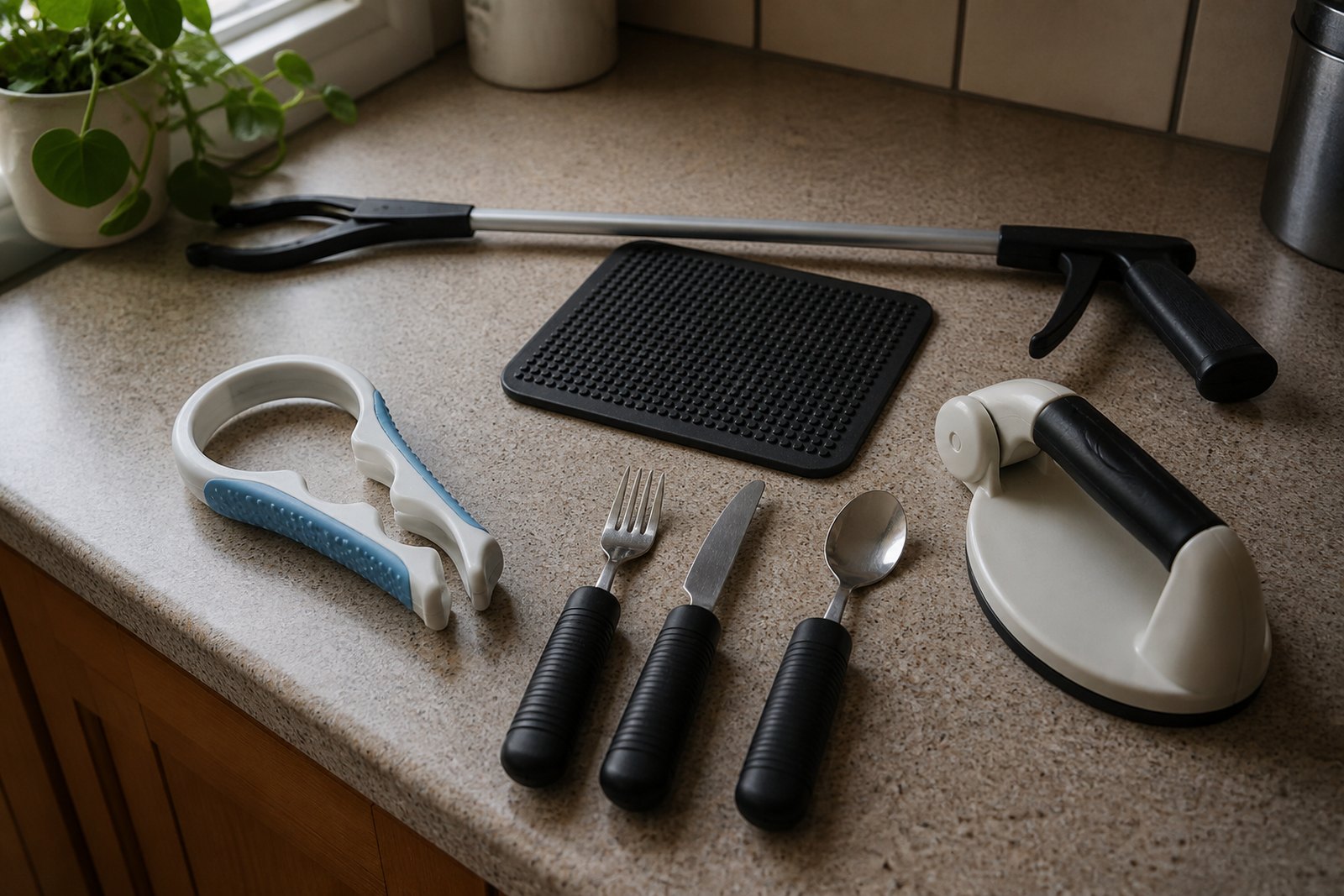
Search online for "daily living aids" and you will be met with hundreds of products, most with confident marketing and few obvious ways to tell which, if any, are actually right for you. This guide cuts through that with a plain-English look at the equipment an occupational therapist commonly recommends, why it helps, and - most importantly - why the right fit matters more than the product itself.
Why "just buying something" often goes wrong
It is easy to buy the wrong bath board, the wrong height of perching stool, or a walking frame that does not suit your home, simply because there was no way to know in advance. Equipment that is the wrong size, wrongly positioned, or used without the right technique can be uncomfortable, ineffective, or in some cases less safe than having no equipment at all. This is the gap an occupational therapy equipment assessment is there to close - trying items in the room they will actually be used in, with someone qualified to check fit and technique.
Common categories of equipment
Bathing equipment
Bath boards, bath seats, non-slip mats and grab rails are among the most commonly recommended items, because bathing is often where risk and difficulty are highest. The right choice depends on the shape of your bath, your bathroom layout, and how you currently get in and out - which is exactly why a generic "best bath aid" list online is rarely much help.
Toileting equipment
Raised toilet seats and toilet frames can make a significant difference to comfort and safety, particularly after hip or knee surgery, or where strength has reduced. Height and positioning both matter, and an ill-fitting raised seat can actually make transfers harder rather than easier.
Seating and transfers
Perching stools, raised chairs and swivel cushions can make everyday tasks such as cooking, washing at a sink, or getting up from a chair considerably easier. The right seat height relative to your own height and strength is central to whether this actually helps.
Kitchen aids
Jar openers, easy-grip cutlery, and lightweight kettles or pans can make cooking safer and more manageable, particularly where grip strength or coordination has changed. These are often inexpensive but genuinely useful once matched to the specific task someone is finding hardest.
Dressing aids
Sock aids, long-handled shoe horns and dressing sticks can reduce the need to bend or reach awkwardly - useful after hip or knee surgery, or where balance or flexibility has changed.
Mobility-related equipment
Walking frames, sticks and related items are sometimes assessed alongside equipment for the home, particularly where a change in mobility affects how someone manages daily tasks such as carrying items or moving between rooms.
Why an assessment matters more than the item
The genuinely useful part of an equipment assessment is rarely the product itself - most items are inexpensive and widely available. What matters is:
- Sizing and positioning - an ill-fitting item can be uncomfortable or actively unhelpful.
- Technique - being shown how to use equipment safely, not just handed it.
- Matching equipment to the actual task - the difference between what looks helpful online and what solves the specific problem you are facing.
- Avoiding unnecessary purchases - sometimes a change in routine or technique achieves more than any product.
This is also why equipment recommendations are often made alongside a wider home assessment, or as part of planning for home adaptations - equipment, adaptation and routine changes usually work best considered together, rather than in isolation.
Who benefits most from an equipment assessment
- Anyone struggling with a specific everyday task - bathing, cooking, dressing, or getting up from a chair
- People who have bought equipment before that turned out not to fit or help
- Those recovering from surgery, illness, or a change in strength or mobility
- Carers and family members looking for practical ways to make caring tasks safer and easier
What to expect from a visit
A typical equipment assessment involves a conversation about which tasks feel hardest right now, followed by trying relevant equipment in the actual room it will be used in - not a showroom or a photograph. You should leave with a written summary of what was recommended and why, along with guidance on where to source it. There is no obligation to buy anything on the spot, and a good assessment should never feel like a sales pitch.
What equipment cannot fix
It is worth being realistic about the limits of equipment. Some difficulties are better addressed through a change to the environment itself - a home adaptation such as a level-access shower - rather than working around a layout that fundamentally does not suit you. Others are better addressed through a change of routine, pacing, or technique, which no product can substitute for. Part of what an occupational therapist brings is the judgement to say, honestly, when equipment is the right answer and when it is not - rather than defaulting to a product recommendation because that feels like the easiest thing to offer.
Second-hand and borrowed equipment
Many people are offered second-hand equipment by family, friends, or a local loan scheme, which can be a sensible, low-cost option. The same principle applies, though: fit and condition matter. An occupational therapist can check whether a borrowed item is the right size and in safe working order for you, rather than assuming that "it worked for someone else" means it will automatically work for you too.
Next steps
If a particular daily task has become a struggle, an equipment assessment is often a quick, practical way to make real progress without committing to anything major. Find your local occupational therapist via our areas we cover page, and see our prices page for current guide pricing.
Talk to an occupational therapist near you
This guide is general information. For advice about your own situation - or someone you look after - a local occupational therapist can visit you at home and see it for themselves.
Choose your area: