

Neurological OT
Occupational therapy for people living with stroke, Parkinson's, MS and other neurological conditions, focused on daily activities and function at home.
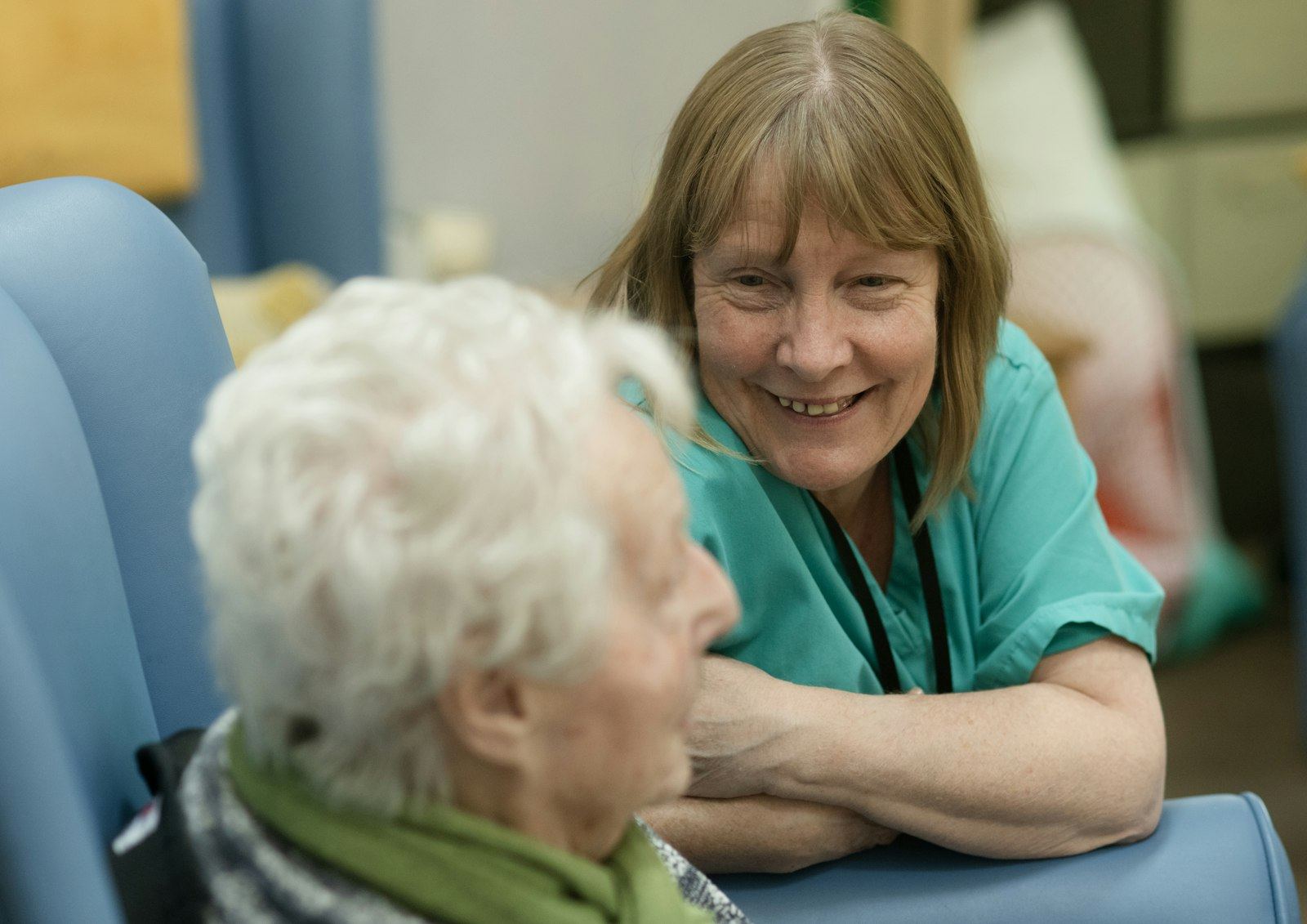
This is a specialist service offered where your local occupational therapist's training and scope of practice cover it - check availability for your area on the county page.
What it is
Neurological occupational therapy supports people living with the day-to-day impact of stroke, Parkinson's, multiple sclerosis and other neurological conditions - things like fatigue, changes in movement or coordination, and the routines that make up daily life. The focus stays on function: what you want or need to do, and how to do it safely and sustainably.
Who it helps
- People living with the effects of stroke, Parkinson's, MS or other neurological conditions
- Those managing fatigue that affects everyday activities
- People working on upper limb function for tasks like dressing, eating or writing
- Anyone wanting practical strategies for memory, routine or cognitive changes that affect daily life
What a home visit involves
- An assessment of the daily activities that matter most to you
- Looking at fatigue, movement, upper limb use and routines together, not in isolation
- Practical strategies and, where relevant, equipment recommendations
- A plan you can build on over time, reviewed as your needs change
Two routes to the same task: practice and compensation
When an everyday activity has become difficult, there are broadly two ways to make it possible again. One is to practise the activity itself, broken into steps and repeated until it becomes reliable. The other is to change the method, the equipment or the surroundings so that the activity no longer demands the thing that has become hard. Occupational therapy uses both, usually at the same time.
Which route carries more weight depends a good deal on the condition. After a stroke or a brain injury, where change may still be happening, practice tends to be given real emphasis. In a progressive condition such as multiple sclerosis, Parkinson's or motor neurone disease, compensation and planning ahead carry more of the load, because the aim is to keep activities achievable as things change rather than to reverse them.
It is worth being plain about the limits of this. Nobody can honestly predict how much movement, dexterity or thinking will return for a particular person, and occupational therapy does not restore what a stroke or a progressive condition has taken. What can be worked on is what you are able to do with what you have, which is a different question and often a more answerable one.
Neurological fatigue behaves differently from ordinary tiredness
Fatigue after a stroke, a brain injury or in a condition such as MS is not simply being tired. It is often out of all proportion to the effort that caused it, it can arrive hours later rather than at the time, and it affects concentration and mood as much as muscles. An unremarkable morning can quietly cost the rest of the day.
The instinct is to make the most of a good day and rest on a bad one. That pattern tends to produce a run of bad days afterwards, and the person is then judged - sometimes by themselves - as inconsistent or unmotivated. Pacing works the other way round: stopping while you still feel able, spreading demanding tasks across the week, and putting the harder ones where your energy reliably is.
The trade-off is real and worth naming. Pacing means doing less than you feel capable of at that moment in exchange for more across the week as a whole. Some people find that bargain clearly worth making and some do not, and which activities are worth spending a good day on is your decision, not one for the therapist to make.
The changes that are hardest for other people to see
Weakness in an arm is visible. Difficulty planning a sequence of steps, keeping track of a task once interrupted, judging distance, or noticing things on one side of the body is not, and these are frequently the changes that cause the most friction at home. Family members can read them as carelessness, stubbornness or not trying, because there is nothing to see.
Some people also have genuine difficulty recognising their own difficulties after a neurological event. That is a recognised effect of injury to the brain rather than denial, and arguing about it rarely works. Occupational therapy tends to approach it through the activity itself - setting up a task so that what is happening becomes obvious to everyone in the room, including the person doing it - rather than through persuasion.
This is also why assessment happens in the actual kitchen, at the actual stairs. A tidy clinic room removes exactly the clutter, noise, interruptions and awkward corners that make these changes show up.
What this can achieve
- A clearer, more manageable daily routine
- Practical strategies for fatigue and energy management
- Greater independence in specific activities that matter to you
- Confidence that your home and equipment genuinely support you
See this service in your area
Find your local occupational therapist and see current pricing for Neurological OT.
Other services
Frequently asked questions
Can occupational therapy help if my condition is progressive rather than improving?
Yes, though the aim is different. With a progressive condition the work is about keeping activities possible as circumstances change, anticipating the next difficulty rather than waiting for it, and making changes at a point when there is time to think about them properly. Occupational therapy cannot slow or alter the underlying condition, and any therapist who suggests otherwise is overstating what the profession does.
How is this different from the rehabilitation I had in hospital or with a community team?
NHS neurological rehabilitation is usually organised around agreed goals and comes to a planned end when those goals are met or progress levels off, which can be well before you personally feel finished. Private input is often used after that point, or for a specific piece of work such as a home layout or an equipment question. If you are still under an NHS team, say so at the outset, so that the two pieces of work complement each other rather than pull in different directions.
Should I be practising between visits, and does more practice mean faster progress?
Repetition matters in neurological rehabilitation, but more is not automatically better where fatigue is involved. Practice carried out to the point of exhaustion is usually poor-quality practice, and it can cost the following day as well. A useful plan says how much and how often, not just what, and it should be adjusted rather than abandoned when it turns out to be too much.
What should I do if new symptoms appear between visits?
Contact your GP, consultant or specialist nurse. Occupational therapy is a practical service and is not a substitute for medical assessment, so new or worsening symptoms belong with your medical team. Sudden facial drooping, arm weakness or slurred speech is a medical emergency: call 999 immediately.
Who carries out the Neurological OT visit?
A qualified, HCPC-registered occupational therapist covering your area carries out the assessment and any follow-up visits in person, at your home.
How is Neurological OT priced?
Your occupational therapist confirms their fee for Neurological OT before you book - see our prices page for current guide pricing.
Will I get anything in writing?
Where relevant, you'll receive a written summary or report of the visit, agreed with you at the outset - particularly for equipment recommendations, adaptations or reports for a third party.
What happens after the first visit?
Your occupational therapist will agree next steps with you directly - this might be a follow-up visit, a set of recommendations to action yourself, or referral on if something falls outside their scope.