

Post Stroke Depression: Signs, Support and What Helps
By Mobile Occupational Therapist • 5 November 2026 • 14 min read
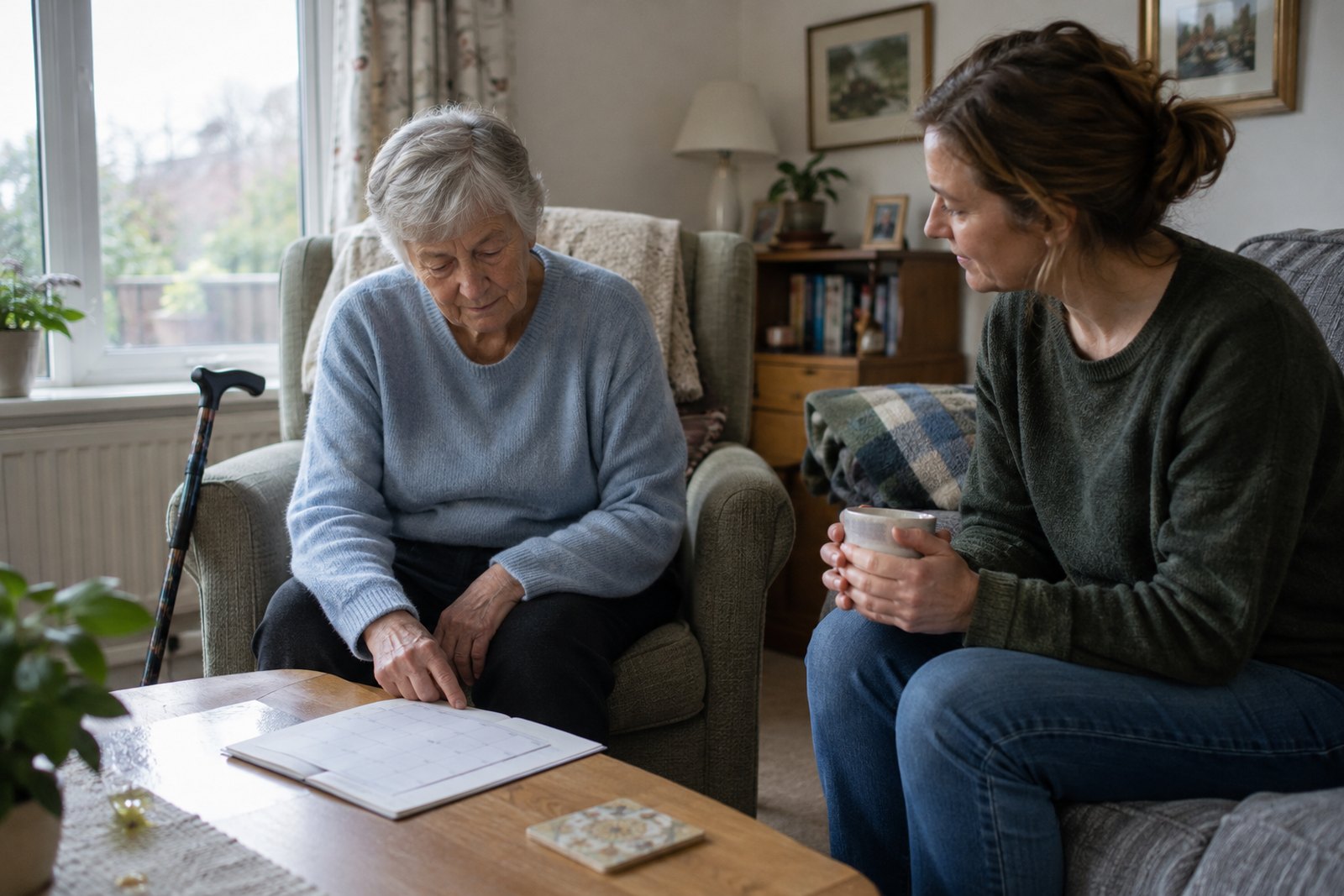
Post stroke depression is common. It can start in the days after a stroke, or creep up weeks or months later. It is also treatable. The best next step is usually to tell the GP, stroke team or rehab team clearly what you are seeing and ask for a proper assessment and support.
Not all emotional changes after stroke are depression. Many people have anxiety, irritability, or sudden crying or laughing that feels out of their control. Some people have a mix of all of these. Whatever the label, you do not have to just put up with it. There are practical things you can do at home, and there is help available through the NHS (or Health and Social Care in Northern Ireland) and privately.
When to get urgent help
If you are worried about immediate safety, call 999 or go to A&E.
If the person has thoughts of self-harm or suicide, get urgent help the same day. Contact the GP urgently, call NHS 111 (England, Scotland and Wales) or the GP out-of-hours service (Northern Ireland). You can also call Samaritans on 116 123 (free, 24 hours) for support while you are arranging urgent care.
Emotional changes after stroke: what can happen
A stroke can affect mood for two big reasons. First, it is a life-changing event, with loss of confidence, independence, work, driving, hobbies, friendships and privacy. Second, the stroke can directly affect the brain systems involved in emotion, motivation, sleep and concentration. So even if someone seems to be "coping" practically, their brain and body may still be struggling.
Common emotional changes after a stroke include:
- Low mood and depression - persistent sadness, emptiness, hopelessness, loss of interest, feeling like a burden.
- Anxiety - constant worry, panic symptoms, fear of another stroke, fear of falling, fear of being alone.
- Emotionalism - sudden crying (or laughing) that does not match how the person feels inside, or is much bigger than the situation.
- Irritability and anger - snapping, impatience, low tolerance, frustration that spills over quickly.
- Apathy and low drive - "can't be bothered", not initiating anything, sitting for long stretches.
It can also look like personality change, but often it is a mix of fatigue, overwhelm, reduced ability to filter noise and input, pain, and the loss of confidence that comes with trying and failing.
If you are new to stroke recovery, our plain English overview of stroke may help you make sense of the different symptoms and services you might come across.
Signs of post stroke depression (and how it can look different)
Depression after stroke does not always look like crying. Some people look flat, withdrawn and quiet. Others are angry, restless or critical. Some people say "I'm fine" but stop doing everything that used to matter to them.
Common signs to look for
- Loss of interest in people, conversation, TV, music, food, hobbies.
- Withdrawing - staying in bed, staying in one room, avoiding visitors or phone calls.
- Changes in sleep - insomnia, early waking, sleeping much more than usual.
- Changes in appetite - eating very little, or comfort eating more than usual.
- Low energy that feels different from typical post stroke fatigue.
- Low self-worth - "I'm useless", "You'd be better off without me."
- Hopelessness - "What's the point?"
- Tearfulness or frequent emotional outbursts.
- Reduced concentration and slowed thinking beyond what you would expect for that person.
- Neglecting self-care - not washing, not changing clothes, not engaging with rehab.
What makes spotting depression harder after stroke
Some stroke effects overlap with depression, including fatigue, reduced speech, slowed thinking and loss of initiative. Communication difficulties (aphasia) can make it hard for someone to explain how they feel. Memory and insight problems can also get in the way.
It helps to watch for change over time: what is different from their usual self, what is getting worse, and what is not improving as other things improve.
Fatigue is particularly confusing, because it is real, it is common, and it can be crushing. If you are trying to work out whether it is "just tiredness" or something more, read our practical guide to fatigue after a stroke.
Emotionalism: sudden crying or laughing after stroke
Some people have episodes of crying (or laughing) that are out of proportion, come out of nowhere, or do not match their true feelings. It can be frightening and embarrassing. Family members sometimes think it means the person is "really depressed", and sometimes it does, but emotionalism can happen even when mood is otherwise steady.
What helps in the moment
- Name it: "This is one of those crying spells. It will pass."
- Reduce input: turn the TV off, lower voices, move to a quieter room.
- Change body position: sit supported, feet on the floor, slow breathing if possible.
- Do not argue with the tears: reassurance and calm presence usually work better than lots of questions.
- Afterwards, reset: a warm drink, a simple task, or a short supported walk (only if it is safe for their balance and they have their usual walking aid and supervision if needed) can help the nervous system settle.
Track patterns for a couple of weeks. If episodes are frequent or distressing, tell the GP or stroke team. There may be treatment options, and it is also worth checking for triggers like fatigue, pain, noisy environments, or difficult conversations late in the day.
What to do if you think it is depression
You do not need to prove it. You just need to describe what you see and ask for help.
Step 1: write down what is happening (briefly)
A simple list makes appointments more useful, especially if the person has memory or communication difficulties. Note:
- When it started, and whether it is getting worse.
- Sleep and appetite changes.
- What they have stopped doing.
- Any worrying statements (for example, "I wish I wasn't here").
- Anything that improves mood, even slightly.
- Any recent changes: infection, pain, new medication, a fall, a discharge from therapy, a bereavement.
Step 2: contact the right professional
Start with the GP if you do not currently have an active stroke team. If you do have a community stroke service, specialist nurse, neuro-rehab team or psychologist involved, contact them as well. Be direct: "I think this could be depression after stroke. I need an assessment and a plan."
A doctor may discuss options such as talking therapies, medication, or both. They should also consider other factors that can mimic or worsen depression, such as thyroid problems, infection, pain, sleep issues, medication side effects, alcohol use, and the impact of cognitive or communication changes.
Step 3: ask specifically about talking therapies
Many people assume they will be offered medication first, but talking therapies can be very helpful, especially for anxiety, adjustment, and rebuilding confidence. Access routes vary by area. Your GP can advise what is available locally and whether self-referral is possible.
Step 4: keep rehab and daily life going, but scale it
Depression can reduce motivation and confidence. The temptation is to stop everything until the mood improves. Unfortunately, stopping everything often makes mood worse.
The aim is not "push through". It is small, repeatable, meaningful activity, with enough rest to avoid overwhelm. Think: a few minutes, not an hour. Something that ends with a sense of completion, not failure.
Practical things that help at home (starting today)
These are not a replacement for medical help. They are ways to reduce the load on the brain and make it easier for treatment and rehab to work.
Build a simple daily routine
After stroke, unstructured days can quietly turn into: sleep, sit, worry, repeat. A routine gives the day some shape.
- Keep anchor points: wake time, meals, wash and dress, a short activity, rest, bedtime.
- Plan one "must do" and one "nice to do" each day. That is enough.
- Use prompts: a paper planner, a whiteboard, or alarms, depending on what the person can manage.
- Put effortful tasks earlier in the day if fatigue builds later.
If you are supporting someone who is relearning everyday tasks, the ideas in stroke recovery at home can help you practise without turning the whole day into therapy.
Make activity easier to start
Depression and low drive make initiation hard. Reduce the number of steps between "idea" and "doing".
- Lay out clothes the night before.
- Keep washing items together so it is one trip, not five.
- Set up a "coffee and wash" routine: drink first, then wash, then rest.
- Choose activities with a clear end point: water the plants, fold one basket of laundry, wipe the table, post one letter.
Get out of the house in the smallest possible way
Getting out helps mood, sleep and confidence. It can also feel impossible after stroke, especially with fatigue, fear of falling, or embarrassment about speech or mobility.
Start smaller than you think:
- Stand at the open front door for two minutes.
- Walk to the gate and back with your usual walking aid and, if needed, someone with you. If you need a rest, use a stable, safe seat that does not create a trip hazard.
- Sit outside with a warm coat and a hot drink.
- Go in the car as a passenger and sit in a quiet place without getting out. Do not drive unless you have been told you are safe to drive and you meet DVLA rules after stroke.
- Visit somewhere familiar at a quiet time of day.
As confidence builds, hobbies and meaningful roles are often the turning point. This is not about "keeping busy". It is about remembering you are still you. Our guide to getting back to hobbies and going out after a stroke has realistic ways to restart, even with limited mobility, one-handed function, fatigue or speech problems.
Use connection without exhausting conversation
Loneliness is common after stroke. So is the feeling that you have nothing to say. Connection can be quiet.
- Sit in the same room doing separate activities.
- Listen to music together.
- Watch a familiar programme and keep commentary minimal.
- Short visits with clear time limits, and an exit plan.
If communication is affected, keep questions simple and slow. Offer options rather than open questions: "Tea or coffee?" "Shower now or after lunch?" If the person is under speech and language therapy, ask for strategies you can use day to day.
Reduce friction: make the environment easier
If everything takes double the effort, mood suffers. Small home changes can remove daily battles.
- Move commonly used items to waist height so there is less bending and reaching.
- Create one stable "base" chair with good support for most of the day, rather than perching on different seats.
- Use clear pathways and good lighting to reduce trips and knocks.
- Make the bathroom routine simpler and safer if washing is a struggle.
If you are considering equipment, our plain English guide to equipment for daily living explains what different aids are for, and why "seems helpful" is not always the same as "safe and suitable".
Look at alcohol and sleep, gently
After stroke, alcohol can interact with mood, sleep, balance and some medications. Poor sleep can worsen anxiety and low mood. You do not need a perfect lifestyle overhaul. You do need an honest picture of what is happening. If alcohol use feels hard to control, ask the GP for help. This is common, and support exists.
For carers: how to talk about mood without it turning into a row
Depression after stroke can feel like rejection to the people doing the caring: "They don't want to see me. They don't appreciate anything. They won't even try." Sometimes the person is also scared, ashamed, or exhausted, and anger is what comes out.
Try this kind of opening
- "I've noticed the last couple of weeks have been harder. I'm worried about you."
- "I'm not asking you to be positive. I just want us to get you some help."
- "Can we tell the GP together? I can do the talking if you want."
Aim for facts, not a debate
Instead of "You're depressed", try "You haven't wanted to get dressed for ten days and you're hardly eating. That's a change. I think we should tell the GP."
If they refuse help
Refusal is common. People may fear being judged, fear losing independence, or feel hopeless that anything will work.
- Ask what they are worried will happen if they say yes to help.
- Offer one small step: a GP appointment "just to talk about sleep", or a phone call rather than a visit.
- Keep the door open: "I won't push today. I will ask again next week."
You may also need your own support, especially if you are doing a lot. A carer's assessment through your local council (or your Health and Social Care Trust in Northern Ireland) can look at your needs as a carer, not just the stroke survivor's needs.
Where an occupational therapist fits
Depression after stroke is a medical and psychological issue, so the GP, stroke team and mental health services are central. Occupational therapy sits alongside that, focused on day to day function and rebuilding a life that feels worth getting up for.
A private occupational therapist visiting at home can help by:
- Understanding what is getting in the way: fatigue, cognitive changes, pain, fear of falling, one-handed function, vision or perception changes, communication barriers, or an environment that is now too hard to use.
- Rebuilding meaningful activity: starting with what matters to the person (not what looks sensible on paper), then grading it so it is achievable. This often helps mood because it restores identity and control.
- Creating routines and prompts that work with memory and concentration problems.
- Adapting tasks so the person can succeed more often, using positioning, sequencing, and the right level of challenge.
- Making the home easier with practical recommendations for layout, safety and equipment, so daily life takes less energy.
- Supporting family members with realistic strategies, and helping you decide what to do for the person versus what to help them do.
If you are wondering what actually happens when an OT comes to the house, read what an occupational therapist does on a home visit. If you are looking at private options, what happens in a private OT assessment explains what to expect and how reports and recommendations usually work.
An OT is not the right professional for everything. If the main issue is walking ability, strength and balance, physiotherapy may lead. If speech, understanding, reading or swallowing are affected, speech and language therapy is key. If there are severe mood symptoms, trauma symptoms, psychosis, or immediate safety concerns, mental health services and your GP are the right starting point.
Frequently asked questions
How long does post stroke depression last?
It varies. Some people improve within weeks once they get the right support. For others it is a longer recovery with ups and downs. The important point is that depression after stroke is treatable, so it is worth asking for help rather than waiting it out.
Is crying after a stroke always depression?
No. Sudden crying (or laughing) can be part of emotionalism, where the brain has difficulty regulating emotional expression. It can happen with or without depression. Tell the GP or stroke team what you are seeing, especially if it is frequent or distressing.
Can antidepressants help after a stroke?
A doctor may discuss antidepressants as one option, depending on symptoms and medical history. They are not right for everyone, and they need medical review, especially after stroke when people may be on several medications. Your GP or stroke consultant is the right person to advise.
What if the person refuses to see the GP about mood?
You can still contact the GP yourself to share concerns, even if the GP cannot discuss the person's care without consent. Focus on specific changes you have observed. If there is immediate risk, do not wait for consent: seek urgent help via NHS 111 (or out-of-hours in Northern Ireland) or 999 in an emergency.
How can I tell depression from post stroke fatigue?
They overlap and they can exist together. Fatigue often looks like needing rest after effort and improving with pacing. Depression more often includes loss of interest, hopelessness, and withdrawal even from enjoyable things. If you are unsure, treat it as worth assessing and speak to the GP or stroke team.
I'm the carer and I feel low too. What should I do?
This is common, and it matters. Tell your GP how you are feeling and ask what support is available. Also consider asking the council for a carer's assessment, because practical support can reduce the pressure that is driving your low mood.
Next steps
See our neurological occupational therapy page or home assessments, check current guide prices, and choose your area below.
Talk to an occupational therapist near you
This guide is general information. For advice about your own situation - or someone you look after - a local occupational therapist can visit you at home and see it for themselves.
Choose your area: