

The Carer's Assessment: What Family Carers Are Entitled To
By Mobile Occupational Therapist • 17 September 2026 • 8 min read
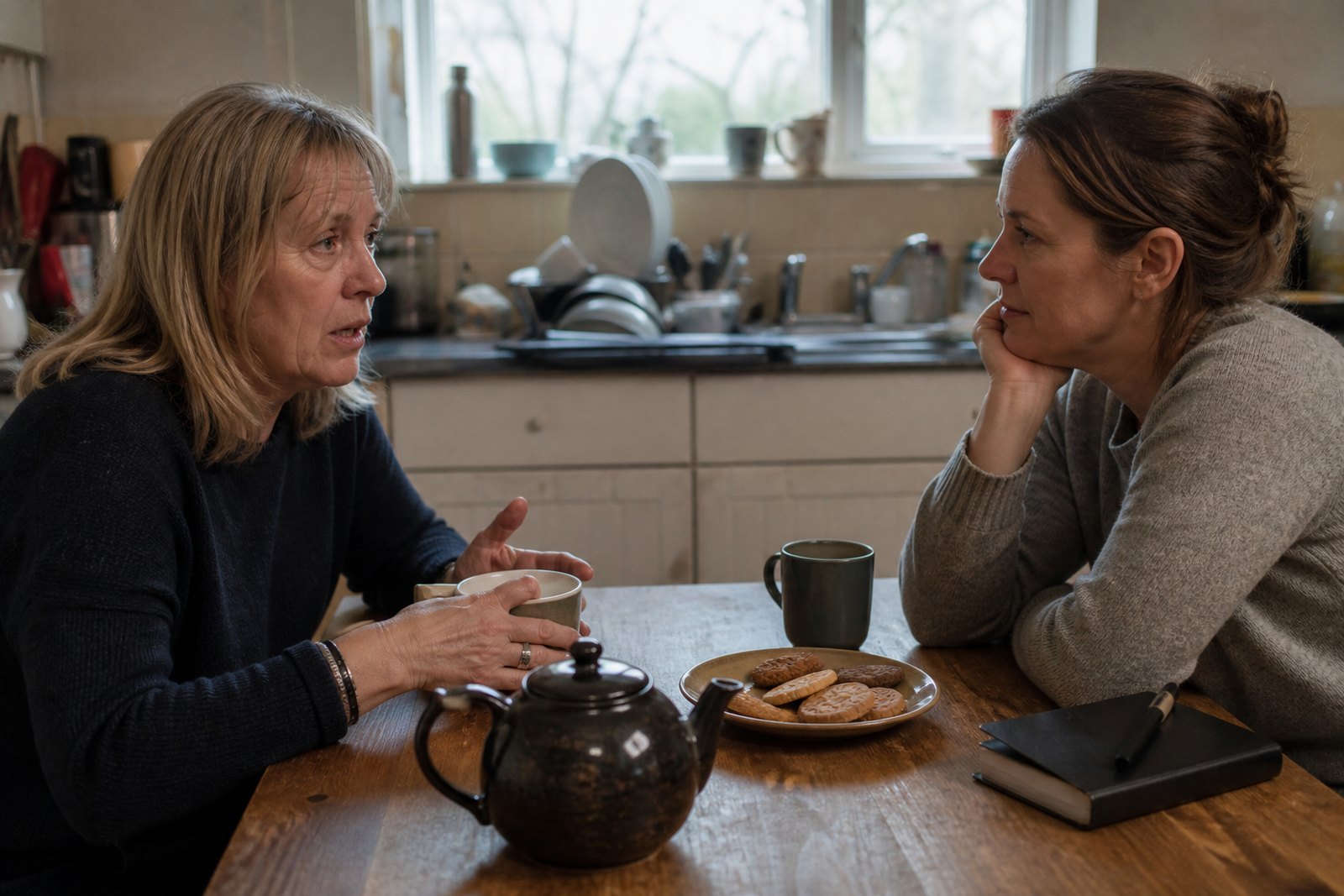
A carer's assessment is a free assessment from your local council that looks at your own needs as a carer - not the needs of the person you look after. If you provide regular unpaid care for a family member, partner or friend, you have a legal right to one under the Care Act 2014, regardless of your income, how many hours you do, or whether the person you care for gets any council help themselves. It can lead to respite breaks, equipment that makes caring physically safer, training, and practical support. Most family carers have never heard of it, which is exactly why it is worth knowing about.
Why most family carers have never heard of it
Part of the problem is the word "carer" itself. Most people looking after a husband with dementia or a mother recovering from a stroke do not think of themselves as carers at all - they are a wife, a son, doing what family does. So when a leaflet mentions "support for carers", it does not feel like it applies to them.
The second problem is that all the attention, quite naturally, goes on the person being cared for. Their appointments, their medication, their equipment. The carer's own back pain and broken sleep get treated as background noise. A carer's assessment exists to turn the spotlight the other way and ask: what would make this sustainable for you?
Who counts as a carer?
You are a carer if you provide unpaid care or support to someone - usually a relative or friend - who could not manage without it. That covers practical help with washing, dressing, meals and medication; supervision that keeps someone safe, including through the night; emotional support; and managing everything from finances to chasing services. You do not need to live with the person, be related to them, or do a set number of hours. Caring at a distance - the daily phone calls, the weekend visits, the constant worry - still counts.
What a carer's assessment covers
The assessment is a structured conversation, usually with someone from the council's adult social care team or an organisation working on its behalf. It looks at how caring affects your physical health, your mental health, your work, your relationships and your own life outside caring. Depending on what it finds, it can lead to:
- Respite and breaks. Arranged care - at home or elsewhere - so you can rest, go away, or simply have a guaranteed few hours a week that are yours. This is the single most valued outcome for many carers.
- Equipment that makes caring physically safer. Caring is physical work: helping someone out of bed, off the toilet, up from a chair. The right equipment protects your back as well as their dignity, and much of it can be provided free after an assessment - our equipment and aids service covers this ground from the OT side.
- Training in safer techniques. One rule comes before any technique: never take someone's full weight by lifting them yourself. It injures carers routinely, and a strained back can end a caring arrangement overnight. If you are physically hauling someone, the setup needs assessment and probably equipment, not more effort from you.
- Help with the practical load - which might mean support with housework, shopping or transport, or a direct payment so you can arrange what actually helps.
- Emergency planning. A written plan for what happens if you are suddenly ill or in hospital yourself, so the person you care for is not left without support while everyone scrambles.
- Signposting to money and support you may be missing - Carer's Allowance and other benefits (the amounts change every April, so check the current rate on GOV.UK), carers' groups, and counselling.
How to ask for one
Contact the adult social care department of the council where the person you care for lives - not necessarily your own council, if you live elsewhere. You can phone, or search the council's name plus "carer's assessment" for its online form. You do not need a GP referral, the permission of the person you care for, or any paperwork to start. If the person you look after is having their own needs assessment, the two can be done together or separately - separately is often better if you want to speak freely. The assessment is free whatever your finances, and waiting times vary by council, so ask early rather than at crisis point.
What to say - and why honesty matters
This is where many assessments quietly go wrong. Carers minimise. They say "we manage" because admitting strain feels disloyal, or because they fear that struggling means someone will take over. Neither is how it works: support is allocated based on what you say, so an understated account produces an understated result. Be specific and honest about the hard parts:
- Sleep - how many times you are up in the night, and what a typical week of sleep actually looks like.
- Your body - back pain, shoulder strain, anything that hurts during or after helping someone move.
- Your time - when you last had a full day off, and what you have given up: work hours, hobbies, seeing friends.
- Your mind - low mood, constant anxiety, the feeling of never being off duty.
- The worst days - describe a bad day, not an average one. Support has to work on the bad days.
Saying "I am exhausted and I cannot keep doing this without help" is not a confession of failure. It is precisely the information the assessment exists to gather, and it is the sentence that unlocks support.
Where occupational therapy fits in
Much of what makes caring physically hard is a problem an occupational therapist can solve directly - the transfers, the stairs, the bathroom, the bed. An OT looks at how the person you care for actually moves through their day and home, then changes the task, the equipment or the environment so that less of it lands on you. That might follow a hospital stay - our guide to discharge planning for families covers that pressured moment - or simply come from noticing that the daily routine has drifted into something unsafe for both of you. If you have never seen one at work, here is what an OT actually does on a home visit; everything that keeps the person you care for safer and more independent takes weight off you.
Who benefits most from a carer's assessment
- Anyone providing regular unpaid care who has never had their own needs looked at
- Carers who are physically helping someone move, wash or dress, especially with any pain afterwards
- Carers whose sleep, work or health is suffering, or who cannot remember their last real break
- Families where one person has quietly become the whole care system, with no plan for what happens if they are ill
- Anyone caring at a distance and running on worry and phone calls
Frequently asked questions
What is a carer's assessment?
It is a free assessment from the local council that looks at your needs as an unpaid carer - your health, sleep, work and life - rather than the needs of the person you care for. It is a legal right under the Care Act 2014, and it can lead to respite breaks, equipment, training and other practical support.
What should I expect at a carer's assessment?
A conversation of an hour or so, face to face or by phone, with someone from adult social care or a carers' organisation working for the council. They ask how caring affects your daily life and what would help, and you can have someone with you. If you have eligible needs, the council sets out a support plan; either way you should receive written information about local help.
What support is available for family carers in the UK?
Beyond the carer's assessment itself: respite care, community equipment, moving and handling training, direct payments, emergency planning, local carers' groups and, for some, Carer's Allowance - check the current rate and eligibility rules on GOV.UK, as the figure changes each April. Charities such as Age UK and Carers UK run advice lines that can walk you through all of it.
Next steps
Ask the council for a carer's assessment - it costs nothing and commits you to nothing. And if the physical side of caring is the part wearing you down, an occupational therapy home visit can often change the daily routine itself, so there is simply less to carry. Find your local occupational therapist through our areas we cover page, or see our prices page for current guide pricing.
Talk to an occupational therapist near you
This guide is general information. For advice about your own situation - or someone you look after - a local occupational therapist can visit you at home and see it for themselves.
Choose your area: