

Fatigue After a Stroke: Why It Happens and How to Manage It
By Mobile Occupational Therapist • 23 September 2026 • 13 min read
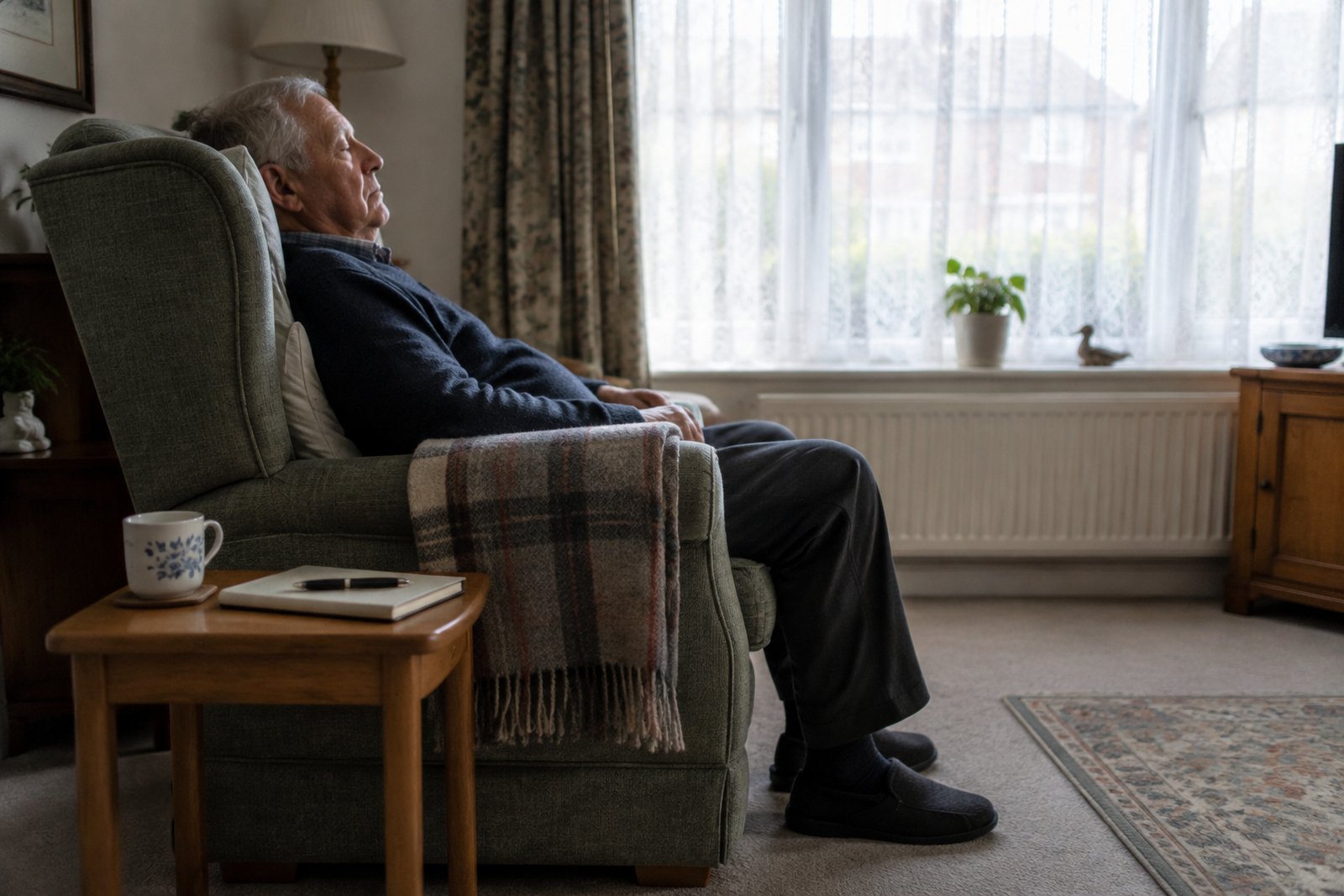
If you have had a stroke and feel exhausted in a way you never did before, you are not imagining it and you are not being lazy. Post-stroke fatigue is one of the most common effects of a stroke. It can follow a large stroke or a small one, and it often turns up after you get home, just when everyone assumed you were over the worst.
It is different from ordinary tiredness. A good night's sleep does not fix it. It can arrive suddenly, after something as small as a shower or a conversation, and wipe out the rest of the day. Most people find it becomes more manageable with time and with some changes to how they run their days: pacing, prioritising, resting before you run out rather than after, and explaining it to the people around you. This guide covers all of that, plus when to ask your GP to check for other causes.
What post-stroke fatigue actually feels like
People describe it in different ways, and it can change from day to day. Common descriptions include:
- Physical heaviness. Arms and legs feel like lead, and tasks you managed easily this morning feel impossible by mid-afternoon.
- Mental fog. You lose the thread of conversations, struggle to find words, read the same paragraph three times or cannot make a simple decision.
- Emotional thinness. You become tearful, irritable or overwhelmed far more quickly than usual.
- Hitting a wall. You feel fine, then suddenly you are not, with very little warning.
Families often notice it as inconsistency. Mum was chatty at lunch and cannot follow the television by teatime. Dad walked to the shop on Tuesday and could barely get dressed on Wednesday. That inconsistency is the fatigue itself, not a lack of effort or motivation.
Why it happens
Nobody fully understands post-stroke fatigue, and it does not always match the size of the stroke. Someone who has made what looks like a good recovery can still be floored by it. Several things are likely to combine:
- The brain injury itself. A damaged brain is healing and reorganising, and that takes energy.
- Everything takes more effort. Things that used to be automatic, like walking, balancing, following a conversation or reading, may now need conscious concentration. Your brain is working harder all day just to do ordinary things.
- Disturbed sleep. Pain, stiffness, needing the toilet in the night, worry, or breathing problems during sleep can all chip away at rest.
- Low mood and anxiety. Both are common after a stroke and both are draining in their own right.
- Loss of fitness. Weeks in hospital and at home doing less can leave your body deconditioned, so everything costs more.
- Medicines and other health conditions. Some can add to tiredness, which is why it is worth a conversation with your GP.
Pacing: the most useful idea of all
The pattern most people fall into is called boom and bust. On a good day you do everything you have been putting off: the washing, the phone calls, a trip into town. Then you pay for it for two or three days. Then you feel guilty and behind, so on the next good day you do even more. Round it goes.
Pacing breaks that cycle. It means doing a similar, steady amount each day, whether you feel brilliant or not, and building up slowly from there.
Find your baseline
Work out roughly how much you can do on an ordinary day without paying for it the next day. That is your starting point, even if it feels insultingly small. It is much easier to build up from a level you can sustain than from one you can only manage on a good day.
Rest before you need it
This is the part people resist. Plan short rests into the day before the fatigue arrives, not as a reaction to it. If you know you usually crash around an hour after lunch, rest for twenty minutes straight after lunch. Resting early tends to buy you more usable energy later on.
Break tasks into pieces
You do not have to clean the whole kitchen. Wipe the worktops, sit down, then do the sink later. Shower one day, wash your hair the next. Small pieces with breaks in between almost always get more done than one big push followed by a collapse.
Planning and prioritising your day
Keep a simple fatigue diary
For a week or two, jot down what you did each hour and give your energy a score out of ten. Note sleep, visitors, outings and anything that felt demanding. Patterns usually appear quickly: perhaps mornings are your best time, busy shops flatten you, or a phone call with a particular relative leaves you wrung out. A diary also gives you something concrete to show your GP or therapist.
Plan, prioritise, pace
Think of your energy as a budget that does not stretch as far as it used to. Each evening or at the start of the week, ask yourself:
- What absolutely has to happen?
- What would I like to do because it matters to me?
- What can wait, be done differently, or be done by someone else?
Put the important and enjoyable things in your best time of day. Do not spend all your good energy on chores and leave nothing for the things that make life feel like yours, whether that is seeing a grandchild, sitting in the garden or watching the football.
Make everyday tasks cost less
Small changes add up:
- Sit down to wash, dress, dry your hair and prepare food. A shower seat or a perching stool in the kitchen can save a surprising amount of energy.
- Lay out clothes the night before and choose easy fastenings.
- Keep the things you use most at waist to shoulder height so you are not bending and reaching.
- Use online shopping and delivery, and cook in batches on better days.
- Have a wash at the time of day that suits your energy, not the time you always used to.
- Use a trolley to move things around the house instead of making several trips.
Remember that thinking counts
Mental effort uses energy too. Concentrating, reading, using a phone or computer, noisy rooms, busy places and group conversations can all be as tiring as physical work, sometimes more. Treat them as part of your budget. One visitor at a time is easier than three. Turning the radio off while you talk helps. So does meeting a friend in a quiet café rather than a busy pub.
Sleep and rest are not the same thing
Sleep matters, but rest during the day is a separate thing. Rest means a short, deliberate break where you sit or lie somewhere quiet, ideally without your phone or the television, and let your brain switch off for a while. Even fifteen or twenty minutes can help.
Naps can be useful, but long naps late in the afternoon can steal from your night's sleep. Many people find a shorter rest earlier in the day works better. Other basics are worth trying too: a fairly regular bedtime and getting-up time, cutting back on caffeine later in the day, going easy on alcohol, and keeping the bedroom dark and cool.
If you or your partner notice loud snoring, pauses in breathing at night, or you wake feeling as though you have not slept at all, tell your GP. Breathing problems during sleep are worth investigating and can make fatigue much worse.
Gentle activity helps, carefully
It sounds backwards, but doing very little can leave you more tired, not less, because your fitness drops and everything becomes harder. Gentle, gradually increasing activity often helps fatigue over time. The key word is gradually. Your stroke team or a physiotherapist is the right person to guide an exercise programme, especially if you have weakness, balance problems or a heart condition. Do not try to push through fatigue to toughen yourself up. It usually backfires.
Going back to work
Fatigue is one of the main reasons returning to work after a stroke is harder than people expect. Many people look recovered and are then exhausted by a full day of concentration, commuting and noise. A few principles help:
- Go back gradually. A phased return, starting with short days or a few days a week, is far more likely to stick than going straight back full-time.
- Talk to your employer early. If there is an occupational health service, ask to be referred. Your GP can use the fit note to say you may be fit for work with changes such as a phased return or altered hours.
- Ask about adjustments. Rest breaks, a quieter workspace, working from home some days, fewer meetings, or putting demanding tasks at your best time of day can all help. A stroke may count as a disability under the Equality Act 2010, which can mean your employer has a duty to consider reasonable adjustments. ACAS and GOV.UK explain how this works.
- Look at Access to Work. This government scheme can help with some costs of support at work. Check eligibility on GOV.UK.
Our guide to getting back to work after illness or injury goes into more detail. If you drive, check the DVLA rules for stroke on GOV.UK and talk to your GP before getting behind the wheel. Fatigue on its own can make driving unsafe, even once you are allowed to drive again.
Explaining it to family and friends
Post-stroke fatigue is invisible, which makes it easy for other people to misunderstand. Well-meaning relatives say "you look so well" or "come on, just a bit longer" and you end up overdoing it to avoid seeming difficult.
Some things that help:
- Use a simple comparison. Many people describe it as a phone battery that no longer charges fully and drains faster. Once it is empty, it is empty.
- Be specific. "I can manage an hour of visitors, then I need to rest" is easier for people to respect than "I get tired".
- Agree a signal. A word or gesture that means "I need to stop now" saves you having to explain yourself when you are already flagging.
- Share this page or the Stroke Association's information so people hear it from somewhere other than you.
If you are caring for someone after a stroke, the most useful thing is often not doing everything for them but helping them plan, protecting their rest, and not taking it personally when they need to leave early or cancel.
When to talk to your GP
Fatigue after a stroke is common, but it is still worth raising with your GP, especially if it is getting worse rather than slowly better, or if it is stopping you doing things that matter. Other causes can add to it, and some are treatable. Your GP may want to consider:
- Low mood, depression or anxiety. These are common after a stroke and can look a lot like fatigue. See our guide to getting mental health support in the UK.
- Thyroid problems, anaemia or blood sugar problems, which can be checked with blood tests.
- Infections, including urine infections, which can cause sudden tiredness and confusion, particularly in older people.
- Side effects of medicines. Mention all your tablets. Do not stop or change any medicine on your own; ask your GP or pharmacist.
- Pain and sleep problems, including breathing problems at night.
Take your fatigue diary along. It turns "I'm tired all the time" into something your GP can work with.
Call 999 straight away if tiredness comes on suddenly with any new signs of stroke: the face drooping on one side, weakness or numbness in an arm or leg, slurred or muddled speech, sudden confusion, loss of vision or a sudden severe headache. Do not wait to see if it passes. If you feel unwell and are not sure what to do, call NHS 111.
Where an occupational therapist fits
Helping people manage fatigue in everyday life is core occupational therapy work. If you are under an NHS community stroke team or early supported discharge service, there is often an occupational therapist involved, so ask about fatigue specifically. If that support has ended or you are waiting, a private occupational therapist visiting at home can help.
An occupational therapist can:
- Watch how you actually manage your daily routine at home and spot where energy is being lost.
- Help you build a realistic, paced weekly plan around what matters most to you.
- Suggest easier ways of washing, dressing, cooking and getting about, and recommend equipment by type where it would save energy.
- Help with the thinking side of fatigue, such as strategies for concentration, memory and busy environments.
- Plan a graded return to work or study, and write a report for your employer if that would help.
- Talk it through with family so everyone understands what is going on.
An occupational therapist does not diagnose the cause of fatigue or review medication; that is your GP. A physiotherapist leads on exercise, walking and balance. A speech and language therapist helps if talking, understanding or swallowing are affected. Persistent low mood may need your GP, talking therapies or a psychologist. Good stroke recovery usually involves several of these people. Our stroke page and our guide to relearning everyday tasks after a stroke explain more.
Frequently asked questions
How long does fatigue after a stroke last?
It varies a great deal. For many people it eases gradually over the months after a stroke. For some it lasts much longer. Even when it does not go away entirely, most people find it becomes more predictable and manageable once they learn to pace themselves.
Is it normal to feel more tired months after the stroke than at the start?
Yes, this is common. In the early weeks you may have been doing less, with lots of support around you. As you start doing more, returning to normal routines and seeing more people, the fatigue often becomes more noticeable. Mention it to your GP or stroke team anyway, so other causes can be ruled out.
Will sleeping more fix it?
Usually not on its own. Good sleep helps, but post-stroke fatigue does not simply lift after a long night. Planned rest during the day, pacing and reducing the effort of everyday tasks tend to make more difference than extra hours in bed.
Should I push through it to build up my stamina?
No. Pushing through tends to lead to a crash that costs you more time than it saves. Build stamina slowly from a level you can manage on most days, and get advice from a physiotherapist on gentle exercise.
Is feeling exhausted a sign of another stroke?
Ongoing fatigue on its own is not usually a sign of another stroke. But sudden tiredness together with new weakness, facial drooping, speech problems, confusion or vision changes is an emergency. Call 999.
Do I need a referral to see an occupational therapist?
For NHS occupational therapy you will usually need a referral, often through your GP or stroke team. You can contact a private occupational therapist directly without a referral, though it helps to share any discharge letters or reports you have.
Next steps
See our neurological occupational therapy page, or current guide prices, and choose your area below.

Talk to an occupational therapist near you
This guide is general information. For advice about your own situation - or someone you look after - a local occupational therapist can visit you at home and see it for themselves.
Choose your area: