

Stroke Recovery at Home: Relearning Everyday Tasks
By Mobile Occupational Therapist • 17 September 2026 • 7 min read
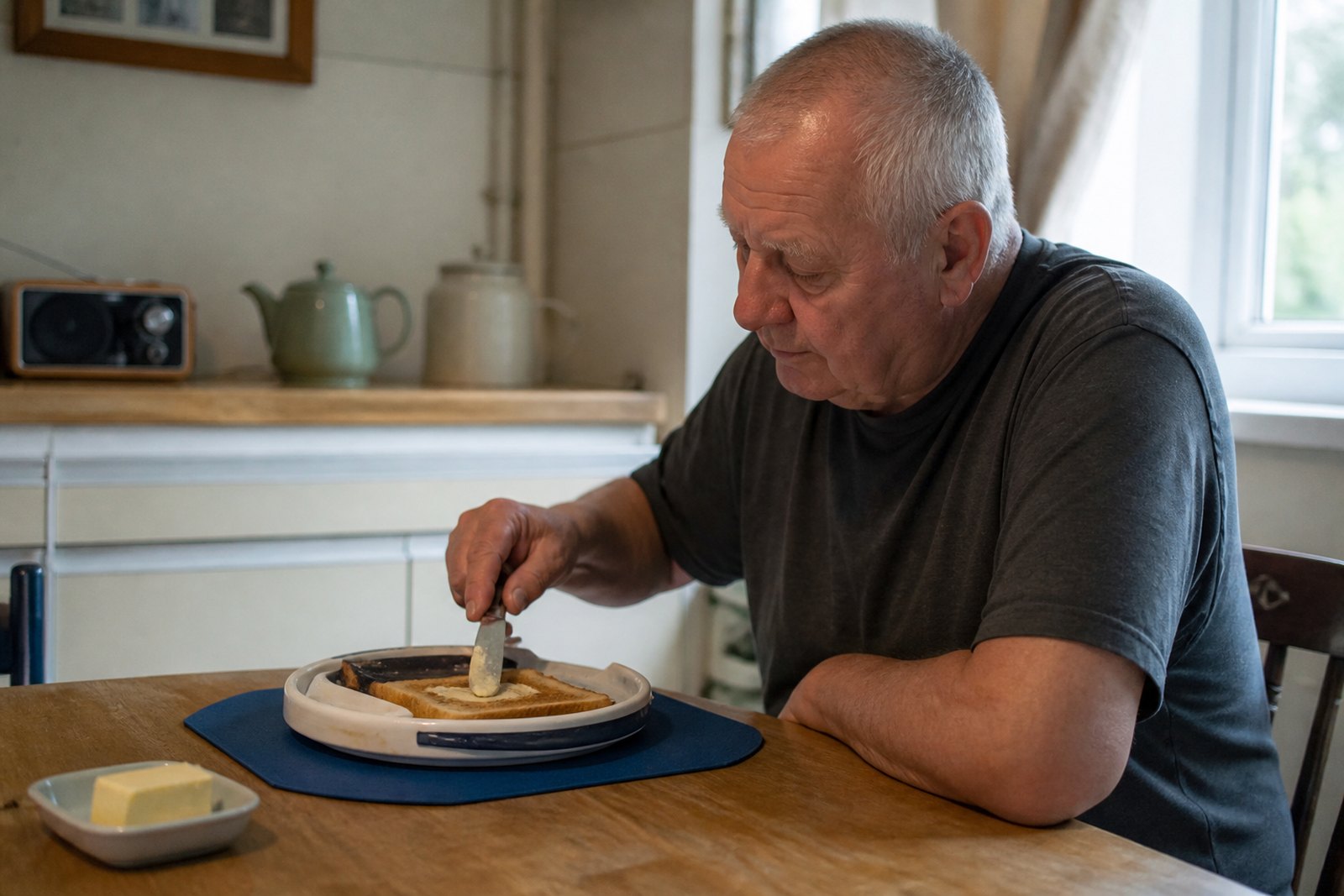
Coming home after a stroke is a milestone and a shock at once. In hospital, progress was measured and staffed; at home, it is you, the kettle and a button that will not do up. Here is the reframe that changes everything: at this stage, the everyday tasks are not obstacles to recovery - they are the recovery. Every wash, every dressed morning, every cup of tea made is repetition, and repetition is how the brain rewires. The clinical name for that rewiring is neuroplasticity, and it responds to exactly one thing: doing, over and over, at the edge of what is currently possible.
This guide covers the practical side - how the daily tasks get relearned, the techniques and small aids that unlock them, and how families help without accidentally taking the recovery away. For how occupational therapy fits into stroke care more broadly, see our page on occupational therapy after stroke; if the discharge itself is still ahead of you, start with our family's guide to hospital discharge.
The everyday tasks are the therapy
An occupational therapist watching someone make toast is not making small talk - they are watching a complex task that involves standing balance, one-handed jar opening, sequencing, attention and judgement, all at once. That is why OTs treat daily activities as both the goal and the method. The practical rules for using them that way:
- Do it slowly rather than have it done. A shirt buttoned in ten minutes by the person recovering beats a shirt buttoned in ten seconds by someone else, every time it is safe and there is time to spare.
- Break tasks down. "Get dressed" is overwhelming; "socks first, sitting on the bed" is achievable. Success at small steps is what keeps the practice going.
- Repeat daily. Little and often beats occasional heroics. The tasks that recur naturally - washing, dressing, drinks, meals - are ideal precisely because they recur.
- Use the affected side as much as is safely possible. A weak hand that is never asked to hold anything learns to be ignored - therapists call it learned non-use. Even resting the affected hand on the jar while the other opens it keeps it in the conversation.
Washing and dressing
Dressing is usually the first battleground, and there is fifty years of one-handed technique to draw on - nobody should be inventing this from scratch. The core of it: sit down to dress, lay clothes out in order, and dress the affected side first, undress it last. Loose clothing to begin with, and no shame in swapping the trickiest fastenings - a button hook, elastic laces or a front-fastening bra can be the difference between dressing yourself and being dressed. Our guide to dressing aids and easier ways to get dressed goes through the options item by item. In the bathroom, a perching stool or shower chair turns washing from a balance test into a task, and long-handled sponges reach what a stiff shoulder cannot. These aids are not giving up - they are what makes daily practice possible, and plenty get retired as recovery progresses.
The kitchen, one-handed
Kitchens reward technique and small equipment more than anywhere else in the house. A damp cloth or non-slip mat stops the bowl chasing itself around the worktop; a spike board or pan-handle holder does the stabilising a second hand used to do; a kettle tipper or a lightweight travel kettle takes the risk out of boiling water; jar openers do the gripping. Slide heavy pans along the worktop rather than carrying them, plate up at the hob, and sit down for any task that allows it - fatigue management starts here. Our guide to kitchen aids and meal-time independence covers the full toolkit. Start with drinks and snacks, then simple meals: each is a graded step, and making your own lunch is a genuinely good week's work in early recovery.
Fatigue, concentration and the invisible parts
Post-stroke fatigue is not ordinary tiredness and does not respond to pushing through - it is neurological, common, and it shapes what recovery practice looks like. Plan the day around it: hardest tasks in the best hour, rest before the wall rather than after hitting it, one thing at a time with the radio off, because attention is doing heavy lifting it never used to do. Memory and planning changes, mood changes and frustration are all part of the same picture, and they are worked on the same way - through structured, graded, real activities rather than abstract exercises. Be honest with the GP or stroke team about the invisible symptoms; they are as treatable a part of stroke as the weak hand, and low mood in particular deserves attention rather than endurance.
For families: help without taking over
The kindest-feeling thing a family can do - stepping in and doing the task - is often the least helpful, because it takes away the repetition the brain needs. The genuinely helpful version is harder: set the task up, allow the time, tolerate the struggle, and step in at the point of genuine unsafety or exhaustion rather than the point of slowness. Agree together which tasks are practice and which are not - nobody recovers on a schedule where every single activity is therapy. And watch your own reserves: caring after a stroke is long-haul, and support for carers exists and should be used. Recovery timelines are also longer than the popular impression - improvement continues for months and years for many people, so a plateau is a moment to change the practice, not to conclude the story is over.
When to bring in an occupational therapist
NHS stroke rehabilitation is often excellent and often time-limited, and the gap tends to appear just as the person is ready for more. It is worth involving an OT when the visits have ended but the goals have not - when washing, dressing or the kitchen have stalled at "managed with help", when fatigue is running the timetable, or when confidence rather than ability has become the ceiling. An OT home visit looks at the person, the tasks and the actual rooms together, and turns "keep practising" into a specific graded plan: this task, this technique, this aid, this week. Where equipment or adaptations are needed, the assessment opens those doors too.
Who benefits most from this approach
- People recently home from hospital after a stroke, especially as formal rehab visits taper off
- Anyone months or years post-stroke whose independence has plateaued at "managed with help"
- People whose fatigue, concentration or confidence - rather than movement alone - is limiting daily life
- Families who want to help with recovery rather than accidentally replace it
Frequently asked questions
How long does stroke recovery take at home?
Longer than the popular impression of a few months. The fastest change usually happens early, but meaningful improvement can continue for months and years, particularly in everyday abilities that are practised regularly. A plateau usually means the practice needs changing - a new technique, a graded next step, a fresh assessment - rather than that recovery has finished.
How do you get dressed after a stroke with one hand?
Sit down, lay the clothes out in order, and dress the affected side first, undressing it last. Loose clothing helps at the start, and aids such as button hooks and elastic shoelaces take over the fastenings that need two hands. An occupational therapist can teach the one-handed techniques for each garment - they are established methods, not things you should have to work out alone.
What does an occupational therapist do after a stroke?
They assess how the stroke affects real daily activities - washing, dressing, cooking, getting around the home - and then rebuild those activities through graded practice, one-handed techniques, equipment and changes to the home. They also work on the invisible effects, structuring the day around fatigue and rebuilding concentration and confidence through the tasks themselves.
Next steps
If recovery has slowed since the therapy visits stopped, or daily tasks have settled at "managed with help" when more feels possible, an occupational therapy home visit can turn everyday routines back into rehabilitation. Find your local occupational therapist via our areas we cover page, or see our prices page for current guide pricing.
Talk to an occupational therapist near you
This guide is general information. For advice about your own situation - or someone you look after - a local occupational therapist can visit you at home and see it for themselves.
Choose your area: