

Back Pain at Work and Home: Housework, Lifting and Everyday Tasks
By Mobile Occupational Therapist • 12 October 2026 • 13 min read
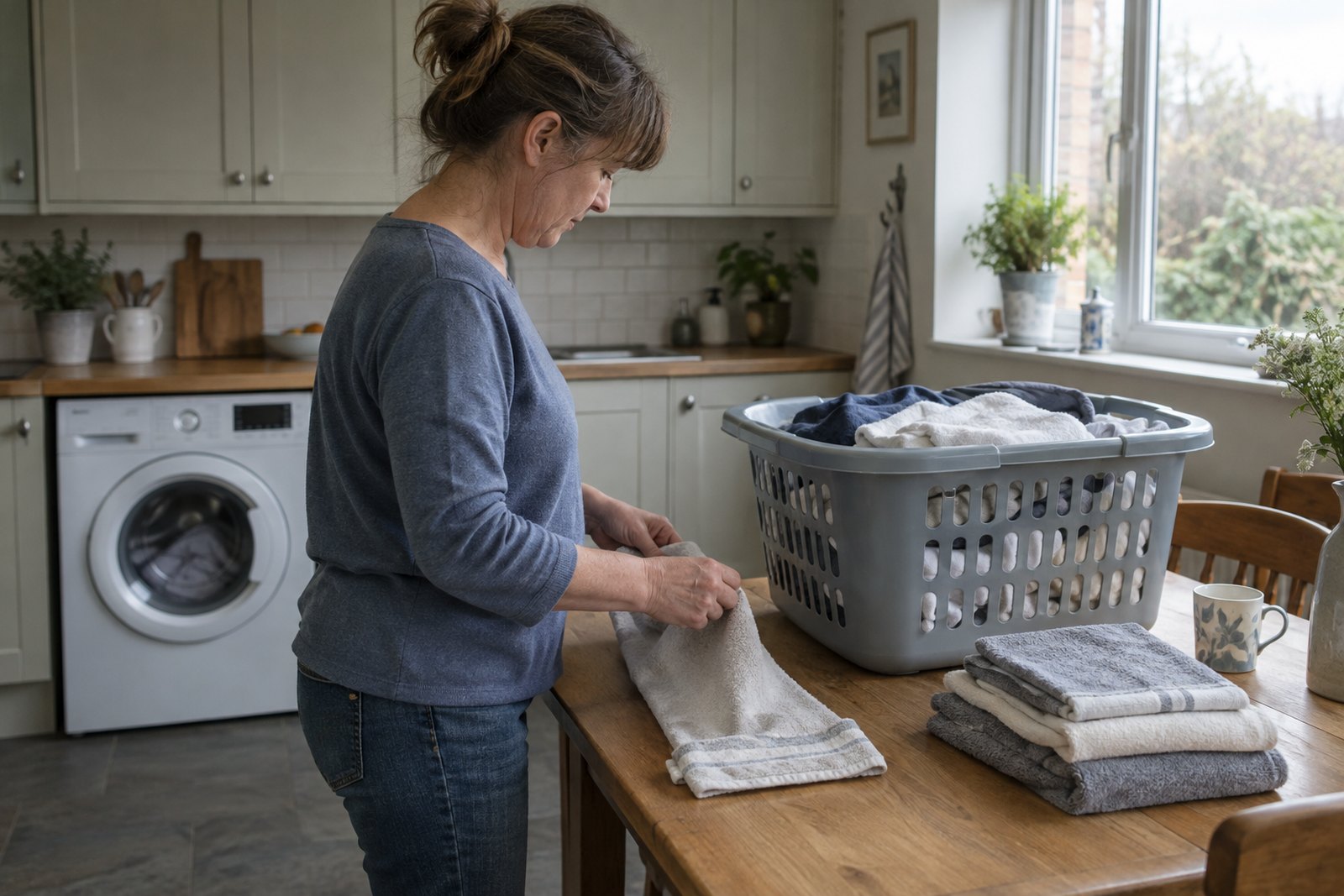
If you have common low back pain, the kind that comes on after bending, lifting, a long day at a desk or for no obvious reason at all, the NHS advice is usually to keep moving and carry on with your normal activities as much as you can. Lying in bed for days tends to make backs stiffer and slower to recover. Most back pain improves within a few weeks or months, even when it is very sore at first.
Keeping going does not mean gritting your teeth through everything. It means changing how you do things: breaking jobs into smaller pieces, bringing work up to waist height, keeping loads close to your body, not twisting while you lift, and changing position often. This guide goes through housework, lifting, shopping, gardening, work and sleep in practical detail. It is not a diagnosis. If you have any of the warning signs listed further down, stop reading and get medical help.
Why moving usually beats resting
It feels backwards. Your back hurts, so surely resting it is sensible. For a day or so, easing off is fine. But backs are built to move, and the muscles around the spine stiffen and guard when you hold still. That stiffness often hurts more than the original strain.
Pain from a sore back is not always a sign that you are doing damage. Common low back pain can be very painful without anything being seriously wrong. The aim is to stay as active as you reasonably can, accept some discomfort, and back off if a particular movement makes the pain sharply and lastingly worse. Gentle walking, moving around the house and doing light jobs in short bursts all count.
Pacing: the skill that makes everything else work
Most people with a bad back do one of two things. They stop everything, or they have a good morning and do the whole house in one go, then pay for it for three days. Pacing sits in between.
- Break jobs up. Hoover one room, not four. Do one load of washing, not the week's worth.
- Change position every 20 to 30 minutes. Sit, stand, walk about. No single posture is perfect if you hold it for too long.
- Alternate heavy and light tasks. Follow the vacuuming with something you can do sitting down, like sorting post.
- Stop before the pain flares, not after. If you know ironing gets bad at 20 minutes, stop at 15.
- Spread the week. Cleaning the bathroom does not have to happen on the same day as the big shop.
If your pain has gone on for months rather than weeks, pacing becomes even more important. Our guide to living with chronic pain goes into planning routines in more depth.
Housework with back pain
Housework is hard on backs because so much of it involves bending forward, reaching low and twisting. Small changes make a real difference.
Vacuuming and mopping
The classic mistake is standing still and pushing the hoover out at arm's length, which bends you forward from the waist again and again. Instead:
- Hold the handle close and walk with the vacuum, stepping forward and back like a lunge, so your legs do the moving rather than your back.
- Keep your back fairly upright and your knees softly bent.
- Adjust the handle or tube length so you are not stooping. Many vacuums and mops have adjustable handles.
- A lighter, cordless or stick-type vacuum can be easier than dragging a heavy cylinder up and down stairs. For stairs, do a few steps at a time and rest.
- Use a long-handled mop with a wringing mechanism you can work standing up, rather than kneeling with a cloth and bucket.
Long-handled tools
Long-handled dustpans and brushes, long-handled sponges for the bath, and extendable dusters all reduce bending. A reacher or grabber is useful for picking things up off the floor, as long as the item is light. For anything heavier, bend your knees and get down to it properly rather than leaning over.
Washing up, cooking and ironing
Standing at a counter for a long time can make backs ache. Try resting one foot on a low step or the bottom of an open cupboard, swapping feet now and then. Or sit. A perching stool has a sloping seat that lets you lean at the sink, counter or ironing board while staying close to the work, and it can take a lot of strain off a sore back. Lower the ironing board so you can sit, or raise it so you are not stooping.
Making the bed
Bed making involves reaching, leaning and lifting the mattress edge, often all at once.
- Kneel on the floor beside the bed to tuck sheets in, rather than bending over from standing.
- Fitted sheets save tucking.
- Change a duvet cover in stages: put the corners in while sitting on the bed, then shake it down standing.
- Walk around the bed instead of reaching across it.
Laundry
Laundry is mostly lifting from low down, so bring it up to waist height wherever you can.
- Put the laundry basket on a table, chair or the top of the machine, not the floor.
- Kneel or sit on a low stool to load and unload a front-loading machine, rather than bending over it.
- Carry smaller loads, held close to your body.
- Use a clothes airer at waist height, or hang washing on a line from a basket raised on a chair or trolley.
Cleaning the bath and toilet
Kneel on a cushion beside the bath and use a long-handled sponge, rather than leaning in from standing. Clean a little at a time, for example after your own shower when you are already there.
Lifting with back pain
You do not have to avoid lifting altogether, but this is where technique matters most. The same principles apply at home and at work.
- Think first. Do you need to lift it? Could it be split into smaller loads, pushed, slid or wheeled instead? Is there somewhere to rest it halfway?
- Get close. Stand right up to the load with your feet apart, one slightly in front of the other.
- Bend your knees and hips. Keep your back in its natural curve rather than rounding over from the waist.
- Hold it close. Keep the heaviest side of the load against your body. Holding something at arm's length puts far more strain on your back.
- Lift smoothly with your legs. No jerking.
- Do not twist. Turn by moving your feet, not your spine.
- Put it down the same way. Bend your knees, then adjust its position.
Know your limits. If something feels too heavy, it is too heavy. Ask for help, or leave it.
Children, pets and other people
Lifting a toddler is lifting a wriggly, unpredictable load. Kneel down to their level, bring them close, and let them climb onto your lap or a step before you lift. Encourage small children to climb into car seats and high chairs themselves where safe. Never try to lift an adult who has fallen; that needs different advice and often different equipment.
Shopping
- Use a shopping trolley rather than a basket, and push it with both hands close to your body.
- Pack more bags with less in each, and split weight evenly between both hands.
- A wheeled shopping trolley bag can save carrying altogether.
- When unloading the car boot, slide bags to the edge before lifting, and do not lift and twist at the same time.
- Online delivery is worth considering during a bad spell, particularly for heavy items like bottled drinks, cat litter and potatoes.
Gardening
Gardening is good for you and you do not have to give it up, but it combines bending, kneeling, twisting and lifting in ways that catch backs out. Warm up with a gentle walk around the garden first. Use a kneeler with handles to help you get up, long-handled tools to reduce stooping, and a small wheelbarrow or garden trolley rather than carrying. Switch jobs often, so you are not weeding for an hour straight. Our guide to gardening with limited mobility has lots more ideas, including raised beds and container growing.
Back pain at work
Many people worry that going to work with back pain will make it worse. For most common back pain, staying at work, or getting back as soon as you can, tends to help recovery, as long as the job is adjusted where needed.
Desk work
Sitting is not bad for backs, but sitting still for hours often is. The basics:
- Set your chair so your feet are flat on the floor or a footrest, your thighs roughly level and your lower back supported.
- Have the top of the screen around eye level, at about arm's length.
- Keep the keyboard and mouse close, so you are not reaching forward.
- Get up every half hour or so. Walk to the printer, refill your water, stand for phone calls.
If you use a computer regularly at work, your employer should carry out a display screen equipment assessment. Our guide to DSE assessments and setting up your workstation explains what this covers and how to ask for one.
Standing, driving and manual jobs
If you stand all day, shift your weight, use a footrest or rail, and sit when you can on breaks. If you drive for work, adjust the seat so you are close enough to the pedals without stretching, and break up long journeys. If your job involves lifting, your employer has duties under health and safety law to assess manual handling risks, and the lifting principles above still apply. Ask whether loads can be reduced, shared or moved with equipment.
Talking to your employer
It helps to tell your manager early. Simple changes such as lighter duties for a few weeks, more frequent breaks, a different chair, or a temporary change of hours can keep you at work. If you are signed off, your GP can say on a fit note that you may be fit for work with adjustments. If your back problem is long term and affects daily life substantially, you may have legal protection under the Equality Act 2010; see our guide to reasonable adjustments at work.
Sleeping and getting out of bed
Nights can be the worst part. The NHS suggests that if you sleep on your side, a pillow between your knees can help, and if you sleep on your back, a pillow under your knees may ease the strain. There is no single right mattress; one that supports you without being rock hard suits most people.
To get out of bed with less pain, roll onto your side with your knees bent, let your legs drop over the edge, and push yourself up sideways with your arms. Reverse it to lie down. This avoids the sit-up movement that often hurts most. Getting up and moving gently first thing usually eases morning stiffness.
When to see a GP, and when it is urgent
See a GP, or a physiotherapist if you can self-refer in your area, if your back pain has not started to improve after a few weeks of looking after it at home, if it is stopping you doing everyday things, if it is very severe or getting worse, or if you are struggling to cope. Ask for an urgent GP appointment or call NHS 111 if you also have a high temperature, unexplained weight loss, pain that is worse at night or does not ease with rest, pain after a fall or injury, or if you have a history of cancer.
Call 999 or go to A&E straight away if you have back pain together with:
- numbness or tingling around your bottom or genitals
- difficulty peeing, or not being able to control when you pee or poo
- weakness, numbness or tingling in both legs, or legs that are getting weaker
- chest pain
These can be signs of serious conditions, including cauda equina syndrome, which needs emergency treatment. Do not wait to see if it settles. The NHS back pain page has the full, current list.
Where physiotherapy and occupational therapy fit
For back pain itself, physiotherapy leads. A physiotherapist assesses your back, gives you exercises, and helps you build strength and confidence in moving. In many areas you can refer yourself to NHS physiotherapy without seeing a GP first; check your local NHS services.
An occupational therapist comes in when the problem is getting through daily life. That might be because pain has gone on a long time, because you have other conditions alongside your back, or because you are coming home after back surgery. An occupational therapist visiting at home can look at how you actually do the jobs that hurt: the height of your bed and chair, how you get in and out of the bath, how you manage the kitchen and laundry. They can suggest different methods, recommend equipment such as perching stools or long-handled aids, and help you plan your day so you can do more without flaring up.
At work, an occupational therapist can assess your job and recommend practical changes to your workstation, tasks and return to work plan. See our work and ergonomics page for more.
An occupational therapist does not diagnose the cause of your back pain or treat it with hands-on therapy. If you are not sure who you need, start with your GP or a physiotherapist.
Frequently asked questions
Should I rest in bed with back pain?
Generally, no. A day of taking it easy is fine, but long periods in bed tend to make backs stiffer and slower to recover. NHS advice is to stay as active as possible and keep up normal activities as much as you can.
Can I go to work with back pain?
For most common back pain, yes, and staying at work often helps recovery. You may need temporary changes such as lighter duties or more breaks. Talk to your manager, and if you are off sick, your GP can advise on a fit note that suggests adjustments.
Is it safe to lift things with a bad back?
Light, careful lifting is usually fine. Keep the load close, bend your knees, avoid twisting and split heavy loads. If something feels too heavy, do not lift it. If lifting causes sudden severe pain or any of the warning signs above, get medical advice.
What is the best sleeping position for back pain?
Whatever is most comfortable for you. Many people find lying on their side with a pillow between the knees, or on their back with a pillow under the knees, eases the strain. Rolling onto your side to get up helps too.
Should I wear a back brace or support belt?
NICE guidance does not recommend belts or corsets for managing low back pain. Keeping active and moving normally is generally more helpful. If you have been given a brace by a doctor or surgeon for a specific reason, follow their advice.
Do I need a physio or an occupational therapist?
For treating the back itself, a physiotherapist. For help managing daily tasks, equipment and your home or workplace set-up, an occupational therapist. Some people benefit from both. Our guide to occupational therapists and physiotherapists explains the difference.
Next steps
If back pain is making everyday tasks or work a struggle, see our equipment and aids and home assessment pages, or current guide prices, and choose your area below.

Talk to an occupational therapist near you
This guide is general information. For advice about your own situation - or someone you look after - a local occupational therapist can visit you at home and see it for themselves.
Choose your area: