

Workplace & Ergonomic Assessment
Practical workplace assessments to support a safe return to work, reasonable adjustments and better day-to-day function at your desk or workstation.
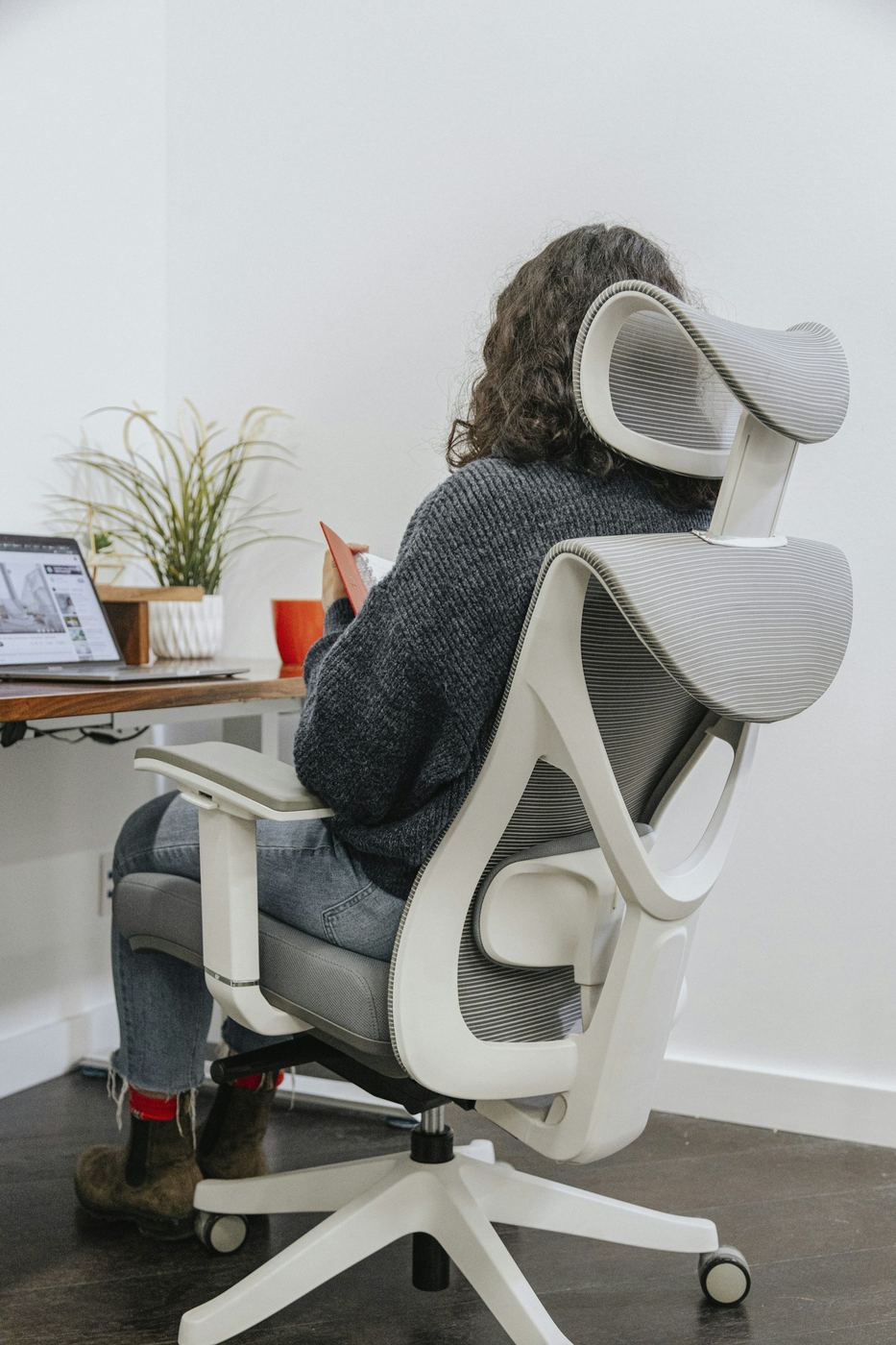
This is a specialist service offered where your local occupational therapist's training and scope of practice cover vocational OT - check availability for your area on the county page.
What it is
A workplace or ergonomic assessment looks at how your work environment - desk, chair, equipment, tasks and routines - affects your comfort, function and fatigue, whether you work from home or in a workplace that can be visited. It is often used to support a return to work, a reasonable adjustment request, or simply to reduce strain from a workstation that no longer fits.
Who it helps
- People returning to work after illness, injury or surgery
- Anyone managing a condition that affects sitting, standing, typing or manual tasks
- Employers seeking a professional recommendation to support reasonable adjustments
- Home workers experiencing discomfort or fatigue from their current set-up
What a home visit involves
- Assessing your workstation, equipment and typical working day
- Identifying practical adjustments to reduce strain and fatigue
- Discussing pacing and task planning where fatigue or function is a factor
- A written report suitable for sharing with an employer or HR, where needed
The chair is not usually the main problem
Most people book a workplace assessment expecting a verdict on their chair and their monitor height. Those matter, but the thing that most often needs to change is the shape of the working day: how long a task runs before anything else happens, how many hours go by in back-to-back calls without standing up, where the heaviest concentration or the heaviest lifting falls, and what happens in the hour after work finishes.
A chair set up perfectly and sat in for six unbroken hours will still cause trouble. That is why the assessment looks at your actual tasks and your actual week rather than a desk in isolation, and why a fair number of the recommendations tend to be about sequencing and pacing rather than equipment. Those are also, as a rule, the recommendations that cost nothing.
A sit-stand desk is a good illustration. The value in one is the alternation, not the standing. Spending the whole day upright instead of seated simply swaps one set of problems for another, and people who buy one and never change position get very little from it.
Adjust what is already in the room before buying anything
A surprising share of the benefit comes from equipment that is already there. Office chairs commonly have adjustments that have never been touched - seat depth, back angle, lumbar height, armrest height and width - and getting seat height right first usually changes what the desk, keyboard and screen then need to do. Adjustment order matters, and it is not intuitive.
Equipment does have a place, but it only helps if it suits the person and the task and is set up properly. A specialist chair or keyboard bought from a website on the strength of a review is about as likely to end up unused as to solve anything. Where equipment genuinely is needed, a written recommendation naming the problem it solves is far more use to whoever is being asked to pay than a product name on its own.
Who pays varies. Some employers fund equipment directly, some route it through occupational health, and in some circumstances the government's Access to Work scheme can help with support at work for people with a health condition or disability. It is worth finding out what applies to you before spending your own money.
What a report can reasonably ask of an employer
Where a report is going to a manager or to HR, it sets out what was assessed, what is causing the difficulty, and what adjustments would reasonably reduce it. That is a professional recommendation. The decision about which adjustments are made rests with the employer, who will weigh it against the role, the workplace and their own processes. An occupational therapist is not in a position to determine an employer's legal obligations, and no report can require an employer to do anything.
In practice, recommendations are more likely to be acted on when they are specific and modest: the task that is going wrong, the change proposed, and the difference it is expected to make. A long list of everything that could conceivably help is much easier to defer than three things with reasons attached to them.
It is also worth flagging anything an adjustment has to survive. One that depends on a fixed desk is awkward in a hot-desking office. One that depends on equipment at home is no use on the days you are in. Saying so during the assessment produces recommendations that fit how you actually work rather than an idealised version of it.
What this can achieve
- A workstation and routine that better supports you
- A clear, professional report to support reasonable adjustments
- Reduced discomfort and fatigue during the working day
- A more confident, sustainable return to or continuation of work
See this service in your area
Find your local occupational therapist and see current pricing for Workplace & Ergonomic Assessment.
Other services
Frequently asked questions
Is this the same as a DSE assessment?
Not quite. A display screen equipment assessment is the standard check employers run for desk workers, frequently self-completed from a checklist, and it covers the ordinary set-up. An occupational therapy workplace assessment starts from a health condition or injury and looks at how those particular difficulties interact with those particular tasks. If a DSE assessment has already been done and things are still hard, that is usually the point at which this is worth arranging.
Will my employer have to make the changes recommended?
That is the employer's decision rather than the occupational therapist's. A report recommends adjustments and explains the reasoning behind each one; the employer considers them alongside the role and the workplace. Most people find a clear, specific report makes the conversation with a manager or HR considerably easier, but no report can commit an employer to a particular adjustment.
Can I arrange this myself, without involving my employer?
Yes. Plenty of assessments are arranged and paid for by the person themselves, particularly by home workers and the self-employed, and you then decide whether to share the report at all and with whom. Where an employer commissions the assessment instead, agree at the outset what will be shared with them, because that is much harder to unpick afterwards.
I work from home at the kitchen table. Is that too basic to assess?
No, and it is one of the more common set-ups. The assessment works with the space and furniture that actually exist, including where a dedicated desk is not an option and the room has to be something else in the evening. What comes out of it is generally a mix of small adjustments to what is already there and a short, prioritised list of anything worth changing.
Who carries out the Workplace & Ergonomic Assessment visit?
A qualified, HCPC-registered occupational therapist covering your area carries out the assessment and any follow-up visits in person, at your home.
How is Workplace & Ergonomic Assessment priced?
Your occupational therapist confirms their fee for Workplace & Ergonomic Assessment before you book - see our prices page for current guide pricing.
Will I get anything in writing?
Where relevant, you'll receive a written summary or report of the visit, agreed with you at the outset - particularly for equipment recommendations, adaptations or reports for a third party.
What happens after the first visit?
Your occupational therapist will agree next steps with you directly - this might be a follow-up visit, a set of recommendations to action yourself, or referral on if something falls outside their scope.