

Living With Chronic Pain: Pacing, Routines and Practical Help
By Mobile Occupational Therapist • 2 October 2026 • 13 min read
Living with chronic pain usually means pain that has lasted more than three months. The honest answer to how you manage it is that, for most people, the pain is not switched off. It is worked around. What makes the biggest difference day to day is rarely dramatic: steady activity instead of good days and crash days, breaking tasks up, protecting sleep, keeping hold of the parts of life that matter, and having a plan for flare-ups before they arrive.
That is not a brush-off. NICE guidance on chronic pain (NG193) recommends exercise and psychological therapies for chronic primary pain, and advises against starting many of the medicines people expect to be offered. Your GP is the right person for medicines and referrals. This guide covers the practical side: what you can change at home and at work, starting today, and where an occupational therapist fits.
Hurt does not always mean harm
With a new injury, pain is a useful warning. Stop, rest, let it heal. With long-term pain, the warning system itself often becomes oversensitive. The nervous system keeps sounding the alarm after tissues have healed, or louder than the problem underneath warrants. The pain is completely real. It is just a less reliable guide to damage.
This matters because many people gradually stop doing things in case they cause harm. Less walking, fewer outings, more sitting. Muscles weaken, joints stiffen, stamina drops, and the next bit of activity hurts more. It is an understandable trap and a very common one.
So the aim is usually not to avoid all pain, but to keep moving within limits you can sustain. If you are not sure your pain has been properly checked, or whether a particular activity is safe for your condition, ask your GP or physiotherapist. That question deserves a proper answer, not guesswork.
Boom and bust: the pattern that keeps people stuck
You wake up feeling better than usual. You finally clean the kitchen, do the big shop, mow the lawn and catch up on emails. By evening the pain is worse, and the next two or three days are spent on the sofa. Then you feel guilty about everything left undone, have a better day, and do it all again.
Almost everyone with long-term pain recognises this. The trouble is that over time the busts tend to get longer and the booms smaller, until life is organised around recovering from good days. The way out is pacing. It feels backwards, because it means doing less on good days so you can do more on bad ones.
Pacing: finding your baseline and building from it
Work out what you can manage on an ordinary day
Your baseline is the amount of an activity you can do on most days, including not-great days, without paying for it afterwards. Not your best day. Pick a few activities that matter to you, such as walking, standing at the sink, sitting at a desk or gardening. For a week, notice how long you manage each before pain builds noticeably. Then start a little below that. If you can stand at the sink for fifteen minutes on a reasonable day, your baseline might be ten.
Let the clock tell you when to stop, not the pain
Stop when the timer goes, even if you feel fine. That is the whole trick, and it is harder than it sounds. A kitchen timer or phone alarm helps. Then switch to something different, or rest briefly, and come back later.
Build up slowly
Once a baseline feels steady for a week or two, increase it by a small amount and hold there again. Small increases you can keep beat big jumps you cannot. Some weeks you will stay put or step back, especially after illness or stress. That is pacing working, not failing. Our guide to fatigue management and pacing covers the same approach in more detail, and many people with pain live with fatigue too.
Planning and prioritising your week
Pacing works much better when you plan the week rather than the day.
- Spread heavy jobs out. One heavier task a day, with lighter ones around it, rather than laundry, shopping and hoovering all on Saturday.
- Break tasks into chunks. Hoover one room, not the house. Change the bed in two goes. Prepare vegetables in the morning and cook in the evening.
- Use the four Ps. Prioritise, plan, pace, position. What actually needs doing? What can wait, be done differently, or be done by someone else?
- Put rest in the diary. Short planned breaks before you need them work better than collapsing afterwards.
- Plan around big events. Before a wedding or a family visit, keep the days either side lighter.
Letting go of some standards is part of this. The house may be less tidy and the ironing may stop. That is a trade, and it buys energy for the things you care about.
Change position often
There is no single perfect posture. The best position is usually the next one. Staying still for long periods, whether sitting, standing or holding your arms up, tends to build pain.
- Get up and move for a minute or two regularly rather than sitting through a whole film or a whole morning at a screen.
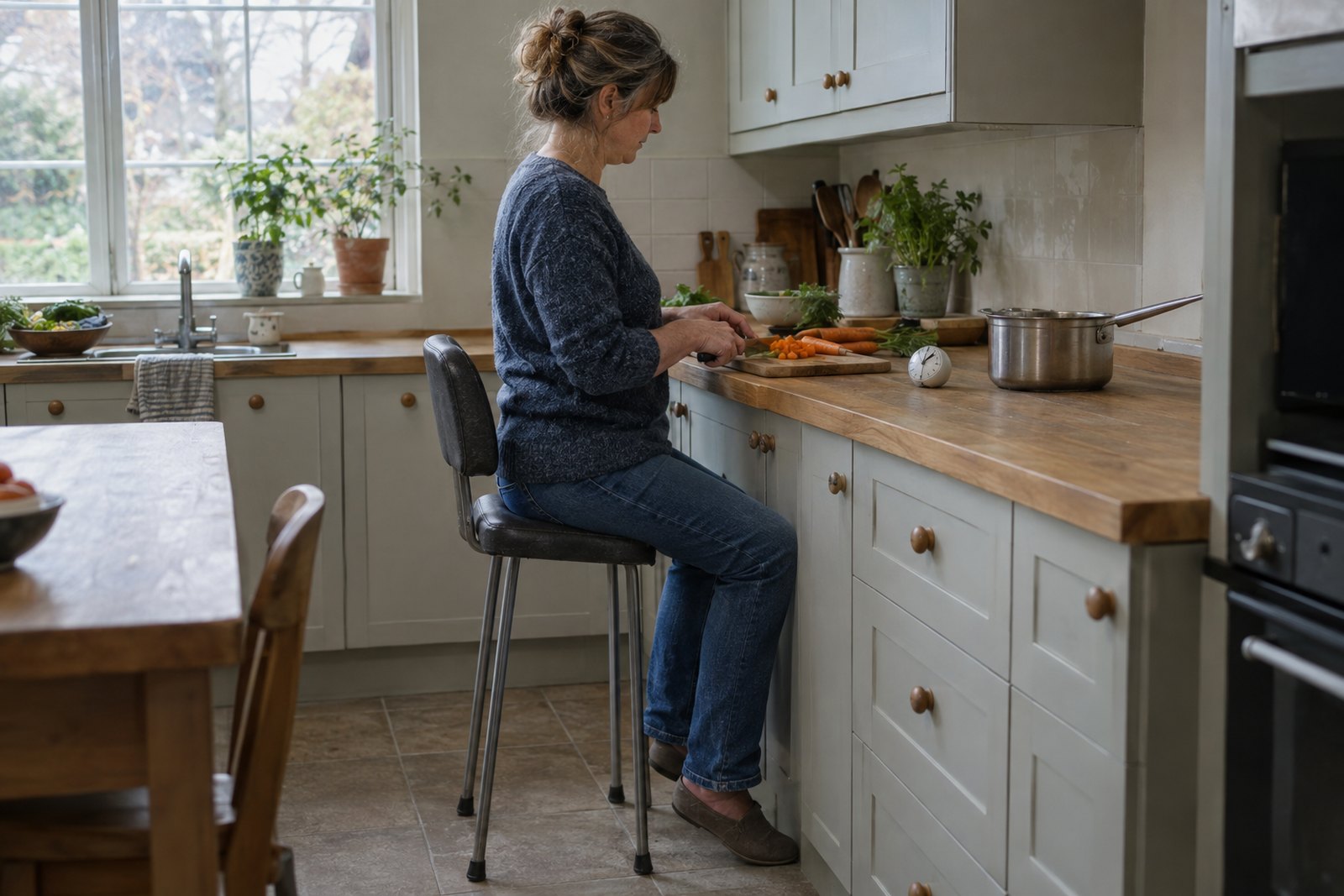
- Sit for jobs you normally stand for, such as food preparation, ironing or washing up. A perching stool can help at a worktop.
- Keep everyday items between waist and shoulder height so you bend and stretch less.
- Choose a chair with firm support, your feet flat, and a small cushion behind your lower back if that feels better.
- Carry less, more often. A trolley or bag on wheels helps with shopping and laundry.
Sleep when pain keeps you awake
Pain and poor sleep feed each other. A bad night makes pain harder to cope with, and pain makes the next night worse.
- Keep a regular getting-up time, even after a bad night.
- If you nap, keep it short and earlier in the day.
- Use pillows to support you: between the knees on your side, under the knees on your back.
- Give yourself a calm wind-down hour with low light and screens away.
- If you have been lying awake a long time, get up, do something quiet in dim light, then go back to bed.
- Notice whether getting in and out of bed is itself a strain. Bed height and a supportive mattress make a difference.
If poor sleep is persistent, talk to your GP, and do not start or change medicines for sleep without checking with them or a pharmacist.
Work
Staying in work, or getting back to it, is often good for people with chronic pain. Work brings structure, money, company and a sense of who you are. But the job may need to change. Common adjustments include altered hours, a phased return, more frequent short breaks, a well set up workstation, the option to alternate sitting and standing, some home working, and swapping heavier tasks with colleagues.
Long-term pain may count as a disability under the Equality Act 2010 (or the Disability Discrimination Act 1995 in Northern Ireland) if it has a substantial and long-term effect on everyday activities, and employers then have a duty to make reasonable adjustments. Acas and GOV.UK explain the rules. Our guide to reasonable adjustments at work covers how to ask.
Keeping your roles and the things you enjoy
When pain takes over, the first things to go are the ones that feel optional: the hobby, the walk with a friend, the choir, the trip to watch a grandchild swim. Chores and appointments swallow whatever energy is left. Life shrinks to pain and duty, and mood follows.
Try to protect at least one thing each week that is just for you, and adapt it rather than drop it. Garden in raised beds or pots for twenty minutes at a time. Meet a friend for coffee instead of a long walk. Read with grandchildren rather than lifting them. Your roles as a parent, partner, friend or colleague matter as much as the tasks.
Low mood and anxiety are common with long-term pain and are not a sign of weakness. Tell your GP if you are struggling. Our guide to getting mental health support explains the routes, including self-referral to NHS talking therapies. If you feel unsafe or are thinking of harming yourself, call NHS 111, or 999 in an emergency.
A flare-up plan, written before you need it
Flare-ups happen even with good pacing. A written plan saves you making decisions in the middle of one.
- Your usual triggers and the early warning signs.
- What helps you: heat, gentle movement, relaxation, distraction, a particular position, and any medicines exactly as agreed with your GP.
- What you will drop for a few days without guilt.
- Who can help with what: meals, the school run, the dog.
- How you will get back: cut your baselines down, then build up again over days rather than waiting in bed until the pain has gone.
- The signs that this is not a usual flare and you need medical advice.
Keep it somewhere obvious and share it with someone close.
Equipment that saves strain
Equipment will not fix pain, but it takes strain out of repetitive or awkward tasks so your energy goes further.
- A perching stool for the kitchen worktop or bathroom basin.
- A long-handled reacher, sock aid and long shoehorn to cut bending.
- Lightweight pans, a kettle tipper, chunky-handled cutlery and a jar opener if your hands hurt.
- A shower seat or bath board so you can sit to wash.
- A raised toilet seat or furniture raisers if standing up is painful.
- A sturdy indoor trolley for moving meals and washing around.
Height and type matter. Badly chosen equipment ends up in a cupboard. Our plain English guide to daily living equipment explains the options, and some items can be provided by council or NHS community equipment services after an assessment.
Talking to family and friends
Chronic pain is invisible. People see you on a good day and assume you are fine, or they rush to do everything and leave you feeling useless.
- Explain pacing, so they understand why you stop halfway through a job when you seem fine.
- Be specific. Asking someone to carry the washing basket upstairs on Mondays works better than saying you need more help.
- Agree a simple way to say it is a bad day without a long conversation.
- Say what you want to keep doing yourself.
- Share your flare-up plan.
If someone close is doing a lot for you, they may be entitled to a carer's assessment from the council.
What the NHS offers
Your GP is the starting point. They can look for underlying causes, review medicines and refer you to physiotherapy, psychological therapies or a specialist pain service where appropriate.
NICE guideline NG193 covers chronic pain in people aged 16 and over. For chronic primary pain, meaning pain not adequately explained by another condition, it recommends supervised group exercise programmes and psychological therapies such as acceptance and commitment therapy or cognitive behavioural therapy. It advises against starting many commonly used painkillers, including opioids, for this kind of pain, though some antidepressants may be considered. Pain caused by a known condition such as arthritis is managed under that condition's guidance. If you already take medicines, do not stop or change them without talking to your GP, as some need to be reduced gradually.
Many areas run NHS pain management programmes. These are usually group courses run by a team that can include psychologists, physiotherapists, occupational therapists and nurses, focusing on pacing, goals, movement, sleep and mood. Referral is usually through your GP or a pain clinic, and availability and waits vary by area, so ask what is offered locally.
When to get medical help quickly
Long-term pain does not mean ignoring change. See your GP if your pain changes in character, spreads, steadily worsens, or comes with unexplained weight loss, fever or night sweats. Call NHS 111 if you need urgent advice. Call 999 or go to A&E for chest pain, sudden severe pain, or back pain with numbness around your bottom or genitals, loss of bladder or bowel control, or new weakness in your legs.
Where an occupational therapist fits
Occupational therapy is about the things you do every day: washing, dressing, cooking, working, caring for others, getting out. An occupational therapist does not cure pain. Their job is to help you do more of what matters with less strain. A private occupational therapist visiting at home can:
- watch how you actually do tasks in your own home and suggest easier methods
- help you set realistic baselines and a weekly plan, and adjust it as life changes
- recommend equipment of the right type and height, and advise on adaptations
- look at your job demands or workstation and write recommendations for your employer
- help you find ways to keep hobbies and roles you have let slip
- write a report on how pain affects daily life, which can support workplace or benefit discussions
Others lead elsewhere. Your GP handles diagnosis, medicines and referrals. A physiotherapist leads on exercise programmes and specific movement problems. A psychologist or talking therapist delivers therapies such as CBT or ACT. A specialist pain clinic manages complex cases. Occupational therapists often work within NHS pain services; private help is an option if you want support focused on your home and work, or sooner.
Frequently asked questions
Should I rest when my pain is bad?
Short rests help. Long periods of rest usually make things worse, as you lose strength and stamina. During a flare, cut activity down rather than stopping completely, then build back up.
How long does pacing take to help?
It varies. Many people find the first weeks frustrating because it means doing less on good days. The benefit is usually fewer crashes and a steadier life, which builds over weeks and months rather than days.
Can I get on an NHS pain management programme?
Many areas offer one, usually through a GP or pain clinic referral. Ask your GP what is available locally, as provision and waiting times vary.
Does chronic pain count as a disability at work?
It can, if it has a substantial and long-term effect on daily activities. Check the Equality Act guidance on GOV.UK or Acas, and talk to your employer or occupational health about adjustments.
Can an occupational therapist help with fibromyalgia or back pain?
Yes, in the practical sense. They can help with pacing, routines, methods, equipment and work. They work alongside your GP, physiotherapist and pain team rather than replacing them.
Will my chronic pain ever go away?
Some people improve a great deal; for others the pain stays but takes up less of life. Focusing on what you can do, rather than waiting for the pain to go, tends to help either way.
Next steps
If pain is making everyday tasks or work harder, an occupational therapist can help you plan, pace and find easier ways. See our home assessment and work and ergonomics pages, or current guide prices, and choose your area below.

Talk to an occupational therapist near you
This guide is general information. For advice about your own situation - or someone you look after - a local occupational therapist can visit you at home and see it for themselves.
Choose your area: