

Occupational Therapist vs Physiotherapist: What Is the Difference?
By Mobile Occupational Therapist • 18 October 2026 • 11 min read
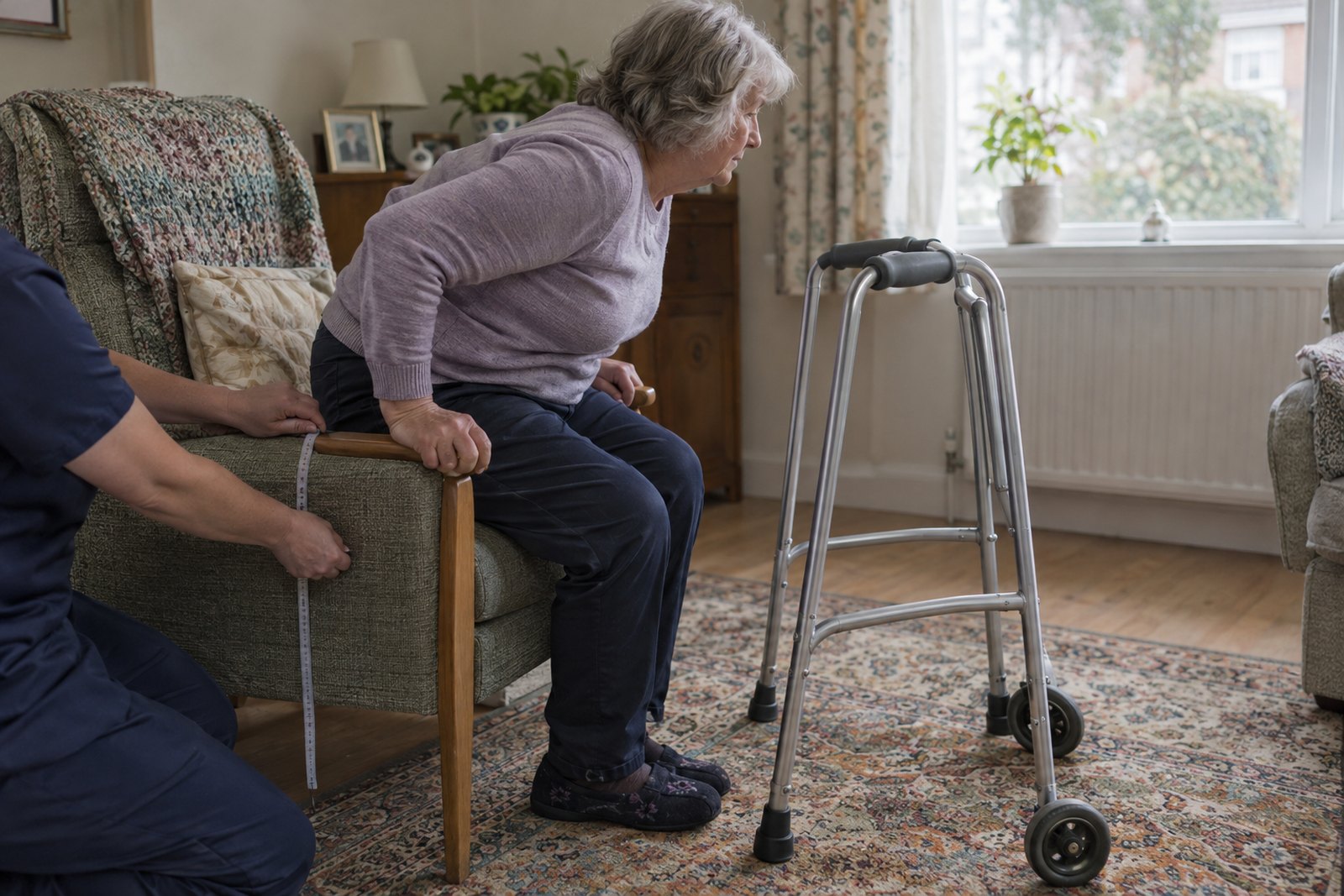
A physiotherapist helps your body work better: movement, strength, balance, joints and pain. An occupational therapist helps you get on with the things you need and want to do every day: washing, dressing, cooking, getting in and out of bed, going to work or school. Put simply, the physio works on your body, and the OT works on what you are trying to do and the place you are trying to do it in.
That is the short answer, and it is right most of the time. The longer answer is that the two professions overlap, they often work side by side, and for some problems, such as recovering from a hip replacement or a stroke, you will usually want both. This guide explains what each one does, where the lines blur, and who to ask about common problems, so you can stop guessing and contact the right person.
What a physiotherapist does
Physiotherapists are experts in how the body moves. They assess muscles, joints, nerves, breathing and balance, work out what is not working properly and why, and help you improve it. Most of their treatment is active: exercise programmes, guided practice, advice on posture and activity, and sometimes hands-on techniques.
You would typically see a physio for:
- back, neck, knee, shoulder and other joint or muscle pain
- sports injuries and sprains
- rebuilding strength and walking after surgery, a fracture or a long stay in hospital
- balance problems, and strength and balance training to reduce the risk of falls
- walking again after a stroke, and keeping moving with conditions such as Parkinson's or multiple sclerosis
- breathing problems, for example with lung conditions or after an operation
- choosing and learning to use a walking stick, crutches or a walking frame
If the question is 'why does this hurt?', 'how do I get stronger?' or 'how do I walk safely again?', a physio is usually your first port of call.
What an occupational therapist does
'Occupation' here does not mean your job. It means anything that occupies your time: getting dressed, making a cup of tea, having a bath, shopping, looking after the children, working, gardening. Occupational therapists look at what you are struggling to do, why, and how to make it possible again. Sometimes that means building up a skill. Often it means changing the task, the equipment or the environment so the abilities you already have are enough.
An OT might:
- watch you get in and out of the bath, on and off the toilet, or up from your chair, and work out what would make it safer
- recommend equipment, from a raised toilet seat or perching stool to a hoist or a profiling bed
- assess your home for adaptations such as grab rails, a level-access shower, ramps or a stairlift
- teach different ways of doing things, such as dressing with one hand after a stroke, or pacing your energy when a condition causes fatigue
- help with memory, concentration and planning problems that affect daily life
- help children with handwriting, dressing, eating and sensory processing
There is more in our plain English guide to occupational therapy. If the question is 'how do I manage the bath?', 'how does Mum stay safe at home?' or 'how do I get through a working day?', an OT is usually the person to ask.
The simplest way to tell them apart
A useful rule of thumb: a physio asks what your body can do and how to improve it. An OT asks what your life needs you to do and how to make that happen with the body you have today.
Take someone with weak legs who struggles to stand up from their armchair. The physio works on leg strength and the technique for standing. The OT checks the chair height, perhaps raises it, looks at the arms of the chair, and makes sure the route to the toilet is clear. Both are right. One works from the inside out, the other from the outside in. Neither is better, and plenty of people need one and never the other.
Where they overlap
Falls
Physios lead on strength and balance training, which is one of the best-supported ways to reduce falls in older people. OTs lead on the home itself: lighting, trip hazards, rails, getting up at night, footwear, and what to do if you do fall. Many NHS falls services include both. If you have had a fall, start with the GP, because falls can have medical causes such as blood pressure, medicines or eyesight. Our guide to falls prevention beyond exercise covers the home side.
Stroke
After a stroke, the rehabilitation team usually includes a physio, an OT and a speech and language therapist. Roughly, the physio leads on walking, balance and movement; the OT on everyday tasks, using the arm and hand in real activities, fatigue, and thinking, memory and vision problems that get in the way of daily life; the speech and language therapist on speech, communication and swallowing. In practice they share goals, especially around the arm.
Hand therapy
Hand therapy is a specialism that both professions train into, so a hand therapist might be an OT or a physio by background. After a hand or wrist injury or operation, the NHS will usually refer you to the hand therapy team. What matters is their experience with hands, not which title they started with.
Who to see for what
After a hip or knee replacement
You will usually see both, often before you leave hospital. The physio gets you walking, gives you your exercises, sorts out crutches or a frame and practises stairs with you. The OT makes sure you can manage at home: the height of your bed, chair and toilet, getting dressed and putting socks on, washing, and moving around the kitchen. Once home, the physio's exercises are what get you better; the OT's equipment and changes are what get you through the first weeks safely. Follow the specific advice from your surgical team, as it varies. See our guide to life after a hip replacement.
Stairs
If the problem is your legs, balance or confidence, start with a physio, who can teach a safe technique and build strength. If the stairs are becoming unsafe whatever you do, an OT can look at a second banister, moving the bedroom downstairs, or whether a stairlift or through-floor lift would work.
Dressing, washing and the toilet
Mostly OT: equipment, technique and setting up the room. The exception is when one joint is the problem, such as a stiff, painful shoulder that will not let you reach behind your back. Then a physio works on the shoulder while an OT helps you manage in the meantime.
Back pain
For new or recurring back pain, start with a physio. If pain has become long term and is shaping your whole day, an OT can help with pacing, routines and adapting tasks, alongside physio rather than instead of it.
Work
If an injury is stopping you working, a physio treats the injury. An OT looks at the job: your tasks, workstation, hours, fatigue, and what a phased return and reasonable adjustments should look like. Occupational health, which your employer may refer you to, is different again: a service usually led by doctors and nurses that advises on fitness for work.
Children
Paediatric physios usually focus on gross motor development: sitting, walking, posture, running and jumping. Paediatric OTs usually focus on fine motor skills, handwriting, dressing, eating, sensory processing and play. Coordination difficulties such as dyspraxia sit across both, and which one a child sees depends partly on local services.
When neither is the first call
Some things need a doctor first. Call 999 if someone shows signs of a stroke, such as a drooping face, arm weakness or slurred speech, even if it seems to pass. Call 999 after a fall if the person is unconscious, has hit their head and is confused, drowsy or vomiting, may have broken a hip or other major bone, or cannot get up and cannot be moved safely. For other falls with pain, a minor head injury, or difficulty bearing weight, go to A&E or call NHS 111. Anyone on blood-thinning medicine who hits their head should get checked urgently. Back pain with numbness around the bottom or genitals, or new trouble peeing or controlling your bladder or bowels, can be a sign of a serious spinal problem: go to A&E or call 999 immediately. See your GP for pain that is getting worse, weakness or numbness that is spreading, or anything that simply does not feel right.
Some problems belong to other professions altogether: a speech and language therapist for swallowing or communication, a podiatrist for feet, a dietitian for eating and weight.
How to get each one: NHS and private
On the NHS
Physio is often easier to reach directly. Many areas in England let you refer yourself to NHS physiotherapy for muscle and joint problems; your GP practice website should say whether yours does. Otherwise your GP or hospital team can refer you.
NHS and council occupational therapy is organised differently. In hospital, the ward team brings in an OT if needed before discharge. In the community, OTs work in community health, mental health and children's services. For equipment and adaptations at home, the usual route is your council's adult social care team, by asking for a needs assessment. Waits for both vary a lot by area.
Privately
Private physios are easy to find and you usually visit a clinic. Private occupational therapists are fewer, and much of their work happens in your home, because that is where the problem is. People often go private for an OT when they need a home assessment quickly, want advice before spending money on equipment or building work, or need a detailed report. Our guide to NHS or private occupational therapy goes through the pros and cons.
Whoever you choose, check they are on the HCPC register. Both 'physiotherapist' and 'occupational therapist' are protected titles in the UK. There are tips on what to ask in our guide to choosing a private occupational therapist.
How they work together
In good teams, the physio and OT talk. A physio notices someone struggling to get off the toilet and tells the OT; an OT notices walking getting worse and asks the physio to review. If you see both privately, tell each what the other has recommended and let them share notes. If advice ever seems to clash, ask them to speak directly. You should not have to be the go-between.
Where an occupational therapist fits
An occupational therapist is the right person when the problem is how everyday life is working at home, at school or at work, rather than one painful body part. Think of a parent struggling with the bath and stairs, someone coming home from hospital, a person whose routines no longer work with a long-term condition, or a child who cannot manage dressing or handwriting. A private occupational therapist visiting at home can watch real tasks in real rooms, which is where many problems only become obvious. Our home assessment page explains what that involves.
An OT is not the right person to treat a painful knee, rehabilitate a sports injury or run your strength programme after surgery. That is a physio's job, and they are very good at it.
Frequently asked questions
Do I need a referral to see a physio or an occupational therapist?
Not privately: you can contact either directly. On the NHS, many areas let you refer yourself to physiotherapy. For NHS or council occupational therapy, you usually go through your GP, hospital team or council adult social care.
Can a physiotherapist recommend equipment?
Yes. Physios commonly provide and fit walking aids such as sticks, crutches and frames. Bathroom, bedroom and toileting equipment and home adaptations are more usually assessed by an OT.
Can I see a physio and an OT at the same time?
Yes. After a joint replacement or a stroke, that is exactly what should happen. Let each know about the other so their advice fits together.
Which is better for an older parent who is struggling at home?
If they are struggling with washing, dressing, getting up from chairs or the stairs, start with an OT. If they have become weak, unsteady or have had falls, a physio's strength and balance work matters too. Often the honest answer is both, with a GP check first if things have changed suddenly.
Are both professions regulated?
Yes. Both are regulated by the Health and Care Professions Council, and both titles are protected by law. You can check anyone's registration on the HCPC website in a couple of minutes.
Next steps
If everyday tasks at home have become the problem, see our home assessment and independence for older people pages, or current guide prices, and choose your area below.
Talk to an occupational therapist near you
This guide is general information. For advice about your own situation - or someone you look after - a local occupational therapist can visit you at home and see it for themselves.
Choose your area: