

Bed Pan Use: Using a Bedpan With Dignity at Home
By Mobile Occupational Therapist • 19 September 2026 • 15 min read
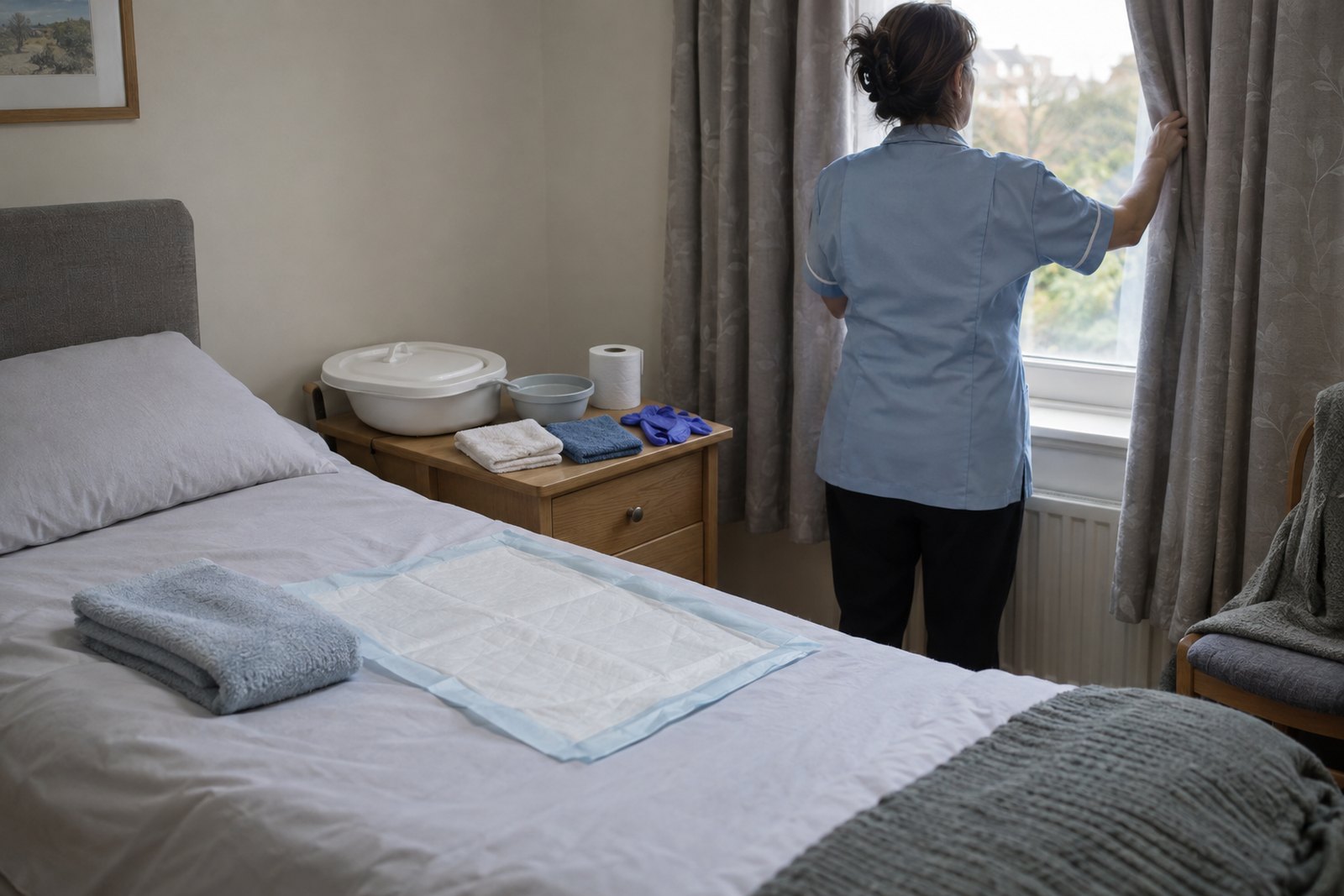
A bed pan is usually a short-term solution when someone cannot get out of bed safely, or when getting to a toilet would take too long and risk a fall. It can also be part of end of life care, when comfort and conserving energy matter more than getting to the bathroom.
You can use a bedpan with dignity at home, but it helps to treat it like a care task with a simple routine: privacy, clear communication, safe moving and handling, good skin care, and calm clean-up. If you are struggling to position the pan, if the person is in pain, or if their skin is breaking down, ask for help from the district nurse or community nursing team rather than forcing it.
When a bedpan is used (and when it is not the best choice)
People tend to need a bedpan in three situations:
- Temporary immobility, for example after surgery, after a fall, during a bad flare of illness, or when they are too weak or breathless to stand.
- Unsafe transfers, where standing, pivoting, or walking to the toilet could cause a fall (or would need more help than you have).
- End of life care, where the person is spending most of their time in bed and comfort, warmth, and rest are the priority.
A bedpan is often not the best option if the person can sit out of bed, even for short periods. A commode by the bedside can feel more like a normal toilet routine, and it is often easier to position safely. If transfers are the problem, get advice before you continue. A strained back for you, or a fall for them, helps nobody.
Also step back and get medical advice if toileting has suddenly changed without a clear reason (for example new confusion, fever, severe pain, new weakness, or a big drop in how much they are passing). If you are worried that someone is seriously unwell, call 999. If it is urgent but not an emergency, NHS 111 can help you decide what to do next.
Types of bedpan (including slipper and fracture pans)
In plain terms, bedpans come in three common shapes. You may hear different names depending on the hospital or supplier.
Standard bedpan
This is the more traditional, deeper pan. It can work well for bowel movements. The downside is that it can be harder to position comfortably, especially if the person has hip pain, back pain, or limited movement.
Slipper pan (including fracture pans)
A slipper pan is flatter and more tapered at one end, so it slides under the buttocks more easily. It is often used for people with painful hips, pelvic injuries, or limited ability to lift their bottom. It can be easier for urine, and sometimes for bowel movements, but it may be smaller and can overflow if the person passes a lot at once.
Disposable pulp pans
Some services use single-use pans made from moulded paper pulp. These are lighter and avoid cleaning, but they still need safe positioning and careful handling.
Choosing in general terms
If you are buying a bedpan yourself, keep it simple. Look for something that:
- Feels stable and not too flexible.
- Has smooth edges that will not dig into skin.
- Is a shape the person can tolerate (many people do better with a slipper pan).
- Is easy for you to carry without sloshing.
If you are unsure which type is safest, ask the district nurse or an occupational therapist. The right choice depends on the person's movement, pain, continence, body size, and how much help you have available.
Before you start: set things up for dignity and safety
This is the part that makes everything less stressful. Two minutes of preparation can save you twenty minutes of mess and upset.
What you need within reach
- Gloves.
- Toilet tissue.
- Wipes or warm water, a bowl, and soft cloths.
- A towel to cover the person's lap or hips.
- A disposable pad or clean towel to protect the bed (if you use an absorbent pad, place it flat so it does not bunch under skin).
- A bag for waste (if you are using wipes, pads, or gloves).
- Fresh continence pad or underwear if needed.
If the person uses prescribed creams, barrier products, or treatments, follow the plan you have been given. If there is no plan and the skin is sore, ask the district nurse before you start trial and error.
Privacy and communication
Close the door, draw curtains, and turn off any loud TV. Tell the person what you are about to do, even if you think they know. It is less frightening when each step is named.
Offer choices where you can: "Do you want the light on or off?" "Do you want me to stay by your shoulder, or step back while you go?" Dignity is often about control.
Warm the pan (gently)
A cold bedpan can make someone tense up, which makes positioning harder and may make it harder for them to pass urine or open their bowels. You can warm the pan with warm water, then empty and dry it before use. It should feel warm, not hot. Never use boiling water and never guess with someone who has reduced sensation.
Protect your own back
If you are leaning, twisting, and reaching across a bed, you are doing it the hard way. Raise the bed if it is height-adjustable. If it is a normal bed, bring the person closer to you by asking them to shuffle, or by turning them towards you.
If you are doing any rolling, repositioning, or pad changes, it is worth reading safe moving and handling for family carers. If you have a slide sheet and have been shown how to use it, slide sheets can make bed moves safer for both of you.
Step by step: using a bedpan with dignity
The exact technique depends on how mobile the person is. The safest approach is always the one you have been shown by a nurse, therapist, or moving and handling trainer. The steps below are a general home routine, with safety points highlighted.
1) Check they are ready and positioned well
Ask if they have pain anywhere, and whether they can bend their knees or roll to the side. Remove extra pillows that force them into an awkward curve. If the head of the bed is raised high, they may slide down and end up in a slumped position, which makes toileting harder. A small amount of head elevation is often enough, unless they need to be upright for breathing or comfort.
2) Put bedding protection in place
Place a pad or towel under the hips area, not just under the bedpan. Accidents rarely land neatly in one spot. Keep sheets as flat as possible to reduce rubbing on skin.
3) Position the bedpan without lifting someone's bottom by yourself
This is the part that causes injuries and arguments.
- If the person can lift their hips a little, ask them to bend their knees and push down through their feet while you guide the pan into place. You are guiding, not heaving.
- If the person can roll, roll them onto their side towards you, place the pan against their buttocks, then roll them back so they end up lying on the pan. Keep the movement slow and talk them through it.
- If the person cannot lift or roll reliably, do not try to "just lift their bottom" with your hands. This is when carers hurt their backs, and it can also be painful for the person. Stop and ask for help from the district nurse team, or request moving and handling advice. Sometimes the answer is different equipment (for example a commode, a different mattress set-up, or two-person care).
A slipper pan can be easier to slide into place because it is flatter. Even then, the rule is the same: if the person cannot help, do not force it.
4) Make sure they are actually on the pan
This sounds obvious, but misplacement is common. The person may feel embarrassed and say nothing, then you discover the result on the sheets. Check by feel through the sheet if you need to, and ask them if it feels right. Reposition early rather than waiting.
5) Give privacy, but stay close enough
Some people want you to leave the room. Others panic if you go. Agree what will happen before you step back. If the person is unsteady, confused, at risk of falls, or likely to try to get up, stay within arm's reach and keep the call bell, phone, or buzzer available.
If they are breathless or fatigued, encourage them not to strain. If they have chest pain, collapse, become suddenly confused, or you are seriously concerned, call 999.
6) Removal: keep it slow and level
Once they are finished, wipe first if needed, then remove the pan using the same method you used to place it (a small lift from them, or a roll to the side). Keep the pan as level as you can and move it away from the bed before you stand up fully. Have a plan for where it is going next.
If there has been spillage, deal with the person and their skin first, then the bed. People remember how you made them feel more than they remember the laundry.
Cleaning the person: front to back, skin first, comfort always
Good cleaning is not about perfection. It is about preventing soreness and infection, and helping the person feel like themselves again.
Front to back matters
For women in particular, always clean from front to back to reduce the risk of urinary tract infections. Use gentle wiping rather than scrubbing. If the skin is fragile, patting can be kinder than rubbing.
Dry skin is not "clean" skin
Make sure the skin is dry afterwards, especially in skin folds. Dampness makes breakdown more likely. If the person is incontinent, ask the district nurse or continence service about a skin protection plan rather than guessing.
If you are using continence products and are not sure what support exists, this guide to NHS continence services and pads explains the usual routes.
Check pressure areas while you are there
If someone is using a bedpan, they are often spending long periods in bed, which raises the risk of pressure damage. While you are cleaning, take a quick look at the skin over the tailbone, buttocks, hips, and heels. Early warning signs include redness that does not fade, darkening or discolouration, heat, swelling, shiny skin, or a complaint of burning or soreness.
If you are worried about a pressure sore, get help promptly. Pressure ulcer categories explained for family carers can help you describe what you are seeing when you speak to a nurse.
Hand hygiene
Wash your hands with soap and water after glove removal. It is basic, but when you are tired it is also the first thing to slip.
Cleaning the bedpan at home (without making the whole house feel clinical)
Different local services have different expectations, especially if you have equipment provided by the NHS. If you have been given specific instructions, follow those. If not, a sensible home routine is:
- Empty the contents into the toilet carefully.
- Rinse the pan with cold water first if needed (hot water can set stool).
- Wash with hot water and household detergent, then rinse.
- Dry thoroughly and store it somewhere discreet and clean.
Wear gloves for cleaning, avoid splashing, and clean any surfaces that were contaminated. If the person has diarrhoea, vomiting, a suspected infection, or a compromised immune system, ask the district nurse for specific advice.
Alternatives that can feel more normal (and sometimes work better)
A bedpan can be the right answer, but it is rarely the nicest one. If you are repeatedly struggling, consider whether one of these would be safer or more dignified.
Commodes
A commode is often easier if the person can sit and can transfer with help. Some are designed to be used over a toilet, some by the bedside, and some are designed for washing and toileting together.
If you are exploring that route, shower commode chairs are worth understanding because they can reduce multiple transfers (bed to commode, commode to shower, back again) when someone is very dependent.
Urinals
For urine only, a urinal can be simpler than a bedpan, particularly overnight. There are different shapes for men and women, and positioning still matters for comfort and avoiding spills. Urinals for men and women is a practical guide.
Toilet aids and set-up changes
If the issue is getting on and off the toilet, not walking to it, aids like raised seats, frames, and rails can make a big difference. Sometimes the best "equipment" is simply rearranging the bathroom so there is space to turn and hold on safely.
When to ask the district nurse (and what to say)
You do not need to wait for things to become a crisis. Ask for nursing help if:
- You cannot position the bedpan safely without straining your back or causing pain.
- The person has broken skin, blisters, worsening redness, or a suspected pressure sore.
- They have new incontinence, severe constipation, diarrhoea, pain on passing urine, or blood in urine or stool.
- They are becoming more confused, very drowsy, feverish, or you suspect infection or dehydration.
- You are supporting someone at end of life and toileting is becoming distressing for them.
When you call, it helps to be specific: what the person can do (roll, bridge, stand), what equipment you have, what is going wrong (spillage, pain, skin damage), and what you need (assessment, continence advice, pressure care, moving and handling guidance). If you are in England and the person is eligible for NHS continuing healthcare or is under community palliative care, the routes may look different, but the principle is the same: ask early.
Where an occupational therapist fits
A bedpan problem is rarely only a toileting problem. It is usually a mix of mobility, fatigue, pain, breathlessness, confidence, transfers, and the home environment. An occupational therapist can help by assessing what the person can do now, what is realistic to improve, and what to adapt so daily care is safer.
A private occupational therapist visiting at home can:
- Watch how transfers are currently done (bed, chair, toilet) and suggest safer techniques within your limits.
- Recommend the right type of toileting equipment (and the right height and set-up), and reduce the trial and error buying that often happens when you are desperate.
- Look at bed positioning, pressure risk, and routines that reduce soreness and night-time disruption.
- Help you plan ahead if needs are increasing, including what to ask the council or NHS for.
Occupational therapists do not replace the district nurse for wound care, catheter care, or medical continence issues. If there is broken skin, signs of infection, blood, or sudden new symptoms, nursing and GP input come first.
If you want a broader look at daily living equipment (not just toileting), our plain English guide to equipment and aids explains the kinds of support an OT assessment can cover.
Frequently asked questions
How do I know if I should use a slipper pan instead of a standard bedpan?
A slipper pan, including a fracture pan, is usually easier when the person cannot lift their hips much, or when hip and pelvic pain make movement difficult. If positioning a standard bedpan is causing pain, distress, or repeated spills, a slipper pan is often worth trying. If you still cannot place it safely, stop and ask the district nurse for advice.
Should I put a bedpan under someone "just in case"?
It is usually better to wait until they actually need to go. Leaving a bedpan under someone for long periods increases pressure on the skin, can be uncomfortable, and can feel humiliating. If urgency is the issue, discuss alternatives like a urinal, a commode, or a continence plan with a nurse.
What if the person is too embarrassed and refuses to use a bedpan?
Refusal is often about fear and shame rather than stubbornness. Keep your language matter of fact, offer privacy, and ask what would make it easier (a towel for cover, a same-sex carer, or stepping out of the room). If they still refuse and it is becoming unsafe, ask a professional for help rather than battling it out.
Can using a bedpan cause pressure sores?
Using a bedpan does not automatically cause pressure sores, but it can add pressure and friction over the tailbone and buttocks, especially if the person is in bed most of the day. Keeping sheets smooth, not leaving the pan in place longer than needed, and checking skin regularly all help. If you see concerning skin changes, contact the district nurse promptly.
What should I do if there is blood in urine or stool?
Do not ignore it. Blood can have many causes, some minor and some urgent. If there is a lot of blood, severe pain, fainting, black tarry stools, or the person is very unwell, seek emergency help. Otherwise, contact the GP or NHS 111 the same day for advice.
Is a commode better than a bedpan?
Often, yes, if the person can sit and transfer safely with the help available. A commode can feel more like normal toileting and can be easier for bowel movements. But if transfers are unsafe, a commode can increase falls risk. The "better" option is the one that is safest and least distressing for both of you.
Next steps
See our home assessment page, or current guide prices, and choose your area below.
Talk to an occupational therapist near you
This guide is general information. For advice about your own situation - or someone you look after - a local occupational therapist can visit you at home and see it for themselves.
Choose your area: