
Free Incontinence Pads and NHS Continence Services: How to Get Help
By Mobile Occupational Therapist • 17 September 2026 • 6 min read
Families often spend months quietly buying pads from the supermarket before anyone mentions that the NHS may supply them. Nobody hides this. It simply does not come up, because continence is the thing everybody is least likely to raise.
So, plainly: most areas of the UK have an NHS bladder and bowel service - often still called the continence service - which assesses people and can provide pads and other products free of charge where they are needed. This is how you reach it, and what else is worth doing besides.
How to get a continence assessment
Ask your GP to refer to the local bladder and bowel or continence service. In many areas you can self-refer, and a district nurse, community nurse or care home can refer too. If someone is in hospital, ask the ward before discharge.
That assessment is normally carried out by a specialist nurse rather than an occupational therapist, and that is the right professional for it - there is more below on where OT does and does not come into this.
What the assessment involves
It is more thorough than most people expect, and pads are the last part of it rather than the first. A good assessment looks for a cause, because a number of causes are treatable and being handed pads for a treatable problem is a poor outcome.
Expect some of:
- A bladder or bowel diary, usually three days - what went in, what came out, when, and what was happening at the time. Tedious, and the single most useful thing you can bring
- A urine test, since a urinary infection can cause sudden incontinence and confusion, particularly in older people
- A medication review. Diuretics, sedatives and several other common drugs make continence worse, and the timing of a dose can matter as much as the dose
- Questions about mobility and the toilet itself - how far it is, how long it takes to get there, whether clothing can be managed in time
- Then, if appropriate, products - and often a trial of a few to find one that suits
Who qualifies, and what you get
This is where honesty is more useful than reassurance: provision varies between areas, and there is no single national entitlement to a set number of pads. Each service sets its own criteria and its own allowance, usually based on assessed clinical need rather than on income.
What is fairly consistent:
- Pads are supplied on the basis of assessed need, not on ability to pay
- There is normally a monthly allowance and a limit, rather than unlimited supply
- Products are delivered, often quarterly, through a contracted supplier
- Light products for mild leakage are frequently not provided - services tend to prioritise moderate to heavy need
- Re-assessment happens periodically, and you should ask for one sooner if things change
If the allowance does not cover what is genuinely needed, say so and ask for a review rather than topping up silently for a year. And if you are buying products yourself, they may be eligible for VAT relief on disability equipment.
The part that is not about pads
Here is the thing worth knowing before you settle for absorbency alone. A significant amount of what gets called incontinence is really a problem of getting there in time - which is a very different problem, and often a more fixable one.
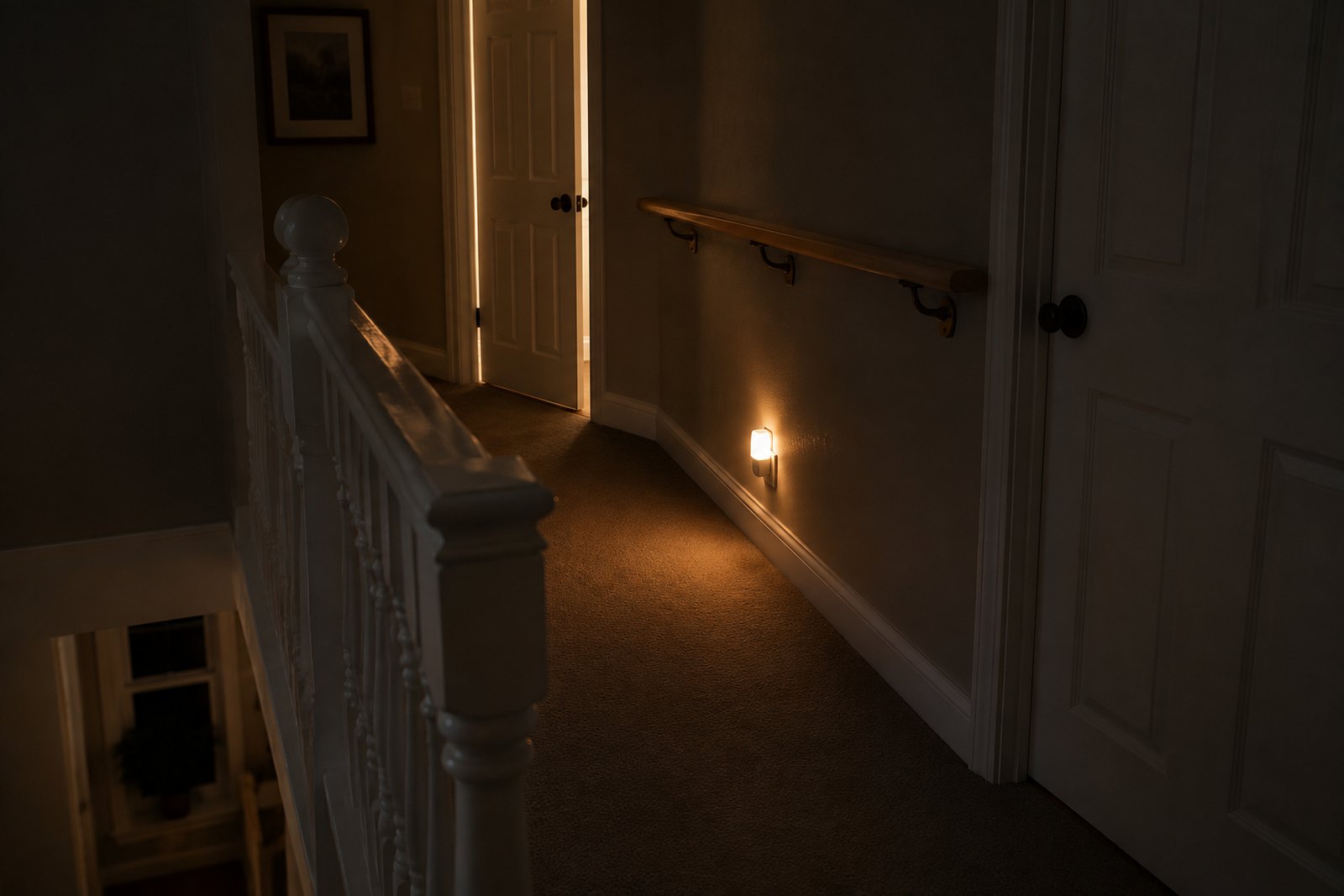
If the toilet is upstairs and the stairs take ninety seconds, or the person cannot rise from the seat unaided, or the trousers have a stiff button, or the route is unlit at night, then the bladder may be working perfectly well and still losing the race. That is the bit an occupational therapist deals with:
- Getting there faster - a clear route, better lighting at night, a commode or urinal downstairs or by the bed, or rethinking which room someone sleeps in
- Getting on and off - a raised toilet seat, frame or rails, so standing is not the obstacle
- Managing clothing - fastenings that can be undone quickly, which sounds trivial until it is the deciding factor
- Reaching and cleaning - see our frank guide to toileting aids for limited reach
- Night-time specifically, which is where most accidents happen - night-time safety for older adults
An OT does not assess bladder function and should not be asked to. What an OT can do is remove the obstacles between a person and a toilet, which for a lot of people is most of the problem.
Dignity, briefly
Two practical points that matter more than they sound.
First, the words. "Pads" and "products" are what the services call them. A lot of older people will accept help framed that way and refuse it framed as nappies, and that is a perfectly reasonable line to respect.
Second, who does what. Personal care from an adult child is harder for many people than personal care from a stranger, and a refusal of help is sometimes a refusal of that help rather than of all help. It is worth asking the question directly.
If someone is refusing to acknowledge the problem at all, our guide to when a parent refuses help at home may be more use than this one.
Frequently asked questions
Are incontinence pads really free on the NHS?
Where you are assessed as needing them, yes - provision is based on clinical need rather than income. But allowances, criteria and which products are covered differ by area, and light products for mild leakage are often not supplied.
How many pads will we get?
There is normally a monthly allowance set by the local service rather than a national figure. Ask what yours is at the assessment, and ask for a review if it is genuinely not enough.
Can I self-refer?
In many areas, yes - search for your local NHS bladder and bowel service. Otherwise ask the GP, a district nurse, or the ward if someone is in hospital.
Is incontinence just part of getting older?
No, and this is the most important thing on this page. It becomes more common with age, but it is not inevitable and a good proportion of cases are treatable or substantially improvable. Sudden onset, or new confusion alongside it, should be seen promptly - a urinary infection is a common and treatable cause.
Does an occupational therapist assess continence?
No. That is the continence service's job. An OT assesses the practical side - reaching the toilet, getting on and off it, managing clothing, and night-time arrangements - which is often where the real difficulty sits.
What about washable pants and pads?
They suit some people well, particularly for lighter needs, and can be more comfortable and cheaper over time. Whether the NHS service provides them varies - worth asking rather than assuming.
Next steps
If the difficulty is getting to the toilet in time rather than the bladder itself, that is an assessment worth having - and it is often fixed with a rail, a raised seat, better lighting or a change of room. See our home assessment and equipment and daily living aids pages, or current guide prices, and choose your area below.
Talk to an occupational therapist near you
This guide is general information. For advice about your own situation - or someone you look after - a local occupational therapist can visit you at home and see it for themselves.
Choose your area: