

The Motability Scheme: How It Works and Who Can Join
By Mobile Occupational Therapist • 26 October 2026 • 12 min read
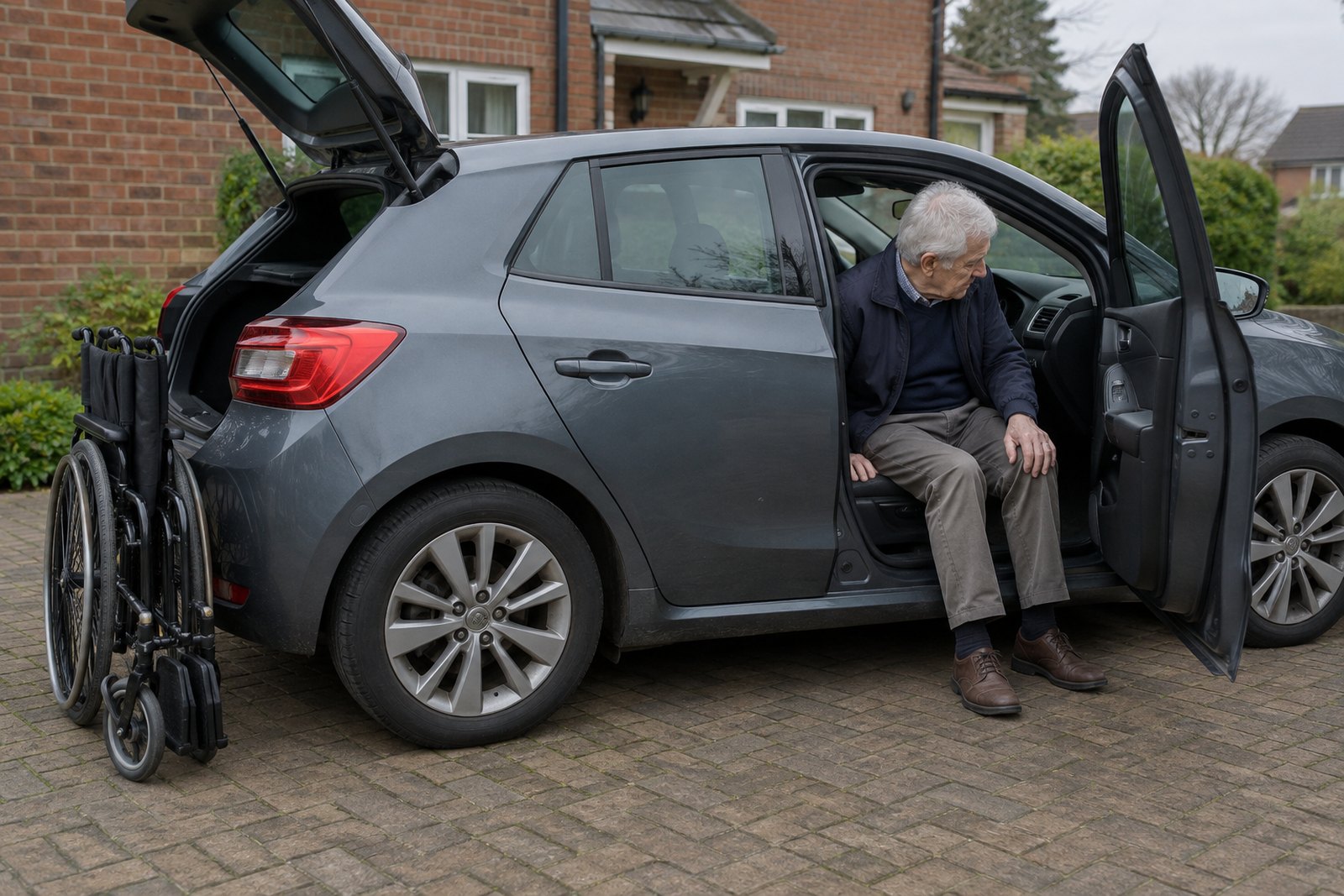
The Motability Scheme lets disabled people swap all or part of a qualifying mobility allowance for the lease of a new car, a wheelchair accessible vehicle, a mobility scooter or a powered wheelchair. Instead of the mobility allowance being paid to you (normally every 4 weeks), it goes straight to the scheme. In return you get the vehicle along with most of the costs that come with running one, such as insurance, servicing and breakdown cover.
To join, you need to receive one of a short list of allowances, and it has to be the higher or enhanced mobility rate: for example the enhanced rate mobility component of Personal Independence Payment (PIP) or the higher rate mobility component of Disability Living Allowance (DLA). Attendance Allowance does not count, and neither does the standard rate of PIP mobility. We are not part of Motability and have no connection with it. This is an independent explainer, and because the rules change, always check the details with Motability Operations, which runs the scheme, and with GOV.UK before you decide anything.
What the Motability Scheme actually is
There are two organisations with similar names. Motability Operations is the company that runs the scheme day to day: the leases, the dealers, the insurance and so on. The Motability Foundation is a charity that oversees the scheme and offers grants to some people who need extra help, for example with an advance payment or an adaptation.
The basic deal is simple. Your allowance, or the part of it you choose to use, is paid directly from the Department for Work and Pensions (or Social Security Scotland, or the relevant body for war pensions and armed forces payments) to the scheme. You choose a vehicle through an accredited dealer, and you have it for a fixed lease period, usually a few years. At the end, you hand it back and can choose another if you still qualify.
You never own the car. That matters for some people and not at all for others. The trade-off is that you do not have to worry about depreciation or selling it on, and most servicing and repairs are covered, but you may still have to pay things like insurance excesses, damage charges or excess mileage charges.
Who qualifies for the Motability Scheme
In general terms, you can join if you receive one of these:
- The higher rate mobility component of Disability Living Allowance (DLA)
- The enhanced rate mobility component of Personal Independence Payment (PIP)
- The enhanced rate mobility component of Adult Disability Payment (Scotland)
- The higher rate mobility component of Child Disability Payment (Scotland)
- War Pensioners' Mobility Supplement
- Armed Forces Independence Payment
This list can change, so check the current version on the Motability Scheme website or GOV.UK before relying on it.
What does not qualify
Attendance Allowance, which many older people receive, does not include a mobility component, so it cannot be used for the scheme. The standard rate of PIP mobility and the lower rate of DLA mobility do not qualify either. This catches a lot of families out, so it is worth knowing early.
Time left on your award
The scheme generally requires a minimum amount of time left on your award when you apply. Motability has said this is at least 12 months, but check their eligibility page for the current rule, especially if your award is due for review soon.
You do not have to be the driver
Plenty of people on the scheme never drive. A parent can lease a car for a child who gets the higher rate mobility component of DLA or Child Disability Payment. An adult who cannot drive can name family members or friends as drivers. The vehicle is meant to be used for the benefit of the disabled person, so check the rules on who can drive it and what for.
If you are over State Pension age
New claims for PIP generally cannot be made once you reach State Pension age, which is why many older people end up on Attendance Allowance instead. If you were already getting a qualifying mobility allowance before that point, it can usually continue. GOV.UK sets out the rules, and it is worth getting benefits advice if you are unsure where you stand.
If you are applying for PIP or going through a review, good evidence makes a difference. Our guide to how occupational therapy evidence helps with PIP explains what helps and what does not.
What is included in the lease
The details vary between cars, scooters and powered wheelchairs, but a car lease generally includes:
- Insurance for named drivers
- Servicing and maintenance
- Breakdown cover
- Tyre replacement
- Windscreen repair or replacement
- Road tax
- A mileage allowance, with charges if you go well over it
What is not included: fuel or charging costs, parking, tolls, and any fines. Some cars also need an advance payment on top of the allowance. Others do not. The price list changes regularly, so look at what is on offer at the time you apply rather than what a friend paid a few years ago.
Cars, scooters and powered wheelchairs
Cars
Most people on the scheme lease an ordinary car, often an automatic, sometimes with adaptations. When people search for "Motability cars" they are usually looking at the range available, which covers most mainstream makes and body types. The range is wide. The real question is which one suits your body, your equipment and your day, which we come to below.
Wheelchair accessible vehicles
If you need to travel sitting in your wheelchair, a wheelchair accessible vehicle has a ramp or lift so the wheelchair can go in with you in it, either as a passenger or, in some vehicles, as the driver. These usually involve a longer lease and often an advance payment. Grants from the Motability Foundation may help with this in some cases.
Scooters and powered wheelchairs
You can also use your allowance for a mobility scooter or a powered wheelchair. This suits people who do not need a car but do need help covering distance. Before choosing one, read our honest guides to mobility scooters and electric wheelchairs. Storage and charging at home are the things people most often forget to think about.
Adaptations
Adaptations can make the difference between a car you can use and one you cannot. Common types include:
- Driving adaptations: push-pull hand controls for accelerating and braking, steering wheel spinner knobs, left-foot accelerators, and controls moved within reach.
- Getting in and out: swivel seats that turn to face the door, and transfer aids.
- Stowing equipment: boot hoists that lift a folded wheelchair or scooter into the boot, and roof-top or rear stowage systems.
Some adaptations are available at no extra cost if they are fitted when you order the car. Others cost money. Fitting them later is usually harder, so think about what you need before you order. If you are not sure whether a swivel seat or a transfer board would help, our guides to swivel seats and car transfer aids and transfer boards go into more detail.
Choosing a car you can actually get in and out of
This is where a lot of people go wrong. A car can look perfect in the showroom and be a nightmare on a wet Tuesday when you are tired and in pain. Test it properly.
Getting in and sitting down
- Seat height: for many people, the easiest seat is roughly level with their hip when standing beside the car. Too low and you drop in and struggle out. Too high and you have to climb.
- Door opening: check how wide the door opens and how much space there is for your legs to swing in.
- Roofline: a low roof means ducking your head, which is hard with a stiff neck or back.
- Sill height: a high or wide sill is hard to lift your feet over.
- Seat shape: deep side bolsters look sporty but get in the way when you slide sideways.
Getting a wheelchair, scooter or frame in
- Take the actual equipment with you. Not a similar one. Yours.
- Check the height of the boot lip. Lifting a heavy wheelchair over a high lip is how carers hurt their backs.
- Check that it fits with the parcel shelf in place and with shopping alongside it.
- If you need a boot hoist, ask whether one can be fitted to that model.
Driving and everyday use
- An automatic gearbox removes the clutch, which helps many people.
- An electronic parking brake is easier than a stiff lever for weak hands.
- Keyless entry and push-button start help if turning a key is painful.
- Check the seat belt is easy to reach and fasten.
- Think about where you park at home. A car that needs the door fully open will not suit a narrow drive.
Bring the person who usually helps you. Try getting in and out several times, from both sides if that is relevant. If you can, test at the end of the day, when you are at your least flexible, not first thing in the morning.
Driving assessments at a Driving Mobility centre
Driving Mobility is a national network of accredited centres that offer independent assessments for drivers and passengers with a disability or health condition. Teams often include occupational therapists and specialist driving instructors.
A driving assessment can look at whether you are safe to drive, what adaptations you need, and which type of car would suit. They also offer passenger assessments, which cover getting in and out safely and how to stow a wheelchair, and can help if you are unsure whether you need a standard car or a wheelchair accessible vehicle.
An assessment is worth considering if you are new to driving with a disability, are returning to driving after a stroke, brain injury or major surgery, or your condition has changed. If your condition is one you must tell the DVLA about, do that separately. GOV.UK lists which conditions need reporting. A Driving Mobility assessment does not replace the DVLA's decision, but its report can support it.
If you are getting back to driving after a stroke, our guide to driving after a stroke covers the DVLA side.
What happens if your allowance changes
If your qualifying allowance stops or drops to a rate that does not qualify, for example after a PIP review, your lease will end and the vehicle has to go back. This is upsetting, especially if you rely on it. Contact Motability straight away. There has been support in the past to help people in this position, and it is worth asking what applies now. If you think the benefit decision is wrong, get advice about challenging it, starting with a mandatory reconsideration.
Where an occupational therapist fits
An occupational therapist will not decide whether you qualify for the scheme or whether you are fit to drive. Those questions belong to the benefits system, Motability and the DVLA, with input from your GP or consultant where needed. Driving Mobility centres are the right place for a formal driving assessment.
Where a private occupational therapist visiting at home can help is with the practical, physical side:
- Looking at how you transfer, so you know what seat height and door opening you need before you visit a dealer.
- Teaching safer ways to get in and out, for you and for a carer.
- Advising on whether a swivel seat, transfer board, handle or other equipment and aids would help.
- Thinking about your posture and seating comfort on longer journeys.
- Looking at how a wheelchair or scooter will get from your front door to the car, including steps, slopes and storage.
- Writing a clear report on your daily function, which can be useful evidence for benefit claims.
If your wheelchair itself does not fit you well, the NHS wheelchair service is usually the first step. For new or worsening symptoms, see your GP. For anything that feels like an emergency, call 999.
Frequently asked questions
Can I get a Motability car on Attendance Allowance?
No. Attendance Allowance does not have a mobility component, so it cannot be used for the scheme. The scheme needs one of the qualifying mobility allowances at the higher or enhanced rate.
Does the disabled person have to be the driver?
No. Many people on the scheme never drive. You can name other people as drivers, as long as the car is used for your benefit. Check the current rules on how many named drivers you can have.
Can I join with the standard rate of PIP mobility?
No. Only the enhanced rate of the PIP mobility component qualifies. If your needs have increased since your last assessment, you can ask for a review, but get advice first as reviews can go either way.
Do I need a driving assessment before joining?
Not always. It is a good idea if you need driving adaptations, have not driven for a while, or your condition affects your driving. Motability may ask for one before some adaptations are fitted, so check when you apply.
Can I get adaptations on a car I already lease?
Sometimes, but it is easier and often cheaper to order them with the car. Talk to Motability and the dealer early, and think about how your needs might change during the lease.
Can an occupational therapist help me choose a car?
An occupational therapist can work out what you need physically, such as seat height, transfer method and how to load a wheelchair, so you go to the dealer knowing what to check. They do not sell cars and cannot decide whether you are fit to drive.
Next steps
If getting in and out of the car, or getting a wheelchair into it, is the real problem, see our equipment and aids or home assessment pages, check current guide prices, and choose your area below.

Talk to an occupational therapist near you
This guide is general information. For advice about your own situation - or someone you look after - a local occupational therapist can visit you at home and see it for themselves.
Choose your area: