
PIP Daily Living Component: How Occupational Therapy Evidence Helps
By Mobile Occupational Therapist • 17 September 2026 • 8 min read
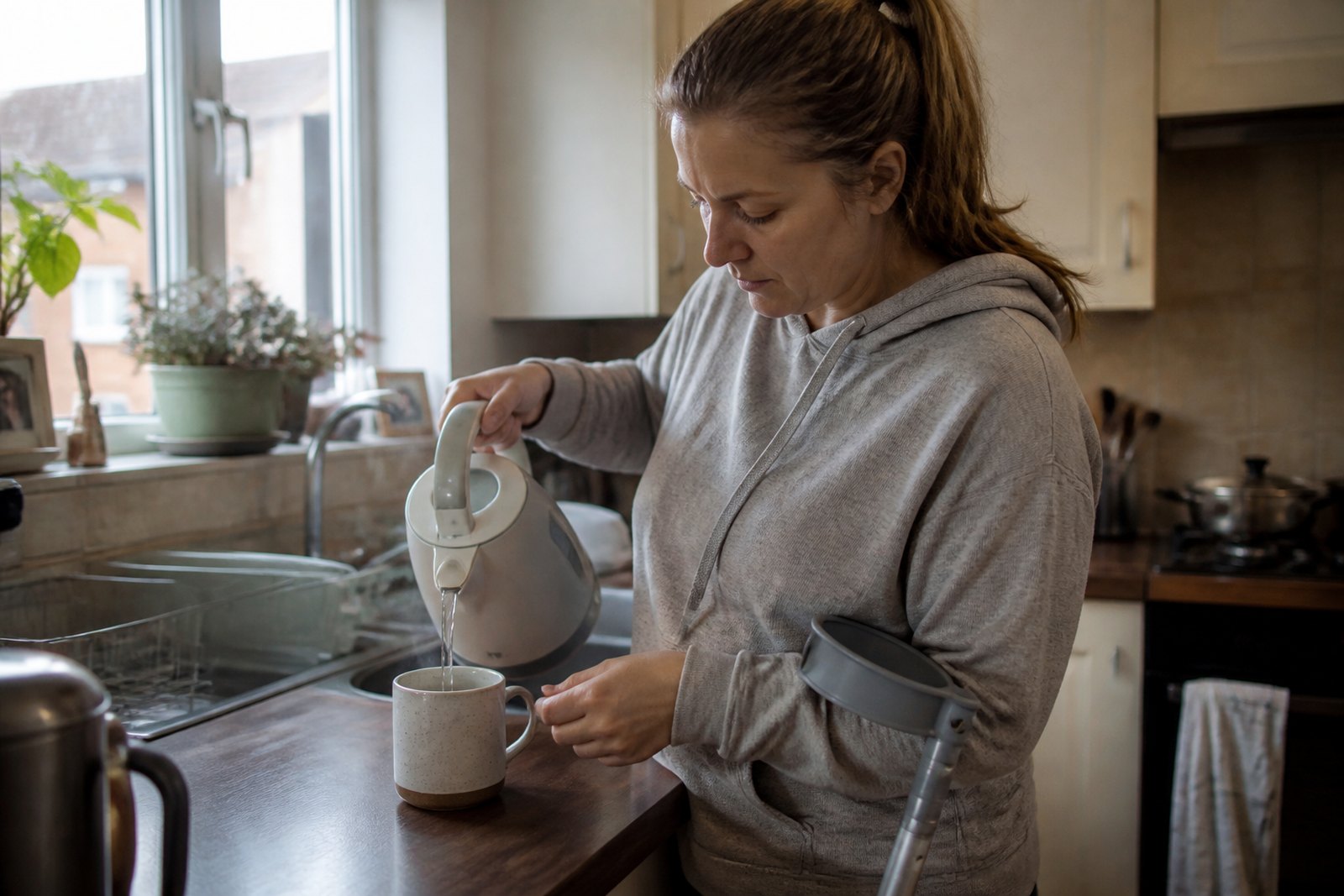
The daily living component of Personal Independence Payment (PIP) is decided on how well you manage a set list of everyday activities - preparing food, washing, dressing, managing medication and money, and so on. Crucially, the test is not whether you can do these things at all, but whether you can do them safely, to an acceptable standard, repeatedly, and in a reasonable time. An occupational therapy report is strong evidence for a PIP claim precisely because describing how someone manages daily tasks is what occupational therapists do professionally, in your own home, in exactly the language the assessment uses.
What the daily living component actually covers
PIP has two parts: a mobility component, about getting around, and a daily living component, about managing yourself day to day. The daily living side is scored against ten defined activities:
- Preparing food - planning and cooking a simple meal, not just reheating one.
- Eating and drinking - including cutting food up and getting it to your mouth.
- Managing treatments - taking medication reliably and monitoring a condition.
- Washing and bathing - getting in and out of a bath or shower and washing yourself.
- Managing toilet needs - getting on and off the toilet and managing continence.
- Dressing and undressing - including fastenings, socks and shoes.
- Communicating verbally - speaking and understanding speech.
- Reading and understanding - written information and signs.
- Mixing with other people - engaging with others without overwhelming distress.
- Making budgeting decisions - handling money and planning spending.
Each activity has descriptors, from managing unaided through to needing prompting, aids, supervision or full assistance, and the descriptors carry points. We are deliberately not printing point values or payment rates here because they change - check the current rates on GOV.UK. The principle is what matters: the award is built entirely from evidence about how you manage these tasks.
"Reliably" is the word the whole assessment turns on
Many people under-describe their difficulties on the form because on a good day they technically can do most things. The law is clearer and kinder than that. You count as unable to do an activity unless you can do it:
- Safely - without a real risk of harm to yourself or anyone else. If showering unsupervised carries a genuine falls risk, that matters, even if you have not yet fallen.
- To an acceptable standard - a wash that misses half your body, or a meal abandoned halfway, does not count as the activity done.
- Repeatedly - as often as the activity reasonably needs doing. Cooking one meal and then being too exhausted to cook again that day is not managing.
- In a reasonable time - broadly, no more than twice as long as someone without your condition would take. Dressing that takes an hour is not dressing reliably.
Fluctuation is built in too: if you cannot manage an activity reliably on more than half the days over a year, the descriptor applies, even though there are days you can. This is where conditions like multiple sclerosis, arthritis and many mental health conditions are so easily under-scored - a snapshot on an average-to-good day misses the pattern.
Why claims come unstuck on evidence
Most medical evidence people send with a PIP claim is diagnostic: a consultant's letter confirming the condition, a repeat prescription list, clinic summaries. That evidence proves what you have. PIP is not awarded for what you have - two people with the same diagnosis can receive completely different awards. It is awarded for what the condition does to your ability to carry out those ten activities - and that functional picture is exactly what standard medical letters tend not to contain. A GP who sees you for ten minutes has usually never watched you attempt a bath transfer or a meal.
The report written after your PIP consultation is supposed to fill that gap, but it rests on a short conversation, often by phone, with someone who has never seen your home. If a strong description of how you actually manage arrives with the claim itself, the decision maker has something solid to weigh.
What a functional OT report adds
An occupational therapist's core skill is functional assessment: observing how a person performs real activities in their real environment and describing the result precisely. A home-visit OT assessment for this purpose typically involves watching you do, or attempt, the tasks the daily living component asks about - making a hot drink or simple meal, managing fastenings, transferring at the toilet or shower - rather than asking you to rate yourself from memory.
The report that follows can then say things no diagnosis letter can:
- How the task was actually done - "prepared a simple meal only by perching on a stool, using pre-chopped ingredients, and resting twice", rather than "struggles with cooking".
- Where safety is compromised - specific observed risks, such as unsteadiness turning in the shower or difficulty judging pan handling.
- What aids and prompting are already involved - needing an aid to manage an activity is itself a scoring descriptor, and OTs spot aids people do not think to mention; our plain-English guide to daily living equipment shows how many hide in plain sight.
- Time, repetition and after-effects - how long tasks took, and what the effort cost for the rest of the day, which speaks directly to "repeatedly" and "in a reasonable time".
- Fluctuation over time - a clear account of good days and bad days and roughly how the week divides, matched to the majority-of-days rule.
Because the report describes function against the same concepts the assessment uses, a decision maker - or, later, a tribunal - can map it straight onto the descriptors.
Being honest about what a report can and cannot do
No report guarantees an award, and a good OT will not write advocacy dressed up as assessment - the value of the evidence rests on it being an accurate, professional account, including the things you manage well. An occupational therapist also does not diagnose; the report describes function, and sits alongside your medical evidence rather than replacing it. Our functional assessments and reports service covers exactly this work, and our guide to what happens in a private OT assessment explains how a visit runs.
One more honest note: a private report is not a required part of claiming, and free help with the form itself is available from Citizens Advice and local welfare rights services. Where a report earns its place is when the gap between how you really manage and how you look on paper is the thing deciding your claim.
Who benefits most from OT evidence for a PIP claim
- People with fluctuating conditions whose bad days never seem to make it into the paperwork
- Anyone whose difficulties are with safety, exhaustion or time taken, rather than outright inability
- People challenging a decision at mandatory reconsideration or appeal, where tribunals give real weight to specific, professionally observed evidence
- Families supporting someone who plays their difficulties down - a professional observer removes that filter
Frequently asked questions
What counts as daily living for PIP?
The PIP daily living component covers ten defined activities: preparing food, eating and drinking, managing treatments, washing and bathing, managing toilet needs, dressing and undressing, communicating verbally, reading, mixing with other people, and making budgeting decisions. Mobility around your home is assessed separately, under the mobility component, so difficulty with stairs or walking is not part of the daily living score.
What evidence is best for a PIP claim?
Evidence that describes function, not just diagnosis: how you actually manage the listed activities, what help and aids you use, what goes wrong, and how often. That can come from care plans, carer diaries and letters from professionals who know how you manage day to day. A functional occupational therapy report is strong because it is a professional's direct observation of you doing the tasks, written in the same terms the assessment scores.
Is an occupational therapy report worth it for PIP?
It can be, particularly where the dispute is about how reliably you manage rather than whether you are unwell, and at appeal stage, where tribunals value specific observed evidence. It is not compulsory and not a guarantee, and free advice on the claim itself is available from Citizens Advice. The report earns its place when your paperwork does not reflect your reality.
Next steps
If your PIP claim, review or appeal turns on how you really manage everyday tasks, an independent functional assessment in your own home can put that picture on paper properly. Find your local occupational therapist through our areas we cover page, or see our prices page for current guide pricing.
Talk to an occupational therapist near you
This guide is general information. For advice about your own situation - or someone you look after - a local occupational therapist can visit you at home and see it for themselves.
Choose your area: