

Moving and Handling Training for Carers: How to Get It
By Mobile Occupational Therapist • 1 October 2026 • 13 min read
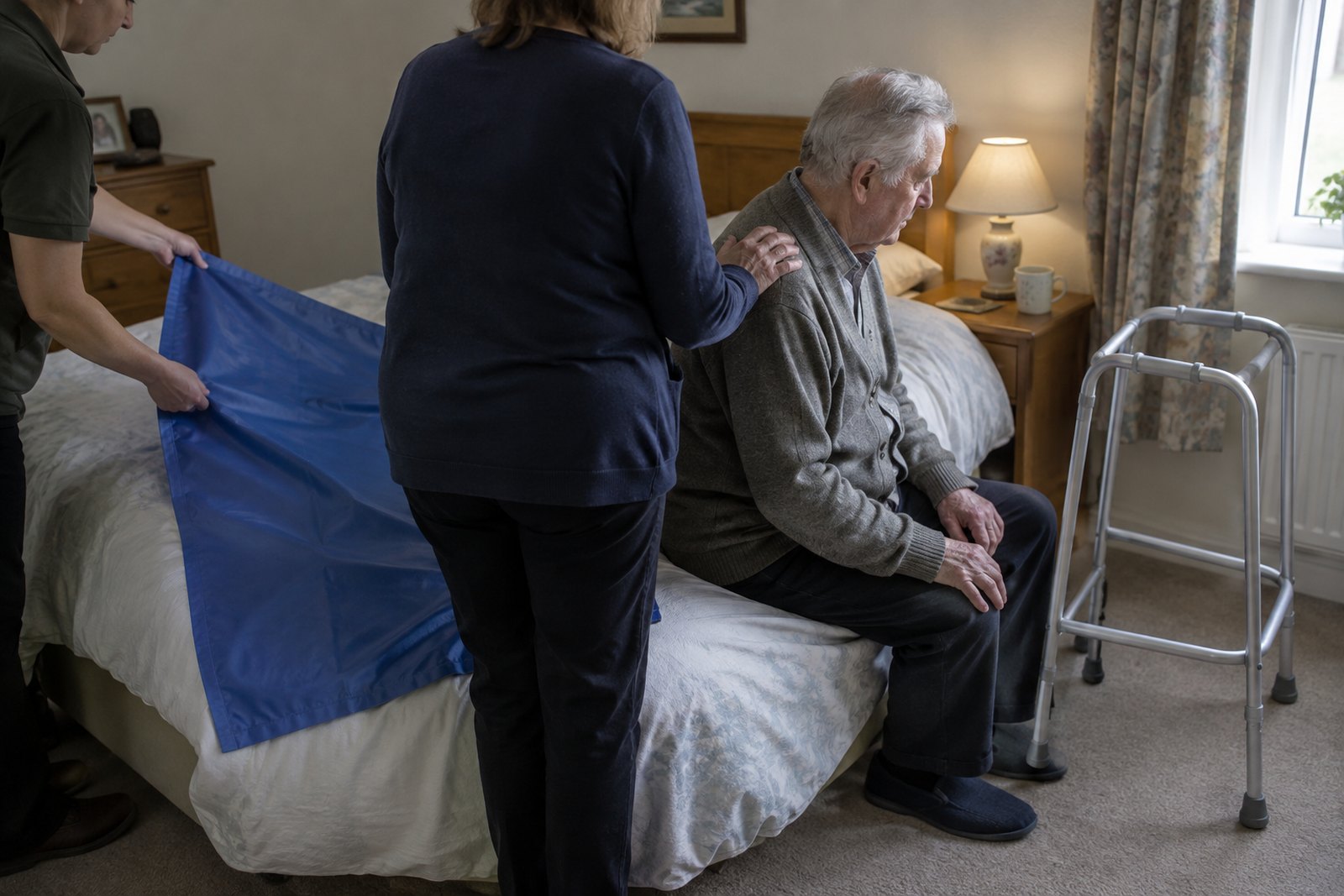
If you help someone you love to stand, turn over in bed, get to the toilet or into a chair, you are doing moving and handling. Paid care workers are trained before they are allowed to do it. Family carers usually just start, often on the day someone comes home from hospital, and work it out as they go.
You can get training, and in many areas it costs nothing. The main routes are your council's adult social care team or local carers' centre, the community nurses or therapists who provide any equipment, and some hospices and charities. A private occupational therapist can also teach you at home. The most useful training is rarely a general course, though. It is being shown how to move your person, in your home, with the equipment you actually have. This page explains why it matters, what good training covers, where to find it and what to ask for when you do.
Why training matters, even if you are managing
Most carers who look this up are not doing so because everything is going smoothly. Something has happened. A near miss on the way to the bathroom. A twinge in your back that has not gone away. A parent who has started to slide down the bed every night and needs hauling back up. Training is worth having before the serious version of any of these.
Your back. Back and shoulder injuries are a real risk for family carers, because you are often lifting awkwardly, at odd angles, in small rooms, several times a day, with nobody to share the load. If you are injured, the person you care for loses their main source of help overnight. Looking after your body is not selfish. It is the care plan.
Their safety. A transfer that goes wrong usually ends on the floor, sometimes with both of you there. Skin on older or unwell people tears and bruises easily, and a fall can mean a fracture, a hospital stay and a big loss of confidence.
Their dignity and comfort. The instinctive way to help someone up, hooking your hands under their armpits and pulling, is widely recognised as unsafe. It can damage their shoulders and yours, and it is uncomfortable to be on the receiving end of. Good handling feels calmer and more respectful for the person being moved.
Confidence on both sides. When a carer is nervous, the person being helped often tenses up, which makes every move harder. Knowing what you are doing changes the whole feel of the task.
The rule that matters most: never take their full weight
If you remember one thing, make it this. Safer moving and handling is built on the idea that a carer should not be lifting all, or most, of another adult's body weight. You guide, steady, prompt and support. The person takes as much of their own weight as they can, and equipment does the rest.
If someone can no longer take most of their weight through their legs, the answer is not a stronger carer or a better grip. It is equipment, a different method, a second person, or a fresh assessment. Signs you have reached that point include:
- You are lifting rather than guiding.
- Their legs buckle or they cannot stay standing long enough to turn.
- You feel strain in your back, shoulders or wrists during or after a transfer.
- There have been near misses, or a fall.
- A task now needs two people and there is usually only one of you.
The same rule applies after a fall. Do not try to lift someone off the floor by yourself. If they are hurt, unwell, have hit their head or cannot get up with gentle guidance, call 999. If they are not hurt but you cannot get them up safely, call NHS 111 or your local falls response service if your area has one. Keep them warm and comfortable while you wait. If help cannot reach you quickly, or they become unwell, cold, confused or distressed, call 999, because lying on the floor for a long time can cause serious harm.
For the practical basics of positioning yourself, planning a move and helping someone stand, see our guide to safe moving and handling for family carers. This page is about getting proper training on top of that.
What good moving and handling training covers
Training for family carers varies a lot. A good session, whether it is a group course or a visit at home, should cover most of the following.
The principles
Many trainers use the idea of looking at the task, the individual doing it, the load (in this case, a person, with their own abilities, pain and moods) and the environment before every move. In plain terms: what are you trying to do, are you fit to do it today, what can they do today, and is the room set up for it? It sounds obvious. It is also what most accidents skip.
Helping the person do as much as they can
Good training teaches you to talk someone through a move, give them time, and let them use their own strength. This protects your back and keeps their muscles and confidence working. Doing everything for someone because it is quicker is understandable, and it often makes them less able over time.
Moving someone in bed
Rolling, sitting up, shuffling up the bed and getting legs over the edge are where many carers hurt themselves. Slide sheets make these tasks much easier when used properly, but they need to be shown, not just handed over. Our guide to using a slide sheet to move someone in bed explains the basics.
Transfers
Bed to chair, chair to commode, wheelchair to car. Depending on what the person can do, this might mean a standing transfer with prompting, a turning aid or a transfer board for someone who can sit but not stand. Each has its own technique and its own ways of going wrong.
Hoists, if you use one
If a hoist has been provided, training is not optional. You need to know how to choose and fit the right sling, check it before use, position the hoist, and what to do if it stops mid-transfer. Our page on hoists at home covers types, assessment and safe use.
When things go wrong
What to do if someone starts to fall during a transfer (usually, guide them down rather than fight it), what to do once they are on the floor, and who to call. Also: what to do if they become unwell, more confused or suddenly much weaker, which can be a sign of infection, a stroke or another illness that needs medical attention.
Why an assessment of the person comes first
A general course can teach you principles. It cannot tell you how to move your dad, who has one weak side, a bad knee and a bedroom with a radiator in the way. The right method depends on what the person can and cannot do, and that needs someone to look.
In England, an adult with care and support needs is entitled to ask the council for a needs assessment under the Care Act 2014. This can lead to equipment, a referral to an occupational therapist, or paid carers for the heavier tasks. Our guide to the Care Act needs assessment explains what to expect.
You are entitled to your own assessment too. A carer's assessment looks at what you do, what it costs you physically and emotionally, and what would help. Moving and handling training is a reasonable thing to ask for in it. Say plainly if you are lifting, if your back hurts, or if you are worried about a fall. Those details shape what is offered.
Scotland, Wales and Northern Ireland have their own laws and names for these assessments, but all of them have routes for both the person and the carer. Your council or health and social care trust website will explain the local process.
Where to get moving and handling training free or at low cost
Council adult social care and carers' centres
Many councils fund training for unpaid carers, often delivered through a local carers' centre or a commissioned provider. It may be a group session or, sometimes, a visit at home. Ring adult social care or your carers' centre and ask directly: do you offer moving and handling training for family carers? If the answer is no, ask whether it can be included in your carer's assessment support plan.
Community nurses and therapists when equipment is provided
If a district nurse, community occupational therapist or physiotherapist has arranged equipment such as a hoist, slide sheets, a stand aid or a transfer board, the person who prescribed it should show you how to use it with the person you care for. If equipment simply arrives on the doorstep with no demonstration, contact whoever ordered it and ask for a visit. Delivery staff may show you how the equipment works mechanically, but that is not the same as being taught how to move a person with it.
Before leaving hospital
If someone is coming home with new handling needs, ask the ward occupational therapist or physiotherapist to show you how to help them before discharge. Ideally, ask to practise while staff are there to watch. It is far easier to ask on the ward than to work it out at home at ten o'clock at night.
Hospices and charities
Some hospices offer practical sessions for families of people they support, including moving someone in bed and using equipment at home. Some condition charities and local carers' organisations run workshops or produce practical guides. Availability varies by area, so ask your hospice team, your carers' centre or the relevant national charity.
Paying privately
If local waits are long or you want help that fits your situation exactly, a private occupational therapist can assess the person at home, recommend equipment and teach you and any other family members how to use it. There are also private training companies. If you use one, ask who delivers the training, what their qualifications are, and whether they will tailor it to your situation rather than run a generic course.
What to ask for
Whoever provides your training, these questions help you get something useful rather than a tick in a box:
- Can it happen at home, with the actual person and equipment? Practising on a colleague in a training room is useful. Practising in your own bedroom is better.
- Can I practise while you watch? Being shown once is not the same as doing it.
- Can everyone who helps be trained? Partners, adult children and regular visitors all need the same method, otherwise the person gets moved four different ways.
- Can I have it written down? A simple handling plan, with which sling, which loops, how many people and what to do if something goes wrong, saves a lot of guesswork.
- Who do I call if things change? Abilities change, sometimes week to week. You need a name or a number.
- When should this be reviewed? Especially after a hospital stay, a fall, an illness, or if you notice you are taking more weight.
Where an occupational therapist fits
Occupational therapists are often the people who work out how someone should be moved. An occupational therapist can assess what the person can do, how that changes through the day, and what gets in the way at home. They can recommend or prescribe equipment, from slide sheets to a hoist and the right sling, suggest changes to the room or furniture height, write a handling plan and teach family carers to follow it. They also look at the wider picture, such as getting to the toilet at night or whether some tasks should be passed to paid carers.
They are not the right person for everything. If you have hurt your back, see your GP or a physiotherapist. If the person you care for needs help building strength and walking again, a physiotherapist usually leads that. District nurses lead on pressure sores, wounds and much of the nursing care at home. If someone's mobility drops suddenly, contact their GP or NHS 111 the same day, and call 999 for signs of a stroke such as a drooping face, a weak arm or slurred speech.
Frequently asked questions
Is moving and handling training free for family carers?
Often, but not everywhere. Training from community nurses and therapists who provide equipment is part of NHS or council care and is free. Many councils and carers' centres also fund training for unpaid carers. Private training and private occupational therapy visits are paid for.
Can I go on the same course as paid care workers?
Sometimes, but a course designed for care staff covers employer rules and situations that may not apply to you, and it will not cover your particular person or home. Many family carers find a short session at home far more useful.
Do I need training before using a hoist at home?
Yes. Hoists are safe when used correctly and dangerous when they are not, particularly if the wrong sling or size is used. Whoever prescribed the hoist should show you how to use it with the person you care for. Do not use one you have been lent or bought without that.
Can I learn moving and handling from online videos?
Videos can help you understand the ideas and remind you of steps you have already been taught. They cannot see the person you care for or check your technique, so they work best alongside hands-on training, not instead of it.
How often should I get refresher training?
There is no fixed rule for family carers. Ask for a review whenever things change: after a hospital stay, a fall or illness, new equipment, or if tasks are getting harder or you are starting to feel strain.
What if the person I care for refuses to use equipment?
This is common and worth talking about with whoever assesses them. An occupational therapist can explain why something is suggested, try alternatives and look at what is behind the refusal. You still should not take their full weight to avoid the conversation.
Next steps
If you want someone to assess how your relative moves and show you safer ways to help, see our home assessment and equipment and aids pages, or current guide prices, and choose your area below.
Talk to an occupational therapist near you
This guide is general information. For advice about your own situation - or someone you look after - a local occupational therapist can visit you at home and see it for themselves.
Choose your area: