
The Care Act Needs Assessment: What to Expect and How to Prepare
By Mobile Occupational Therapist • 2 September 2026 • 8 min read
A care needs assessment is a free assessment from your local council's adult social care team, looking at how you manage everyday life and what support might help. Anyone can ask for one - you do not need a GP referral, a diagnosis, or a family member to request it for you, and your savings and income make no difference to whether you get one. The assessment itself is always free; only the care that may follow is means-tested, and that is a separate step. Under the Care Act 2014, the council in England must assess anyone who appears to need care and support. You request it by contacting your council's adult social care department directly.
What the assessment actually is
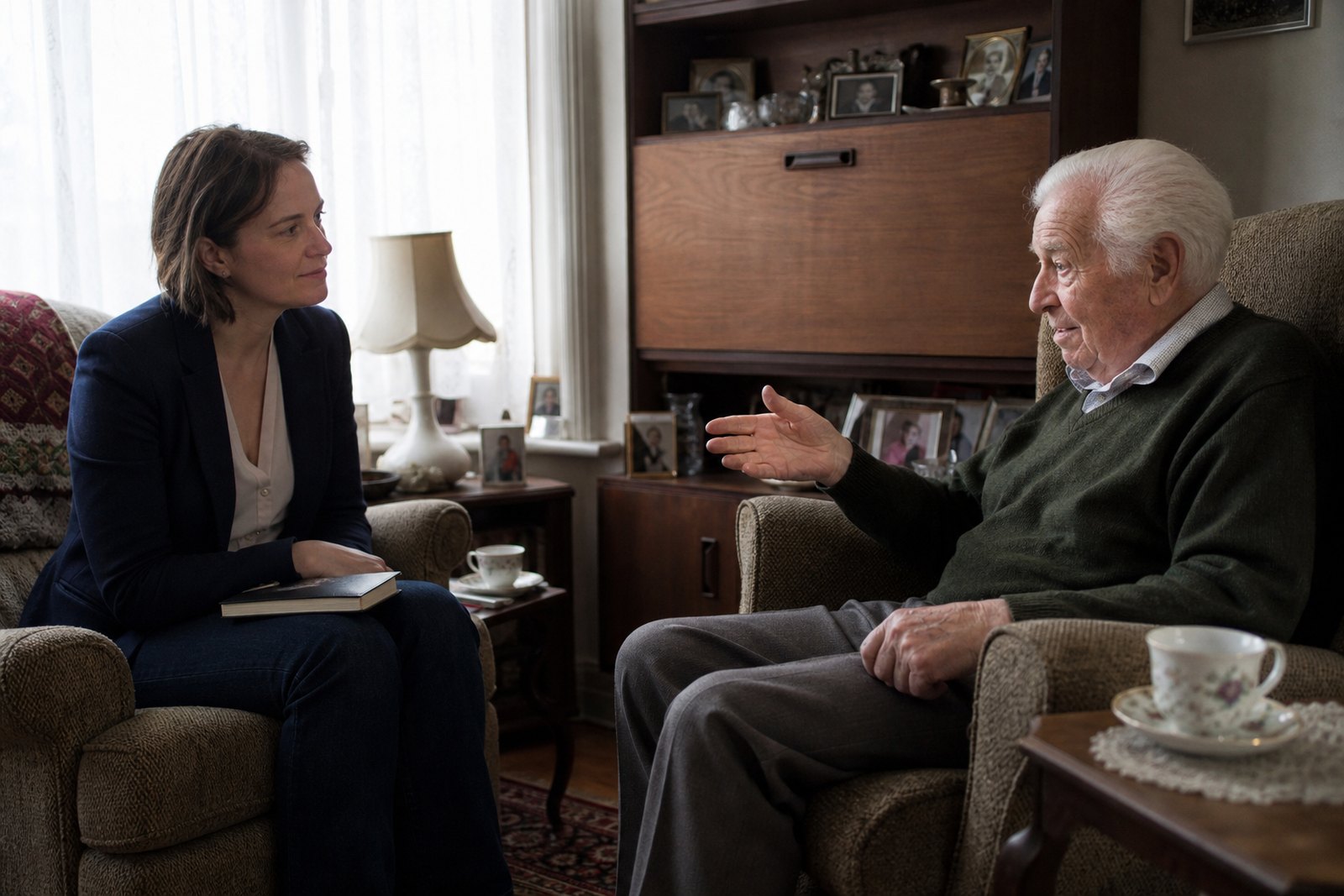
Despite the formal name, a needs assessment is essentially a structured conversation, usually at your home, sometimes by phone or video call, carried out by a social worker, occupational therapist or trained assessor. The aim is an accurate picture of a normal week: what you manage, what you struggle with, what it costs you in pain, exhaustion or risk, and who is currently filling the gaps.
It is worth being clear about what it is not. It is not a test you pass or fail, not an inspection of your housekeeping, and not a means test - money is only discussed later, and only if the council goes on to offer care.
What the assessor looks at: the eligibility outcomes
The Care Act sets national eligibility criteria, so the question the assessor is answering is the same in every English council. Broadly, three things need to be true: your needs arise from a physical or mental condition, you cannot achieve two or more of a set list of everyday outcomes, and that has a significant impact on your wellbeing.
The outcomes on that list are the shape of the whole conversation, so it helps to know them in advance:
- Eating and drinking - managing and maintaining nutrition, from shopping to preparing food to actually eating it.
- Personal hygiene - washing yourself and your clothes.
- Toilet needs - getting to and using the toilet, and managing continence.
- Dressing - being appropriately dressed, including for the weather.
- Moving around your home safely - including stairs, and getting in and out of the property.
- Keeping the home habitable - cleaning, heating, basic maintenance.
- Relationships - maintaining contact with family and friends.
- Work, education and volunteering - accessing them where you want to.
- Getting out into the community - shops, GP, activities that matter to you.
- Caring for a child - where you have caring responsibilities.
Two details matter here. "Cannot achieve" includes managing something only with pain, anxiety or serious effort, only unsafely, or only far more slowly than is reasonable - struggling through counts as a need, not as coping. And if you are only managing because a partner, son or daughter steps in daily, the assessor should look at what you could achieve without that help; family carers can ask for a carer's assessment of their own at the same time.
How to prepare: a diary, not a performance
The single most useful preparation is a short diary of a normal week. Not a bad week chosen for effect, and not a good one - a normal one. Note what you did, what you avoided, what hurt, what took three attempts, what you only managed because someone else was there. Concrete details carry far more weight than general statements: "I have not used the bath since March because I cannot get out of it" tells an assessor more than "washing is difficult".
Then, on the day, resist the urge to perform. Most of us have a lifetime's habit of rising to the occasion for visitors, and in this one conversation that habit works directly against you. The assessor can only record what they see and hear; if you present your best hour of the month, your best hour of the month is what gets assessed. Describe the ordinary days, including the parts that feel embarrassing to say out loud - toileting, continence and falls are exactly the things people under-report.
Other preparation worth doing:
- Have someone with you if you want - a relative or friend can prompt you and take notes, and if you would struggle to take part alone the council must arrange an independent advocate.
- List medications, conditions and the professionals involved, so nothing is missed.
- Note near-misses as well as events. A stumble on the stairs that did not become a fall is still evidence of risk - our guide to falls and frailty covers why these patterns matter.
- Think about what you want back, not just what is wrong. The Care Act is built around outcomes that matter to you - getting to church, cooking again, sleeping upstairs - and saying them out loud shapes the plan.
What happens afterwards
The council decides whether your needs meet the national eligibility threshold and must tell you the outcome in writing. If you are eligible, a care and support plan is drawn up with you - help at home, equipment, minor adaptations such as grab rails, or a day service. Only now does the separate financial assessment happen, deciding what, if anything, you contribute towards care; check the current thresholds on GOV.UK. Equipment and minor adaptations are commonly provided free regardless of the means test.
If you are not eligible, the council must still give written reasons and point you towards other local support. You can ask for the decision to be reviewed, and you can be reassessed later if things change. Where bigger adaptations are needed, the assessment is often the doorway to other routes - see our guide to the Disabled Facilities Grant.
Where a private occupational therapist fits
The council assessment is free and worth having, and nothing here is an argument against it. But waiting lists vary enormously between areas, and months of waiting can mean months of managing unsafely. A private OT can visit within days, carry out a thorough home assessment, and get practical changes moving straight away while the council process continues in parallel.
A private assessment can also strengthen the council route rather than replace it. A written functional assessment report describes your difficulties in the language the eligibility framework uses - useful evidence for the assessment itself, for challenging a decision, or as an independent second opinion. And much of what an OT recommends does not need to wait for anyone's process at all; our guide to what an OT does on a home visit shows what that looks like in practice.
Who benefits most from knowing this
- Older people finding daily tasks slowly harder, who have never asked for help because they assumed savings would rule them out
- Families noticing a parent is coping less well than they claim on the phone
- Anyone leaving hospital with less capability than they went in with
- Carers quietly propping up someone's independence at cost to their own health
- People turned down before, whose circumstances have since changed
Frequently asked questions
How do I get a needs assessment?
Contact your local council's adult social care team directly - by phone or through the council website - and ask for a care needs assessment. No GP referral is needed, and you can request one for yourself or, with their agreement, for someone else. The council must assess anyone who appears to need care and support, regardless of income or savings.
What happens at a care needs assessment?
An assessor talks with you, usually at home, about how you manage everyday tasks: washing, dressing, cooking, moving around the home, getting out, and keeping in touch with people. It typically takes an hour or more. They may ask you to show how you manage something, but it is a conversation, not an exam, and you can have someone with you throughout.
Does a social services assessment for an elderly person cost anything?
No. The assessment is free for everyone, whatever their savings, income or property. Means-testing only enters the picture afterwards, and only for any ongoing care the council arranges - and even then, equipment and minor adaptations are commonly provided without charge. Check the current financial thresholds on GOV.UK, as they change.
Next steps
If waiting for the council feels too long, or you would value an independent view of what would actually help at home, a private occupational therapy assessment can happen quickly and sit alongside the council process rather than competing with it. Find your local occupational therapist through our areas we cover page, or see our prices page for current guide pricing.
Talk to an occupational therapist near you
This guide is general information. For advice about your own situation - or someone you look after - a local occupational therapist can visit you at home and see it for themselves.
Choose your area: