

Night-Time Safety for Older Adults: The Journey to the Bathroom and Back
By Mobile Occupational Therapist • 17 September 2026 • 8 min read
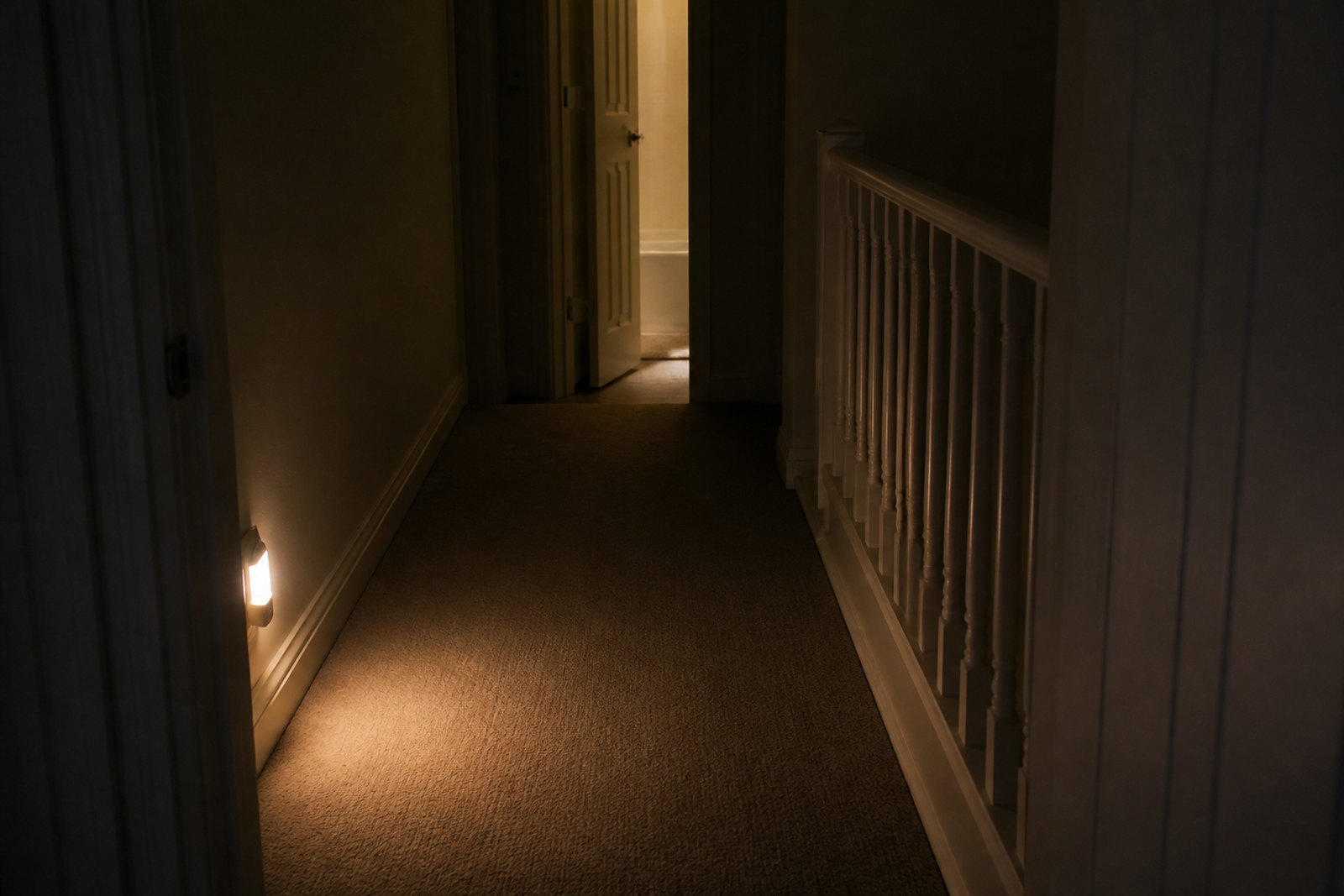
Ask anyone who works in falls prevention where the risky hours are and they will tell you: the small hours, on the shortest journey in the house. Bed to bathroom and back - a route walked half-asleep, in the dark, often in a hurry, on legs that have been horizontal for four hours. Everything that makes walking safe in the daytime is compromised at 3am, which is why a home that is perfectly manageable by day can still produce night-time falls. The good news is that this is one of the most fixable risks in the whole house, because it is one specific journey, and every step of it can be engineered.
This guide walks that journey from pillow to bathroom and back. It belongs alongside our room-by-room guide to practical falls prevention at home, which covers the daytime house; and if falls are already happening, our page on falls and frailty explains when the pattern itself needs assessing.
Why night is different
- Blood pressure drops on standing. After hours lying down, standing up quickly can produce seconds of dizziness or greying vision - exactly when you are stepping off into the dark. It has a name, postural hypotension, and it is worth mentioning to your GP, because it can be checked in minutes and is often treatable.
- Eyes are dark-adapted and slow. Older eyes need more light and adapt more slowly to changes, so the journey happens functionally half-blind - and snapping on a blazing main light is its own hazard, dazzling you and waking you fully.
- Urgency sets the pace. Needing the toilet urgently makes people hurry, and hurrying in the dark is how rugs and doorframes win. If urgency itself is the driver - several trips a night, or a genuine rush each time - that is a medical question worth raising with your GP, not just a layout question, because night-time frequency is often improvable.
- Sedating medicines are at their peak. Sleeping tablets and some other evening medicines increase falls risk at exactly this hour. Never stop a medicine on your own, but a review with the GP or pharmacist - specifically mentioning night-time unsteadiness - is one of the highest-value moves available.
Getting out of bed: the first three steps
The most dangerous moment is not mid-journey but the launch. Build in a deliberate pause: sit up, sit on the edge of the bed, count slowly to ten - feet flat, lamp on - and only then stand. It feels fussy and it prevents the dizzy first step that starts so many falls. The bed itself should help: a height where feet rest flat on the floor when sitting on the edge, a firm mattress edge to push up from, and something solid to steady on. A bed lever - a rail that tucks under the mattress and gives a fixed handle - suits many people, but rails around beds are not automatically safe for everyone; our guide to bed rails explains which is which. Slippers matter more at night than any other footwear: backless mules that flap and slide are a genuine hazard, and the upgrade to a fitted pair with a back and a grippy sole costs a few pounds.
Lighting the route so it works half-asleep
The aim is a route that is lit before your feet move, without ever needing to find a switch in the dark.
- A touch lamp or easy switch within arm's reach of the pillow - if you have to sit up and grope, it will get skipped.
- Plug-in motion-sensor night lights along the route - bedroom, landing, bathroom. They cost little, need no electrician, and come on as you approach, at a soft level that guides without dazzling.
- Light the destination. A bathroom light left on with the door ajar, or a sensor light inside, means the toilet is visible from the landing - which also matters for anyone whose memory is less reliable at night.
- Mind the landing and stairs. If the route passes the top of the stairs, that edge deserves the brightest sensor light in the house - and a route that avoids the stairs at night is better still.
Clearing and shortening the journey
Walk the route in daylight and look at it as an obstacle course, because at night that is what it is. Trailing flexes, the laundry basket that lives mid-floor, the rug that creeps, the door that is sometimes half-open - all of it is findable by shin in the dark. Clear the route permanently rather than nightly, and keep it clear on both sides, because the return journey is made even sleepier. Then consider shortening it. A commode or urinal by the bed is not a defeat - for someone dizzy at night, on water tablets, or a long dark corridor from the bathroom, it can be the single change that removes most of the risk at a stroke. In the bathroom itself, the highest-value additions are a rail where you steady yourself, a raised seat if getting up again is the struggle, and a non-slip floor - covered in detail in our guide to toilet aids.
If a fall happens anyway: the backstop
Night multiplies the worst part of a fall, which is not always the impact - it is lying undiscovered. A phone that lives on the bedside table rather than charging downstairs, a pendant alarm worn at night (many people take them off to sleep, which is exactly backwards), or a falls detector that raises the alert automatically: any of these turns "found in the morning" into "helped within minutes". It is also worth everyone in the house knowing how to get up from the floor safely, and when not to try - our step-by-step guide to getting up after a fall is written to be read before it is needed. For the wider range of sensors and alarms, see our guide to assistive technology at home.
When to get a professional eye on it
Do-it-yourself changes cover a lot, but some patterns are a sign the night-time picture needs assessing as a whole: more than one near-miss or fall at night, new dizziness on standing, several toilet trips a night, or a household where one person is getting up in the dark to help another. An occupational therapy home visit looks at the actual route, the actual bed and bathroom, and the person's actual night - and produces specific fixes in order of value, from a repositioned lamp to a commode to a referral back to the GP about the dizziness. It is a short assessment for a risk that peaks every single night.
Who benefits most from these changes
- Anyone who gets up at night and has had a stumble, near-miss or moment of dizziness
- People on sleeping tablets, water tablets or blood pressure medicines who walk in the dark
- Couples where one partner gets up in the night to help the other
- Families of someone living alone, where a night-time fall could go undiscovered for hours
Frequently asked questions
Why do elderly people fall at night?
Because several risks stack at once: blood pressure that drops on standing after lying down, eyes that adapt slowly to darkness, urgency that makes people hurry, sedating medicines at their peak, and a cluttered or unlit route. Most night falls are not mysterious - they happen on the bed-to-bathroom journey, and that journey can be systematically made safer.
What is the best night light for elderly people?
Plug-in motion-sensor night lights are the practical answer for most homes: they come on automatically as the person approaches, cast a soft light that guides without dazzling, and need no wiring. Place them to cover the whole route - bedroom, landing and bathroom - rather than relying on one, and pair them with a touch lamp within reach of the pillow for getting out of bed.
How can I make night-time toilet trips safer?
Work through the journey: pause sitting on the edge of the bed before standing, wear fitted slippers with backs, light the whole route with sensor lights, clear it of clutter and rugs, and add a rail by the toilet. If the journey is long or dizziness is involved, a commode by the bed shortens it dramatically. Several trips a night is also worth raising with a GP, because the frequency itself is often treatable.
Next steps
If night-time trips are getting riskier - for you or for someone you love - an occupational therapy home visit can assess the route, the bedroom and the bathroom together and make the small hours genuinely safer. Find your local occupational therapist via our areas we cover page, or see our prices page for current guide pricing.
Talk to an occupational therapist near you
This guide is general information. For advice about your own situation - or someone you look after - a local occupational therapist can visit you at home and see it for themselves.
Choose your area: