

Caring for Someone After a Stroke: The First Months at Home
By Mobile Occupational Therapist • 3 October 2026 • 13 min read
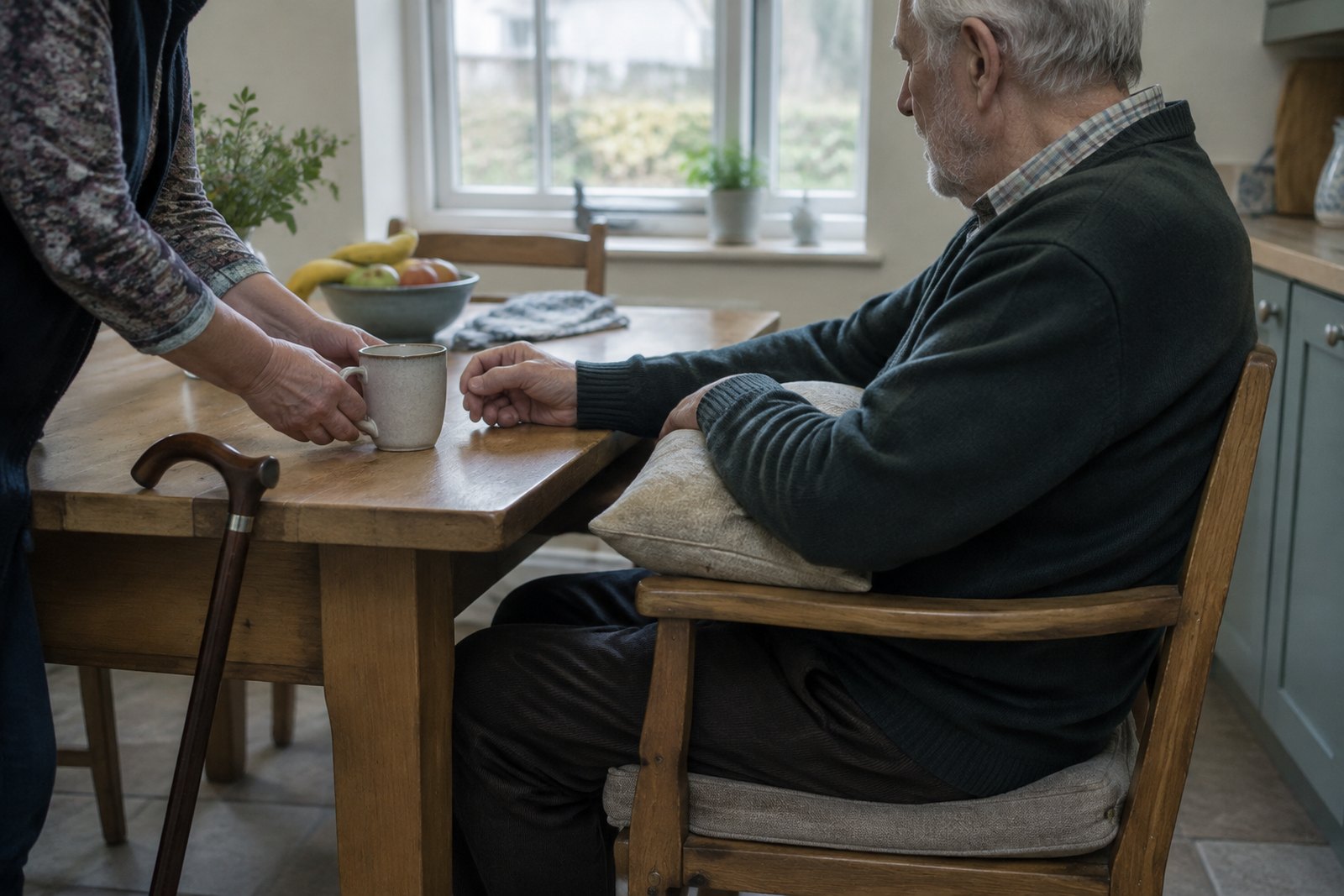
Caring for someone after a stroke usually starts on the day they come home, and almost nobody feels ready for it. In hospital there was a team of nurses and therapists around the clock. Now there is you, a bag of medicines and a discharge letter you have not had time to read.
The short answer to what helps: take every bit of rehabilitation and support you are offered, let the person do as much for themselves as they safely can (even when it is painfully slow), learn how to help them move without hurting either of you, and get your own needs assessed early rather than when you are already exhausted. Recovery is often quickest in the first weeks and months, which is why this stretch matters so much. And learn the signs of another stroke, because if you see them, you call 999 straight away.
Before and on the day they come home
Discharge can happen quickly, sometimes with less notice than you would like. If you can, ask your questions before the day itself, while the ward team is still in front of you. It is reasonable to ask the nurse in charge or the ward therapists for a few minutes to go through the plan. Our hospital discharge page explains how an occupational therapist can help when the plan feels thin.
Useful things to ask:
- What rehabilitation has been arranged after discharge, who is providing it, and when will they first visit?
- Who do we ring if something goes wrong in the first few days? Get a name and a number, not just a department.
- Has any equipment been ordered, such as a raised toilet seat, a frame around the toilet, a perching stool or a walking aid? When will it arrive?
- Is any care at home being arranged, and is it short-term or ongoing?
- What are the medicines for, and has anything changed from before the stroke? Ask the pharmacist or nurse to go through it with you.
- Are there problems with swallowing, and if so, what should food and drink be like?
- Can they climb stairs safely, or should they sleep downstairs for now?
On the first day home, keep things simple. Clear trip hazards from the routes they will use, put the things they need within easy reach on their stronger side, and plan for a quiet afternoon. Coming home is tiring, and many people are more confused or wobbly than they were on the ward simply because everything is less familiar than it used to be.
Rehabilitation at home: who might come
What happens next varies by area, so treat this as a general picture rather than a promise.
In many areas there is an early supported discharge team. These are stroke specialists, often including physiotherapists, occupational therapists, speech and language therapists and nurses, who continue rehabilitation at home for people well enough to leave hospital earlier. In other areas, rehab comes from a community stroke or neurological rehabilitation team. Some people are offered a period of reablement from council adult social care, which focuses on regaining everyday skills like washing and making a drink, often with carers visiting.
Roughly, who does what:
- Physiotherapists lead on walking, balance, strength and movement.
- Occupational therapists focus on everyday tasks: washing, dressing, toileting, cooking, getting around the home, and the equipment and adaptations that make those possible.
- Speech and language therapists lead on communication problems and on swallowing. If eating or drinking makes the person cough or splutter, they are the right people, not an occupational therapist.
- The GP handles medicines, blood pressure, mood, pain and referrals.
Community rehab is usually time-limited. When it finishes, ask what the next step is, what exercises or practice should continue, and how to get referred back if things change. Many areas offer a review some months after the stroke; ask whether one is planned.
What changes to expect
Every stroke is different, depending on which part of the brain was affected and how badly. Some people have obvious physical problems. Others look completely fine and are struggling with things nobody can see.
Weakness on one side
One-sided weakness is common, affecting the arm, leg, face or all three. It changes how someone walks, dresses, washes and eats. Our guide to living with one-sided weakness goes into the day-to-day detail. One thing to know now: a weak arm hangs heavily from the shoulder, so support it on a cushion or armrest when sitting and never pull on it.
Tiredness that is out of proportion
Post-stroke fatigue is not ordinary tiredness and does not always improve with sleep. A shower and getting dressed can use up a whole morning's energy. Read fatigue after a stroke for how to pace the day.
Memory, thinking and concentration
Forgetting things, losing track of conversations, struggling to plan a meal or follow a recipe, being slow to process what is said: all of these are common and easy to mistake for not trying. Our article on memory and thinking problems after a stroke has practical strategies.
Vision and attention
Some people lose part of their field of vision, or stop noticing things on one side altogether. They may eat only half their plate, bump into door frames or miss you when you stand on that side. See living with visual field loss after a stroke. Ask the therapists which side you should approach and sit on, because the answer depends on the person.
Speech, swallowing and continence
Difficulty finding words or understanding language is called aphasia, and unclear or slurred speech caused by weak muscles is called dysarthria. A speech and language therapist leads on both. Bladder and bowel control can also be affected; the GP can refer to a continence service. Say so early. Embarrassment keeps a lot of people quiet about problems that are often helped.
Helping without taking over
This is the hardest part for most families, and the one that matters most. When you love someone and you are short of time, doing it for them feels kind. It is quicker. It avoids the struggle. But every task you take over is practice they do not get, and practice is how the brain relearns.
Some things that help:
- Allow far more time than seems sensible. If getting dressed takes forty minutes, build the morning around that rather than rushing and finishing it yourself.
- Do the bit they cannot do, not the whole task. If they can wash their face and chest but not their back or feet, help with those and stop there.
- Break tasks into steps. Lay clothes out in the order they go on. Say one instruction at a time.
- Prompt before you help. "What comes next?" works better than reaching in.
- Set things up so they can manage. Mug within reach, chair with arms at the table, toothbrush laid out. A small change to the setup often matters more than your hands.
- Keep the same routine. Doing things the same way at the same time each day makes them easier to relearn.
- Praise effort, not just results. Rehab is slow and discouraging. Notice what is improving.
Be honest with yourself about safety too. Encouraging independence does not mean leaving someone to struggle with something risky, such as getting in and out of the bath or using the cooker, before they are ready. Ask the therapists what is safe to practise now and what should wait.
Moving and handling safely
Helping someone stand, walk, get to the toilet or move up the bed is where carers most often injure their backs, and where people after a stroke most often have their shoulders hurt. Our guide to safe moving and handling for family carers covers the techniques properly.
The basics:
- Never pull someone up by their arms, especially the weak one, and never lift under the armpits.
- Encourage them to do the work: feet back, lean forward, push up from the chair arms. You guide and steady.
- If you are lifting most of their weight, the method or equipment is wrong. Ask for a reassessment.
- Equipment such as transfer boards, stand aids and hoists needs to be assessed for and shown to you. Do not buy and improvise.
- If they fall, do not try to lift them alone. Check for injury, keep them warm and comfortable, and call for help. If they are hurt, cannot get up or have hit their head, call 999.
Emotions, mood and personality changes
Families are often more shaken by this than by the physical changes. Low mood and anxiety are common after a stroke, and understandable. But a stroke can also change emotions directly. Some people cry or laugh suddenly without feeling sad or amused, which is called emotionalism. Others become irritable, flat, uninterested, impulsive or say things they would never have said before.
It helps to know this is often the stroke, not the person rejecting you. It does not make it easy. Things that can help: keep the environment calm, avoid too much noise or too many people at once, give them time, and do not argue about small things when they are tired.
Tell the GP or stroke team about mood or personality changes. Depression after a stroke is treatable, and there may be psychological support in your area. If the person talks about wanting to die or harming themselves, get help the same day: contact the GP or NHS 111, or call 999 if they are in immediate danger.
Looking after yourself (yes, really)
You will have heard it already, and you are probably thinking: when? So here are the practical bits rather than the pep talk.
- Ask for a carer's assessment from your council's adult social care team. It is about your needs, not theirs, and can lead to breaks, practical help or support. Our guide to the carer's assessment explains what to expect and what to say.
- The person you care for can have their own needs assessment from the council, which may lead to care at home or respite.
- Check benefits early. Depending on age and circumstances, they may be able to claim Attendance Allowance or Personal Independence Payment, and you may be eligible for Carer's Allowance. In Scotland, the equivalents are Pension Age Disability Payment, Adult Disability Payment and Carer Support Payment. Check the current rules on GOV.UK or mygov.scot.
- Tell your own GP you are a carer. Many practices keep a register and may offer flexibility or health checks.
- Make a simple emergency plan so someone knows what to do if you are suddenly ill.
- When people offer help, give them a specific job. "Could you sit with him on Thursday afternoon" works. "Let me know if you need anything" never does.
The Stroke Association has information and support for carers, and talking to someone who has been there can help more than you expect.
When to call 999: signs of another stroke
The risk of another stroke is higher in the period after a first one. Learn the FAST signs and put them on the fridge:
- Face - has the face dropped on one side? Can they smile?
- Arms - can they raise both arms and keep them there?
- Speech - is their speech slurred or garbled, or can they not speak?
- Time - call 999 immediately if you see any of these.
Also call 999 for sudden loss of vision, sudden confusion, sudden severe headache, sudden weakness or numbness, or sudden loss of balance. Do not wait to see if it passes. Symptoms that go away within minutes can be a mini-stroke (TIA) and still need urgent assessment. Do not drive them to hospital yourself.
Where an occupational therapist fits
An occupational therapist looks at the everyday tasks the stroke has made difficult and works out how to make them possible again, through practice, different techniques, equipment or changes to the home. That might mean relearning to dress one-handed, setting up the bathroom so washing is safe, working out how to make a hot drink with a weak arm, or planning how to pace the day around fatigue.
Through the NHS, occupational therapy usually comes via the early supported discharge or community stroke team, and through council adult social care for equipment and adaptations. That is the right first route. NHS therapy and council assessments are free, and most equipment is provided without charge, although larger adaptations and ongoing care may be means-tested.
Some families also use a private occupational therapist visiting at home: when NHS rehab has ended but progress has not, when there is a wait, when larger adaptations are being considered, or when a detailed report is needed. See our neurological occupational therapy page. An occupational therapist does not replace physiotherapy for walking and balance, a speech and language therapist for communication or swallowing, or the GP for medical problems, mood and medicines.
Frequently asked questions
How long does recovery take after a stroke?
There is no fixed timetable. Improvement is often quickest in the first weeks and months, but many people keep making progress for much longer with continued practice. Some changes may be permanent, and adapting how things are done becomes part of recovery.
Can I leave them alone in the house?
It depends on what they can do safely, whether they can call for help, and whether they understand risks such as the cooker or stairs. Ask the therapists directly. A personal alarm or phone within reach can help when short periods alone are safe.
Why are they so tired and short-tempered?
Fatigue and emotional changes are both common after a stroke, and tiredness makes irritability worse. Pacing the day, keeping things quiet and not packing in visitors helps. Mention ongoing mood changes to the GP.
What do we do when the rehab team stops visiting?
Ask before they go what practice should continue, how to get re-referred, and whether a later review is planned. If new problems appear or things get worse, go back to the GP and ask for a referral back to the stroke or community team.
Can they drive again?
Not straight away. The rules on driving after a stroke are set by DVLA and depend on the type of licence and any lasting effects, such as vision or thinking problems. Check the current guidance on GOV.UK and talk to the GP before getting behind the wheel.
Should I give up work to care?
Try not to decide in the first weeks, when everything feels like a crisis. Talk to your employer about flexible working or leave, ask for a carer's assessment, and see what care and support can be arranged first. Things often look different a few months in.
Next steps
If daily tasks at home are still hard after a stroke, see our neurological occupational therapy or home assessment pages, or current guide prices, and choose your area below.

Talk to an occupational therapist near you
This guide is general information. For advice about your own situation - or someone you look after - a local occupational therapist can visit you at home and see it for themselves.
Choose your area: