

Hemiplegia: Living With One-Sided Weakness After a Stroke
By Mobile Occupational Therapist • 5 October 2026 • 12 min read
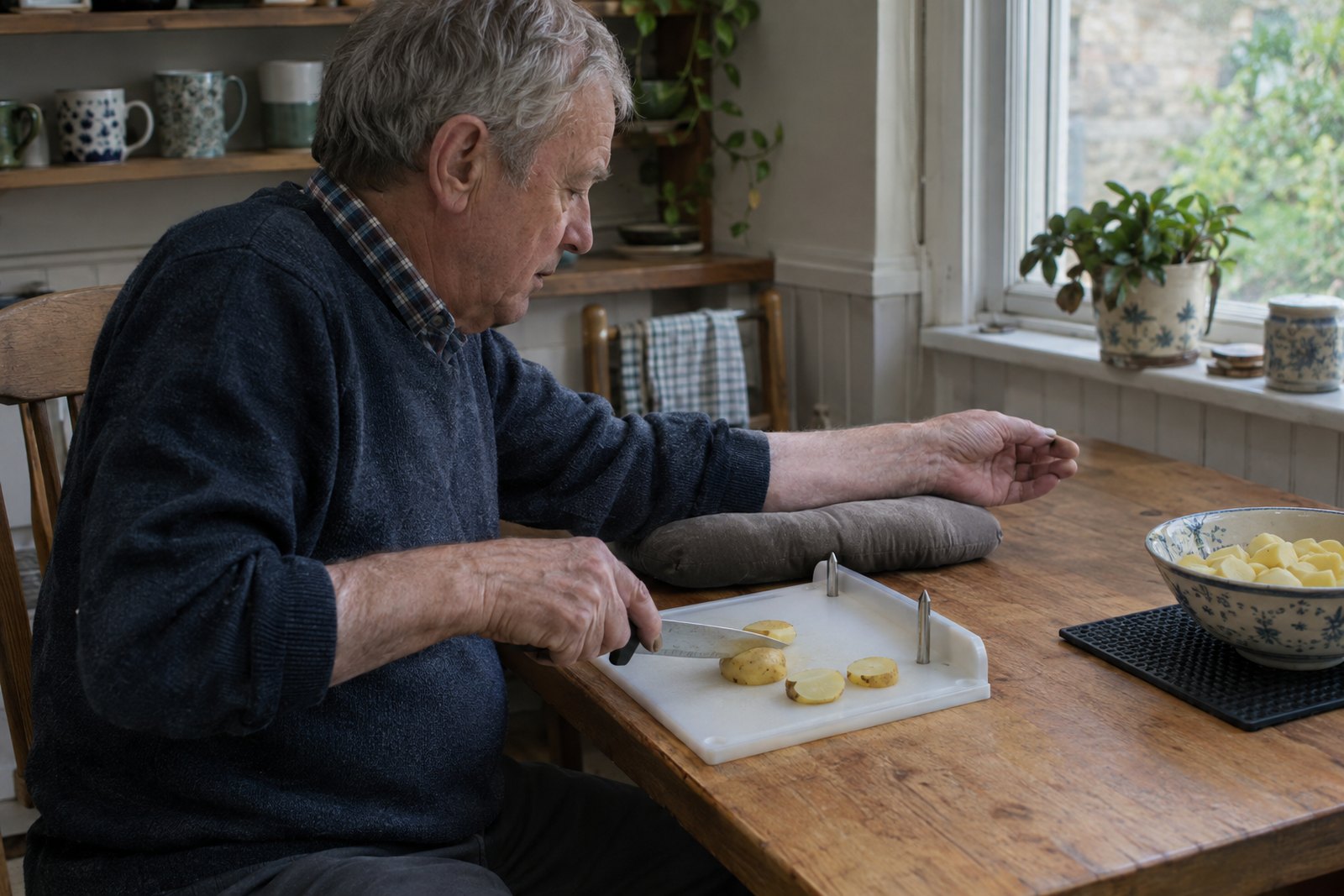
Hemiplegia means paralysis of one side of the body. Hemiparesis means weakness of one side. In practice the words get used loosely, and plenty of people are told they have hemiplegia when they can actually move the arm or leg a little. Both are common after a stroke, because a stroke on one side of the brain affects the opposite side of the body. A stroke in the right side of the brain usually affects the left arm, leg and face, and the other way round.
The label matters less than what it does to your day. One-sided weakness can make dressing, washing, eating, cooking and getting out of a chair hard work, and the weak shoulder needs protecting from the start. This guide covers what helps at home, what to avoid, and who to ask. If you are reading this on behalf of someone else, most of it applies to you too.
If someone has new weakness, a drooping face, slurred speech or confusion, call 999 straight away. Do not wait to see if it passes. That applies even if they have had a stroke before.
Hemiplegia and hemiparesis in plain terms
Think of it as a scale. At one end, the arm or leg does not move at all. At the other, it moves but feels heavy, clumsy, slow or tires quickly. Many people sit somewhere in the middle, and the arm and leg are often affected differently. It is common for walking to come back better than hand function, though every stroke is different.
Weakness is rarely the only effect. The same side may also have:
- Reduced feeling, so you may not notice heat, cold, pressure or where your hand is.
- Stiffness or tightness in the muscles, known as spasticity.
- Inattention or neglect, where the brain stops paying attention to that side, so you bump into door frames or leave food on one side of the plate.
- Visual field loss, where you cannot see to one side. Our guide to hemianopia after a stroke covers this.
A stroke affecting the left side of the brain often affects speech and understanding as well, which is the job of a speech and language therapist, not an occupational therapist.
Protecting the weak shoulder
This is the most important practical point, and it is often missed. When the muscles around the shoulder are weak, the weight of the arm can pull the joint partly out of position. That can be painful and slow down recovery. The arm needs support whenever you are upright.
Day to day
- Never let the arm hang. When sitting, rest it on a pillow on your lap, a chair armrest, or a table in front of you.
- Never pull on the weak arm to help someone up, roll them over or pull a sleeve on. Carers should not lift under the armpit either.
- When walking, keep the hand in a pocket, tucked into a waistband, or held by your stronger hand if your physiotherapist agrees. Some people are given a support; use it the way the stroke team showed you.
- In bed, support the arm on a pillow so the shoulder is forward rather than squashed underneath you. Ask the stroke team which positions they recommend for lying on each side.
- Do not let anyone do vigorous stretching or swinging movements with the arm unless a therapist has shown them how.
If the shoulder becomes painful, swollen or the hand puffs up, tell your stroke team, community therapist or GP. It is common, and it is treatable, but it is better caught early.
Dressing one-handed
The rule to remember: weaker side in first, weaker side out last. Put the sleeve or trouser leg on the weak side first, then the strong side. To undress, take the strong side out first, then slide the garment off the weak side.
- Sit down to dress, ideally in a firm chair with arms, or on the edge of the bed with feet flat on the floor.
- Lay clothes out in order before you start, so you are not reaching and twisting.
- For a top, drape it across your lap, feed the weak arm into its sleeve and pull the sleeve right up past the elbow before doing anything else. Then the head, then the strong arm.
- Looser tops, wider necks, front-opening shirts and elasticated waists make life much easier, at least for now.
- For trousers, cross the weak leg over the strong one to get it into the leg hole, then the strong leg, and only stand to pull them up if your balance is safe.
- Bras can be fastened at the front and turned round, or you could try a front-fastening or pull-on style.
- Slip-on shoes with a firm back, or shoes with elastic laces or touch fastenings, avoid one-handed lace tying.
Simple equipment such as a long-handled shoe horn, sock aid or button hook can help some people. Our guide to dressing aids explains each type.
Washing and keeping clean
Bathrooms are where many falls happen, so take this slowly.
- Sit to wash wherever you can: a shower chair or stool, or at the basin.
- Test water temperature with your stronger hand, never the weak one. Reduced feeling means you can scald without noticing.
- A long-handled sponge or brush helps reach your back, feet and the stronger arm.
- A wash mitt is easier to use than a flannel you have to wring out. Pump dispensers beat bottles with lids.
- To wash the strong arm, try resting a soapy flannel on your knee and rubbing the arm against it.
- Do not try to get into a bath without advice. Getting out is far harder than getting in, and many people get stuck.
Grab rails, a bath board, a shower seat or a raised toilet seat may help, but where they go depends on which side is weaker. Rails fitted on the wrong side are useless. This is exactly the kind of thing an occupational therapist works out on a home visit.
Eating and drinking
Cutting food with one hand is surprisingly hard, and being fed by someone else is not something most people want.
- A non-slip mat stops the plate sliding about.
- A plate guard or a plate with a raised rim gives you something to push food against.
- A rocker knife, or a combined knife and fork, lets you cut with one hand.
- Cups with two handles or a wide base are easier to manage than tall glasses.
- If you have inattention on one side, turn the plate halfway through the meal.
If you cough, choke, sound gurgly after drinking, or food collects in your cheek, tell your GP or stroke team. Swallowing problems are common after a stroke and need a speech and language therapist, not a different spoon.
Kitchen tasks one-handed
The kitchen is where independence often feels most at stake. The main problem is not having a second hand to hold things still.
- A spiked chopping board with raised corners holds vegetables and bread steady while you cut or spread.
- A damp cloth or non-slip matting under bowls stops them spinning.
- Jars can be opened by wedging them in a drawer or using a fixed under-cupboard opener.
- A kettle tipper, or a small kettle filled with just one cup, reduces the risk of hot water spills.
- Sit on a perching stool to prepare food, so you are not standing and balancing for long.
- A sturdy kitchen trolley lets you move plates and drinks without carrying them in your only good hand while also needing it for balance.
- Keep everyday items between waist and shoulder height on the stronger side.
There is more on this in our guide to stroke recovery at home. Hot pans and oven trays are the riskiest jobs. Leave them until a therapist has watched you, or find another way, such as a microwave on the worktop.
Getting in and out of bed, chairs and the car
Transfers are where shoulders get hurt and people fall. Some general points, but your physiotherapist or occupational therapist should show you the method that suits you.
- It is often easier to move towards your stronger side, at least at first.
- Shuffle forward to the edge of the seat, feet flat and slightly apart, and lean forward "nose over toes" before standing.
- Push up from the armrests or bed with your strong hand, not by grabbing a walking frame that can tip.
- Higher, firmer chairs with arms are much easier than low, soft sofas.
- Carers: guide and steady, do not lift or pull. If someone cannot stand with a little help, they need proper equipment and training, not a stronger carer.
Keeping the weaker side involved
It is natural to do everything with the good hand. But the brain recovers partly through use, and an ignored arm tends to become a stiffer, more painful one.
- Keep the weak arm where you can see it, not tucked away by your side.
- Use it as a helper: to hold paper still while you write, to steady a cup, or to rest on the table while you eat.
- Sit so that people, the television and the things you need are sometimes on the weaker side, so you have to turn towards it.
- Do the exercises your therapists give you, little and often, even when progress feels slow.
- Look after the skin and nails on that side, and check for marks you might not feel.
Spasticity, where muscles become tight and pull the arm or leg into a bent position, can develop over weeks or months. If it is getting worse, painful or interfering with washing and dressing, speak to your stroke team, physiotherapist or GP, because there are treatments.
Fatigue and emotions
Many people expect weakness after a stroke. Fewer expect the tiredness, which can be overwhelming and is not cured by a good night's sleep. Doing everything one-handed uses far more energy, and so does concentrating on tasks that used to be automatic. Pace yourself, plan the harder jobs for your best time of day, and sit down whenever you can. Our guide to fatigue after a stroke goes into detail.
Low mood, anxiety, frustration and sudden crying or laughing that does not match how you feel are all common. They are effects of the stroke, not a failing. Talk to your GP or stroke team. If you or someone you care for has thoughts of self-harm or suicide, call NHS 111 or 999, or Samaritans free on 116 123.
Family carers get tired too. Asking for help early is sensible, not weak.
Children with hemiplegia
Hemiplegia is not only a stroke condition in older adults. Children can be born with it, often as a form of cerebral palsy, or develop it after a stroke or brain injury in childhood. The everyday challenges are similar but tied to growing up: dressing for school, using cutlery, handwriting, play and sport. A paediatric occupational therapist can help with these. Contact, the national charity for families with disabled children, offers advice and support, including information on childhood hemiplegia.
Where an occupational therapist fits
After a stroke you may see a whole team. Physiotherapists lead on movement, walking and balance. Speech and language therapists help with speech and swallowing. Doctors and nurses manage medical care, medicines and risk of another stroke. Occupational therapists focus on getting you back to the things you need and want to do: washing, dressing, cooking, getting around your home, hobbies and work.
An occupational therapist visiting at home can:
- Watch how you manage real tasks in your own home and teach easier, safer methods.
- Advise on equipment that suits your stronger and weaker sides, and where rails or seats should go.
- Show family members how to help without hurting your shoulder or their backs.
- Work on using the weaker arm in everyday activities.
- Help with fatigue, routines, and planning a return to work or driving.
- Write reports to support adaptations or funding applications.
NHS community stroke teams provide occupational therapy after discharge, though how long it lasts varies by area. Some people choose a private therapist to continue or add to that support. Our neurological occupational therapy page explains what is involved.
Frequently asked questions
Will the weakness get better?
Often it improves, especially in the first weeks and months, and many people keep making gains for much longer with practice. Nobody can promise how much, and your stroke team is best placed to talk about your situation.
Why does the stroke affect the opposite side of my body?
Each side of the brain controls movement on the opposite side of the body. So a stroke in the left side of the brain affects the right arm and leg, and vice versa.
Why does my weak shoulder hurt?
Weak muscles can let the joint slip slightly out of position, and stiffness or being pulled on can make it worse. Keep the arm supported, never pull on it, and tell your stroke team or GP so they can assess it.
Can I drive with hemiplegia?
There are DVLA rules about driving after a stroke, and weakness may mean you need car adaptations or an assessment. See our guide to driving after a stroke and check the current rules on GOV.UK.
How do I get occupational therapy after a stroke?
Ask your stroke team, GP or the hospital before discharge about community stroke rehabilitation. Your council adult social care team can also assess for equipment and adaptations. Private occupational therapy is another option if you want more or quicker support.
Is hemiplegia the same as cerebral palsy?
No. Hemiplegia describes the pattern of one-sided weakness. In children it is often caused by a type of cerebral palsy, but in adults it is usually caused by a stroke or brain injury.
Next steps
If one-sided weakness is making daily life hard at home, an occupational therapist can help you find safer, easier ways to manage. See our neurological occupational therapy and home assessment pages, or current guide prices, and choose your area below.

Talk to an occupational therapist near you
This guide is general information. For advice about your own situation - or someone you look after - a local occupational therapist can visit you at home and see it for themselves.
Choose your area: