

Memory Problems After a Stroke: Thinking Changes and What Helps
By Mobile Occupational Therapist • 16 October 2026 • 12 min read
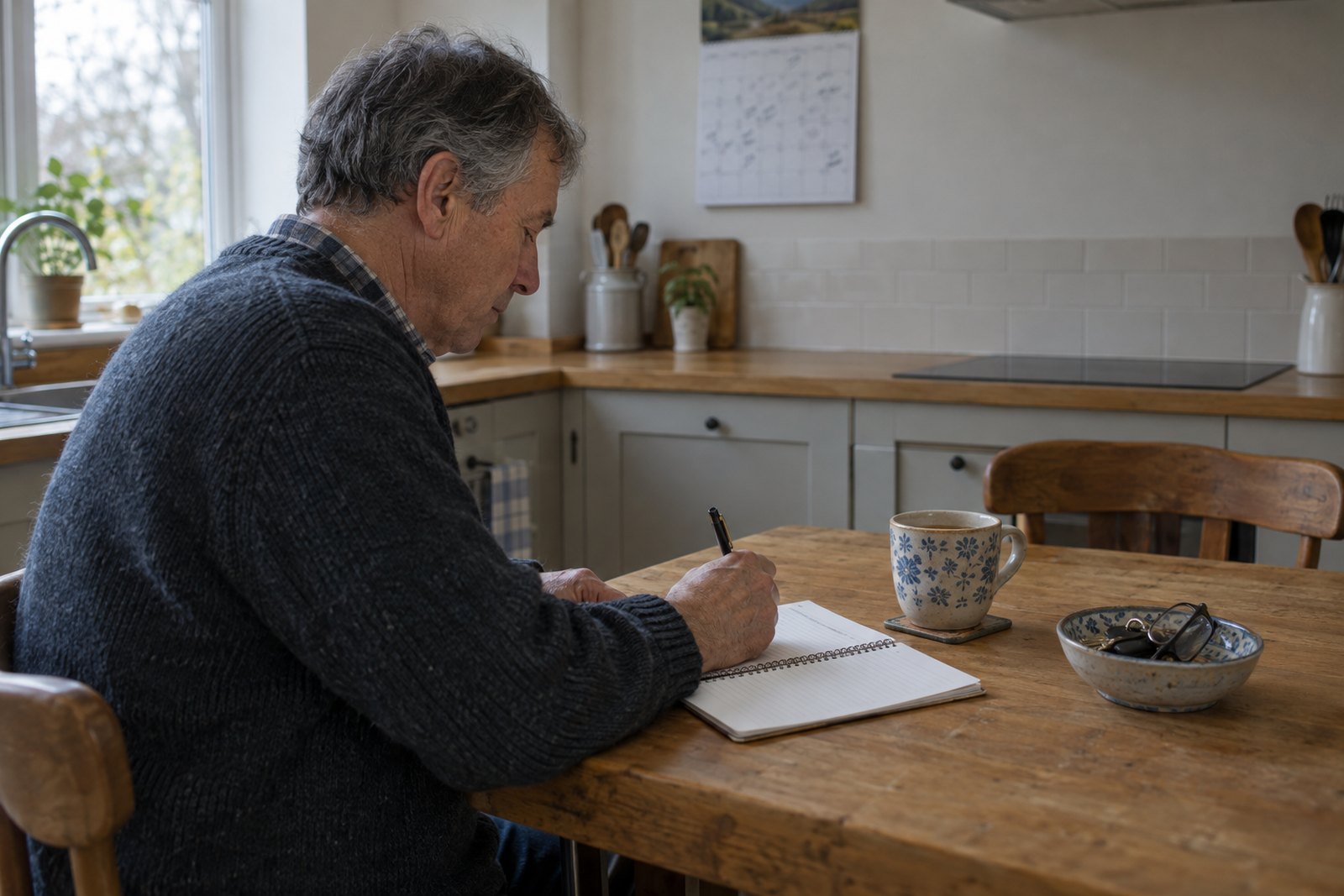
Memory and thinking problems are among the most common effects of a stroke, and among the least visible. Someone can come home from hospital looking much as they did before and still be unable to follow a conversation in a busy room. They may forget what they went upstairs for, or lose the thread halfway through making a cup of tea. Doctors call this cognitive impairment. When it is caused by damage to the brain's blood supply, you may hear the term vascular cognitive impairment.
The short answer to what helps is this. Many people improve, especially in the first months. The problems are usually worse when tired. While the brain recovers, practical changes at home make a real difference: a steady routine, one place for important things, written plans, phone reminders, less distraction and doing one thing at a time. If you or your relative are struggling, ask the stroke team or GP for an assessment rather than waiting and hoping. And if confusion comes on suddenly, that is not something to manage with a notebook. See the section on urgent help below.
The changes people commonly notice
Every stroke is different, because it depends on which part of the brain was affected. But the same handful of changes come up again and again.
Memory
It is usually new information that slips, not old memories. People can describe their wedding day in detail and still forget that the nurse came this morning or where they put their glasses. Remembering to do things in the future, like taking tablets or ringing someone back, is often hit hardest, and it causes most trouble day to day.
Attention and slower thinking
Many people can only focus on one thing at a time. The television, two people talking and a question all at once can feel like being underwater. Thinking also often slows down. The person understands, but it takes longer, and conversations move on before they have worked out their answer. Being rushed makes it worse and can look like confusion when it is really delay.
Planning, organising and problem solving
These are sometimes called executive skills. They let you plan a meal, work out what to do when the bus does not come, or sort post into what matters and what does not. After a stroke, people may struggle to start a task, do steps in the wrong order, or keep trying the same approach when it is not working. Families often describe it as not being able to get going.
Fatigue and fog
Post-stroke fatigue is not ordinary tiredness and does not always lift with sleep. Thinking is hard work for a recovering brain, so fog builds through the day. Many people find their memory is reasonable in the morning and poor by mid-afternoon. Our guide to fatigue after a stroke covers pacing in more detail.
Things that get mistaken for memory loss
Difficulty finding words is a language problem, and a speech and language therapist leads on that. Missing things on one side or ignoring food on half the plate may be visual field loss or neglect, not forgetfulness. Low mood and anxiety, both common after a stroke, also blunt concentration. It is worth separating these out, because the help is different.
Will it get better?
Often, yes, at least partly. Recovery tends to be quickest in the early weeks and months, but many people keep improving for much longer. Some changes do last, and then the aim shifts to working around them. Nobody can reliably predict exactly how much one person will recover, so be wary of firm timescales either way.
Things that reliably make thinking worse include tiredness, poor sleep, pain, stress, illness, alcohol, dehydration and trying to do too much at once. Some medicines can affect alertness too. If you suspect that, ask the GP or pharmacist to review them rather than changing anything yourself.
How memory and thinking problems are assessed
In hospital, the stroke team usually does a brief screen of thinking skills, and NICE guidance on stroke rehabilitation expects cognitive problems to be checked for. It is reasonable to ask what was found. Screening tests are short and can miss subtle problems, especially in people who were very capable before, so a normal score does not mean nothing has changed.
After that, help with assessment can come from several directions:
- The stroke or community neuro rehabilitation team. This often includes occupational therapists, physiotherapists, speech and language therapists and nurses. Ask how to get back in touch if problems become clearer once you are home.
- A clinical neuropsychologist. They do detailed testing of memory, attention and planning, and can untangle thinking problems from mood. NHS access varies by area, so ask the GP or stroke team for a referral if things are not adding up.
- An occupational therapist. An OT looks at how thinking problems show up in real tasks, such as making a drink, planning a meal or managing tablets, and notices where and why things go wrong.
- The GP. The GP can check for other causes, such as infection, thyroid problems, low mood or medication side effects, and refer on.
Families often spot problems first. Before any appointment, write down specific examples: left the hob on Tuesday, missed two appointments, could not follow the bank's phone menu. Specific examples carry more weight than saying someone is not themselves.
Practical strategies that help at home
None of this is clever. It works because it takes the load off memory and attention. Start with two or three ideas and build up.
Build a steady routine
Doing the same things at the same time each day turns tasks into habits, and habits need far less memory than decisions. Tablets with breakfast, a walk after lunch, rest at three. Put the hardest thinking jobs at the time of day when energy is best, which for many people is the morning.
One place for important things
Choose one spot for keys, glasses, wallet and phone, such as a bowl by the door or a tray next to the usual chair. Everything goes straight there. It feels fussy for a fortnight, then saves hours of searching and a fair few arguments.
Write it down, in one place
One notebook or one large wall calendar beats scraps of paper. Use it for appointments, visitors, decisions and jobs. A short plan for tomorrow, written the night before with tasks in order, helps people who struggle to get started. Agree as a household that the notebook is the record, so nobody has to win an argument about what was said.
Use phone reminders and alarms
Phones and smart speakers can set alarms with a label, such as take evening tablets or physio at 2pm. Set the reminder for the moment of action, not hours before. If someone is new to smartphones, start with one or two alarms rather than a whole system. A pharmacist can talk through simple ways to organise medicines.
Reduce distraction and do one thing at a time
Turn the television or radio off during conversations, meals and tasks that need thought. Talk one person at a time and ask one question at a time, then wait for the answer. Keep worktops clear so the things for a task stand out. Finish one job before starting the next, and if interrupted, jot down where you were before answering.
Keep the kitchen safe
If someone forgets the hob or taps, act on it rather than hoping it will not happen again. Timers, cooking when someone else is around, using a microwave or kettle instead of the hob for a while, and tested smoke alarms are sensible starting points. Our guide to relearning everyday tasks after a stroke goes into more detail.
The effect on family life
Hidden changes are often harder on families than visible ones. A partner may find they have become the diary, the organiser and the memory for two people. The person who had the stroke may not fully realise what has changed, which is a common effect of brain injury, not stubbornness. Irritability, flat mood or personality changes are worth raising with the GP or stroke team.
Share the load where you can, and keep one regular time each week to talk about plans rather than squeezing it into every conversation. If you are the main carer and feeling worn thin, our piece on carer burnout is written for you, and you may be entitled to a carer's assessment from the council. If judgement or planning are affected, bills and scam calls become riskier. A conversation about lasting power of attorney, while the person can still make that choice, can save trouble later. GOV.UK explains how it works.
Going back to work
Thinking problems, more than physical ones, often decide whether a return to work succeeds. Someone may manage the commute and still be wiped out by a morning of emails and meetings. A gradual return usually goes better than going straight back full time. Our guide to a phased return to work explains how to plan one.
Helpful adjustments often include shorter hours at first, regular breaks, a quieter workspace, written rather than spoken instructions and fewer meetings. Employers may have a duty to consider reasonable adjustments, and Acas explains how this works. Driving needs care too, because attention, speed of thinking and vision all matter on the road. Read our guide to driving after a stroke and check the DVLA rules on GOV.UK before driving again.
When new or worsening confusion needs urgent help
Patchy memory problems that slowly improve are expected. A sudden change is different.
- Call 999 if there are signs of a new stroke: the face drooping on one side, weakness or numbness in an arm or leg, slurred or muddled speech, sudden loss of vision or sudden severe confusion. Remember FAST: Face, Arms, Speech, Time to call 999. Do this even if the symptoms pass, because a mini-stroke also needs urgent assessment.
- Get help the same day from the GP or NHS 111 if someone becomes noticeably more confused, drowsy, agitated or unlike themselves over hours or a day or two, without stroke signs. Infections and dehydration are common causes and are often treatable.
- Book a GP appointment if memory or thinking seems to be getting steadily worse over weeks or months rather than better.
Vascular dementia: a careful word
Many people quietly worry that memory problems after a stroke mean dementia. Usually they do not. Most post-stroke thinking problems are a direct effect of the stroke and either improve or stay stable. However, a stroke does raise the chance of vascular dementia later for some people, particularly if there are further strokes or ongoing damage to small blood vessels in the brain.
The thing to watch for is a pattern of decline rather than recovery. If you notice that, ask the GP for a review. The steps that lower the risk of another stroke, such as taking prescribed medicines, managing blood pressure, not smoking, staying active and keeping alcohol down, also help protect thinking. The GP and stroke team can tell you what applies to you.
Where an occupational therapist fits
An occupational therapist does not diagnose memory problems or dementia, and does not replace a neuropsychologist's testing or the stroke team's medical care. Speech and language therapists lead on communication, and physiotherapists on movement and balance.
What an OT does is look at thinking in the context of real life. A private occupational therapist visiting at home can:
- watch everyday tasks like making a meal, managing medicines or handling post, and pinpoint where things break down;
- set up routines, memory aids, reminders and a home layout that suit the person;
- advise on kitchen safety and whether someone can safely be alone for parts of the day;
- plan pacing for fatigue and a return to hobbies or work;
- write a functional report to support work discussions, care assessments or benefit claims.
NHS community stroke teams often include OTs, so ask there first. A private OT can help if you are waiting, have finished NHS rehab, or want a closer look at daily life. Our neurological occupational therapy page explains more.
Frequently asked questions
Is memory loss after a stroke permanent?
Not always. Many people improve, particularly in the first months, and some keep improving for much longer. Where problems remain, routines and memory aids can make daily life run far more smoothly.
Why is memory so much worse later in the day?
Fatigue. A recovering brain tires quickly, and memory and concentration are often the first things to go. Planning demanding tasks for the morning and building in rests usually helps.
Do brain training games help after a stroke?
Getting better at a game does not necessarily make everyday memory better. Practising the real tasks you want to do, with the right strategies, tends to be more useful. Puzzles are fine as a hobby if you enjoy them.
Can someone with memory problems after a stroke live alone?
Many can, with the right set-up and support. It depends on safety with cooking, medicines, falls and strangers at the door. An occupational therapy assessment or a council care needs assessment can help you weigh this up honestly.
Can I still get help if the stroke was years ago?
Yes. Ask the GP about a referral back to stroke or neuro services or to neuropsychology. The Stroke Association also offers information and support for people living with the long-term effects of stroke.
Next steps
If memory or thinking changes are making daily life harder, see our neurological occupational therapy or home assessment page, or current guide prices, and choose your area below.

Talk to an occupational therapist near you
This guide is general information. For advice about your own situation - or someone you look after - a local occupational therapist can visit you at home and see it for themselves.
Choose your area: