

Broken Wrist Recovery: Managing at Home in a Cast and After
By Mobile Occupational Therapist • 22 September 2026 • 14 min read
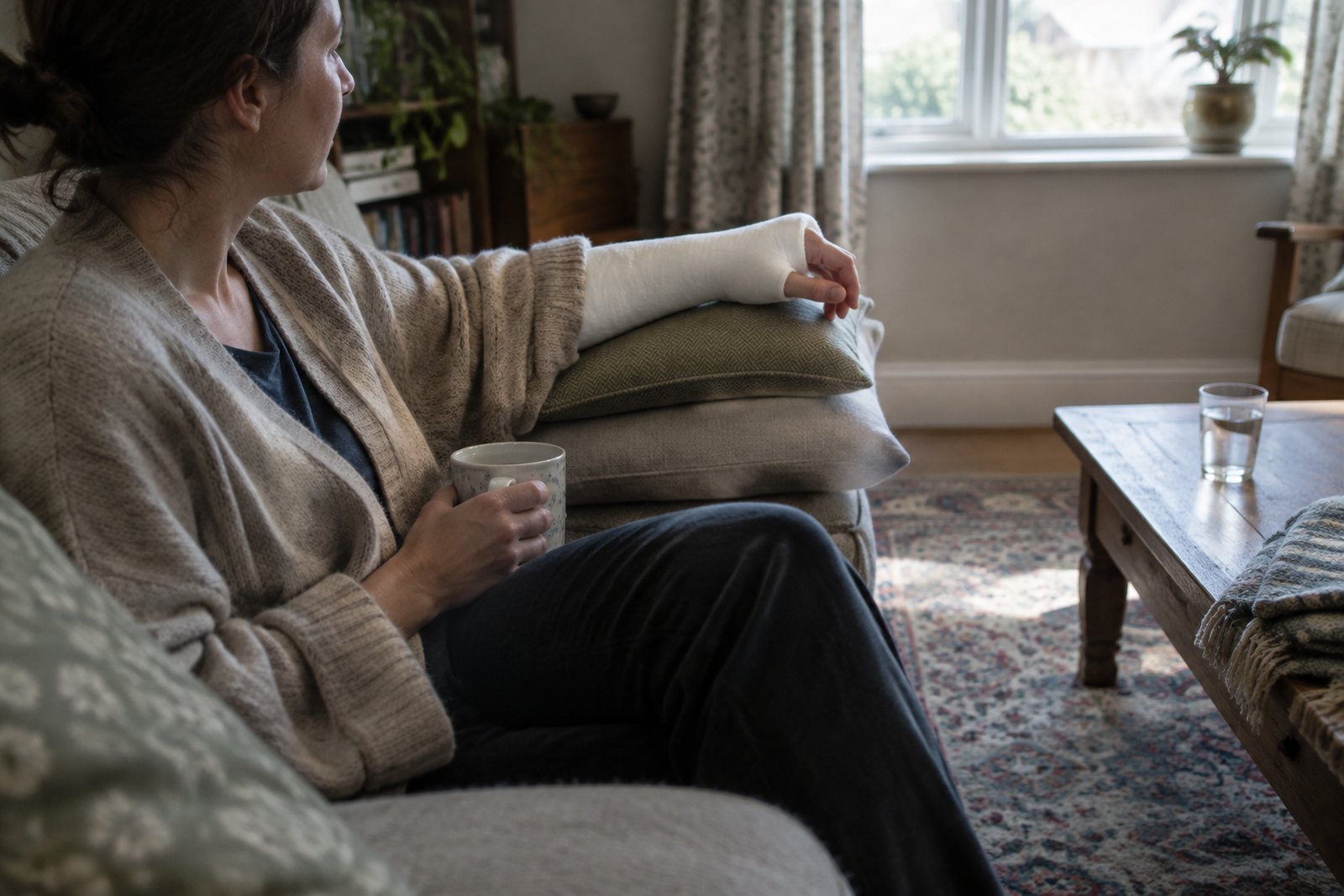
Most broken wrists heal well. For a straightforward break the bone usually knits within weeks, often with around six weeks in a cast or splint, though yours may be shorter or longer depending on the type of fracture, whether it needed an operation and your age. The harder part for most people is not the bone. It is the weeks of doing everything with one hand, followed by a wrist that comes out of the cast stiff, weak and looking nothing like the one that went in.
So broken wrist recovery is really two jobs. While you are in the cast, you keep the swelling down, keep your fingers, elbow and shoulder moving, keep the cast dry and find one-handed ways to dress, wash, cook and sleep. After the cast comes off, you get movement and strength back gradually, using the exercises your fracture clinic gives you and, if progress is slow, proper hand therapy. This guide covers both, with the practical detail that leaflets tend to skip.
The first few days: swelling, elevation and rings
A broken wrist swells, and a cast does not stretch. Keeping swelling down in the first days makes you more comfortable and makes problems less likely.
- Keep your hand up. Aim to have your hand higher than your elbow, and ideally above the level of your heart, for much of the first few days. On the sofa, rest the arm on two or three pillows. In bed, do the same. Letting it hang by your side is when it throbs.
- Move what you can. Unless you have been told otherwise, wiggle your fingers, straighten and bend them as far as the cast allows, and move your elbow and shoulder fully several times a day. A stiff shoulder after a wrist fracture is common, and keeping it moving makes it much less likely. People hold the arm still for six weeks and end up with two problems instead of one.
- Take rings off now. If you are wearing rings on the injured hand and they are still loose enough to remove, take them off. Once fingers swell, rings can become trapped and may need cutting off.
- Use the sling as advised. Many people are given a sling for comfort at first. Follow what the fracture clinic told you about how long to use it. Wearing it all day for weeks, when not advised, tends to stiffen the shoulder.
- Pain relief. Follow the advice you were given at the hospital, or ask a pharmacist. Do not guess at doses.
If you have a plaster cast, ask how long it needs to harden fully and be careful not to knock or lean on it in that time. Lightweight synthetic casts set more quickly, but still need looking after.
Warning signs with a cast: when to get help
Most people sail through cast time with nothing worse than an itch. But a cast can hide problems, so know what matters. Contact your fracture clinic (the number is usually on the leaflet you were given) or go to A&E if:
- your fingers become numb, tingling or have pins and needles that do not go away when you raise your hand
- your fingers turn white, blue or very pale, or feel cold compared with the other hand
- the pain is getting worse rather than better, especially if it is severe and not eased by the pain relief you were advised to take
- your fingers are very swollen and the swelling does not settle with elevation
- the cast feels too tight, or so loose your arm moves inside it
- the cast cracks, breaks, gets soaked or develops soft spots
- there is a bad smell, discharge, or a sore or burning spot under the cast
Severe, increasing pain with numbness and tight swelling needs urgent attention, not a wait until morning. If you are unsure, call NHS 111. Call 999 if you have chest pain or sudden breathlessness, or any other emergency.
One later warning sign is worth knowing about. A small number of people develop pain that seems far out of proportion to the injury, with burning, extreme sensitivity to touch, or changes in the colour, temperature or sweating of the hand. This can be a condition called complex regional pain syndrome, and early treatment helps. Tell your fracture clinic or GP promptly rather than pushing on.
Keeping the cast dry
Water softens plaster and soaks the padding under any cast, which can damage skin. A few rules:
- Use a proper waterproof cast protector for showers. This is a long sleeve with a tight rubber seal at the top. A plastic bag with tape is better than nothing, but water often creeps in at the top.
- Keep the arm out of the water anyway. Even with a protector, hold the arm up and away from the spray. Protectors are for splashes, not for submerging, unless one is specifically designed for that.
- Consider a strip wash on days when a shower is too much effort. Our guide to strip washing and keeping clean covers this.
- If it gets wet, contact the fracture clinic for advice, especially if it is plaster or the padding stays damp.
- Never poke anything inside the cast to scratch. Knitting needles, rulers and coat hangers cause skin damage and infection. Tapping the outside of the cast can ease an itch. Some clinics suggest blowing cool air in with a hairdryer on its cold setting; ask yours first.
Managing one-handed at home
If you have broken your dominant hand, the first few days can feel absurd. Simple things take three times as long. It gets easier quickly once you stop trying to do everything the old way.
Dressing
- Injured arm in first, out last. Put the sleeve over the cast before the other arm goes in. Take it off the good arm first.
- Choose wide sleeves and front openings. Loose shirts, cardigans, zip tops and wide-armed jumpers. Tight sleeves will not go over a cast.
- Elastic waists. Joggers, leggings and pull-on trousers save a lot of struggle with buttons and zips.
- Slip-on shoes with a firm back, not laces. Avoid backless slippers if you are older or unsteady.
- Bras are tricky one-handed. A soft stretchy bra pulled over the head, or fastening a back-fastening bra at the front then turning it round, are common workarounds.
- Sit down to dress. Balance is harder with one arm out of action, especially for trousers and socks.
For more ideas and simple gadgets, see our guide to dressing aids and easier ways to get dressed.
Washing, hair and teeth
- A shower stool or seat makes one-handed washing safer and less tiring.
- A long-handled sponge helps reach your back and your good arm, which is the bit people forget they cannot wash.
- Pump dispensers for soap, shampoo and toothpaste remove the need for two hands.
- Washing hair one-handed is possible with short hair. With long hair, a family member, a friend or a hairdresser wash for a few weeks is often simpler. Dry shampoo fills gaps.
- An electric toothbrush is easier in the non-dominant hand.
The toilet
Wiping with your non-dominant hand is awkward and nobody likes to mention it. Moist toilet wipes help (put them in the bin, not the toilet). If reach is a real problem, there are long-handled toilet aids; our frank guide to toileting aids explains them. Loose, elastic-waist trousers make the whole thing quicker.
Cooking and eating
- Put a non-slip mat under bowls and chopping boards so they do not slide away from you.
- Buy ready-chopped vegetables, grated cheese and simple meals for a few weeks. This is not the time for culinary pride.
- Avoid carrying hot pans and full kettles one-handed. Fill the kettle with a jug, only boil what you need, and slide pans along the worktop rather than lifting them.
- A rocker knife lets you cut food with one hand. A plate with a raised edge or a plate guard stops food escaping.
- Ask a neighbour or shop staff to loosen jar lids, or use a jar opener mounted under a cupboard.
Our guide to kitchen aids and mealtime independence goes into more detail.
Sleeping
Sleep is often the worst bit in the first week. Lying on your back with the cast raised on a pillow beside you usually works best. If you sleep on your side, lie on the uninjured side with a pillow in front of you to rest the cast on. A pillow behind your back stops you rolling onto the injured arm in the night. Keep a lamp or light within reach of your good hand.
Writing, phones and work
Voice typing and voice assistants on phones and computers are surprisingly useful. Many people return to desk work while in a cast, but it depends on your job, your commute and whether you can drive. Manual work, driving for work and anything involving lifting needs a conversation with your employer and the fracture clinic. A fit note from your GP or the hospital can say what you could do with adjustments, not just that you cannot work.
If you are older or live alone
A wrist fracture in later life usually follows a fall, and having one arm out of action makes another fall more likely. You cannot push up from a chair with both hands, catch yourself, or hold a rail and a cup at the same time. Use chairs with firm arms, clear the floor, use night lights, and accept offers of shopping and help for a few weeks. Our guide to preventing falls at home is worth reading now, not after the next one.
When the cast comes off
People expect relief. What they often get is a shock. The wrist may look thin, the skin dry and flaky, perhaps hairier than before, and the joint feels stiff, weak and oddly fragile. It may swell again for a while, especially in the evening. This is normal after weeks of immobilisation, and it improves.
- Skin: wash gently with warm water and mild soap, pat dry and moisturise. Do not scrub off the flaky skin; it will shed by itself.
- Exercises: you will usually be given exercises, either on a leaflet or by a physiotherapist or hand therapist. Do them little and often, several short sessions a day rather than one long one.
- Some discomfort is expected. Stretching into stiffness feels uncomfortable. Sharp, severe pain is a signal to ease off, and pain that keeps getting worse should be reported.
- Splint: some people are given a removable splint for a time. Use it as instructed.
- Heavy lifting, sport and driving: wait for advice. The bone may be healed enough to come out of plaster but not yet strong enough for heavy loads.
Getting function back: stiffness, strength and everyday tasks
The best therapy for a stiff wrist is often ordinary life. Your exercises matter, but so does using the hand for light, everyday tasks as soon as you are allowed.
- Warm water first. Many people find their wrist moves more easily after a few minutes in warm water. Washing up is a good excuse.
- Turning movements. Turning the palm up and down is often the stiffest and the most missed, because you need it for turning keys, door handles, taps and holding a cup. Practise it.
- Light grip work. Squeezing a sponge in warm water, folding towels, peeling vegetables, buttoning a cardigan.
- Weight-bearing comes later. Pushing up from a chair through the hand, carrying shopping and opening heavy jars are usually the last to return. Build up gradually.
- Avoid the trap of protecting it. If you carry on doing everything with the other hand, the injured one stays stiff.
Many people get most of their movement back over the following weeks and months, but it varies, and some stiffness can linger, especially after more complex breaks. If you are not improving, ask the fracture clinic or your GP about a referral to physiotherapy or hand therapy. Our article on hand therapy at home explains what that involves.
Bone health: worth asking about
If you are over 50 and broke your wrist in a fall from standing height or less, it is worth asking your GP whether you should have your bone health checked. A wrist fracture from a simple fall can be the first sign of osteoporosis, and treatment can reduce the risk of a more serious fracture later. Your fracture clinic may already have arranged this. The NHS website has clear information on osteoporosis.
Where an occupational therapist fits
Be clear about who does what. The fracture clinic and orthopaedic team manage the bone: the X-rays, the cast, any surgery, and when it comes off. Physiotherapists often lead the rehabilitation exercises. Hand therapists, who are occupational therapists or physiotherapists with specialist training in hands and wrists, treat more complicated or slow recoveries. An occupational therapist cannot tell you whether your bone has healed, and should not be asked to.
Where an occupational therapist is genuinely useful is the practical, everyday side. A private occupational therapist visiting at home can:
- work out one-handed ways of managing personal care, the kitchen and the toilet
- suggest equipment that actually suits you, and what you can borrow rather than buy
- look at falls risk if you are older, live alone or are now less steady
- help with returning to work, including adjustments while your grip is weaker
- if they have hand therapy experience, help with stiffness, swelling and getting function back after the cast comes off
If you want to understand more about the kinds of injuries this covers, see our page on hand and upper limb injuries. If you are choosing someone for hand rehabilitation specifically, ask about their hand therapy training and experience before booking.
Frequently asked questions
How long does a broken wrist take to heal?
Many straightforward wrist fractures spend around six weeks in a cast or splint, but this varies with the type of break, whether surgery was needed and your age. Getting full strength and movement back usually takes longer than the bone itself. Your fracture clinic will tell you what to expect for your break.
Can I drive with a broken wrist?
You must be in full control of your vehicle at all times, and that is very hard to guarantee with a wrist in a cast. Most people are advised not to drive until the cast is off and they have enough movement and grip to steer, change gear and do an emergency stop. Check with your fracture clinic and your insurer, and see the GOV.UK guidance on health conditions and driving.
Should I wear my sling all the time?
Not usually, unless you have been told to. Slings are often given for comfort in the first days. Keeping your arm in one for weeks can leave you with a stiff shoulder and elbow. Follow your clinic's advice and keep those joints moving.
Is it normal for my wrist to be stiff and swollen after the cast comes off?
Yes, very. Stiffness, weakness, some swelling and dry skin are expected after weeks in a cast, and they improve with exercise and everyday use. Contact the clinic or your GP if pain is getting worse, swelling is severe, or the hand becomes very sensitive, discoloured or changes temperature.
How do I wash my hair with a broken wrist?
Short hair can be washed one-handed in the shower with the cast in a waterproof protector and held well away from the water. With longer hair, it is often easier to have someone wash it over a sink, or to book a hairdresser wash for a few weeks, with dry shampoo in between.
When can I go back to work?
It depends on your job. Some people return to desk work within days, while manual or driving jobs may need to wait until well after the cast comes off. A fit note can suggest adjustments such as lighter duties or different hours, which may let you return sooner.
Next steps
If one-handed life is proving harder than expected, or recovery after the cast has stalled, see our equipment and aids page, or current guide prices, and choose your area below.

Talk to an occupational therapist near you
This guide is general information. For advice about your own situation - or someone you look after - a local occupational therapist can visit you at home and see it for themselves.
Choose your area: