
Washing Without a Bathroom: Strip Washing and Keeping Clean
By Mobile Occupational Therapist • 17 September 2026 • 8 min read
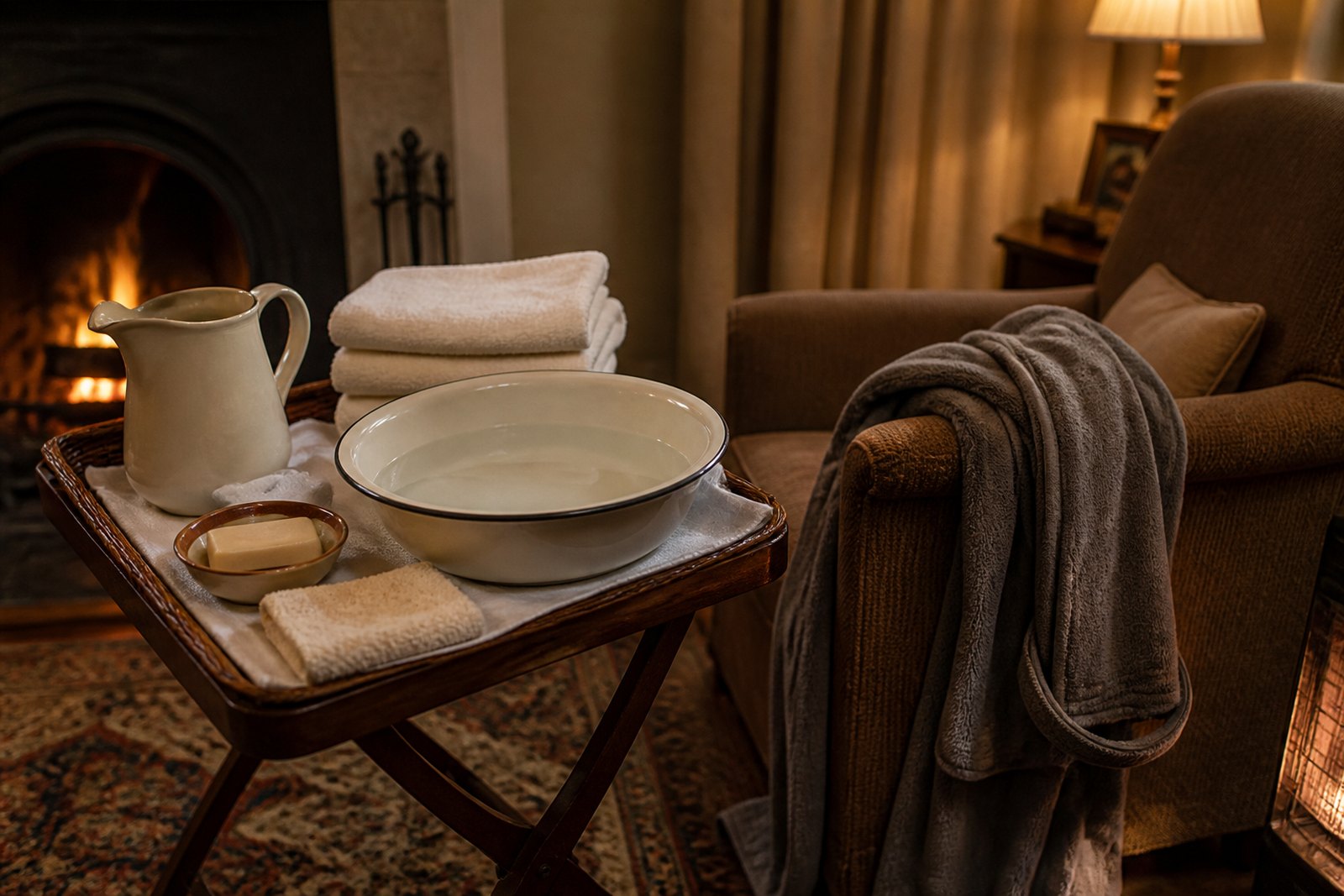
Plenty of people go weeks or months without being able to use their bathroom. The stairs become impossible, an adaptation is on a waiting list, a hip or knee is healing, or getting over the side of a bath is simply no longer safe. A strip wash - washing thoroughly at a basin or bowl rather than in a bath or shower - is a perfectly good way of keeping properly clean in the meantime, and done well it is warm, private and quick. This guide sets out the order that works, what to have ready, and how to look after skin while you are at it. There is nothing undignified about washing this way.
Set everything up first
The single biggest difference between a miserable strip wash and a comfortable one is preparation. Nothing should have to be fetched halfway through - that is when people get cold and cross, and when someone reaches for a towel that is not there and falls.
- Warm the room first. Heating on ten minutes early. People undressed and damp lose heat startlingly fast, and older or thinner people fastest of all.
- A bowl on a stable surface at the right height. A table or firm worktop, not a wobbly stand, at a height that does not mean bending. A second bowl of clean rinse water is useful.
- Something to sit on. Washing seated is safer and less tiring than standing. A sturdy chair with arms is ideal, and a perching stool suits people who find a low chair hard to rise from.
- Towels, warmed on a radiator. One to cover, one to dry with.
- Flannels or disposable cloths. Separate ones for the top half and the bottom half, and clean water for the face.
- Clean clothes to hand, laid out in the order they go on.
The order that works
The principle is simple: work from cleanest to least clean, and keep everything you are not washing covered up. That keeps the person warm and keeps their dignity intact, whether they are washing themselves or being helped.
Start with the face, using clean water and usually no soap. Then the neck, ears and top half - arms, hands, chest, under the breasts, underarms, and back. Rinse and dry each area as you go rather than washing everything and drying at the end, because wet skin in cool air is what makes this uncomfortable. Then put a top on, or cover the upper body with a warm towel, before moving down.
Then the bottom half - legs and feet, and finally the genital area and bottom, with fresh water, a fresh cloth and clean hands. Wash front to back. That water and cloth are not used anywhere else.
Drying matters as much as washing. Pat rather than rub, and dry thoroughly in every skin fold, under the breasts, in the groin, and between every toe. Damp skin trapped in a fold is where soreness, fungal infection and broken skin begin.
No-rinse products, wipes and where they genuinely help
No-rinse wash foams, lotions and large disposable cloths are widely used in nursing and earn their place at home too. They come into their own when someone is very tired, in bed, or needs a quick freshen-up between proper washes. They are not a replacement for a thorough wash with water and a flannel, but as an addition they are genuinely useful and save a great deal of standing about.
Ordinary toiletry wipes are best kept for hands: many contain fragrance or preservatives that irritate fragile skin, and none should go down the toilet, whatever the packet says.
Washing hair without a shower
Hair is usually the sticking point, and there are three workable answers. Leaning forward over a basin works well if the person can bend safely and someone can pour with a jug - a folded towel over the tap edge makes it far more comfortable. An inflatable washing basin is a purpose-made cushion that sits under the head while the person lies back on a bed or leans back in a chair, draining into a bucket; it sounds elaborate and is actually simple. And dry shampoo, or a no-rinse shampoo cap, keeps hair presentable between washes.
If energy is limited, do hair on a different day from the full body wash. Doing everything at once is what makes people dread the whole business.
Do as much as you can yourself
If you are helping someone, the temptation is always to take over, because you can do it in a third of the time. Resist it where you safely can. Letting someone wash their own face and chest, even slowly, is what keeps the ability there - and once a task is done for someone every day for a month, it is usually gone. A reasonable compromise is that the person does what they can reach and you do the rest, with no fuss about which is which.
Simple equipment often shifts what someone can manage alone: a long-handled sponge for the back and feet, a wall-mounted soap dispenser instead of a slippery bar, a tap turner for stiff hands, or a non-slip mat under the bowl. Our guide to bathing aids and bathroom safety covers more of these.
Check the skin while you wash
Washing is the best opportunity anyone gets to look at skin properly. Check the bottom, the base of the spine, hips, heels, elbows and shoulder blades - anywhere that takes weight when sitting or lying - plus under breasts, in the groin and between the toes.
The thing to act on is a red or darkened patch that does not fade once the pressure has been off it for a while. On darker skin, look for an area that feels different - warmer, cooler, firmer or boggier - or looks purplish rather than red. That is an early pressure sore, and it needs reporting to a district nurse or GP the same day, not next week. Broken skin, a new sore, or anything weeping should be reported too. Pressure damage caught early is a nuisance; caught late it is months of treatment.
Frequently asked questions
How often should someone have a strip wash?
A daily wash of face, hands, underarms and the genital area, with a fuller top-to-toe wash a couple of times a week, keeps most people comfortable and skin healthy. More often if there is incontinence or a skin condition. Soaping the whole body every day is not necessary and can dry older skin out.
What is the correct order for a bed bath or strip wash?
Face first with plain water, then the upper body - arms, chest, underarms, back - drying and covering each area as you go, then the lower body, and the genital area and bottom last with fresh water and a fresh cloth. Cleanest to least clean, and the person stays covered apart from the part being washed.
Is a strip wash as good as a shower?
For cleanliness, yes - done properly it gets you just as clean. What it does not give you is the comfort, the warmth on aching joints and the sheer pleasure of a shower, and that matters more to wellbeing than people credit. So treat it as a good solution while it is needed, not as a permanent settlement.
When a stop-gap needs to become something else
Strip washing is entirely reasonable for weeks - after an operation, during a flare-up, while waiting for a follow-up. It becomes a problem when it quietly turns into the permanent arrangement because nobody revisited it. If someone has not got into their bathroom for months, the question is no longer how to wash at a bowl; it is whether the bathroom can be made usable, whether a level-access shower downstairs is the answer, or whether the layout of the house needs to change. Our guides to wet rooms and level-access showers and home adaptations both start there.
Next steps
If washing has become difficult, an occupational therapist can work out whether the answer is equipment, a change to the room, or a different routine - usually within one visit. We look at what you are actually managing at home rather than what you can do in a clinic, and set out the options plainly, including the ones that cost nothing. See home assessments. To find someone near you, see the areas we cover and our prices.
Talk to an occupational therapist near you
This guide is general information. For advice about your own situation - or someone you look after - a local occupational therapist can visit you at home and see it for themselves.
Choose your area: