

Vertigo and Dizziness at Home: Staying Safe While It Settles
By Mobile Occupational Therapist • 30 October 2026 • 14 min read
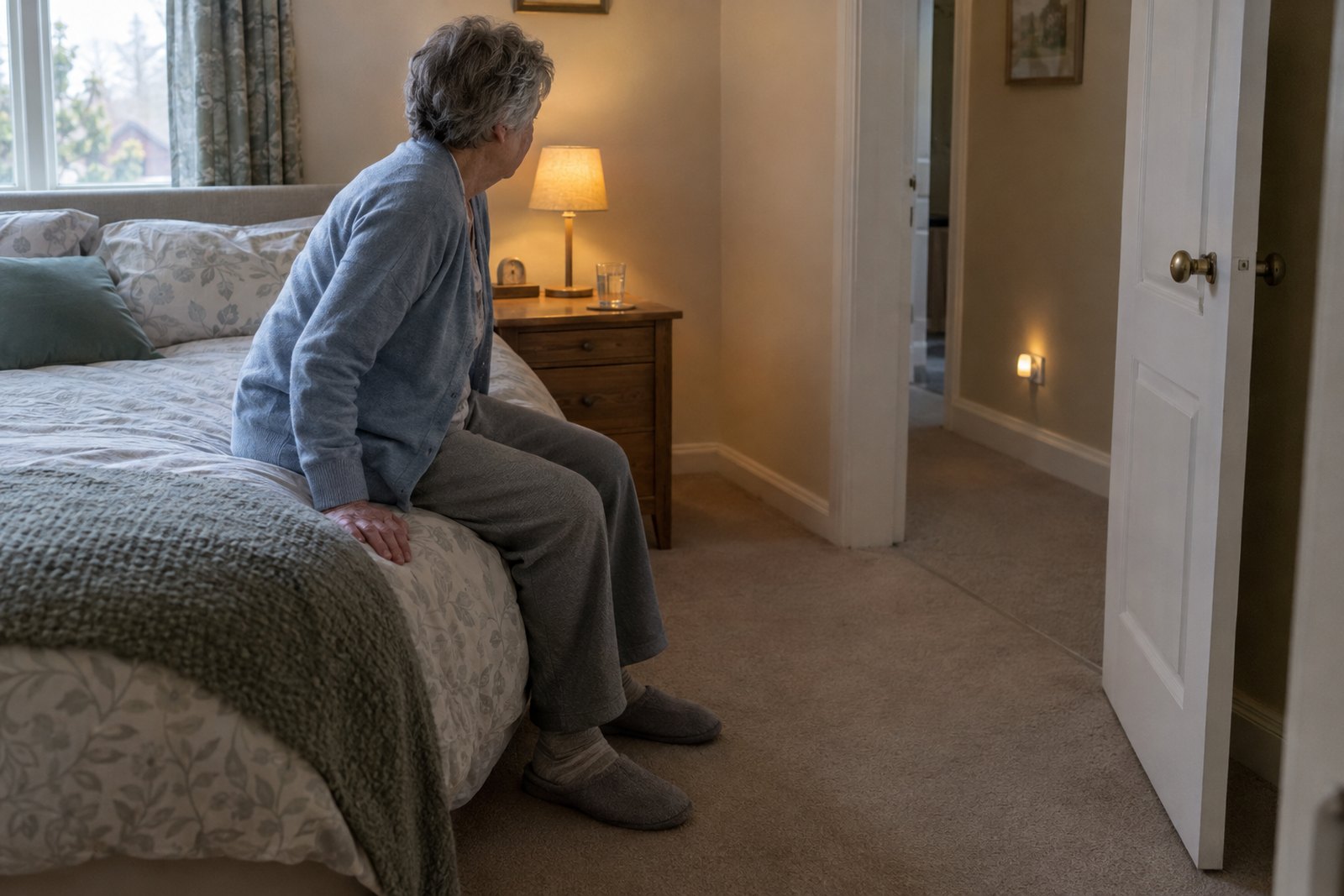
Many causes of dizziness are not dangerous in themselves, and symptoms often improve over days or weeks, but dizziness can sometimes be a sign of a serious problem so it is important to get it checked. The most common spinning kind, called BPPV, is often treated with a simple sequence of head movements done by a GP or physiotherapist. The bigger risk while you are dizzy is usually falling: getting up too fast, turning over in the dark, tipping your head back in the shower or going downstairs with your hands full.
So you have two jobs. Get it checked, so you know what kind of dizziness it is and whether it needs treatment. And make your home a bit more forgiving while it settles. This article covers both, plus driving, work, balance exercises and the warning signs that mean you should call 999 straight away.
First: when dizziness is an emergency
Call 999 if dizziness comes on suddenly together with any of these:
- the face drooping on one side
- weakness or numbness in an arm or leg, especially on one side
- slurred or muddled speech, or difficulty understanding what people are saying
- double vision or sudden loss of sight
- a sudden, severe headache unlike any you have had before
- chest pain, a racing or irregular heartbeat, or fainting
These can be signs of a stroke or a heart problem. Do not wait to see if it passes, and do not drive yourself to A&E. If you are unsure, call 999 anyway. Nobody will mind if it turns out to be something simpler.
If the dizziness is not an emergency but is new, keeps coming back, is getting worse, or comes with hearing loss, ringing in the ears or a recent knock to the head, see your GP or call NHS 111 for advice.
What kind of dizziness is it?
"Dizzy" covers several quite different feelings. Your GP will ask which one you have, so it helps to notice before the appointment.
Spinning (vertigo)
Vertigo is the feeling that you, or the room, are moving or spinning when nothing is. It often comes with nausea and sometimes vomiting. Common causes include BPPV (below), an inner ear infection or inflammation, often after a cold or virus, which can make you dizzy for days and take weeks to fully settle, and Meniere's disease, which tends to come in attacks with hearing changes, ringing and a full feeling in one ear. Migraine can also cause vertigo, sometimes with little or no headache.
Light-headedness
This is feeling faint, woozy or as if you might pass out, often when you stand up. It can come from your blood pressure dropping as you stand, not drinking or eating enough, being unwell, some medicines, or occasionally a heart rhythm problem. In older people, dizziness on standing is common and always worth mentioning to the GP.
Unsteadiness
Some people are not spinning or faint, just off balance, especially in the dark or on uneven ground. This can be linked to numbness in the feet, eyesight changes, weak legs after an illness, or an inner ear problem that has not fully recovered.
Many people have more than one of these. Before you see the GP, jot down what it feels like, when it started, what sets it off, how long each episode lasts and anything else going on, such as hearing changes or headaches. Take a list of all your medicines, including anything bought over the counter. Do not stop any medicine on your own; ask your GP or pharmacist whether any of them could be playing a part.
BPPV: the common one, and usually treatable
Benign paroxysmal positional vertigo, or BPPV, happens when tiny crystals in the inner ear come loose and drift into one of the balance canals. Certain head movements then trigger a short, intense spin, usually lasting less than a minute. Typical triggers are rolling over in bed, lying down, sitting up, looking up at a high shelf or bending down to the floor. "Benign" means it is usually not due to a serious underlying condition, but it still needs proper assessment, especially if it is new, follows a head injury or keeps coming back. It does not feel benign at three in the morning.
A GP, physiotherapist or ear, nose and throat (ENT) specialist can usually confirm BPPV with a test that involves moving your head and lying you back while watching your eyes. If it is BPPV, they may do a repositioning manoeuvre, often called the Epley manoeuvre: a set sequence of head and body positions that guides the crystals back to where they belong. It often helps quickly, sometimes needs repeating, and BPPV can come back later. It can also improve on its own over weeks or months.
You will find videos of these manoeuvres online. It is safer to have it done first by someone trained, who has confirmed it really is BPPV and worked out which ear and which canal is involved. The wrong version does nothing useful, and people with neck or back problems may need a different approach. If a clinician shows you how to repeat it at home, follow their instructions rather than a video.
Getting up, dressing and moving around safely
Whatever the cause, the same habits cut the risk of falling while you are dizzy.
Get up in stages
- When you wake, lie still for a moment before moving. Turn on a bedside lamp first.
- Roll onto your side, then push yourself up to sitting with your arms as you swing your legs over the edge of the bed.
- Sit on the edge of the bed with your feet flat on the floor for a minute or so. Look at a fixed point straight ahead.
- Stand up holding something solid and fixed, not a wheeled table, a door or a radiator cover.
- Stand still for a few seconds before you walk. If the dizziness comes back, sit down again.
The same applies to getting up from a chair or the toilet. Slow and in stages beats quick every time. Some people find that sleeping slightly propped up and moving their head slowly reduces symptoms, but it does not treat BPPV and you should follow the advice you are given for your situation.
Sit down to get dressed
Standing on one leg to pull on trousers or socks is a classic moment for a fall. Sit on the bed or a firm chair with arms instead. Bring your foot up towards you rather than bending your head down to your feet. Slip-on shoes, elastic laces and a long-handled shoe horn all help. Lay out clothes the night before at waist height so you are not rummaging in low drawers.
Bending and reaching
Looking up and bending right down are two of the commonest triggers. For now, move the things you use every day to somewhere between hip and shoulder height. If you need to pick something up, bend at the knees with one hand on something steady, or use a grabber. No ladders, step stools or standing on chairs while you are dizzy: not for light bulbs, curtains, the loft or the top cupboard. Ask someone else, or leave it.
Clear routes and night lights
Walk the route from bed to toilet with fresh eyes. Move loose rugs, trailing cables, shoes and piles of washing. Plug-in night lights along the landing and in the bathroom mean you are not feeling your way in the dark, which makes balance worse. Keep your phone within reach of the bed, along with a glass of water. If you are very unsteady at night, a temporary commode or urinal by the bed can save a risky trip, at least until things settle.
Stairs
Always hold the rail, and use both hands on two rails if you have them. Do not carry things in both hands; use a bag over your shoulder or leave things at the bottom for later. Take one step at a time, and if you feel dizzy part way, stop and hold the rail until it passes. If you need to sit, do so on a landing or at the top or bottom and call for help if you are not safe to continue. If a second banister would help, our guide to stair rails, second banisters and half steps explains the options. When symptoms are bad, some people choose to live on one floor for a few days.
The bathroom
Bathrooms combine hard surfaces, water and the exact head positions that set off vertigo. Tipping your head back to rinse your hair, or closing your eyes under the water, can trigger a spin with nothing to hold.
- Sit to shower. A shower stool or chair lets you wash without standing on one leg or tipping backwards. Our guide to shower stools and shower chairs covers how to pick a stable one.
- Use a handheld shower head so the water comes to you. Wash your hair sitting down and tilting slightly forward, or skip it for a few days.
- Use a non-slip mat, and do not lock the door. If possible, shower when someone else is in the house.
- If climbing over a bath edge feels risky, a strip wash at the sink while sitting on a chair is perfectly good for now.
- Do not hold onto towel rails, basins or soap dishes for support. They are not designed to take your weight. Only properly fixed grab rails are.
If you do fall
Do not rush to get up. Stay still, check whether you are hurt and let any dizziness pass. If you are injured, have hit your head or cannot get up, call for help. Our guide on how to get up from the floor after a fall explains the safe way to do it when you are not hurt. If you live alone, keep a phone on you rather than in another room, and think about a personal alarm while things are uncertain.
Everyday habits that help
Drink regularly through the day unless a doctor has told you to limit fluids, and do not skip meals. Go easy on alcohol, which makes balance worse. During a bad spinning attack, lying still in a quiet, dim room is fine. Once the worst has passed, gentle normal activity is usually better than staying in bed for days, but ask your GP or physiotherapist what suits your particular kind of dizziness.
Vestibular rehabilitation: exercises that retrain balance
If dizziness or unsteadiness lingers, for example after an inner ear infection, your GP may refer you to a physiotherapist, some of whom specialise in balance problems, or to an ENT or audiology balance service. Vestibular rehabilitation is a programme of exercises: head movements, eye and head coordination, and balance practice standing and walking, built up gradually. The idea is to help your brain adjust to the signals from the inner ear.
The exercises can make you feel a little dizzy at first. That is often part of how they work, but stick to the limits your physiotherapist sets and tell them if things get worse rather than better. This is physiotherapy territory, not occupational therapy; our page on occupational therapists and physiotherapists explains the difference.
Driving
Do not drive while you have vertigo or dizziness, or if you get attacks that come on without warning. The same goes for cycling and using power tools. Depending on the cause and how often attacks happen, you may need to tell the DVLA, and the rules are stricter for bus and lorry licences. GOV.UK has a page on vertigo and driving that sets out the current rules, and your GP can advise. It is also worth checking with your insurer, because driving against medical advice can affect your cover.
Work
Tell your manager what is happening, especially if your job involves driving, working at height, ladders, machinery or a lot of screen work. If you need time off, your GP can give you a fit note, which can also say you may be fit for work with changes such as no driving, no work at height or a temporary move to seated duties. Working from home for a spell, or a phased return, can help. Our guide to reasonable adjustments at work explains how to ask.
Where an occupational therapist fits
To be clear about what an occupational therapist does not do: they do not diagnose dizziness, treat BPPV or run vestibular rehabilitation. That is the job of your GP, physiotherapist, ENT or audiology team. Start there.
Where an occupational therapist helps is when dizziness or unsteadiness is making everyday life risky or shrinking it. That is often an older person who has already fallen, someone living alone, someone whose dizziness has not fully gone, or a family worried about a parent with a mix of balance problems, low blood pressure and weaker legs. An occupational therapist visiting at home can watch how you actually get out of bed, use the toilet, shower, manage the stairs and move around the kitchen, then suggest practical changes. That might be a shower stool, a toilet frame, grab rails in the right places, a second banister, a perching stool for the kitchen, better lighting, rearranging the house, or a routine that builds confidence back after a fall.
You can contact your council adult social care team to request an occupational therapy assessment. You can also ask your GP or local NHS therapy service whether there is an NHS occupational therapy referral route in your area. If you would rather not wait, a private occupational therapist can visit for a home assessment. More on balance and falls is on our falls and frailty page.
Frequently asked questions
How long does vertigo last?
It depends on the cause. A BPPV spin usually lasts under a minute, though the condition can keep recurring for weeks unless it is treated or settles. Dizziness from an inner ear infection is often worst for a few days, then improves gradually over weeks. If it is not improving, or keeps coming back, see your GP.
Can I do the Epley manoeuvre myself?
It is best to have it done first by a GP or physiotherapist who has confirmed you have BPPV and which ear is affected. If they then show you a home version, use theirs. Do not try it if you have neck or back problems without checking first.
Is dizziness in elderly people serious?
Often it has a common, manageable cause, such as BPPV, blood pressure dropping on standing or a side effect of medicine. But it should always be checked by a GP, partly because it raises the risk of falls. If it comes on suddenly with any stroke signs, chest pain or fainting, call 999.
Should I stay in bed until it passes?
During a bad attack, lying still in a quiet room is sensible. After that, staying in bed for days can leave you weaker and less steady. Gentle, careful activity is usually better, but follow the advice of whoever is treating you.
Can I drive with BPPV?
Not while you are having symptoms. Whether you need to tell the DVLA depends on your condition and licence type, so check the vertigo and driving page on GOV.UK or ask your GP.
Who teaches vestibular rehabilitation exercises?
Usually a physiotherapist, often one with a special interest in balance, or an ENT or audiology balance service. Ask your GP about a referral. In some areas you can refer yourself to NHS physiotherapy.
Next steps
If dizziness is making home feel unsafe, a practical visit can help. See our home assessment and independence for older people pages, or current guide prices, and choose your area below.

Talk to an occupational therapist near you
This guide is general information. For advice about your own situation - or someone you look after - a local occupational therapist can visit you at home and see it for themselves.
Choose your area: