

Stroke Recovery Timeline: What To Expect In The First Year
By Mobile Occupational Therapist • 21 September 2026 • 15 min read
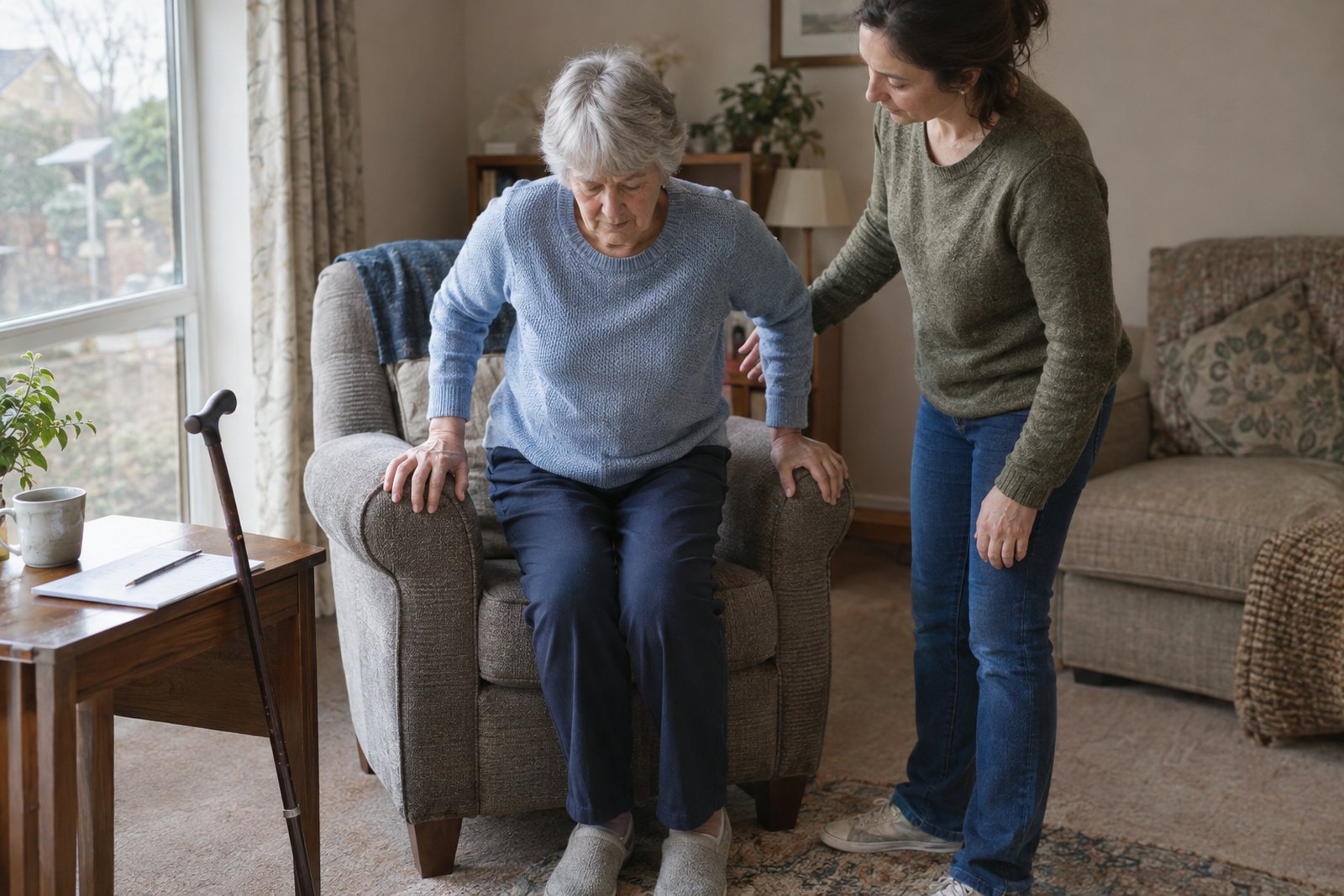
Stroke recovery does not follow a neat timetable. Some people make big gains quickly, some more slowly, and some are left with long-term effects. What is true for many people is that the earliest weeks and months often bring the fastest, most noticeable change, and improvement can continue for much longer than a year with the right practice and support.
If you are trying to work out how long stroke recovery takes, the most helpful way to think about it is in phases: getting medically stable, getting home safely, building skills and routines, then learning how to live well after formal rehab tails off. This guide explains what those stages often look like in the UK, what you can do at home, and when to push for more help.
The stroke recovery timeline in plain terms
You may hear people talk about "stages" of stroke recovery. They are not official, and you cannot force your way through them. But they are a useful map when you are exhausted and trying to plan.
- Hospital and stroke unit (days to a couple of weeks): stabilising, early assessments, starting rehab, discharge planning.
- Early rehab at home (roughly weeks 2 to 12): the most therapy input for many people, lots of change, lots of fatigue.
- Building independence (months 3 to 6): practising daily tasks, adapting how things are done, confidence and mood dips are common.
- Review and longer-term plan (around 6 months): a chance to take stock, adjust medication and goals, and ask for referrals.
- Life after rehab (months 6 to 12 and beyond): progress can continue, but you may need to create your own structure and find the right services.
At any point, you can get stuck because of pain, fatigue, low mood, fear of falling, poor sleep, or simply not knowing what to practise. That is often fixable, but it may need the right professional input.
Weeks 0 to 2: hospital, tests, and getting started
In hospital the priority is safety. The team will be working out what type of stroke it was, treating immediate complications, and trying to reduce the risk of another stroke. You might feel like everything is "medical" and not much is "rehab" at first, but early rehab often starts sooner than families expect.
What usually happens
- Assessment by therapists: physiotherapy (movement and walking), occupational therapy (everyday activities), and speech and language therapy (speech, language, swallowing).
- Early mobilisation where safe, and basic practice such as sitting balance, standing, transfers (bed to chair), and self-care tasks.
- Swallow checks and advice on safe eating and drinking if needed.
- Planning for discharge: what support is needed, what equipment is required, what your home set-up is like.
If you are a family member, it can feel like you are being asked to make big decisions (care, equipment, where someone will live) when you are still in shock. It helps to write questions down and take photos and measurements at home (door widths, steps, bathroom layout) so you are not trying to remember it all on the ward.
What is a good sign in this phase
Small things count. Being more alert, tolerating sitting out for longer, managing a few more steps with support, or getting one arm to "join in" a bit more. Early gains do not guarantee a particular long-term outcome, but they do show the brain and body are starting to re-organise.
Weeks 2 to 12: getting home and the busiest rehab period
For many people, this is the most intense part of stroke recovery. If someone is eligible, they may get Early Supported Discharge (ESD) or a community stroke rehab team for a period at home. If not, they may still get some community therapy input, or be referred to outpatient rehab.
This stage is often where families go from "we got through the hospital" to "how do we actually live like this?" The practical reality can be a shock, especially with stairs, toileting, washing, getting dressed, and getting out of the house.
If you are supporting someone day to day, the most useful companion piece to this timeline is caring for someone at home after a stroke in the first months. It covers the gritty details people do not always warn you about.
What you can do at home that genuinely helps
You do not need to "do therapy all day". You do need regular, meaningful practice, plus enough rest to recover.
- Build practice into real tasks: washing at the sink, making a drink safely, getting dressed using a consistent method, and walking to the loo only if it has been assessed as safe. Otherwise use the recommended option (for example a urinal, bottle or commode) to reduce falls risk.
- Keep goals small and measurable: "stand at the worktop for 2 minutes" beats "get stronger".
- Use the same set-up each time: same chair, same height of bed if possible, same side of the bed, same route to the toilet. Consistency reduces effort.
- Write down what the therapists say: who can do what, with what help, and what to avoid.
- Prioritise safety: a fall can set recovery back. If transfers feel risky, ask for reassessment.
One-sided weakness and "the affected side"
Many strokes cause weakness or reduced control on one side (hemiplegia or hemiparesis). Practical progress is often about learning to do tasks safely with the body you have right now, while also giving the weaker side chances to wake up and take part. For a plain English guide to what helps and what tends to get in the way, see hemiplegia and living with one-sided weakness after a stroke.
If you are helping physically, be wary of "yanking" on a weaker arm to pull someone up, or grabbing it to stop a fall. It can injure the shoulder. Ask the therapists to show you safer ways.
Months 3 to 6: building skills, confidence, and routines
By month 3, some people feel they have "plateaued". Often, what has happened is that the obvious improvements (standing up, first steps, getting words out) have slowed, and the work becomes less dramatic: better quality movement, more endurance, fewer prompts, fewer near-misses, more independence outside the home.
Common themes in this phase
- Fatigue becomes the hidden boss of everything. People can look "fine" and still be wiped out by a shower, a conversation, and a short walk. The practical strategies in fatigue after a stroke can make day to day life more manageable.
- Thinking and memory issues show up more. Once you are home, there are more decisions and more distractions. If you are noticing problems with planning, attention, or remembering steps, read memory and thinking problems after a stroke.
- Mood dips are common. This is often when the reality lands, and when support from professionals may be reducing. If low mood, anxiety, or loss of motivation is getting in the way, see low mood and depression after a stroke and speak to the GP.
- People want their old roles back. Driving, work, cooking, childcare, hobbies, being alone in the house. These are reasonable goals, but they need a safe plan.
If rehab input is tapering off and you feel there is still a lot to work on, this is a good time to ask for a clear home programme and for any onward referrals (for example to community neuro services, wheelchair services, continence services, or mental health support).
Around 6 months: review, risk reduction, and adjusting the plan
Many people are offered a review around 6 months after a stroke, but it varies by area and by the type of stroke service. The value of a review is not the date on the calendar. It is the chance to step back and ask: what has improved, what is still hard, what support is missing, and what is the plan from here?
Secondary prevention: what the GP and stroke team focus on
Preventing another stroke is part of recovery. Your GP or stroke clinic may review things like blood pressure, cholesterol, heart rhythm problems such as atrial fibrillation, diabetes risk, smoking, alcohol intake, weight, and activity levels. They may also review medication. Do not change or stop prescribed medication without medical advice.
If you are unsure what follow-up you should have, it is reasonable to ask the stroke team or GP what to expect locally and what to do if new problems appear later (for example new spasticity, shoulder pain, or worsening balance).
Months 6 to 12: life after formal rehab
This is the part families often feel unprepared for. Rehab may have ended, but daily life is still hard. Or someone is "mostly independent" but cannot manage the things that make life feel normal, like shopping, cooking, getting on a bus, using a computer, or going out socially without it wiping them out for two days.
What progress looks like in this phase
- Doing the same task with less effort or less supervision.
- Needing fewer rests, or recovering faster after activity.
- Fewer stumbles and near-falls.
- More confidence outside the home.
- Better problem-solving: "I can work around this" instead of "I can't".
It is also common for goals to change. Early goals are about safety and basics. Later goals are about quality of life. Both matter.
Common stroke effects and how they often recover
Strokes can affect movement, sensation, vision, speech, swallowing, thinking, mood, and energy. People can recover in one area and still struggle badly in another. That is normal, but it needs recognising so the right professional helps.
Movement and balance
Walking can improve for a long time with practice, but the pattern of walking matters. If someone is "getting around" but doing it in a way that is unsafe or painful, it is worth asking for review. Physiotherapists lead on gait, balance, strength and falls risk. An occupational therapist focuses on how movement problems affect daily tasks (washing, dressing, cooking, stairs, getting in and out of the car) and what adaptations make them safer.
Arm and hand use
Arm recovery is often slower than leg recovery. People may regain movement but struggle with control, sensation, or pain. Using the affected arm in daily life where safe can help, but it should be guided. If the shoulder is painful or the arm feels "floppy", ask for professional advice rather than pushing through.
Speech, language, and swallowing
Speech and language therapists are the right professionals for communication and swallowing. If someone is coughing, choking, has a wet voice, or seems to be "going off" food and drink, get this checked. Eating and drinking problems can lead to chest infections and weight loss.
Fatigue
Post-stroke fatigue is not just being tired. It can be crushing and unpredictable. It often improves, but it can also linger. Pacing, prioritising, and building routines around rest can make the difference between some independence and none.
Memory, attention, and "thinking speed"
Some people look physically recovered but cannot cope with planning, processing information quickly, or managing distractions. That can affect cooking, managing money, online forms, driving, and work. You may need cognitive rehab strategies, environmental changes (less clutter, fewer steps), and support to build consistent routines.
Mood, anxiety, and personality changes
After a stroke, people can experience depression, anxiety, emotional lability (crying or laughing more easily), irritability, or a sense of grief for their old life. This is not a personal failing and it is not something families can simply "cheer up". Talk to the GP. Psychological therapies, medication, and structured activity plans can help.
What helps stroke recovery at home (without burning out)
Families often ask for "exercises". Exercises have a place, but most recovery is about practice in real life, done often enough to make it stick.
Make practice specific
- Choose 1 to 3 priorities for the next two weeks (for example: getting to the toilet safely, washing at the sink, making a simple lunch).
- Break the task down into steps and practise the tricky step first.
- Repeat little and often. Five minutes, several times a day, is usually better than one exhausting hour.
Use goals that matter to the person
"Improve transfers" is a rehab goal. "I want to get to the garden and make a cup of tea out there" is a life goal. Both can be used, but the second one tends to get more buy-in and more practice.
Respect rest as part of rehab
Recovery happens between the sessions. If someone is consistently crashing, snapping, or sleeping for hours after basic activity, scale back and speak to the team. Overdoing it can mean less total practice over the week, not more.
Adapt the environment so the right thing is the easy thing
- Put everyday items at waist height to reduce bending and one-handed rummaging.
- Use a stable chair with arms for sit-to-stand practice, rather than a low, soft sofa.
- Reduce trip hazards on the main route to the toilet, especially at night.
- Think about lighting, especially on stairs and in the bathroom.
If you are constantly "spotting" someone to stop them falling, that is a sign the set-up is not right yet and needs review.
When to seek urgent help
A stroke is a medical emergency. Call 999 if you think someone is having a stroke or another one.
The FAST test is a useful prompt:
- Face: has their face fallen on one side?
- Arms: can they raise both arms and keep them there?
- Speech: is their speech slurred or strange?
- Time: call 999 now.
Other warning signs can include sudden severe headache, sudden confusion, sudden loss of vision, sudden dizziness with new weakness, or sudden numbness, especially on one side. If symptoms come and go quickly (a possible TIA or "mini-stroke"), call 999 urgently, even if the symptoms have resolved.
Where an occupational therapist fits
Occupational therapy is about what you can do day to day, and how to make daily life safer, easier, and more independent after a stroke. An occupational therapist looks at the whole picture: movement, fatigue, thinking skills, vision, mood, habits, home layout, and the demands of the tasks you need to do.
An occupational therapist can help with:
- Getting the basics working: washing, dressing, toileting, transfers, stairs, kitchen tasks.
- Making a home safer: practical changes to reduce falls risk and make routes easier.
- Adapting how tasks are done: one-handed techniques, sequencing prompts, energy-saving methods.
- Cognitive strategies: routines, checklists, reducing "mental load", managing attention and distraction.
- Planning a return to roles: being alone at home safely, community access, hobbies, and in some cases work tasks (often alongside other services).
NHS stroke teams do a huge amount, but input is time-limited and varies by area. If you need a focused assessment at home after discharge, or you have hit a wall later on, a private occupational therapist visiting at home can assess what is happening in your real environment and help you set a practical plan. See neurological occupational therapy for the kinds of support people often look for after stroke.
Occupational therapy is not a replacement for medical follow-up. If new symptoms appear, pain is severe, swallowing is unsafe, or mood is very low, the right next step may be your GP, NHS 111, A&E, or the stroke team.
Frequently asked questions
How long does stroke recovery take?
There is no fixed timeline. Many people see the quickest changes in the first weeks and months, especially in basic mobility and self-care. But improvement can continue for much longer, including beyond the first year, particularly with the right practice and goals.
What are the stages of stroke recovery?
A useful way to think about it is: hospital and stabilising, early rehab at home, building independence and routines, then longer-term adjustment once formal rehab reduces. People can move back and forth between stages, especially if they have setbacks like infections, falls, pain, or low mood.
Can you still improve after 6 months?
Yes. Six months is sometimes talked about because services may review you around then, and because early recovery can be rapid. But the brain and body can keep adapting. Progress may be slower and needs more self-directed practice, but it can still happen.
What if progress seems to stop?
First, check the basics: fatigue, sleep, pain, confidence, fear of falling, and mood can all block progress. Then look at whether the practice is specific enough (real tasks, repeated often) and whether the home set-up is helping or hindering. If you are unsure, ask for reassessment. A targeted review can sometimes unlock the next step.
When can someone drive after a stroke?
Driving after a stroke depends on the type of stroke, symptoms, recovery, and medical advice. There are legal responsibilities around informing the DVLA in some situations and you may need medical clearance. Check current rules on GOV.UK and discuss it with the stroke team or GP before returning to driving.
How can family help without taking over?
Aim to support practice, not replace it. Give enough help to keep things safe, but leave space for the person to do the parts they can do, even if it is slower. Agree one or two priorities together, and build those into the day at a time when energy is best.
Next steps
If you want help making home life work after stroke, see our neurological occupational therapy page, or current guide prices, and choose your area below.

Talk to an occupational therapist near you
This guide is general information. For advice about your own situation - or someone you look after - a local occupational therapist can visit you at home and see it for themselves.
Choose your area: