

Sensory Needs in Teenagers: What Changes and What Helps
By Mobile Occupational Therapist • 25 September 2026 • 13 min read
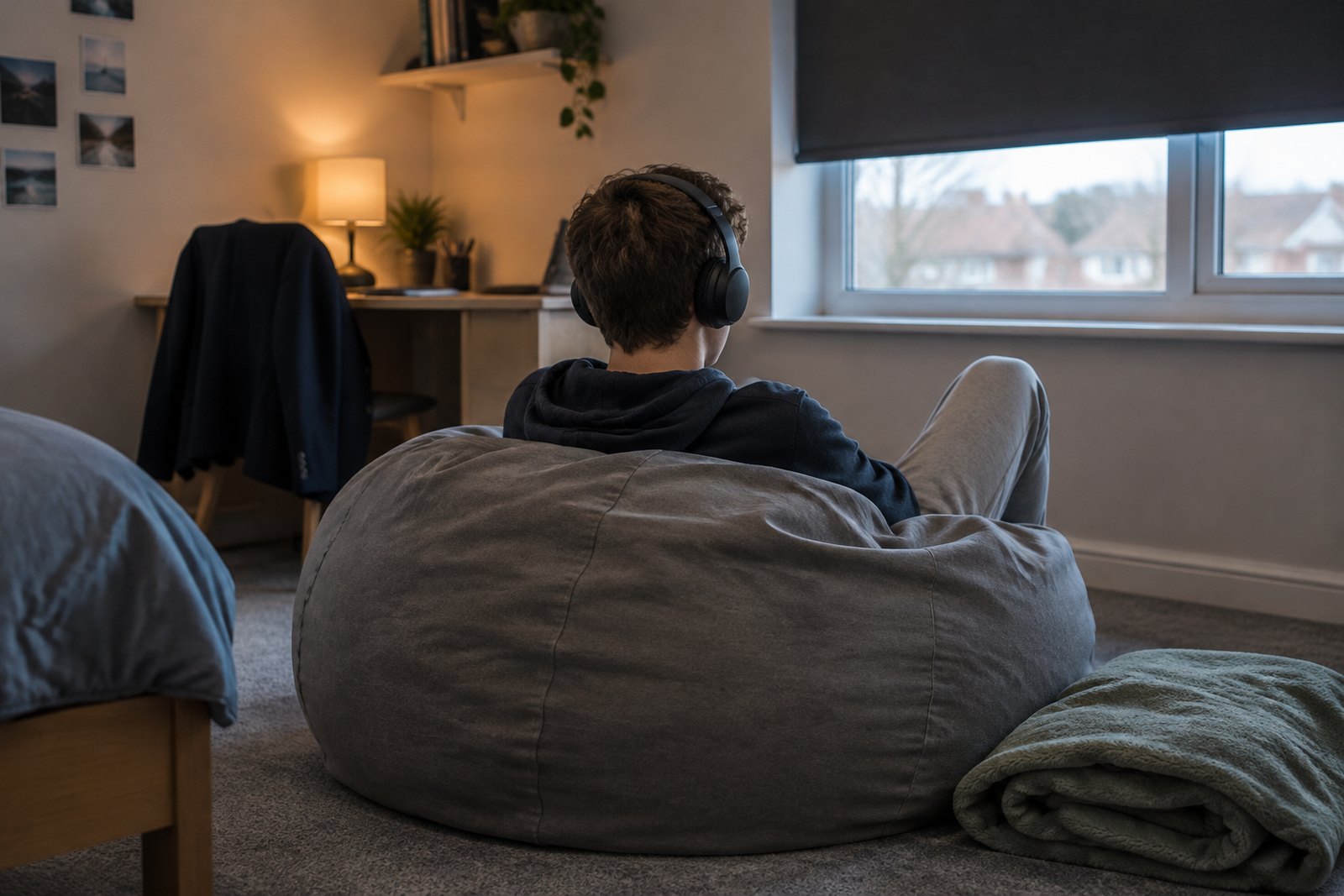
Yes, sensory differences often change in the teenage years, and for many young people they become more noticeable, not less. For many young people the underlying sensory differences have not changed much, but everything around them has. A bigger, louder school. Crowded corridors. A stiff uniform. A body that is changing. Less sleep, and far more pressure to fit in. A young person who coped reasonably well at primary school can start to struggle badly at 12 or 13, and it is often put down to attitude or hormones alone.
A lot helps, and much of it is simple. Control over noise. Clothes that do not hurt. Somewhere quiet to go. Chances to move. Enough sleep. A teenager who can explain what they need. The catch with teenagers is that it has to be done with them, not to them. This guide covers what tends to change, practical strategies for home and school, exams, sleep, when to worry, and where an occupational therapist fits.
What sensory processing actually means
Sensory processing is how the brain takes in and makes sense of information from the senses: sound, sight, touch, taste, smell, movement, balance, body position, and signals from inside the body such as hunger, thirst or needing the toilet. Some people are more sensitive than average to certain input, so a hand dryer feels painful or a label feels like sandpaper. Some notice less, so they miss that they are cold or hungry. Some seek out strong input, such as loud music, spinning or hard physical exercise. Most people have a mix.
Sensory differences are common in autistic people and in people with ADHD or dyspraxia, but plenty of young people have them without any diagnosis. If you want the background from earlier childhood, our guide to sensory processing in children covers the basics.
Why things can get harder in adolescence
Secondary school is a sensory assault course
Think about a normal school day from the point of view of someone sensitive to noise and crowds. Corridors at lesson changeover. A canteen full of scraping chairs and shouting. Bells. Echoing sports halls. Science labs that smell. Changing rooms thick with spray deodorant. Moving rooms every hour, with different lighting, different seats and different teachers' rules. At primary school there was usually one classroom and one adult who knew the child well. At secondary school there may be a dozen adults, none of whom sees the whole picture.
Uniform and PE
Blazers, ties, buttoned collars, synthetic fabrics and stiff school shoes are hard work for a teenager who is sensitive to touch. Changing for PE adds being seen, being rushed and being close to other people, all at once.
A changing body
Puberty brings a run of new sensory experiences. Body odour and the need for deodorant, when strong scents are unbearable. Bras. Shaving. Spots and skin products. Periods, and period products that can feel intolerable. Growth spurts can make a young person clumsier for a while, because their sense of where their body is in space has to catch up. Many teenagers and parents also notice that tolerance for noise, touch and change dips at certain times, including around periods, though this varies a great deal from person to person.
Independence and social pressure
Teenagers are expected to travel on busy buses, go to shopping centres, parties and concerts, and later hold down part-time jobs. At the same time, fitting in matters more than it ever did. A 14-year-old who happily wore ear defenders at eight may now refuse, because nobody else does. That is a perfectly understandable choice, and it means support has to become more discreet.
Masking and burnout
Masking means hiding or suppressing differences to fit in: putting up with noise without reacting, copying how others behave, forcing eye contact, laughing along when overwhelmed. It is often described in autistic girls, and our guide to autism in girls explains why their needs are so often missed, but boys and young people with no diagnosis mask too.
Masking works, up to a point. It costs a lot of energy. A common pattern is a teenager who teachers describe as quiet and fine, who then falls apart the moment they get home: tears, rage, silence, hours in their room. Both reports can be true. School is seeing the effort; you are seeing the cost.
Kept up for too long, this can tip into burnout. Signs to watch for include:
- exhaustion that rest does not seem to fix
- losing skills they had, such as getting themselves ready or coping with a bus journey
- becoming more sensitive to noise, light or touch than before
- more meltdowns or shutdowns
- withdrawing from friends and things they used to enjoy
- finding it harder and harder to get to school
If school attendance is starting to slide, our guide to emotionally based school avoidance is worth reading early, before the gap gets wide.
Practical strategies that respect their independence
The most useful shift with teenagers is from managing their sensory needs to helping them manage their own. Ask, try, review, and let them have the final say wherever it is safe.
Start with a sensory audit together
Sit down, at a calm moment, and ask two questions: what drains you, and what helps? Write down their answers in their words. Over a week, notice which parts of the day go badly. Patterns often jump out: Tuesday is the double PE day, lunchtime is always the flashpoint, the bus home is worse than the bus there. Fixing one or two of these can make more difference than any general advice.
Noise
- Many teenagers prefer discreet in-ear options, such as earplugs designed to lower volume while letting speech through, or noise-cancelling earbuds, to large over-ear defenders. Our guide to noise sensitivity covers the options.
- Agree with school when they can be worn, and make sure every teacher knows.
- Ask whether they can leave lessons a few minutes early to avoid the corridor rush, or eat lunch somewhere quieter.
- If music is how they block noise, keep the volume sensible and agree they come out when crossing roads or cycling.
Clothes and uniform
- Cut out labels, try seamless socks and underwear, and let them wear a soft layer under a scratchy shirt.
- Ask the school about approved alternatives: a polo shirt instead of shirt and tie, softer trousers, plain black trainers instead of stiff shoes, or the blazer carried rather than worn.
- For PE, ask whether they can change in a cubicle or toilet, or wear PE kit under their uniform on PE days.
In England, Wales and Scotland, schools have a duty under the Equality Act 2010 to make reasonable adjustments for disabled pupils, and that can include uniform. Northern Ireland has similar duties under its own disability discrimination law. Raise it with the head of year or SENCo, explain the reason, and put the request in writing. GOV.UK has guidance on support for pupils with special educational needs if you want to check where you stand.
Quiet spaces and an exit plan
- Agree a specific place to go when things get too much, and check it is genuinely quiet. A busy reception area is not a quiet space.
- Agree a discreet way of leaving: a card on the desk, a word with the teacher, a pre-arranged signal. Teenagers will not use anything that draws attention.
- At home, help them set up their bedroom as a recovery space: dimmable or warm lighting, blackout blinds, a soft seat, less clutter, and a door they can close. Then respect the door.
Movement
Movement and heavy physical effort calm many young people. At school that might mean being sent on errands, standing at the back for part of a lesson, sitting on the end of a row, or a quiet fidget item that does not disturb others. Outside school, walking, swimming, cycling, climbing, the gym, trampolining or martial arts can all help. Many teenagers find that hard exercise before school, or straight after, makes the rest of the day more manageable.
Food, smells and the body
- A packed lunch they can predict, eaten somewhere calmer, often beats the canteen.
- Try unscented or roll-on deodorants rather than sprays.
- Let them try different types of period product, including period pants, without pressure. Some teenagers find an electric razor easier than a blade.
- If they do not notice thirst, hunger or needing the toilet until it is urgent, phone reminders can help.
Build in recovery time
Many teenagers need time to decompress after school before they can talk, eat or do homework. Questions at the door rarely go well. Give them space first and the conversation tends to come later.
Self-advocacy
The long-term goal is a young person who can explain their own needs. Help them practise a simple sentence: 'I find the canteen too loud, so I eat in the library.' A one-page profile that they help write, and that goes to every teacher, is often more useful than a long report. Invite them to school meetings about them. Practise what they might say to a college tutor or a manager at a Saturday job. These skills matter even more after 16, when support becomes more their own business.
Exams and access arrangements
Exam halls can be among the hardest environments of all: large, echoing, full of rustling paper, footsteps and ticking clocks. For GCSEs and A levels in England, Wales and Northern Ireland, schools apply for access arrangements under rules set by the Joint Council for Qualifications. Scotland has its own system through the SQA. Depending on the young person's needs and evidence, arrangements can include things such as rest breaks, a smaller or separate room, extra time or using a word processor.
Two things matter. First, the arrangement usually needs to reflect the young person's normal way of working, so supports should be in place in lessons and tests well before the real exams. Second, schools need time to gather evidence. Speak to the SENCo early, ideally as GCSE courses begin, and use mock exams to test what works. Your school's exams officer can tell you the current rules and deadlines.
Sleep
The body clock naturally shifts later during adolescence, so many teenagers genuinely are not sleepy at 10pm. Sensory differences pile on top: bedding that feels wrong, light around the curtains, household noise, being too hot, and a mind still buzzing from the day.
- Keep wake-up time fairly consistent, including weekends, as far as is realistic.
- Blackout blinds, a fan or steady background sound, and bedding in a fabric they choose can all help.
- A predictable wind-down routine helps more than battles about phones. Agree together when screens go off, or at least go dim.
- Some teenagers like the feel of a heavier duvet. They must always be able to move it off easily themselves.
If sleep problems go on for weeks, or you notice loud snoring or pauses in breathing, speak to the GP.
When to get help, and from whom
See the GP if your teenager has low mood that lasts more than a couple of weeks, anxiety that is stopping them doing everyday things, big changes in eating or weight, has hurt themselves, or has withdrawn from almost everything. The GP is also the usual starting point if you think autism or ADHD might be behind their sensory differences, though in some areas schools can refer too. If noise sensitivity has appeared suddenly, ask about a hearing check.
If your teenager is in immediate danger, or has seriously hurt themselves, call 999 or go to A&E. For urgent help that is not an emergency, call NHS 111; in England you can choose the mental health option. Samaritans are free to call any time on 116 123. Shout offers a free text service on 85258. Childline, for anyone under 19, is on 0800 1111. Our guide to getting mental health support explains the routes, including CAMHS.
Other professionals lead in some areas. A speech and language therapist is the right person for communication difficulties. If eating is very restricted, start with the GP, who can involve a dietitian or specialist services.
Where an occupational therapist fits
An occupational therapist looks at how sensory differences affect everyday life: getting to and through school, sleep, washing and dressing, eating, travelling, and later work and college. A sensory assessment for a teenager usually involves talking with the young person and their parent, standardised questionnaires (some designed for teenagers to fill in themselves), observation, and sometimes a school visit or information from teachers. Our guide to sensory processing assessments explains what these involve.
The result should be a practical plan built around the young person's own goals, and a report with clear recommendations that school can act on. That report can support SEN support planning, an EHCP request, or help a school understand needs when considering adjustments. A private occupational therapist visiting at home can see the bedroom, the morning routine and the after-school crash as they really are. See our sensory needs service page for more.
Be clear about the limits. An occupational therapist does not diagnose autism or ADHD on their own, and does not treat depression, anxiety or self-harm; CAMHS and the GP lead there. The best-supported help is practical: changing the environment, building routines and teaching strategies. Be wary of anyone promising to cure or permanently rewire sensory processing.
NHS children's occupational therapy varies by area, and some services see sensory needs only in limited circumstances. Ask the GP or school what is available locally.
Frequently asked questions
Can a teenager suddenly develop sensory issues?
Usually the differences were there all along and have become more noticeable as demands increased, or as masking stopped working. But genuinely new symptoms, especially after a head injury, alongside headaches or pain, or with a change in hearing or vision, should be checked by a GP.
How do I know if it is sensory or just being a teenager?
Often it is both. Look for patterns: does irritability spike in particular environments, after busy days, or with particular clothes, noise or smells? Sensory-driven distress tends to follow the environment rather than the mood of the moment.
Can my teenager wear headphones or earplugs at school?
That depends on the school, but many will agree when the reason is explained. Ask the SENCo, put the request in writing, and make sure all teachers are told so your teenager is not challenged in every lesson.
Do they need a diagnosis to get support?
No, not for most adjustments. SEN support in schools in England is based on need, not diagnosis. Exam access arrangements do need evidence of need, which is another reason to talk to school early.
Will they grow out of it?
Many sensory differences continue into adulthood. What usually improves is control: adults choose their clothes, their workplace and how they spend their evenings. Teenagers who learn what helps, and how to ask for it, tend to cope much better as they get older.
Should I be in the room for an assessment?
An occupational therapist will want to hear from your teenager directly and will usually ask how they want things to run. Your view of home life is valuable, but many teenagers speak more freely with some time on their own.
Next steps
If sensory differences are making school, sleep or home life harder, an occupational therapy assessment can turn them into a practical plan. See our sensory needs and children and young people pages, or current guide prices, and choose your area below.

Talk to an occupational therapist near you
This guide is general information. For advice about your own situation - or someone you look after - a local occupational therapist can visit you at home and see it for themselves.
Choose your area: