

Emotionally Based School Avoidance: What It Is and How to Help
By Mobile Occupational Therapist • 28 October 2026 • 14 min read
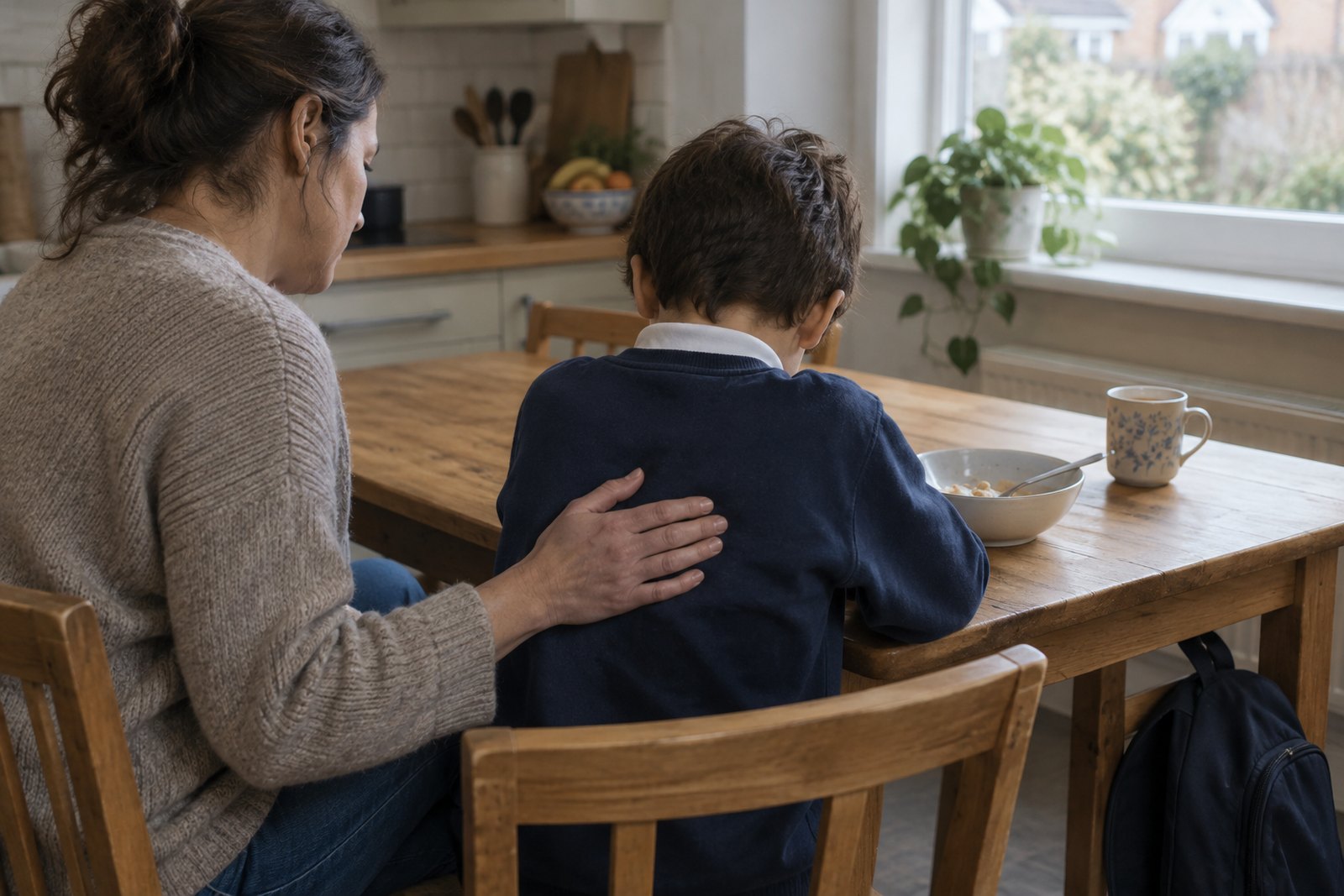
Emotionally based school avoidance, usually shortened to EBSA, is when a child or teenager finds it very hard or impossible to go to school because of how school makes them feel. Most often that feeling is anxiety, but it can also be overwhelm, distress or a sense of dread they cannot always put into words. It is not truancy. A child who truants is usually choosing to be somewhere else, often without their parents knowing. A child with EBSA usually wants to be able to go, may be desperate to, and is at home with you, in tears, with a stomach ache, at quarter past eight on a Monday.
What helps is rarely one fix. It is working out what is driving the avoidance, getting school to change what can be changed, keeping your child connected to school even on the bad days, and planning a gradual, realistic route back. The earlier this starts, the easier it usually is. This guide covers each of those, what to ask the school for, what the law actually says without the scare stories, when to involve the GP, and how to keep yourself going while it is happening.
Why "school refusal" is a misleading term
You will still hear "school refusal" from schools, doctors and in your own search history. It is the older term and it is widely understood, but it gets the problem slightly wrong. "Refusal" suggests a choice, and a choice suggests that firmer parenting or a consequence will sort it out. For most children with EBSA it does not work like that. Their body is in a state of alarm. They are not refusing so much as unable, at that moment, to do something that feels unbearable.
The language matters because it shapes what adults do next. If school sees refusal, the response may be pressure and sanctions. If school sees anxiety with a cause, the response is more likely to be curiosity, adjustments and a plan. You do not need to correct everyone, but it is reasonable to say "we think this is anxiety-based, and we would like to work out what is behind it".
What usually sits underneath it
EBSA is a description, not a diagnosis. It tells you what is happening, not why. The why is usually a mix of things building up over time rather than one event. Common drivers include:
- Anxiety - general worry, social anxiety, fear of getting things wrong, or worry about something at home such as a poorly parent or a separation.
- Sensory overwhelm - noisy corridors, crowded dinner halls, bells, strong smells, scratchy uniform, bright lights. A child who is sensitive to these can be exhausted before the first lesson starts. Our guide to sensory processing difficulties in children explains this in more detail.
- Unmet special educational needs - difficulties with reading, writing, handwriting, attention or processing that mean every lesson feels like failing in public.
- Bullying or friendship problems - including online, and including the quieter kinds such as being left out.
- Autism, diagnosed or not - the social demands, unpredictability and sensory load of school can be relentless. Many autistic children hold it together all day and fall apart at home, which can leave school genuinely surprised to hear there is a problem.
- Social difficulties more generally - not knowing the unwritten rules, finding unstructured time such as break and lunch hard.
- Transitions - starting secondary school, a new teacher, a change of class, returning after illness or a long holiday.
- Low mood or other mental health difficulties that need assessment in their own right.
Sometimes there is a specific trigger, such as a particular lesson, teacher or person. Often there is not, and the child honestly cannot tell you. "I don't know" is frequently a true answer, not evasion.
Early signs worth noticing
EBSA tends to creep in. Catching it early gives you more options. Signs include:
- Stomach aches, headaches, feeling sick or needing the toilet repeatedly on school mornings, which ease at weekends and in holidays.
- Sunday night dread: tearfulness, irritability, trouble getting to sleep the night before school.
- Struggling to get dressed or leave the house, getting slower and slower as the deadline approaches.
- Asking to come home during the day, frequent visits to the school office or medical room.
- Lateness that keeps growing, or odd days off that cluster around certain lessons or days.
- Big meltdowns or shutdowns after school, or being unusually withdrawn.
- Lots of questions about the school day, needing reassurance about what will happen.
Physical symptoms should not simply be assumed to be anxiety. If a pain is severe, new, wakes your child at night or comes with other symptoms such as weight loss, fever or blood in poo or wee, see the GP to rule out a physical cause.
What you can do at home this week
Stay calm and curious, not cross
Easier said than done at ten past eight. But the aim is to lower the alarm, not add to it. Talk about school at a calm time, not on the doorstep. Side-by-side conversations, in the car or while doing something together, often go better than face-to-face ones. Ask what the hardest part of the day is, rather than why they will not go.
Map the week
Keep a simple diary for a couple of weeks: which days are hardest, what lessons fall on those days, how they slept, what happened the evening before, how they were after school. Patterns often appear that nobody had spotted, and it gives you something concrete to take to school.
Keep the routine, gently
Keep getting up, getting dressed and having breakfast on school days, even if school is not happening. Days at home should be calm and boring rather than a reward, but not a punishment either. Screens all day tend to make the return harder.
Help them notice what their body is telling them
Many children cannot tell the difference between worry, hunger, tiredness and a real tummy bug. Naming feelings together and noticing where they show up in the body can help over time. Our guide to interoception and noticing body signals has practical ideas.
Working with school
You cannot fix this from home alone, and school cannot fix it without you. Aim for a working partnership, even if relationships feel strained.
Ask for a meeting early
Ask to meet the person who can actually make changes: often the head of year or pastoral lead, plus the SENCO (special educational needs coordinator) if learning or sensory needs might be involved. Bring your diary. Ask what school has noticed. Agree one named person your child can go to.
Ask for an attendance support plan
A good plan is written down and reviewed regularly. It usually covers what is making school hard, what will change, small steps back, who your child goes to when they arrive and when they are struggling, how home and school will communicate, and when you will next meet. Small, achievable steps matter more than ambitious ones. Getting to the school gate with a trusted adult meeting them may be a genuine success in week one.
Reduced timetables: only in writing, only short-term
Schools sometimes suggest a part-time or reduced timetable. Used well, it can be a useful bridge. Used badly, it quietly becomes the new normal and your child loses months of education. Government guidance in England says part-time timetables should be used only in exceptional circumstances, be agreed with parents, be time-limited and include a plan to return to full-time. In practice, ask for it in writing, with a start date, a review date and a clear plan for building the hours back up. Do not accept an informal "just keep them at home in the afternoons" arrangement.
Special educational needs and EHCPs
If you think your child has unmet needs, ask in writing for them to be assessed and supported through SEN support. If needs are significant and not being met, in England you can ask the council for an education, health and care needs assessment yourself. Wales, Scotland and Northern Ireland have different systems, so check the rules where you live. Our guide to EHCPs and how to apply explains the process. In England, councils also have a duty to arrange suitable education for children who cannot attend school because of illness or other reasons, and the charity IPSEA explains how this works.
Sensory and environmental adjustments at school
For many children, small practical changes reduce the load enough to make the day possible. Things worth asking for include:
- Arriving a few minutes before or after the main rush, and leaving lessons early to avoid crowded corridors.
- A quiet, predictable place to go at break, lunch or when overwhelmed, and a simple agreed way to ask for it, such as an exit card.
- Eating lunch somewhere smaller than the main hall.
- Ear defenders or ear plugs in noisy lessons and assemblies.
- Uniform flexibility: softer fabrics, no tie, trainers instead of stiff shoes if needed.
- A consistent seat, away from doors, windows or the busiest part of the room.
- Advance warning of changes such as supply teachers, trips, fire drills or room swaps.
- A visual timetable so the day is predictable.
- Movement breaks for children who need to move to stay regulated.
- Reduced homework while the return is being built up.
These are usually cheap and quick. The hard part is consistency, so they need to be in the written plan and known to every member of staff your child sees.
Keeping your child connected while they are off
The longer a child is away, the bigger school can feel. Keeping small threads of connection makes the return less of a cliff edge. Depending on what your child can manage:
- Keep in touch with one or two friends.
- Ask for work to be sent home, at a level your child can actually do.
- Arrange short visits to school when it is quiet, after school or in a free period, to see the room they will go back to.
- Ask the trusted adult to send a short message or photo, or phone at an agreed time.
- Keep up clubs or activities outside school where they feel capable.
The aim is that school still feels like their school, not somewhere they used to go.
What the law says, in plain terms
In England, parents have a legal duty to make sure a child of compulsory school age gets a suitable full-time education. Schools record every absence, and unauthorised absence can lead to formal action, including penalty notices. That is the part that frightens parents, so here is the rest of it.
National attendance guidance in England expects schools and councils to work with families and offer support first, especially where a child's mental health or special educational needs are affecting attendance. Absence because a child is unwell, including with mental health difficulties, can be authorised. What protects you most is a clear paper trail: emails to school, notes of meetings, a written attendance plan, and any letters from the GP or other professionals. Keep everything. Wales, Scotland and Northern Ireland have their own rules, so check the government guidance for where you live. If you are worried about formal action, the GOV.UK pages on school attendance and specialist SEND advice charities are the places to start.
When to see the GP, and when it is urgent
Book a GP appointment if your child seems persistently low or tearful, has stopped enjoying things they used to love, is sleeping or eating very differently, is withdrawing from friends and family, or if anxiety is affecting life well beyond school. The GP can check for physical causes, talk about mental health support and, where appropriate, refer to children and young people's mental health services. A GP letter can also help school authorise absence and take things seriously.
If your child talks about not wanting to be alive, or you find signs of self-harm, treat it as urgent. If they are in immediate danger, call 999 or go to A&E. Otherwise call NHS 111 for urgent advice, or contact your GP the same day. Children and young people can call Childline free on 0800 1111.
Looking after yourself
Every school morning that goes wrong costs you something: sleep, work, patience, sometimes your job. Many parents also carry guilt, or the sense that everyone thinks they are being soft. You are not. You are dealing with a hard, slow problem that does not respond to quick answers. Talk to your employer early about flexible working. Find one person you can be honest with. Online and local parent groups for EBSA and SEND can be a lifeline. If you are running on empty, our piece on carer burnout is written for exactly that.
Where an occupational therapist fits
An occupational therapist is not usually the first or main professional for EBSA. School, the GP and, where needed, mental health services lead on anxiety and mood. An educational psychologist often advises on learning and emotional needs in school. Speech and language therapists help where communication is part of the difficulty.
Where occupational therapy can add something is the practical, physical and sensory side of the school day. A children's occupational therapist can assess how your child processes sensory information, how they manage fine motor tasks such as handwriting, how organised they are with routines and transitions, and how tiring the school environment is for them. They can then recommend specific, realistic adjustments for home and school, help build calmer morning and evening routines, and write a report that can support SEN support plans or an EHCP request. A private occupational therapist visiting at home sees how your child copes in their own environment, which is often where the effects of the school day show most clearly.
Frequently asked questions
Is school refusal the same as emotionally based school avoidance?
They describe the same situation. EBSA is the term many councils and schools now prefer because it points to the cause, emotional distress, rather than implying the child is simply choosing not to go.
Can I be fined if my child will not go to school because of anxiety?
Formal action is possible for unauthorised absence, but national guidance in England expects support to be offered first, and absence for illness, including mental health, can be authorised. Keep written records of everything and work with school on a plan. Check GOV.UK or a SEND advice charity if you are worried.
Should I physically make my child go to school?
Forcing a distressed child into school usually increases the fear and can damage trust with you and with school. Gentle, consistent expectations combined with real changes at school tend to work better than pressure alone. That is not the same as letting things drift, which is why a written plan matters.
Does my child need a diagnosis to get help?
No. Schools should support needs whether or not there is a diagnosis. A diagnosis such as autism or ADHD can help explain what is going on, but you do not need to wait for one to ask for adjustments.
How long does it take to get back to school?
There is no standard timescale. It depends on how long avoidance has been going on, what is driving it and how quickly the right changes are made. Early action usually makes it quicker. Progress is rarely a straight line, so expect setbacks and plan for them.
Can an occupational therapist help with school avoidance?
An occupational therapist can help where sensory overwhelm, coordination, handwriting, fatigue or daily routines are part of the picture, and can recommend practical adjustments. They work alongside school, the GP and mental health services rather than replacing them.
Next steps
If sensory overwhelm or the practical demands of the school day seem to be part of the problem, see our sensory needs and children's occupational therapy pages, or current guide prices, and choose your area below.

Talk to an occupational therapist near you
This guide is general information. For advice about your own situation - or someone you look after - a local occupational therapist can visit you at home and see it for themselves.
Choose your area: