

Sensory Processing Disorder in Children: Signs and What Helps
By Mobile Occupational Therapist • 15 October 2026 • 14 min read
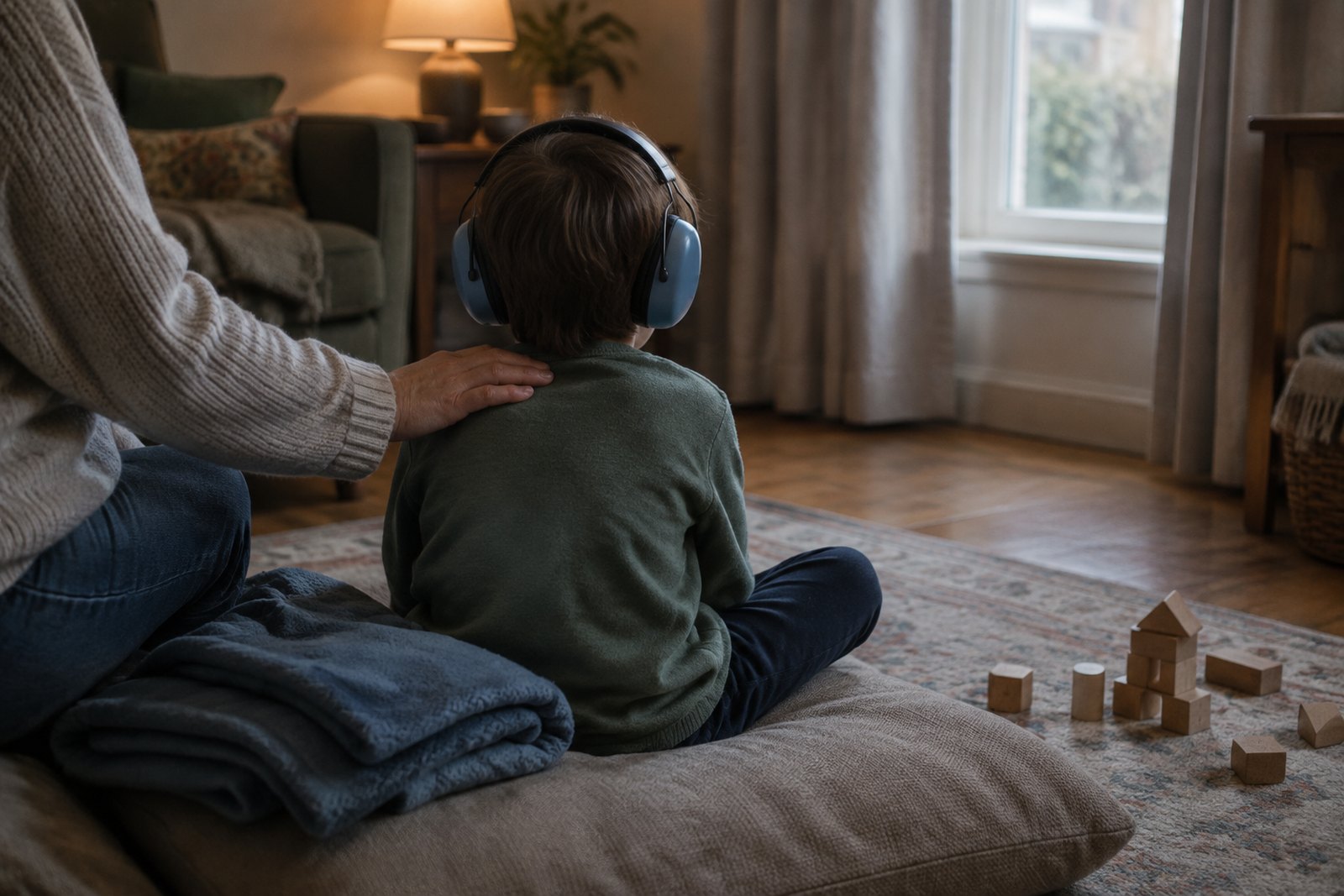
Sensory processing disorder is a term used when a child's brain handles everyday sensations, such as noise, touch, movement, light, smells and tastes, in a way that makes ordinary life harder than it should be. Some children react too strongly: the sock seam is unbearable, the hand dryer is terrifying. Some barely seem to notice: they do not feel the cold, they crash into furniture, they cannot sit still without moving. Many children do a confusing mix of both, sometimes on the same day.
It is not a formal diagnosis in the main medical manuals, and it often turns up alongside autism, ADHD or dyspraxia. That does not mean it is imaginary. The difficulties are real and they can affect dressing, eating, sleep, school and family life. The good news is that a lot can be done at home, often without waiting for anyone. This guide explains what is going on, the signs to look for, what helps day to day, and where an occupational therapist fits. If you are reading this about yourself rather than your child, see our separate guide to sensory processing disorder in adults.
What sensory processing differences actually are
All day, every day, your child's brain takes in information from the senses and decides what matters. Most of us filter out the hum of the fridge, the feel of our clothes and the slight sway of a moving bus without thinking about it. Sensory processing is that filtering and sorting. When it works smoothly, a child can get on with playing, learning and eating without being distracted or overwhelmed by the sensations involved.
When it works differently, the volume dial is in the wrong place. Some sensations are turned up so loud they feel painful or threatening. Others are turned down so low the child does not register them, or goes looking for more. Most children have a few sensory quirks. It becomes worth looking at more closely when it is getting in the way of everyday life.
The name: why there is a debate
You will see several terms: sensory processing disorder (SPD), sensory processing differences, sensory processing difficulties and sensory integration difficulties. They describe broadly the same thing. The disagreement is about whether it is a condition in its own right.
Sensory processing disorder is not listed as a standalone diagnosis in the two main diagnostic manuals used by doctors. Sensory differences are, however, recognised as part of autism, and they are very common in children with ADHD and developmental coordination disorder (DCD, often called dyspraxia). Some children have sensory differences without any other diagnosis at all.
In practice, many UK professionals prefer "sensory processing differences" because it describes what is happening without implying a separate medical label. For you as a parent, the name matters less than the question underneath: what is hard for my child, and what makes it easier? You do not need a diagnosis to start helping.
Over-responsive, under-responsive and sensory seeking
It helps to think in three broad patterns. A child can show different patterns for different senses.
- Over-responsive (sometimes called sensory sensitive or avoiding). Sensations feel too strong. The child may cover their ears, refuse certain clothes, gag at food textures, hate being touched unexpectedly, or become anxious in busy places. They are often on high alert.
- Under-responsive (low registration). Sensations do not seem to get through. The child may not notice their name being called, not realise their face is messy, seem slow to get going, or not notice pain or cold the way you would expect.
- Sensory seeking. The child actively looks for more input: spinning, jumping, crashing, chewing, touching everything, making noise. This is the child who climbs the bookcase. We have a separate guide to sensory seeking behaviour in children.
A child who is over-responsive to sound may also be a movement seeker. That combination is common and it is why sensory behaviour can look so contradictory.
Signs to look for, sense by sense
These are examples, not a checklist to diagnose with. Lots of children do a few of these. What matters is how often, how intense, and how much it gets in the way.
Touch
- Distress about clothes: labels, seams, tight waistbands, new shoes, or insisting on the same few items.
- Hates hair washing, hair brushing, nail cutting or teeth brushing far more than other children.
- Avoids messy play, sand, paint or glue, or only touches with fingertips.
- Reacts to light or unexpected touch as if it hurts, but may be fine with a firm hug.
- Or the opposite: touches everything and everyone, does not notice a runny nose or food on the face.
Sound
- Covers ears at hand dryers, hoovers, blenders, sirens or school assemblies.
- Struggles in noisy classrooms, parties or supermarkets.
- Or seems not to hear you, while their hearing has been checked and is fine.
Sight
- Bothered by bright or flickering lights, squints a lot, prefers dim rooms.
- Overwhelmed by busy, cluttered spaces or wall displays.
- Or seeks visual input: stares at spinning objects, lights or moving water.
Taste and smell
- A very narrow diet based on texture, colour or brand of packaging, gagging at new foods.
- Notices smells others do not and reacts strongly.
- Or chews and mouths non-food items well past the toddler years.
Movement and balance (vestibular)
- Fearful of swings, slides, escalators, or having feet off the ground. Gets car sick easily.
- Or constantly on the move: spinning, rocking, hanging upside down, never seeming dizzy.
Our guide to the vestibular system in children explains this sense in more detail.
Body awareness (proprioception)
- Seems clumsy, bumps into things, presses too hard with pencils or breaks toys by accident.
- Loves crashing, rough play, tight squeezes and heavy blankets.
- Slumps in chairs or leans on furniture and people.
Inside the body (interoception)
- Does not notice hunger, thirst or needing the toilet until it is urgent.
- Struggles to tell you whether they are hot, cold, tired or unwell.
How it shows up in everyday life
Parents rarely come looking for help because their child dislikes a hand dryer. They come because mornings are a battle, tea is a negotiation, bedtime takes two hours, or school is ringing again. Sensory differences often sit underneath:
- Getting dressed: refusing clothes, meltdowns over socks, wearing shorts in January.
- Eating: a limited diet, gagging, refusing mixed textures, finding the dinner table too much.
- Personal care: haircuts, teeth, nails and bath time becoming major events.
- Sleep: struggling to settle, waking at small noises, needing particular bedding.
- Toileting: not noticing the signals, or being frightened of flushing and echoing toilets.
- School: trouble sitting still, distraction, exhaustion, or holding it together all day and falling apart at home.
- Behaviour: what looks like defiance or a tantrum can be a child at the end of their sensory limit.
That last point is worth holding on to. A child who screams at the shoe shop is not necessarily being difficult. They may be overwhelmed. Seeing it this way does not mean anything goes, but it changes what helps.
Check with your GP first if
Some signs that look sensory have other causes that need ruling out. Book a GP appointment, or speak to your health visitor for younger children, if:
- You have not had your child's hearing or eyesight checked recently. Glue ear and vision problems can look a lot like sensory differences.
- Your child is losing skills they used to have, such as words, toileting or play.
- Eating is so restricted that you are worried about weight, growth or energy, or they choke or cough when eating. A speech and language therapist and a paediatrician may need to be involved.
- Sleep problems are severe, or there are signs of pain, seizures or illness.
- Your child seems very anxious or low, talks about hurting themselves, or you are worried about their mental health.
If your child is unwell and you are not sure how urgent it is, call NHS 111. In an emergency, call 999.
What helps at home
You do not have to wait for an assessment to start. The general principle is simple: reduce the sensations that overwhelm your child, and build in the ones that help them feel settled.
For a child who is easily overwhelmed
- Warn before you touch. Approach from the front and use firm rather than light touch. Many children find a firm hand on the shoulder easier than a tickle.
- Make clothing easy. Cut out labels, turn socks inside out or try seamless ones, wash new clothes several times, and let them choose from two acceptable options.
- Cut background noise. Turn the telly off when you are talking, offer ear defenders for loud places, and shop at quieter times.
- Create a calm spot. A corner with cushions, a blanket and low light where your child can go before things boil over, not as a punishment.
- Prepare for hard tasks. Haircuts, dentists and new places go better with a warning, a picture, a countdown and an agreed signal for "I need a break".
For a child who seeks or under-registers
- Build in movement. Regular, active play before tasks that need concentration: trampolines, swings, scooters, climbing at the park.
- Heavy work. Pushing, pulling and carrying are often calming. Carrying shopping bags, pushing a laundry basket, digging, wheelbarrow walks, animal walks.
- Chewing. Crunchy or chewy snacks that are suitable for your child's age, drinking thick smoothies through a straw, or a purpose-made chew tool if they mouth everything. Supervise chewing, check chew tools regularly for wear and replace them if they are damaged.
- Make signals louder. Use their name and a touch before instructions, use visual timetables, and set regular toilet and drink reminders if they do not notice body signals.
Plan the day, not just the moment
Many families find that sensory activities spread through the day work better than waiting until their child is melting down, although formal research on this approach is still limited. This is often called a sensory diet. It is not about food. It is a planned set of activities that suits your child's patterns. Our guide to building a sensory diet at home walks you through it.
Keep a simple diary for a week or two: what happened, where, what came before, and what helped. Patterns jump out quickly, and it is gold for any professional you see later.
And look after the adult in the room. Living with a child who is constantly overwhelmed is exhausting. You are not doing it wrong because it is hard.
Support at school
School is often where sensory differences bite hardest: noise, crowded corridors, assemblies, smells from the canteen, scratchy uniform and long periods of sitting. Some useful starting points:
- Talk to the class teacher and the SENCO (special educational needs coordinator). Share your diary and what works at home.
- Ask about practical adjustments: a seat away from the door or the noisiest area, movement breaks, a quiet space at lunch, ear defenders for assemblies, uniform flexibility, leaving lessons a minute early to avoid crowds.
- In England, a child does not need a diagnosis to receive SEN support. Support should be based on need. You can read the official guidance on GOV.UK under children with special educational needs and disabilities.
- If needs are significant and SEN support is not enough, an Education, Health and Care plan may be appropriate. See our guide to the EHCP process and what an OT report adds.
Wales, Scotland and Northern Ireland have their own systems for additional learning or support needs, so check your local council and school for the right process.
How an occupational therapist assesses sensory processing
A sensory assessment usually combines several things. The therapist will talk with you in depth about your child's history, daily routines and the situations that are hardest. You will often be asked to complete standardised questionnaires that compare your child's responses with those of other children the same age. School may be asked to fill one in too.
The therapist will also watch your child playing, moving and doing everyday tasks, ideally in real settings such as home or school. They may look at balance, coordination, posture and how your child responds to different kinds of input. Our guide to sensory processing tests and assessments explains the process step by step.
What you should come away with is a clear explanation of your child's sensory patterns, how they link to the problems you are seeing, and a practical plan for home and school. A written report can also support requests to school or an EHCP application.
Where an occupational therapist fits, and where they do not
Occupational therapists are the profession most involved with sensory processing in children. They focus on daily life: getting dressed, eating, sleeping, playing, learning and taking part at school. An occupational therapist can assess sensory patterns, suggest changes to routines and environments, design a sensory diet, advise school, and work on related skills such as handwriting, coordination and self-care.
An occupational therapist does not diagnose autism, ADHD or other conditions. That is done by paediatricians, psychiatrists and specialist assessment teams, usually through your GP or school. If feeding, swallowing or communication are concerns, a speech and language therapist leads. A physiotherapist may help with significant motor difficulties. Anxiety, low mood or behaviour that is causing serious concern may need children and young people's mental health services.
NHS children's occupational therapy varies a lot between areas, and some services only see children for sensory needs in specific circumstances. Ask your GP, health visitor or SENCO how to refer locally. Many families also choose a private occupational therapist, particularly to get an assessment in the child's own home. A private occupational therapist visiting at home can see the actual bedroom, bathroom and morning routine, which often makes the advice more practical. See our children's occupational therapy and sensory needs pages for more.
Frequently asked questions
Is sensory processing disorder a real diagnosis?
It is not listed as a standalone diagnosis in the main diagnostic manuals doctors use. Sensory differences are recognised as part of autism and are common in ADHD and dyspraxia. Whatever name is used, the difficulties are real and support can help.
Does sensory processing disorder mean my child is autistic?
Not necessarily. Many autistic children have sensory differences, but plenty of children with sensory differences are not autistic. If you have other concerns, such as social communication or very rigid routines, talk to your GP or school about whether an autism assessment is appropriate.
Will my child grow out of it?
Some children find sensory difficulties ease as they mature and learn their own strategies. Others carry them into adult life in some form. Either way, understanding what helps tends to make a big difference to how much it affects daily life.
Can I get an NHS occupational therapy assessment for sensory issues?
It depends on where you live. Some NHS services offer sensory assessments and others only provide advice or see children with particular diagnoses. Ask your GP, health visitor or school SENCO about the local referral route.
Do sensory toys and equipment work?
Some items, such as ear defenders, wobble cushions or chew tools, can help the right child in the right situation. They work best as part of a plan based on your child's patterns, rather than bought in bulk hoping something sticks. Take advice before using weighted products.
Does my child need a diagnosis to get help at school?
In England, no. SEN support should be based on your child's needs, not a label. Speak to the SENCO, and check the GOV.UK guidance on special educational needs for the details.
Next steps
If sensory differences are making everyday life hard, an assessment at home can turn confusing behaviour into a clear, workable plan. See our children's occupational therapy and sensory needs pages, or current guide prices, and choose your area below.

Talk to an occupational therapist near you
This guide is general information. For advice about your own situation - or someone you look after - a local occupational therapist can visit you at home and see it for themselves.
Choose your area: