

Autism in Girls: Signs That Are Often Missed and What Helps
By Mobile Occupational Therapist • 26 October 2026 • 13 min read
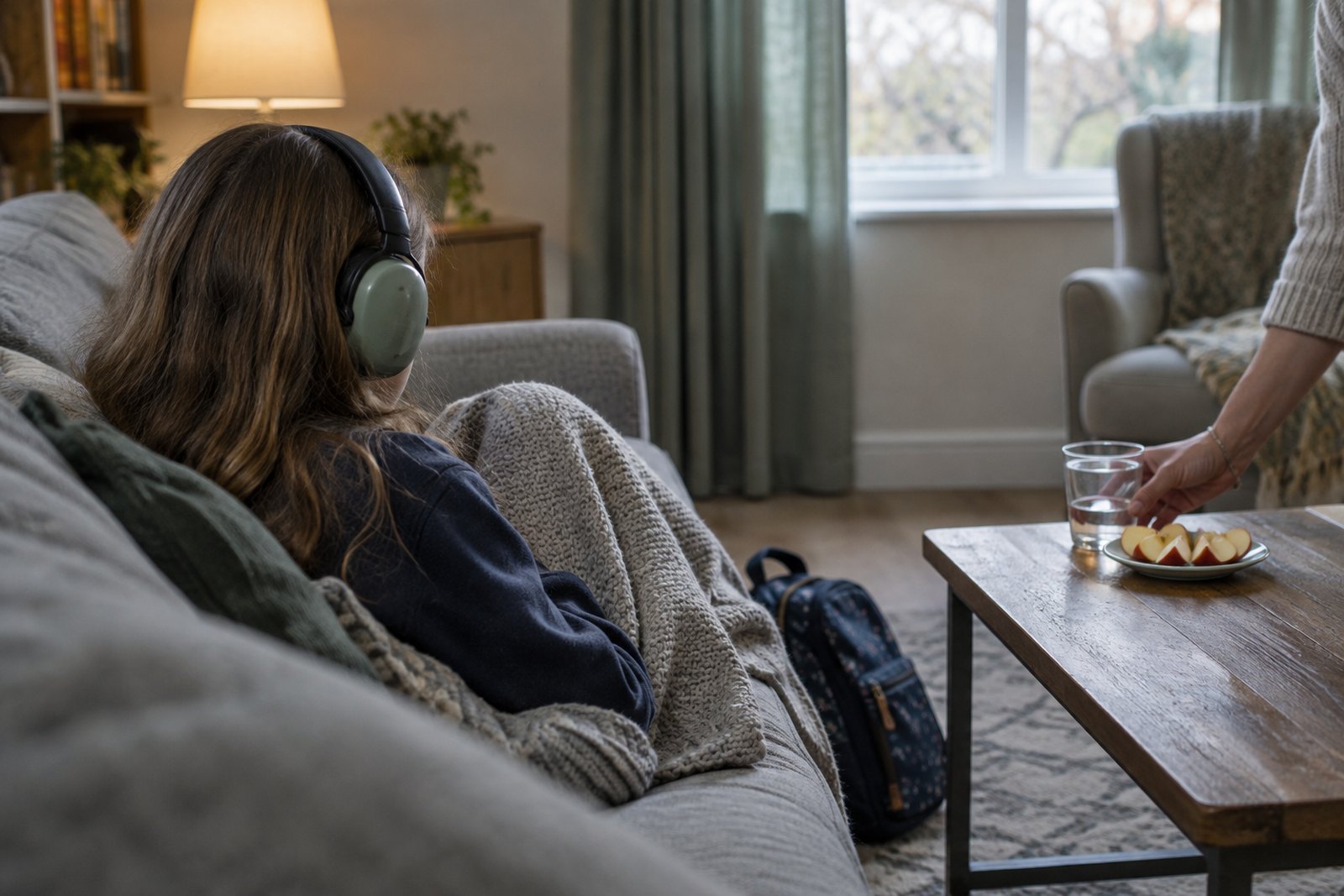
Autism in girls is often missed because many autistic girls do not match the picture most people carry in their heads. They may be quiet rather than disruptive. Their interests may look ordinary. Many work very hard to copy the people around them so that they fit in. That effort is called masking or camouflaging, and it can hide autism from teachers, doctors and sometimes from the girl herself for years.
The signs are usually there, just in different places. Look at what happens after school rather than during it, at what friendships cost her rather than whether she has any, and at how tired ordinary days make her. If that sounds familiar, you can speak to your GP or your child's school about an assessment. You can also start making things easier at home and in class now, without waiting for a diagnosis.
A note on words. This article says 'girls' and 'women' because that is what most people search for, but much of it applies to anyone socialised as a girl, including many trans and non-binary people, who are often missed for the same reasons. We say 'autistic person' because many autistic people prefer it, though not everyone does.
Why autism in girls is recognised later
For a long time, research and diagnostic thinking were based mainly on boys. The checklists, the stereotypes and the training followed. A girl who did not line up toy cars, did not have meltdowns in class and could chat about a popular TV series was easy to overlook.
Masking and camouflaging
Many autistic girls learn early that they are different, and that being different has a social cost. So they study. They watch how other girls laugh, what they talk about and how close to stand. They copy facial expressions, rehearse phrases, prepare small talk in advance and replay conversations afterwards to work out what went wrong. Some describe it as acting all day.
From the outside this can look like a child who is managing well. Inside, it is hard, continuous work. And because it is so effective, the people who see her most in public, teachers especially, may genuinely see nothing wrong.
Interests that do not raise eyebrows
Intense interests are part of autism, but they are not always trains or timetables. An autistic girl might be absorbed in animals, a book series, a band, drawing, a fictional world, horses or psychology. The topic looks typical. What stands out is the intensity: the depth of knowledge, the hours spent, the distress when it is interrupted, or the way it becomes her main way of calming down.
A quieter presentation
Some autistic girls are described as shy, dreamy, sensible or 'no trouble'. They follow rules carefully and avoid putting their hand up. Distress tends to turn inward, as anxiety, low mood, stomach aches or not eating, rather than outward. Quiet children simply get noticed less than children who are disrupting a lesson.
Other labels come first
Girls and women are often told they have anxiety, depression or an eating difficulty, or that they are 'just sensitive', long before anyone considers autism. Those difficulties are real and need help in their own right. Sometimes they are also the visible part of something underneath.
Signs that are often missed
No single sign means a girl is autistic, and plenty of non-autistic children show some of these at times. What matters is a pattern that has been there a long time, across different settings, and that makes everyday life harder than it should be. Treat these as things worth noticing, not a test.
Friendships and social life
- One intense friendship at a time, with real distress when it ends or changes.
- Closely following a more confident friend, copying her style, words or interests.
- Getting on better with adults, or with much younger or older children.
- Finding group chat and play confusing, especially unspoken rules, teasing and sudden changes in who is in or out.
- Being taken advantage of, or not realising when someone is being unkind.
- Preferring to organise the game, or play alongside others, rather than join in loosely.
Holding it together, then falling apart
- Coping at school, then melting down, shutting down or going silent at home. Many parents describe this, and some call it after-school restraint collapse.
- Needing long stretches alone after school, parties or family events.
- School saying 'she's fine here' when home feels very different.
Routines, control and change
- A strong need to know what is happening and when, and real distress at last-minute changes.
- Perfectionism: tearing up work, or avoiding anything she might not do perfectly.
- Firm rules about food, clothes, routines or how a game must be played.
- Resisting everyday requests in ways that look like stubbornness but are driven by anxiety.
Communication
- Taking things literally or missing hints and sarcasm, while being very articulate.
- Using phrases borrowed from books, TV or other people.
- Finding phone calls, ordering food or asking a teacher for help unusually hard.
- Eye contact that is practised or uncomfortable, even if it looks fine to others.
Sensory differences
Sensory differences are common in autistic people of every gender. In girls they are often written off as fussiness. They can include:
- Clothing: labels, sock seams, tight waistbands, scratchy uniform fabric, or wearing the same few soft items again and again.
- Personal care: hair brushing, hair washing, teeth brushing and nail cutting causing real distress.
- Noise: busy dinner halls, hand dryers, assemblies, siblings, a ticking clock.
- Light, smells and food: bright lights, strong smells, certain textures or mixed textures in food.
- Body signals: not noticing hunger, thirst, cold or needing the toilet until it is urgent. This sense of the body's inside signals is called interoception.
- Seeking input: rocking, spinning, fiddling, chewing sleeves or hair, wanting tight hugs or heavy blankets.
Sensory differences carry on into adulthood. Many women only recognise theirs when they read about them, sometimes decades later. Our guide to sensory processing difficulties in adults covers this in more detail.
If eating is very restricted, or a child is losing weight or not growing as expected, see your GP. Restrictive eating has several possible causes and needs a proper medical assessment.
The toll of masking
Masking is not something done once. It runs all day, every day, on top of lessons, friendships and a world that is often too loud and too bright. The bill usually arrives as exhaustion, anxiety and, eventually, burnout.
Autistic burnout is a term many autistic adults use for a period of deep exhaustion, losing skills they normally have, and becoming more sensitive to everything, after a long stretch of coping beyond their capacity. In girls it may look like struggling to get to school, a sudden drop in what she can manage, or not wanting to leave her room. In women it often coincides with big transitions: secondary school, exams, university, a new job, having a baby or perimenopause.
One reassuring point. If she falls apart at home, that usually means home is where she feels safe enough to stop performing. It does not mean you are doing something wrong.
Anxiety and low mood are common, and they deserve to be taken seriously. If a girl or woman talks about self-harm or suicide, or you are worried about her safety, contact the GP urgently or call NHS 111. In England, NHS 111 has a mental health option for urgent help. If someone is in immediate danger, call 999.
How to seek an autism assessment in the UK
For a child
- Write down what you notice. Give specific examples from home and school, when they started and what happens after school. Include early years if you can: sleep, feeding, play and reactions to change.
- Talk to the school. Ask for the SENCo (special educational needs coordinator). Ask what they see and whether they will support a referral. In some areas schools can refer directly; in others the GP does.
- See the GP or health visitor. Bring your notes. Say clearly that you are asking about an autism assessment and that you know girls can present differently.
- Expect a wait. Waiting times vary a great deal between areas and can be long. Ask what support is available in the meantime, and keep a diary of what you see.
In England you may be able to choose which NHS-funded provider assesses your child. Ask your GP and check current NHS guidance. Scotland, Wales and Northern Ireland have their own pathways, and the National Autistic Society explains the routes in each nation.
For an adult
Ask your GP for a referral to the local adult autism assessment service. A short written summary helps: what you find hard now, what you remember from childhood and how masking affects you. If a parent or older relative can describe your early years, that is often useful. Waits can be long here too.
Private assessments
Private assessments exist for children and adults. If you go this way, check that the team follows NICE guidance, that the clinicians are registered with the relevant regulator (for example the GMC for doctors, or the HCPC for psychologists, speech and language therapists and occupational therapists), and ask beforehand whether your GP, school or local authority will accept the report. Practice varies, so ask before you pay.
What helps at home, with or without a diagnosis
You do not need a diagnosis to make life easier. These help many girls, whatever the outcome of an assessment:
- Plan for the after-school crash. A snack, quiet, low light and no questions about the day for a while. Talk later, or sideways, in the car or while doing something together.
- Make the day predictable. A written or picture plan, warnings before changes, and telling her in advance what a new place will be like.
- Treat sensory needs as real. Soft clothes, cut-out labels, seamless socks, ear defenders or earplugs for noisy places, and letting her choose how she washes.
- Protect her interest. For many autistic girls it is rest and regulation, not a distraction. Avoid using it as a reward that can be taken away.
- Lower demands on hard days. Drop what does not matter. A bad week is not the time to tackle tidy bedrooms.
- Say out loud that she does not have to perform at home. Some girls have masked so long they do not know they are allowed to stop.
- Help her notice her body. Regular prompts to drink, eat and use the toilet, and a simple energy scale she can point to.
When distress spills over, our guide to autistic meltdowns explains what is happening and how to respond.
For women, the same principles apply. Build recovery time into your week after social events, keep a small sensory kit with you, and tell one trusted person what helps. At work you can ask for reasonable adjustments, with or without a diagnosis.
What helps at school
In England, schools are expected to support special educational needs based on what a child needs, not on whether she has a diagnosis. You can read the SEND guidance on GOV.UK. Practical things to ask for include:
- A quiet place to go, and a way to ask without speaking, such as an exit card or agreed signal.
- Advance warning of supply teachers, trips, room changes and timetable changes.
- Support at break and lunch, such as a club, library access or a calm space.
- Sensory adjustments: flexibility on uniform, a seat away from noise, ear defenders in assemblies, eating somewhere quieter.
- Clear written instructions and check-ins that do not put her on the spot in front of others.
- A named adult she trusts.
- A home-school diary, so school hears what happens after the bell.
If school-based support is not enough, you can ask your local authority for an education, health and care needs assessment. A diagnosis is not required. Our guide to EHCPs explains the process.
Where an occupational therapist fits
Occupational therapists look at how everyday life is going and what makes it harder. For a girl or woman who is, or may be, autistic, an occupational therapist can help with:
- Sensory needs: working out what she finds overwhelming or calming and building a practical plan for home and school. See our sensory needs page.
- Routines and self-care: mornings, dressing, hair, teeth, washing and bedtime, done in ways that suit her sensory profile.
- School strategies: clear written recommendations for the classroom, and reports that can support an EHC needs assessment.
- Energy and burnout: pacing, planning recovery time and reducing the load for teenagers and adults.
- Work: suggesting workplace adjustments for autistic women.
Be clear about what an occupational therapist does not do. An occupational therapist does not diagnose autism on their own. Diagnosis comes from an assessment team, often including a paediatrician or psychiatrist, a psychologist and a speech and language therapist, and occupational therapists sometimes contribute. For anxiety, low mood, self-harm or eating difficulties, the GP, children's mental health services or adult mental health services lead. A speech and language therapist is the right person for language and social communication. A private occupational therapist visiting at home can see a child or adult without a diagnosis and alongside an NHS wait.
Frequently asked questions
Is autism really more common in boys, or just missed in girls?
More boys have been diagnosed, but it is widely thought that part of the gap comes from girls being under-recognised, because of masking and checklists built around boys. The exact picture is still being researched.
Can my daughter be autistic if she has friends and makes eye contact?
Yes. Many autistic girls have friends and manage eye contact, often through careful effort. The question is what it costs her and whether the pattern shows up elsewhere, such as after school, around change or with sensory things.
Does my child need a diagnosis to get support at school?
No. In England, support should be based on need. A diagnosis can help people understand her, but you can ask the SENCo for adjustments now, and an EHC needs assessment does not require one.
Is it worth seeking a diagnosis as an adult woman?
That is a personal choice. Many women say it helps them make sense of their past and stop blaming themselves, and it can support requests for adjustments. Others are content with self-understanding. Talk to your GP and read the National Autistic Society's guidance on adult diagnosis.
Can an occupational therapist diagnose autism?
Not on their own. An occupational therapist can assess sensory processing and daily living and may contribute to a diagnostic team, but diagnosis is made by an assessment team following national guidance.
What if school says she is fine?
Believe both of you. She may be coping at school at a high cost. Share specific examples of what happens at home, ask school to watch unstructured times closely, and keep pursuing a GP referral if you are concerned.
Next steps
If sensory needs, routines or school are wearing her down, an occupational therapist can help, with or without a diagnosis. See our children's occupational therapy page, or current guide prices, and choose your area below.
Talk to an occupational therapist near you
This guide is general information. For advice about your own situation - or someone you look after - a local occupational therapist can visit you at home and see it for themselves.
Choose your area: