

Noise Sensitivity in Children: Ear Defenders and What Helps
By Mobile Occupational Therapist • 12 October 2026 • 16 min read
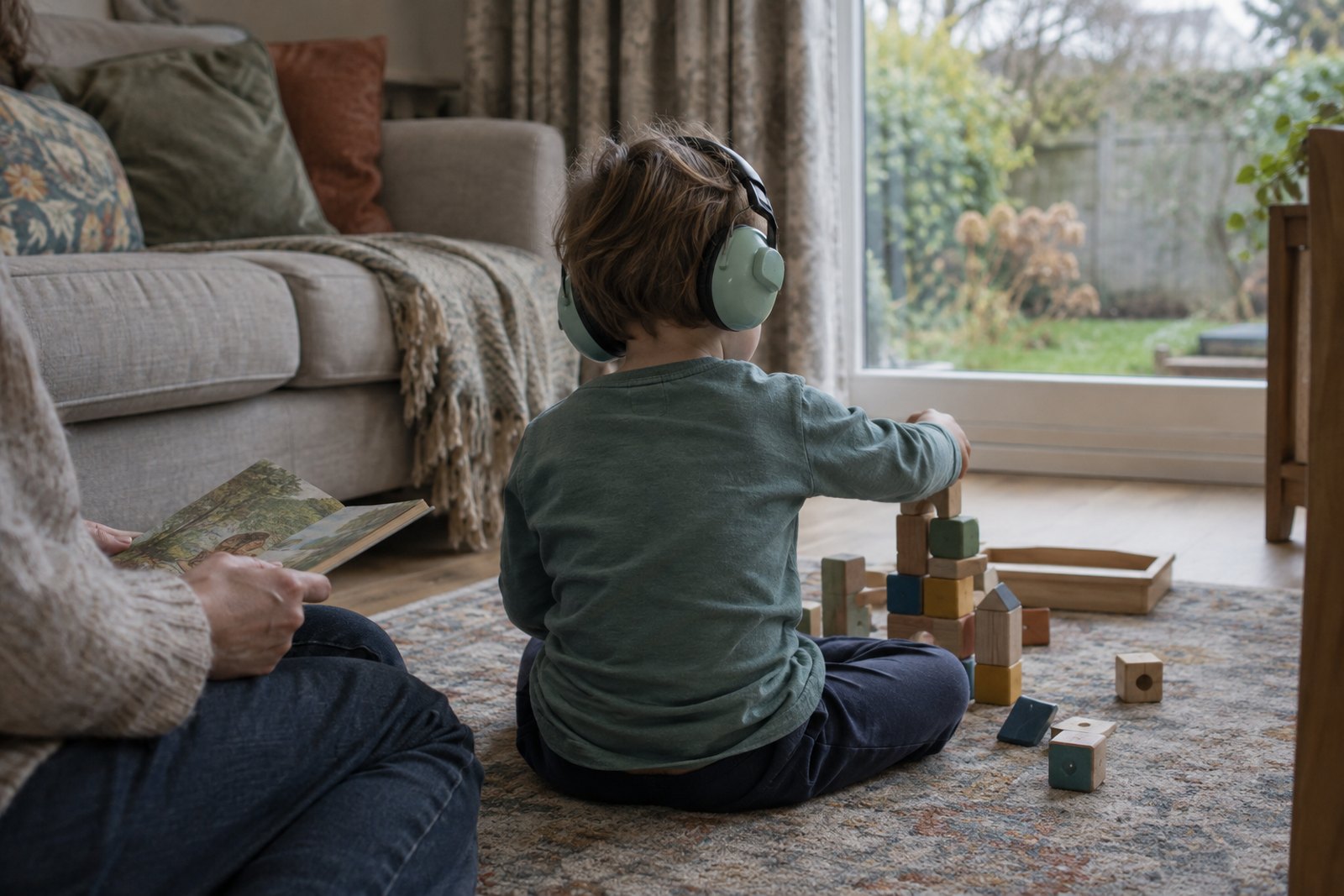
If your child covers their ears at the hand dryer, falls apart at birthday parties or cannot face the school hall at lunchtime, you are not imagining it and they are not being dramatic. Noise sensitivity means ordinary sounds feel too loud, painful or overwhelming. It is common in autistic children, children with ADHD and children with sensory processing differences. It can also come from hyperacusis, a hearing condition in its own right, or sit alongside anxiety.
The short answer to what helps: get their hearing checked first. Then use ear defenders as a tool for specific noisy situations rather than all day, let your child decide when they go on, prepare them before loud places, make sure school has a quiet space they can actually use, and build their confidence with everyday sounds slowly. If noise is affecting school, sleep, eating or family life, an audiologist or an occupational therapist can help, depending on what is behind it.
What noise sensitivity looks like
It rarely announces itself neatly. You might see some of these:
- Covering ears, hiding under a table or running out of the room when something loud starts.
- Refusing public toilets because of the hand dryer or the flush.
- Distress at the hoover, the blender, the smoke alarm test or a baby crying.
- Avoiding parties, swimming baths, cinemas, football matches and supermarkets.
- Struggling to concentrate in a busy classroom, then coming home exhausted, tearful or explosive.
- Saying sounds "hurt" rather than just being annoying.
- Waking at small noises or being unable to settle if the house is not quiet.
- Intense anger or upset at one particular sound, such as someone chewing.
It helps to notice the pattern. Some children struggle with loudness in general. Some cope with steady noise but are floored by sudden sounds like a balloon popping or a dog barking. Some are bothered by one specific sound. And some hold it together all day and release it the moment they are home. Each pattern points to slightly different help, so a few weeks of jotting down what happened, where and what came before is worth the effort.
Get their hearing checked first
This sounds backwards. Your child clearly hears too much, not too little. But a child who reacts oddly to sound may have a hearing problem that nobody has spotted. Glue ear, where fluid builds up behind the eardrum, is common in young children and can make hearing muffled and patchy. Some children with a degree of hearing loss also find certain loud sounds uncomfortable. And a child who cannot hear speech clearly in a noisy room may look distractible or overwhelmed for a completely different reason.
Ask your GP to refer your child to children's audiology. In some areas a health visitor or school nurse can also arrange a hearing check. If your child is autistic or finds appointments hard, tell the clinic in advance. Audiology services can often adapt the test, the timing or the room, and a quiet first appointment makes the next one easier.
Some ear problems need quicker attention. Contact your GP the same day or call NHS 111 if your child has a sudden loss of hearing, ear pain with a high temperature, fluid or pus coming from the ear, swelling or redness behind the ear, or an ear injury. If your child seems seriously unwell, call 999.
Why some children find noise so hard
There is no single cause, and more than one can apply to the same child. These are the usual explanations, described carefully, because labels get thrown around loosely online.
Autism
Differences in how the senses are experienced are part of autism for many people, and sound is one of the most common. An autistic child may hear background noise that others filter out, such as a buzzing light or a fridge humming, and find it hard to tune it out. Noise overload is a frequent trigger for shutdowns and meltdowns. Our guide to autistic meltdowns explains what is happening and what helps in the moment.
ADHD
Many children with ADHD find it hard to filter out background sound, so a noisy room becomes a wall of competing information. The result can look like distraction, irritability or restlessness rather than obvious distress.
Sensory processing differences
Some children without an autism or ADHD diagnosis still process sensory information differently. They may be over-responsive to sound, and sometimes to touch, light or smell as well. Sensory processing differences are not a formal medical diagnosis in the UK, but they are something an occupational therapist can assess and help with in practical terms.
Hyperacusis
Hyperacusis is when everyday sounds seem much louder than they should, sometimes to the point of pain. It is a hearing condition, assessed and treated through audiology or an ear, nose and throat service. It can happen on its own or alongside other conditions, including autism. Treatment, where needed, is usually led by audiology and may include gradual sound therapy and help with the anxiety that builds up around noise.
Misophonia
Misophonia describes a strong emotional reaction, often anger, disgust or panic, to particular sounds such as chewing, breathing, sniffing or tapping. It is about the sound itself rather than how loud it is. It is still being researched and is understood less well than hyperacusis, so be wary of anyone who sounds too certain about it. If you think this fits, start with your GP.
Fear of noise
Sometimes the sound itself is bearable but the dread of it is not. A child who once had a bad experience with a hand dryer may spend the whole trip to the shops on edge in case they meet one. Anxiety and sensitivity feed each other, which is why gradual confidence building matters as much as blocking sound out.
Ear defenders and earplugs: when they help
Ear defenders can be genuinely life-changing. A child who could not go into a supermarket might manage a short shop. A child who could not sit through assembly might stay in the room. Used well, they let a child take part in things rather than avoid them.
They are most useful for predictable, time-limited noise: fireworks, school assemblies, sports halls, cinemas, swimming baths, parties, the hairdresser's clippers, the hoover going on at home. They are less useful as a permanent setting.
Why not to wear them all day
Hearing specialists commonly advise against wearing ear defenders or earplugs all the time where they are not needed. The concern is that if the ears spend most of the day in near silence, the brain adjusts and ordinary sounds can start to feel even louder when the defenders come off. That is the opposite of what you want.
There are practical reasons too. A child in ear defenders hears less of what the teacher says, less of what friends say and less of the warning sounds that keep them safe, such as traffic, a fire alarm or your voice calling them. So the aim is for ear defenders to be there when needed and off when they are not. If your child wants them on for most of the day, that is useful information. It suggests their environment is too much and needs changing, or that there is something going on that deserves a proper assessment.
Let your child control them
Where it is safe, let your child decide when to put them on and take them off. Being in control of the noise is a big part of why ear defenders work. A child who knows they can reach for them is often calmer even without wearing them, because the threat feels manageable. Teach them to notice the early signs that noise is getting too much, and to reach for the defenders before they hit their limit rather than after.
Do not use them as a reward or take them away as a punishment. They are closer to a pair of glasses than a toy.
Choosing ear defenders
- Fit: the cups should fully cover the ears and sit snugly without pressing hard. Children's sizes exist for a reason. Adult ones can slip and leave gaps.
- Comfort: soft, padded cups and a padded, adjustable headband make a big difference for a child who is already sensitive to touch. Let them try them on if you can.
- Strength of reduction: ear defenders come with a noise reduction rating. More is not always better. Your child needs to hear voices well enough to stay connected and safe, so a moderate level often suits everyday use. Ask audiology if you are unsure.
- Practicality: a folding design fits in a school bag. Some children like a pair in a favourite colour, which helps them feel less self-conscious.
- A spare pair: one for home, one for school, saves a lot of morning panic.
Earplugs and noise-cancelling headphones
Earplugs are discreet and some older children and teenagers prefer them. They are generally less suitable for young children, because small plugs can be a choking hazard and can be pushed too far into the ear. If an older child uses them, show them how to insert and remove them properly and keep them clean.
Electronic noise-cancelling headphones reduce steady background hum well, such as traffic or engine noise, and some children find them more comfortable. They need charging and are less good at blocking sudden loud sounds. If your child listens to music through them, keep the volume sensible, because the point is to protect their ears rather than replace one loud noise with another.
Preparing for noisy places
Most noise distress is worse when it is a surprise. A bit of preparation goes a long way.
- Tell them what to expect. Explain where you are going, what sounds there might be and how long you will stay. Some children like a simple picture sequence or a short story about the trip.
- Pick your timing. Shops, pools and soft play are quieter at certain times of day. Many cinemas, museums and attractions run relaxed or quieter sessions. It is worth asking.
- Pack the kit. Ear defenders, a favourite snack, something to fiddle with and anything else that calms them.
- Agree an escape plan. Decide together on a signal that means "I need to leave" and a place to go, like the car or a quiet corner outside. Then honour it when they use it.
- Keep it short to start. Ten good minutes at a party is a success. Staying until it ends in tears teaches them parties are dreadful.
- Plan recovery time. After a noisy outing, give them quiet time at home rather than stacking another busy activity on top.
At home
Home should be the place where the ears get a rest. A few practical changes help:
- Warn before loud jobs. "I am going to put the blender on in a minute" lets them leave the room or grab their defenders.
- Run the washing machine, dishwasher or hoover when they are out or in another room.
- Soften echoey rooms with rugs, curtains and cushions. Hard floors and bare walls bounce sound around.
- Create a quiet spot, such as a small tent, a corner with cushions or their bedroom, where nobody follows them in uninvited.
- At night, steady low background sound such as a fan can mask small sudden noises for some children. Others need silence. Try and see.
- Think about the whole sensory picture. A child who is tired, hungry or already overloaded by light or touch will cope less well with sound. Our guide to building a sensory diet at home covers how to plan calming activities through the day.
At school: quiet spaces and sensible adjustments
School is often the hardest place. Hand dryers, dinner halls, assemblies, PE in an echoing hall, fire drills and thirty children in one room. Many children manage the day by masking their distress, then unravel at home.
Talk to the class teacher and the school's special educational needs coordinator (SENCO). Things that commonly help include:
- Permission to wear ear defenders when they need to, without having to ask each time.
- A named quiet space they can go to, and a simple way to ask, such as a card on the desk.
- Leaving lessons a few minutes early to avoid crowded corridors.
- Eating lunch somewhere quieter, or going in before the hall fills up.
- Advance warning of fire drills, where the school can safely give it, and a trusted adult with them during the drill.
- A seat away from doors, windows, the projector fan or the busiest part of the room.
- Paper towels or permission to use a different toilet if hand dryers are a problem.
In England, schools are expected to make reasonable adjustments and to support children with special educational needs, whether or not they have a diagnosis. If your child's needs are more complex and the school's own support is not enough, an education, health and care plan may be appropriate. Our guide to the EHCP process explains how it works and what an occupational therapy report can add. Check current guidance on GOV.UK or with your local SEND information, advice and support service.
Building confidence with everyday sounds, gently
Protection is half the job. The other half is helping your child feel safe around sound so that their world can grow rather than shrink. This should be slow, led by your child and never forced.
- Give them control. Let them switch the hoover on and off themselves, or press the hand dryer button from the doorway. Being in charge of a sound changes how frightening it feels.
- Start small and far away. Listen to a recording of fireworks quietly at home, then a little louder another day. Watch the hand dryer from outside the toilet before trying one.
- Pair noise with something pleasant. A favourite song in the car, a treat after the hairdresser.
- Stop before distress. If they become upset, you have gone too far. Step back and try a smaller step next time.
- Celebrate small wins. Staying in assembly for the first song is progress worth noticing.
If you suspect hyperacusis, be guided by audiology on this, as structured sound therapy is a specialist area. If anxiety is driving most of the problem, your GP can talk to you about mental health support for children and young people in your area.
A note on adults
Noise sensitivity does not always stop in childhood. Many autistic adults, adults with ADHD and people with hyperacusis or misophonia live with it, and some only recognise it once their child is diagnosed. The same principles apply: get your hearing checked, use protection for specific situations rather than constantly, and ask for adjustments at work, such as a quieter desk or permission to wear headphones. Our guide to sensory processing difficulties in adults goes into more detail.
When to get help, and from whom
- GP: the first stop for a hearing check referral, any ear symptoms, sudden changes or if you are worried about anxiety or development.
- Audiology or ear, nose and throat services: for hearing tests, suspected hyperacusis or tinnitus, and specialist sound therapy.
- Autism or neurodevelopmental assessment services: usually accessed through your GP, health visitor or school, if you think your child may be autistic or have ADHD.
- Child and adolescent mental health services: if anxiety, panic or low mood are a big part of the picture.
- Speech and language therapist: if your child struggles to understand speech in noise or to communicate when overwhelmed.
Where an occupational therapist fits
An occupational therapist does not test hearing or treat hyperacusis. That is audiology. What an occupational therapist does is look at how sound sensitivity is affecting your child's daily life, such as getting dressed, eating, sleeping, going to school, using toilets, playing and joining in, and then help you change things so that life works better.
A paediatric occupational therapist visiting at home can assess your child's wider sensory profile, because noise sensitivity rarely sits on its own. They can work out which situations are hardest and why, suggest changes to the home and routine, build a practical sensory plan, advise on using ear defenders sensibly and help with gradual confidence building. They can also write reports or recommendations for school, and contribute evidence to an EHCP. See our sensory needs page for more on what this involves.
If your child has ear symptoms or you have not yet had their hearing checked, start with the GP. An occupational therapist will usually want to know that has been done.
Frequently asked questions
Should my autistic child wear ear defenders at school?
Often yes, for the noisy parts of the day such as assembly, lunch, PE and fire drills. The aim is that your child can put them on when they need to, without fuss, and take them off for lessons where hearing the teacher matters. Agree this with the school so every adult knows the plan.
Can ear defenders make noise sensitivity worse?
Used for specific noisy situations, they are generally helpful. The concern from hearing specialists is about wearing them all the time when they are not needed, which may make everyday sounds feel louder when they come off. If your child wants them on constantly, talk to audiology or an occupational therapist about why.
Is there a right age to start using ear defenders?
There is no fixed age. Ear defenders are made in sizes for babies and young children. What matters is a proper fit, comfort and supervision, especially near roads or water where your child needs to hear you. Small earplugs are not suitable for young children.
Will my child grow out of noise sensitivity?
Some children become more tolerant as they get older, learn coping strategies and gain more control over their surroundings. For others, particularly autistic children, sensitivity to sound continues into adulthood but becomes easier to manage. Getting the right support early tends to make that easier.
Is hyperacusis the same as autistic sound sensitivity?
Not exactly. Hyperacusis is a hearing condition where sounds seem abnormally loud, and it is assessed through audiology. Many autistic children experience sound differently in ways that overlap with it, and some have both. A hearing assessment helps tell them apart and makes sure your child gets the right help.
Can I get ear defenders on the NHS?
Not usually as a routine item, and most families buy their own. Some schools provide them for pupils who need them, so it is worth asking the SENCO. If your child is under audiology for hyperacusis, ask the clinic for advice on the right type.
Next steps
If noise is getting in the way of school, sleep or family life, a home visit can help you work out what will make the biggest difference. See our children's occupational therapy page, or current guide prices, and choose your area below.

Talk to an occupational therapist near you
This guide is general information. For advice about your own situation - or someone you look after - a local occupational therapist can visit you at home and see it for themselves.
Choose your area: