

Safe Sleep Space for a Disabled Child: Beds, Tents and Room Safety
By Mobile Occupational Therapist • 15 October 2026 • 13 min read
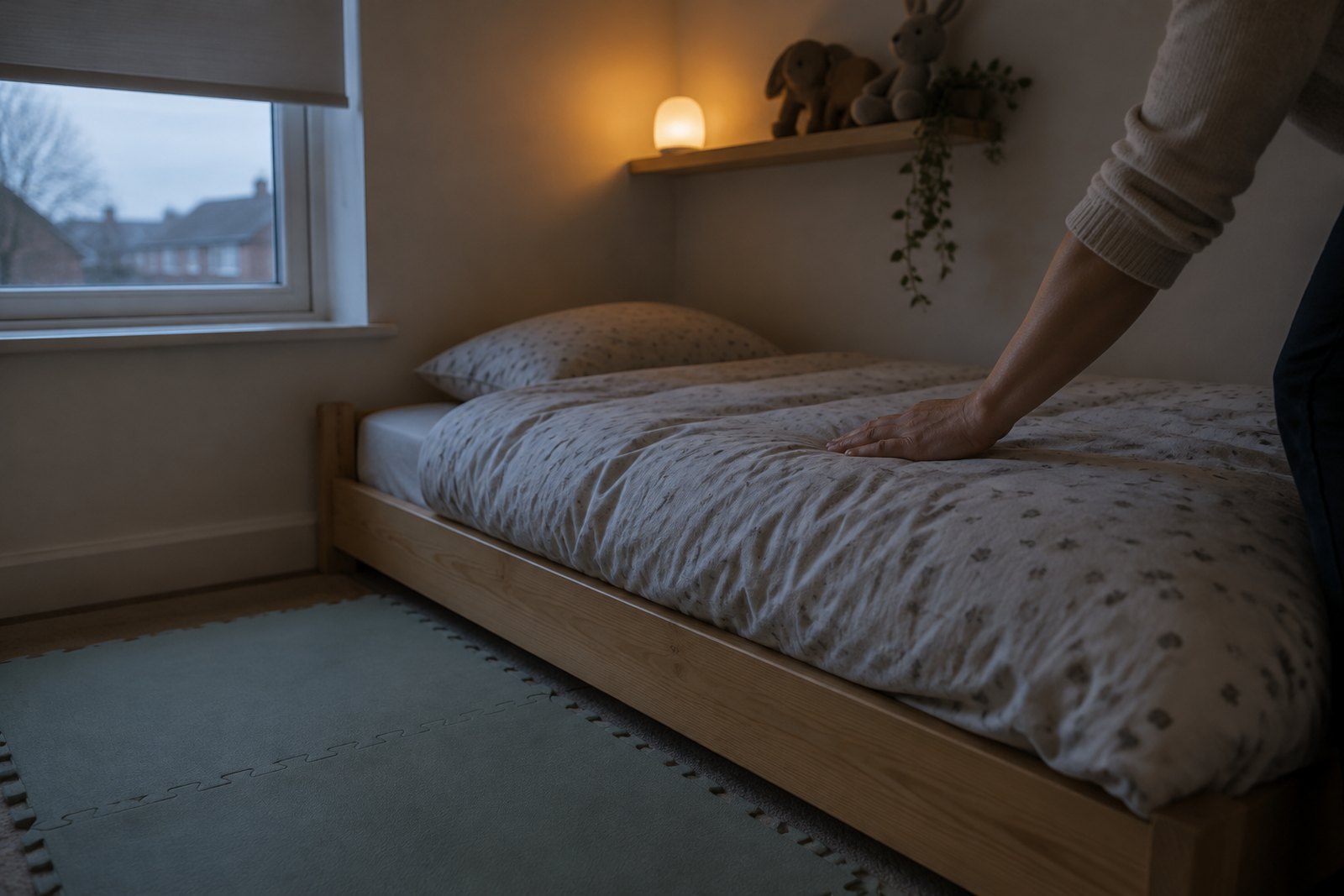
If your child climbs out of bed, wanders the house at night, bangs their head or has seizures in their sleep, a safe sleep space means a bed and bedroom set up so they can sleep without coming to harm, and so you can sleep too. For many children that is a low bed and a carefully cleared room. For a smaller number it is a specialist enclosed safety bed or a sleep tent, often searched for as a special needs bed or a safety bed for an autistic child.
The honest short answer is this. Start with the room and the routine. Get a professional assessment before anyone buys an enclosed bed. And expect the right answer to be the least restrictive one that keeps your child safe. Enclosed beds can transform life for some families. They can also trap, overheat or confine a child who never needed one. Specialist beds are usually assessed by an occupational therapist through your council's children's social care or the NHS, and some charities help with costs.
Why night-time safety matters so much
Most parents searching for this have already had the bad night. The one where you found your child on top of the wardrobe, at the bottom of the stairs, in the kitchen with the fridge open, or having a seizure on the floor. After that, you sleep with one ear open, if you sleep at all.
The usual risks fall into a few groups:
- Climbing onto furniture, windowsills or over bed sides, often with no sense of danger.
- Wandering around the house, down the stairs, into the kitchen or out of the front door.
- Seizures, with the risk of falling, injury or being in a poor position afterwards.
- Self-injury, such as head banging against walls or bed frames.
- Falling or rolling out of bed because of movement disorders, low tone or restless sleep.
There is a second safety issue that gets less attention: you. Parents running on broken sleep for months or years make more mistakes, get ill more often and reach breaking point. A safe sleep space is partly about letting the adults in the house rest. That is a legitimate reason to ask for help, not a selfish one.
Start with the bedroom, not the bed
A surprising amount of risk can be taken out of a room without any specialist equipment. Do this first, whatever bed you end up with.
A quick bedroom safety check
- Tall furniture: fix wardrobes, chests of drawers and bookcases to the wall with anti-tip straps or brackets. Better still, move out anything your child does not need in the bedroom.
- Windows: fit window restrictors so windows only open a little. Make sure an adult can release them quickly in a fire.
- Blind and curtain cords: looped cords are a known strangulation risk for children. Use cordless blinds or fix cords well out of reach.
- Radiators and pipes: fit guards if your child could get trapped against them, burn themselves or climb on them.
- Electrics: move lamps, chargers and trailing cables out of reach.
- Climbing aids: anything that can be dragged, stacked or stood on, from toy boxes to beanbags, goes elsewhere.
- The bed itself: keep it clear of piles of soft toys and extra pillows, especially if your child has seizures.
- Light: a dim night light can reduce confusion when a child wakes and lets you check on them without switching the main light on.
Doors, stairs and the rest of the house
If wandering is the main worry, think about the route your child takes once they are out of bed. A fixed stair gate at the top of the stairs suits some children, but a gate an older child can climb is more dangerous than none. Door sensors or a monitor that alerts you when your child gets up let you respond before they reach the stairs or front door. Lock away medicines, sharp knives and cleaning products as a matter of routine.
Please do not lock your child into their bedroom. It is a serious fire risk and means they cannot reach you if something is wrong. Some families use a half-height stable-style door or a gate across the doorway. If you are considering anything that stops your child leaving their room, talk it through with an occupational therapist or your child's social worker first, and make sure you have a plan for getting everyone out in a fire.
Low beds and floor-level sleeping
If the main problem is falling out, rolling out or climbing over the sides, lowering the bed often works better than raising the sides. Options include a good mattress directly on the floor, a low or floor-level bed frame, and soft crash mats along the side of the bed. A child who rolls off a low bed lands a few centimetres down onto something soft, and there is nothing to climb over.
Our guide to falling out of bed, low beds and crash mats goes into this in more detail. One warning: standard bed rails designed for adults are not made for children. Children can slip into the gaps between rail and mattress. Read about when bed rails help and when they are dangerous before fitting any.
Enclosed safety beds and sleep tents
An enclosed safety bed is a bed with high padded, mesh or solid sides, usually with a door or zip so a parent can get in and out. Some are fixed frames with padded panels. Some are fabric tents that fit over a mattress or bed. Some fold away for travel or respite stays.
When they can be the right answer
- A child with no sense of danger who climbs and wanders, where less restrictive options have been tried and have not worked.
- A child who has frequent seizures and is getting hurt falling out of bed, alongside proper monitoring.
- A child who self-injures badly at night, where padding reduces harm.
- A child who genuinely seems calmer and sleeps better in a small, enclosed space. Some do.
The honest concerns
An enclosed bed stops a child getting up and moving freely. In plain terms that is a form of restriction, even when it is done with love and for good reasons. That does not make it wrong. It does mean it needs thinking about properly.
- Dignity and choice: your child cannot get out to use the toilet, get a drink or come and find you. As they grow, what was reasonable at four may not be at fourteen.
- Legal questions: restricting a child's movement can raise questions about restraint and deprivation of liberty, particularly for 16 and 17 year olds, in respite or residential settings, or where equipment is provided by the council. Professionals should record why it is needed, what else was tried and when it will be reviewed.
- Physical risks: entrapment, overheating, and difficulty reaching your child quickly in an emergency.
- Distress: some children become more upset when enclosed, not less.
Cerebra, a national charity for children with brain conditions, offers sleep advice for families and has looked closely at how restrictive sleep spaces are used. Its website is worth reading before you decide. An enclosed bed should never be used as a way to contain a child without an assessment, a clear reason and regular review.
Safety points about enclosed beds and entrapment
The Medicines and Healthcare products Regulatory Agency (MHRA) has long warned about entrapment with bed rails, mainly in gaps between the rails, mattress and frame. The same principles apply to children's enclosed beds and sleep tents. Check current guidance on GOV.UK, but these points hold in general:
- The mattress must fit snugly. No gaps at the sides or ends where a head, neck, arm or leg could get caught. Use only the mattress the bed is designed for.
- Do not add extras such as additional mattresses, cushions or piles of pillows. They raise the sleeping surface, reduce the height of the sides and create soft pockets and new gaps.
- Check it regularly for torn netting, split padding, broken zips and loose fixings. Children chew, pick and pull.
- Make sure you can get in fast. Practise opening it in the dark. If you cannot reach your child within seconds, that is a problem.
- Think about airflow and temperature, especially with fabric tents. Avoid heavy bedding.
- Follow the size and weight limits and have it reassessed as your child grows.
- Never use homemade sides or adult bed rails on a child's bed.
If a bed or tent fails, or your child is hurt or nearly hurt, stop using it and report the problem to the MHRA through its Yellow Card scheme, which covers medical devices.
If your child has seizures at night
An enclosure may stop a fall, but it does not tell you a seizure is happening. Talk to your child's epilepsy nurse or neurologist about night-time monitoring, sleeping position and their seizure care plan. They lead on this, not an occupational therapist. Our guide to epilepsy safety at home covers sleeping in more detail. Follow your child's care plan, and call 999 if a seizure lasts more than 5 minutes, your child is badly hurt or they struggle to breathe.
The sleep itself
A safe space deals with the safety part. It does not explain why your child is awake at 3am. Pain, reflux, constipation, sensory needs, anxiety, light, noise and side effects of medication can all play a part. Loud snoring, gasping or pauses in breathing at night need a GP appointment, as these can be signs of sleep apnoea. Do not change or start any sleep medicine without your child's GP or paediatrician.
Routines, the sensory feel of the room and how bedtime is handled often make a real difference. Our guide to sleep problems in autistic children has practical ideas that apply to many disabled children. Ask your health visitor, school nurse or paediatrician whether there is a sleep practitioner or sleep clinic in your area.
How specialist beds are usually provided
Through children's social care
You can ask your council's children's services for an assessment of your disabled child's needs. An occupational therapist from the children's disability or OT team may visit, look at sleep and safety, and recommend equipment. Where it is provided, it is often on loan and maintained by the council's equipment service. Waiting times vary a lot between areas.
Through the NHS
Community children's occupational therapists, children's community nurses and paediatricians can also be involved, particularly where a bed is needed for health reasons such as seizures or complex physical needs. Children with very complex health needs may be assessed for children's continuing care. Ask your GP, paediatrician or health visitor to make a referral.
Adaptations to the room
If your child's bedroom needs bigger changes, such as moving a bedroom downstairs, a Disabled Facilities Grant may help. In England, grants for disabled children are generally not means tested; check the current rules on GOV.UK and with your council. Our guide to the Disabled Facilities Grant explains how an OT assessment fits in.
Charities
Family Fund gives grants to some lower-income families raising disabled children, and some condition-specific charities help with equipment. Cerebra has offered help to families in the past. Criteria and funds change, so check what is currently available. The charity Contact runs a helpline for families with disabled children and can point you in the right direction.
Buying privately
If you decide to buy, still get an assessment first. Check the bed is designed for your child's size and needs, that the mattress matches, and be very cautious about second-hand beds with missing parts or worn padding.
Where an occupational therapist fits
An occupational therapist looks at the whole picture: your child's movement, behaviour and sensory needs at night, how seizures or other conditions affect them, the layout of the room, and how you manage. That last part matters. Lifting a growing child over high sides every night can injure a parent's back.
A good assessment works through options from the least restrictive upwards: room changes and routines, then low beds and mats, then enclosed beds if they are genuinely needed. An occupational therapist can recommend the type and size of bed, check it fits your child and your room, help you trial it, suggest changes to the bedtime routine and sensory environment, and write a report to support funding. They should also plan a review, because needs change as children grow. A private children's occupational therapist visiting at home can do this where local services have long waits, or add detail to an application.
Other professionals lead on some parts. Your GP or paediatrician looks at medical causes of poor sleep. The epilepsy team leads on seizure safety and monitoring. A learning disability nurse or positive behaviour support team may help with night-time behaviour and self-injury. A social worker can talk to you about short breaks and support for you as a carer.
Frequently asked questions
Is a safety bed a form of restraint?
It restricts movement, so it can be. That does not mean it is wrong, but it should only be used after an assessment shows it is needed, with a clear reason recorded, less restrictive options tried and regular reviews.
Can I just put my child's mattress on the floor?
For many children who fall or roll out, yes, and it is often the safest first step. Make sure the room around it is safe, because a child on the floor can still get up and wander or climb.
Will the council pay for a special needs bed?
Sometimes. If an assessment through children's social care or the NHS shows your child needs one, it may be provided on loan. It depends on your child's needs and local policy, so ask for an assessment rather than starting with a product.
Is a sleep tent a good safety bed for an autistic child?
Some autistic children sleep better in a small enclosed space, and some become very distressed. It depends on the child. A tent still needs to fit the mattress properly, allow good airflow and be checked for wear, so get an assessment first.
My child has outgrown their cot - what now?
Do not simply move to a bigger bed with rails added. Look at the room, consider a low bed and mats, and ask for an assessment if your child climbs, wanders or has seizures.
Can a private OT report help get funding?
It can add detail to an application to the council, NHS or a charity, but funders make their own decisions and some prefer their own assessment. Ask the funder what they accept before you pay.
Next steps
See our children's occupational therapy and equipment and aids pages, or current guide prices, and choose your area below.

Talk to an occupational therapist near you
This guide is general information. For advice about your own situation - or someone you look after - a local occupational therapist can visit you at home and see it for themselves.
Choose your area: