

Epilepsy Safety at Home: Bathing, Cooking and Sleeping
By Mobile Occupational Therapist • 24 September 2026 • 13 min read
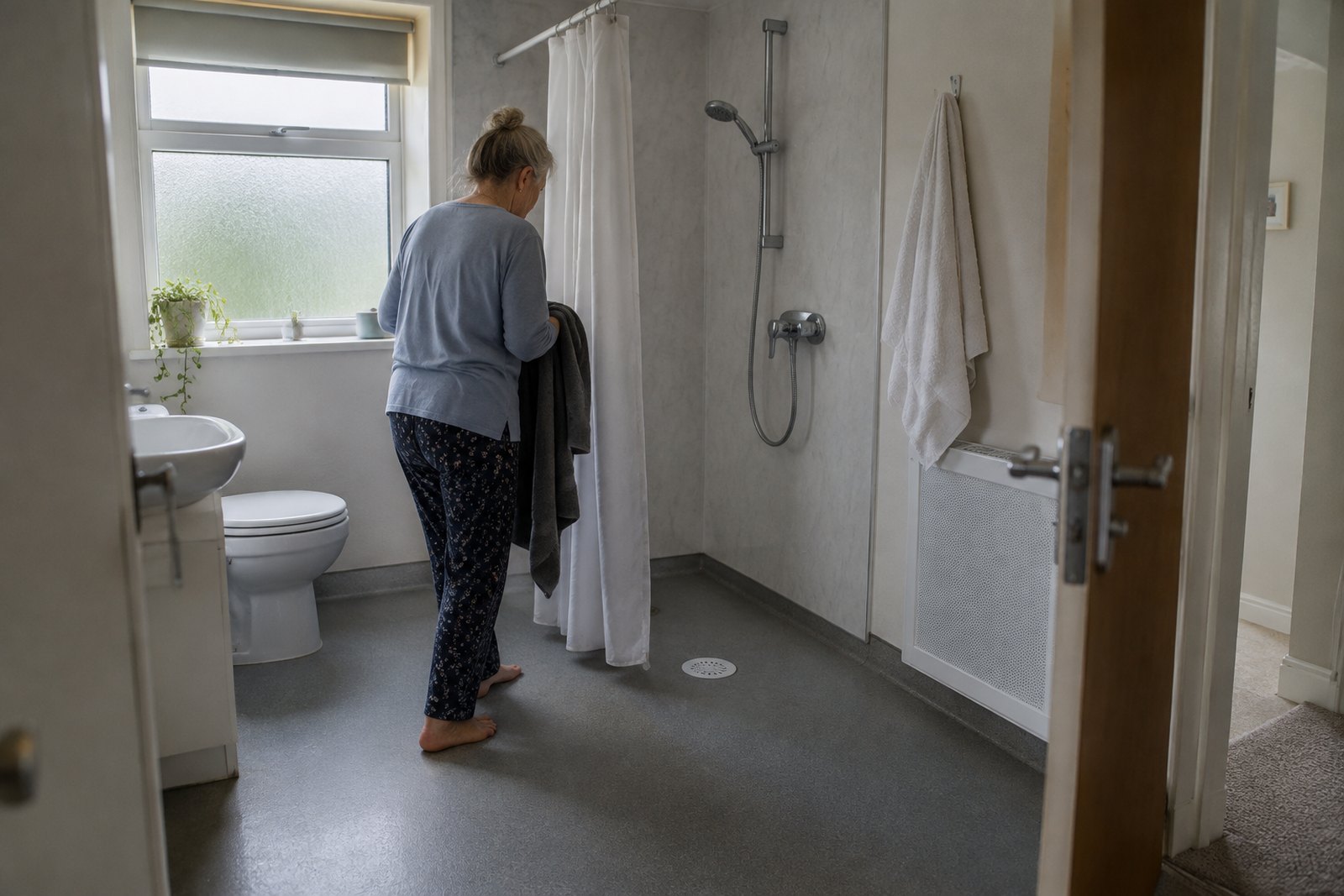
Making a home safer for someone with epilepsy is mostly about where a seizure might happen, not the seizure itself. The real dangers are water, heat, height and hard edges. So the core advice is simple: shower rather than bathe if seizures are not well controlled, never lock the bathroom door, cook on the back rings and use the microwave where you can, think carefully about the bed and the night, and make sure the people around you know basic seizure first aid and when to call 999.
How far you go depends on your seizures. Someone who has been seizure free for years needs a lot less than someone who has frequent seizures with no warning. This guide covers the practical changes room by room, so you can pick what fits. It is not medical advice. Questions about diagnosis, medicines or your care plan belong with your GP, epilepsy specialist nurse or neurologist.
Start with your seizures, not a generic list
Before buying anything or moving furniture, it helps to answer a few honest questions. Write the answers down, because they shape everything else.
- What happens during a seizure? Do you fall, stiffen and jerk, go blank, wander, or drop suddenly?
- Do you get a warning? Some people get an aura that gives them seconds to sit or lie down. Others get nothing.
- When do seizures happen? At night, on waking, when tired, at certain times of the month?
- How often? Weekly is a very different picture from once a year.
- How long does recovery take? Many people are confused, sleepy or wobbly afterwards, which is a risk in itself.
If you keep a seizure diary, bring it into this. Patterns you have already spotted, such as seizures clustering in the early morning, tell you which rooms and which times of day matter most.
Bathing and showering
The bathroom is the room most epilepsy charities single out. Water, hard surfaces and a closed door are an unhelpful combination, and drowning can happen in very little water.
Showers rather than baths
If seizures are not well controlled, a shower is generally safer than a bath. If you do have a bath, keep the water shallow, make sure someone else is in the house and knows you are in there, and keep the conversation going through the door. Check in if it goes quiet. Some people prefer to bathe only when another adult is home, full stop.
In a shower, a few details make a real difference:
- Keep the drain clear so water cannot pool if you fall across it.
- A shower curtain is safer than a glass screen. If you have glass, ask whether it is safety glass.
- A level-access shower removes the tray edge and the step. Our guide to wet rooms and level-access showers explains the options.
- Sitting to shower can help some people, especially those who fall with seizures. Whether a shower seat suits you, and which kind, is worth discussing with an occupational therapist, because a fall from a seat onto a hard edge is also a risk.
Never lock the door, and make it open outwards
A locked door is the single biggest delay in getting to someone who has a seizure in the bathroom. If privacy matters (and it does), use an engaged sign or a privacy lock that can be opened from the outside with a coin or screwdriver.
Many bathroom doors open inwards. If someone collapses behind it, nobody can get in. Rehanging the door to open outwards, or fitting a sliding or folding door, solves this. It is a small job for a joiner and one of the most useful changes you can make.
Scalds, glass and hard edges
- A thermostatic mixing valve or thermostatic shower limits how hot the water can get, which matters if a seizure leaves you unable to move away from the flow.
- Run cold water first when filling a basin or bath.
- Keep glass bottles, razors and hair straighteners out of the bath and shower area.
- Radiator and towel rail covers stop burns if you fall against them.
Bathing a baby if you have epilepsy
If you are a parent with seizures, the usual advice from epilepsy charities is to avoid bathing your baby alone. Use a sponge wash on a towel on the floor instead, or bath them when another adult is with you. Change nappies on a mat on the floor rather than a raised changing table.
Cooking and the kitchen
Kitchens mean heat, sharp things and boiling water. You do not need to stop cooking. You need to cut down the moments where a seizure would land you in something hot.
- Use the microwave for heating and cooking where you can. It turns itself off.
- Cook on the back rings and turn pan handles towards the wall.
- Avoid carrying hot pans and kettles. Bring the plate to the pan, not the pan to the table. For pasta and vegetables, a lift-out mesh basket or a pan with a straining lid means you are not walking a full pan to the sink.
- Fill the kettle with only what you need. A kettle tipper lets you pour without lifting, so if a seizure starts the kettle stays put. See our guide to kettle tippers and jar openers.
- Move hot drinks with a lid, or on a trolley, rather than carrying open mugs.
- Grill and oven rather than frying in deep fat. Avoid deep fat frying altogether if seizures are frequent.
- Hob guards can stop pans being knocked off, though they are not a substitute for staying nearby.
- Cook when someone else is in if your seizures are frequent or come without warning.
Small appliances with an automatic switch-off (irons, hair straighteners, heaters) are worth choosing when you replace them. Open fires and gas fires need a fixed fireguard.
Padding, flooring and furniture
You cannot pad a whole house, and you should not try. Focus on where seizures actually happen.
- Flooring: carpet with a decent underlay is kinder than tiles or laminate. Cushioned vinyl is an option in kitchens and bathrooms. Keep floors clear and rugs flat or gone.
- Corners: soft corner guards on tables, worktops and hearths. Rounded furniture where you are choosing new.
- Glass: avoid glass coffee tables. Glass in internal doors should be safety glass or covered with safety film.
- Space: leave room around chairs and the bed so a fall is onto floor, not into furniture.
- Radiators: covers, especially next to the bed and in the bathroom.
Some people with frequent drop seizures use protective headwear. That is a decision to make with your epilepsy team, not something to buy on a guess.
Sleeping safely
Bedding and the bed itself
Night is when many people are alone and nobody would notice a seizure. A few practical points:
- Pillows: avoid piles of soft pillows. Some people use a firmer pillow, or a pillow designed to let air through, to reduce the risk of lying face down in something soft after a seizure. Ask your epilepsy nurse what they suggest.
- Bed height: a lower bed means a shorter fall. A soft mat beside the bed can help. Our guide to low beds and crash mats covers this.
- Bed rails are usually not the answer for seizures. Limbs can be caught in them, and they can turn a fall into an injury. Get advice before fitting them.
- The space around the bed: no bedside tables with sharp corners right at head height, no hot drinks or lamps that could be pulled over.
Seizure alarms and monitors
There are several types: bed sensors that pick up particular patterns of movement, wearable devices worn on the wrist or arm, and audio or video monitors that let someone in another room hear or see what is happening. Some link to a family member's phone or to a telecare monitoring service.
They can help, especially for people with tonic-clonic seizures at night who sleep alone. But none of them detects every seizure, they detect different seizure types with different reliability, and an alarm is only useful if someone can respond quickly. Talk to your epilepsy team about whether one suits your seizures. Our guide to personal alarms and telecare explains how monitored systems work.
SUDEP: what it is and why it is worth talking about
SUDEP stands for Sudden Unexpected Death in Epilepsy. It is when someone with epilepsy dies suddenly and no other cause is found. It is rare, and it is understandably frightening to read about. It is mentioned here because some things are known to raise the risk, and some of them can be changed.
The clearest risk factor is having tonic-clonic seizures that are not controlled, particularly at night and when sleeping alone. Taking medicines as prescribed and talking to your epilepsy team if seizures are not controlled are the most important steps. Epilepsy Action and SUDEP Action both have clear, calm information and can help you think through your own risk, and SUDEP Action supports bereaved families. If no one has ever talked to you about SUDEP, it is reasonable to ask your GP or epilepsy nurse.
Stairs
A seizure on the stairs can mean a long fall. If your seizures are frequent:
- Fit a second handrail so you always have a rail on both sides.
- Do not carry things up and down. Leave a basket at the bottom and the top.
- Keep stairs well lit and clear.
- Think about whether the bedroom, and ideally a toilet and shower, could be on the ground floor, at least for a while.
- Stair gates are usually a bad idea for adults. They are something else to fall over.
Going out
- Carry an epilepsy ID card or wear medical ID with basic information about your seizures and who to contact.
- Keep your phone charged and with you. Tell people where you are going if you are alone.
- Stand back from platform edges, kerbs and water.
- Swim only with someone who knows you have epilepsy and can get you out of the water, and tell the lifeguard.
- If you drive, you must tell the DVLA (or the DVA in Northern Ireland) about epilepsy. The rules depend on your seizures and are set out on GOV.UK and nidirect.
Seizure first aid and when to call 999
Everyone who lives with or regularly sees the person should know this. For a seizure where someone falls and shakes:
- Stay calm and time it. Note when it starts.
- Move hard or hot things away. Only move the person if they are in danger, such as near a road or a hob.
- Cushion the head with something soft.
- Do not hold them down and do not put anything in their mouth.
- When the shaking stops, roll them onto their side in the recovery position and check they are breathing.
- Stay with them and talk calmly until they are fully back to themselves.
For seizures where someone is confused or wandering, gently guide them away from danger and stay with them.
Call 999 if:
- it is their first seizure, or you do not know if they have epilepsy
- the seizure lasts more than 5 minutes
- one seizure follows another without them recovering in between
- they are injured
- they have difficulty breathing, or do not come round as expected
- the seizure happened in water
If the person has an emergency care plan that includes rescue medication, follow it only if you have been trained to. If you are not sure, call 999. For worries that are not an emergency, contact the GP, epilepsy nurse or NHS 111.
Where an occupational therapist fits
An occupational therapist does not diagnose epilepsy, adjust medicines or write seizure care plans. That is the job of your GP, neurologist and epilepsy specialist nurse, and they should always be your first port of call for anything medical.
Where an occupational therapist helps is the practical side: looking at your actual home, your actual seizures and your actual routine, and working out how to keep you as independent as possible without unnecessary risk. On a visit they can:
- assess the bathroom, kitchen, bedroom and stairs with your seizure pattern in mind
- advise on bathing and showering, including whether a seat helps or hinders
- recommend adaptations such as level-access showers, outward-opening doors or a second stair rail
- suggest kitchen routines and equipment that keep you cooking
- help with fatigue after seizures, memory problems and planning the day
- write reports that support applications for adaptations or funding
Your council's adult social care team can arrange an occupational therapy assessment, and larger adaptations may be funded through a Disabled Facilities Grant. If you would rather not wait, or want a detailed report, a private occupational therapist can visit for a home assessment. A good assessment is about balance. The aim is not a padded room. It is a home where you can still do the things you want to do.
Frequently asked questions
Is it safe for someone with epilepsy to have a bath?
It depends on how well controlled the seizures are. If seizures are not controlled, a shower is generally safer. If you do bathe, keep the water shallow, leave the door unlocked and make sure someone else is home and checking on you.
Should the bathroom door have a lock?
Not a lock that can only be opened from the inside. Use an engaged sign or a privacy lock that can be released from outside, and ideally a door that opens outwards so nobody is blocked by a person lying behind it.
Do seizure alarms actually work?
They can help, particularly for tonic-clonic seizures at night, but no device catches every seizure. An alarm also only helps if someone can respond quickly. Ask your epilepsy team which type, if any, suits the seizures you have.
Can someone with epilepsy live alone?
Many people do. It usually means planning: safer bathing, cooking routines, possibly a monitored alarm, a plan for regular contact with someone, and an honest conversation with the epilepsy team about night-time risk.
Will the council pay for adaptations?
Councils can provide some equipment and smaller adaptations, and larger works such as a level-access shower may be funded through a Disabled Facilities Grant in England, Wales and Northern Ireland. This is means tested for adults but not for children, and Scotland has its own scheme. Ask your council's adult social care team, and check the current rules on GOV.UK.
Should I stop cooking?
Usually not. Using the microwave, cooking on back rings, avoiding carrying hot pans and using a kettle tipper remove most of the risk. If seizures come often without warning, cooking when someone else is home is sensible.
Next steps
If you want someone to look at your home with your seizures in mind, see our home assessment and home adaptations pages, or current guide prices, and choose your area below.
Talk to an occupational therapist near you
This guide is general information. For advice about your own situation - or someone you look after - a local occupational therapist can visit you at home and see it for themselves.
Choose your area: