

Falling Out of Bed: Low Beds, Falls Mats and Safer Nights
By Mobile Occupational Therapist • 2 November 2026 • 13 min read
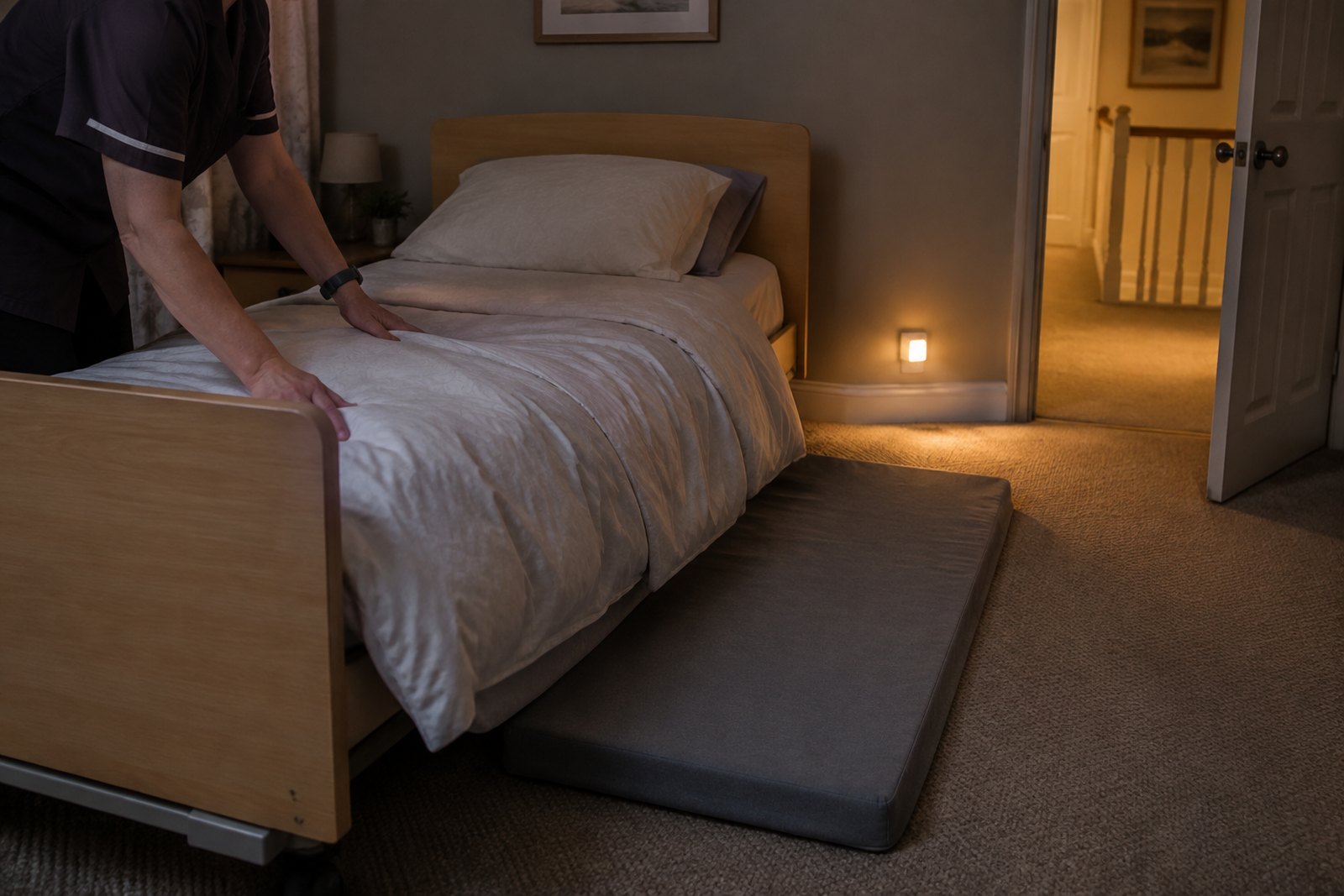
If someone keeps falling out of bed, there are two jobs to do at once. The first is to find out why it is happening. A lot of night-time falls have a cause that can be treated, such as an infection, a medicine, a bladder that wakes them repeatedly, pain or confusion. The second is to make the route out of bed safer and the landing softer while you work that out. That usually means a bed at the right height, or one that lowers close to the floor at night, sometimes a falls mat beside it, decent lighting and a clear path to the toilet.
Bed rails are often the first thing families reach for, and they are not always the answer. For someone who is confused or determined to get up, rails can turn a short fall into a longer one, or trap an arm, leg or neck. This guide goes through the causes, the first steps, the equipment and its trade-offs, and when it is worth getting an occupational therapist to look at the bedroom with you.
Why people fall out of bed
It is rarely one thing. The common reasons are:
- Getting up for the toilet. Needing to go urgently, in the dark, half asleep, is behind a great many night falls. Often the person is not rolling out so much as trying to get up and not quite making it.
- Confusion. Dementia, or delirium caused by an infection, an operation or a hospital stay, can leave someone unsure where they are. They may try to get up to go home, go to work or find someone who is not there.
- Restlessness. Pain, being too hot or too cold, constipation, breathlessness, restless legs or anxiety all mean more tossing and turning near the edge.
- Acting out dreams. Some people, particularly those with Parkinson's, move vigorously, kick or shout in their sleep. Mention this to the GP specifically, because it is worth looking into.
- The bed itself. A bed that is too high, too narrow, or has a soft edge that gives way when they sit on it. Thick mattress toppers and some pressure-relieving air mattresses raise the sleeping height and soften the edge.
- Slippery bedding and nightwear. Satin sheets, silky pyjamas and a slide sheet left in the bed after repositioning all make it easy to slide off. Slide sheets are for moving someone and should always be taken out afterwards.
- Standing up too fast. Going straight from lying to standing can make some people dizzy as their blood pressure drops, and they go down beside the bed.
First steps: look for a medical cause
If the falls are new, or have suddenly become more frequent, speak to the GP before you spend money on equipment. A bed and a mat will not fix a urine infection. Things worth raising:
- Infection. Urine and chest infections can cause sudden confusion in older people. A marked change over hours or a day or two needs same-day advice from the GP or NHS 111.
- Medicines. Some medicines cause drowsiness, dizziness or more trips to the toilet at night. Ask the GP or a pharmacist for a medication review. Do not stop or change anything yourself.
- Continence. Getting up many times a night can have treatable causes. The GP can check for these and refer to the local NHS continence service if that would help. Do not cut back drinks drastically to reduce night toileting without advice, as dehydration brings its own problems, including more confusion.
- Pain, sleep, eyesight and dizziness on standing. All of these make night falls more likely and all are worth a conversation.
Ask too whether there is a local falls service. Many areas have one, often with nurses, physiotherapists and occupational therapists, and the GP can tell you how referral works where you live.
When a fall needs urgent help
Call 999 if the person is unconscious or hard to wake, has trouble breathing, is bleeding heavily, is in severe pain, cannot move a limb or you suspect a broken hip. If they have hit their head and take a blood-thinning medicine, NHS advice is to get them checked at A&E. If you are not sure, call NHS 111. Do not try to lift someone off the floor on your own, as you can hurt them and yourself. Our guide on getting up from the floor after a fall explains when it is safe for someone to get up with help and when to wait.
Bed height: easier to get out of, or a shorter fall?
This is the real tension, and it catches a lot of families out. A higher bed is easier to get out of, and much kinder on a carer's back. A lower bed means a shorter fall. You cannot have both from a fixed-height bed.
For getting in and out, the bed usually works best when the person can sit on the edge with their feet flat on the floor and their knees roughly level with their hips. Too high and their feet dangle, so they slide off the edge rather than stand. Too low and pushing up to standing is hard work, especially with weak legs or painful knees.
For reducing injury from rolling out, lower is better. That is why a height-adjustable bed often solves the problem. It goes up for getting in and out and for care tasks, and down while the person is asleep. Electric profiling beds do this, and some councils and NHS teams lend them through the local community equipment service after an assessment, so ask before buying one.
Ultra-low beds
Some beds lower to just above floor level. They suit people who roll out but do not usually get up and walk on their own, such as someone very frail, very sleepy or in the later stages of dementia. Things to know:
- Someone who does try to get up from a very low bed may struggle, crawl or pull on furniture. If they are still trying to walk at night, a very low setting may simply move the fall.
- The bed must be raised before anyone washes, changes or repositions the person. Bending to floor level is how carers injure their backs.
- Keep the handset where a confused person cannot press it by accident. Some beds allow the controls to be locked.
- Check the brakes are on and that nothing is underneath when the bed lowers.
Falls mats and crash mats
A falls mat, sometimes called a crash mat, is a thick, cushioned mat laid on the floor beside the bed. It does not stop a fall. It aims to soften the landing. Paired with a low bed, it can mean someone who rolls out ends up on a soft surface a short drop away, rather than on a hard floor from full height.
The trouble is that the same mat that protects someone rolling out can trip someone standing up. Think about:
- The person getting up. A soft mat is an unstable surface to stand on, and the edge is a step to catch a foot on. Walking frame wheels and stick tips sink or snag. For someone who still walks to the toilet at night, a mat may add risk rather than remove it.
- Carers. Mats are easy to trip over in the dark, particularly for a tired family member or a visiting carer who is not expecting one. Mats with sloped, bevelled edges and a colour that stands out from the floor help.
- Equipment. Hoists, commodes and wheelchairs do not roll well over a thick mat, so it may need moving for every transfer. Decide who does that, every time.
- Cleaning. A wipe-clean cover matters, especially if there are continence problems.
Please do not improvise with duvets, pillows or sofa cushions on the floor. They slide, bunch up and are a trip hazard in their own right.
Bed rails: helpful for some, dangerous for others
Bed rails can reassure someone who is alert, understands what the rails are for and is worried about rolling out, or someone who cannot get out of bed at all. For a person who is confused, restless or determined to get up, they carry real risks. People climb over them and fall from a greater height. Arms, legs, heads and necks can be trapped in gaps between the rail, mattress and headboard. Rails that do not match the bed and mattress, or a mattress that has been changed for a deeper one, make this worse.
Using rails to stop someone getting up when they want to is also a form of restraint, which is a serious decision best made with professional input. A bed lever or bed handle is a different thing altogether, designed to help someone sit up and get out, not to keep them in. Our guide to bed rails: when they help and when they are dangerous goes into the detail.
Sensor mats, bed sensors and alarms
Sensors will not stop a fall, but they can buy you time to get there before someone walks into the dark. The main types are:
- Bed sensors that sit under the mattress and alert when the person has been out of bed for a set time.
- Floor sensor mats beside the bed that alert when someone steps on them.
- Movement sensors on the wall that detect someone moving around the room.
These can sound a pager in your room or link to a telecare monitoring centre. Be honest with yourself about response time. An alert at 3am only helps if someone can get there quickly. Floor sensor mats are themselves a trip risk, so under-mattress sensors are often a better fit. Where possible, talk the person through what is being used and why. Many councils run telecare services, and our guide to personal alarms, telecare and falls detectors covers the options.
Lighting and the route to the toilet
Because so many night falls happen on the way to the toilet, this route deserves as much attention as the bed.
- Put a lamp within easy reach of the bed so the light can go on before the person stands. A touch lamp is easier for stiff or shaky hands.
- Use low-level night lights along the route, from bedside to toilet. Motion-activated ones come on without anyone having to find a switch.
- Clear the floor of rugs, trailing cables, slippers and clothes.
- Leave the toilet door open and a light on inside so it is easy to find.
- If the toilet is a long way off, a commode or a urinal by the bed can take the rush out of the journey.
- Keep a walking aid, glasses and a drink within reach, and well-fitting slippers with a back by the bed.
- Encourage sitting on the edge of the bed for a moment before standing, to let any dizziness settle.
A few small changes help too. Swap slippery bedding for cotton. Make sure getting out is on the person's stronger side. If a bed is pushed against a wall to cut down the sides they can fall from, it must be tight to the wall with no gap to slip into. There is more in our guide to night-time safety for older adults.
Where an occupational therapist fits
An occupational therapist looks at the whole picture: the person, the bed, the bedroom, the route to the toilet and the people helping at night. They will usually want to see the person get in and out of bed, find out what happens when they wake, and talk about what is worrying you. From there they can advise on bed height, whether a profiling or ultra-low bed makes sense, whether a falls mat helps or adds risk, whether rails are appropriate, and what sensors would actually fit your household. They can also show carers safer ways to help someone sit up, stand and get back into bed.
An occupational therapist is not the right person for every part of this. The GP leads on medical causes such as infection, medicines and continence. A physiotherapist leads on strength and balance work. A pharmacist can review medicines, and a memory service or dementia nurse may help with night-time confusion. A council occupational therapist can be reached through adult social care and is free, though there may be a wait. A private occupational therapist visiting at home can often see you sooner and write recommendations you can take to the council or GP. Our home assessment page explains what a visit involves.
Frequently asked questions
Is it safe to put a mattress on the floor?
It removes the fall, but it brings other problems. Getting up from floor level is very hard for most older people, and carers have to kneel or bend right down for every wash and change, which risks their backs. It can work as a short-term stopgap for someone who does not get up on their own, but a height-adjustable bed that lowers at night is usually the better answer.
Should I put bed rails on Mum's bed if she has dementia?
Be cautious. If she is confused and likely to try to get up, she may climb over the rails and fall further, or get trapped. A low bed, a falls mat and a sensor are often safer. Get professional advice before fitting rails for someone with dementia.
Can we get a low bed or falls mat on the NHS?
Sometimes. Councils and NHS teams lend equipment through community equipment services, usually after an assessment by an occupational therapist, physiotherapist or community nurse. What is available varies by area, so ask the GP, district nurse or council adult social care.
What height should an older person's bed be?
For getting in and out, a height where they can sit on the edge with feet flat on the floor and knees about level with their hips usually works. For someone who rolls out at night, lower is safer while they sleep. An adjustable bed lets you have both.
Will a falls mat stop someone falling out of bed?
No. It only softens the landing. It works best with a low bed for someone who rolls out but does not walk at night, and it can become a trip hazard for anyone standing on or stepping over it.
Do I need to call an ambulance every time Dad falls out of bed?
Not if he is unhurt and can get up safely with help. Call 999 if he is unconscious, badly hurt, cannot move a limb or you suspect a broken hip, and get him checked at A&E if he hits his head while taking a blood thinner. If you are unsure, call NHS 111. Either way, tell the GP about repeated falls.
Next steps
See our home assessment and equipment and aids pages, or current guide prices, and choose your area below.

Talk to an occupational therapist near you
This guide is general information. For advice about your own situation - or someone you look after - a local occupational therapist can visit you at home and see it for themselves.
Choose your area: