

Reablement and Intermediate Care: The Six Weeks After Hospital
By Mobile Occupational Therapist • 17 September 2026 • 8 min read
Somebody in a hospital corridor tells you your mother is being referred for reablement. Or intermediate care. Or a recovery service. You nod, because everyone else seems to know what that means, and you look it up in the car park afterwards.
Here is the short version. They are different names for the same thing: a short period of free, intensive help to get someone back on their feet after illness, injury or a hospital stay. The NHS itself lists "rehabilitation, reablement and recovery services" as other names for intermediate care, so if you have been given two different words by two different people, nobody has changed the plan.
What it actually is
Intermediate care is help aimed at getting someone independent again, rather than help that does things for them. That distinction is the whole point of it and it is worth holding on to, because it explains a lot of what can feel strange about how it works.
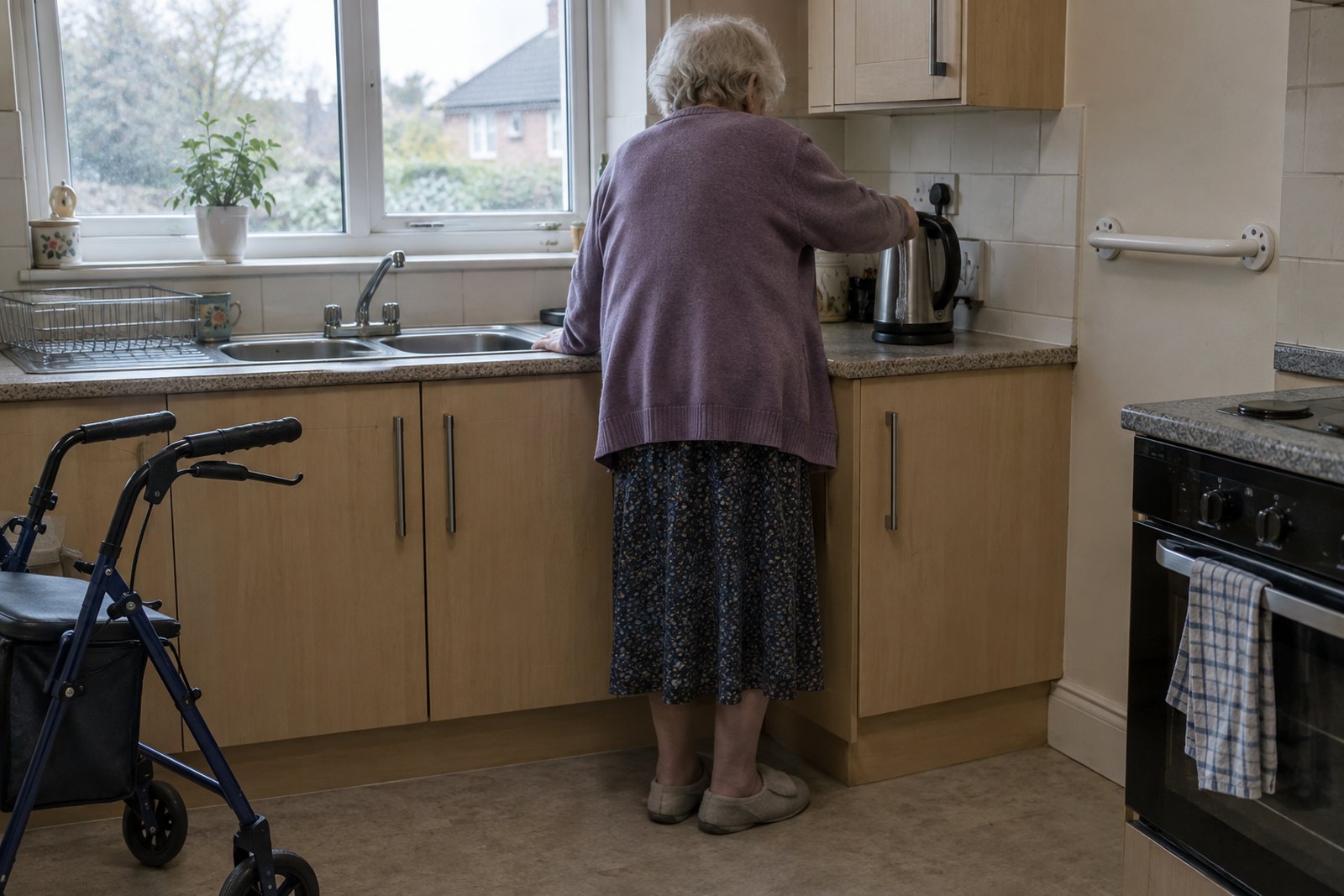
A traditional care visit might wash and dress someone. A reablement visit is more likely to stand beside them while they wash and dress, working out which bit has become difficult and what would fix it - a different chair, a rail in the right place, a change to the order they do things, or simply practice and time.
That is why occupational therapists and physiotherapists are usually central to it, alongside support workers, nurses and sometimes a social worker.
How long it lasts, and what it costs
Nothing, and that surprises people. The NHS is explicit that this type of care is free. It is provided for as long as it is needed - which might be a week or two, and usually for a maximum of six weeks. How long you actually get depends on your needs, your circumstances and the progress being made towards the goals that were set.
The six weeks is not a guarantee of six weeks. Some people are discharged from reablement in ten days because they have got where they needed to get to. That is a success, even though it rarely feels like one at the time.
How someone gets it
There is a needs assessment first, to decide whether intermediate care is the right thing. That may happen in hospital, or increasingly at home - see our guide to discharge planning for how the wider process fits together.
You do not usually arrange reablement yourself. It comes through the hospital discharge team, a community therapy team, a GP referral or adult social care. If someone is struggling at home and has not been in hospital, the route in is normally a Care Act needs assessment through the council.
What a good six weeks looks like
Goals should be specific and they should be the person's own. "Improve mobility" is not a goal. "Get to the downstairs toilet without help by the end of the fortnight" is.
Expect some or all of the following:
- An assessment of the actual home, not a generic checklist - which chair, which steps, how far to the bathroom, what the lighting is like at night
- Equipment, usually quickly. Community equipment stores can deliver rails, frames, raised seats and perching stools in days, sometimes the same day
- Practice at real tasks - stairs, getting off the toilet, making a hot drink, getting in and out of bed
- Visits that reduce over time. Going from three visits a day to one is the service working, not the service being withdrawn
- A conversation about what happens next, which should start well before the last week
Where it can go wrong
Three things families report often enough to be worth naming.
The goals were set without the person. If nobody asked what mattered to your father, the plan will be about walking distances rather than about getting to his greenhouse, and he will not engage with it. It is entirely reasonable to ask for the goals to be rewritten.
It is mistaken for a care package. Some families are dismayed that the worker will not simply do things. That is not neglect - it is the design. But if the person is genuinely unable to do a task safely, say so clearly, because reablement is not meant to leave anyone struggling unaided.
Nobody explains the ending. Which brings us to the part this article exists for.
What happens when the six weeks end
One of three things.
They have got there. The service ends, no ongoing care is needed, and any equipment usually stays.
They still have long-term needs. There should be a further care needs assessment for ongoing support, arranged through the local council. Long-term care is means-tested, unlike the six weeks, so this is the point at which money enters the conversation - often abruptly.
They are somewhere in between. This is the common one and the least well handled. Real progress was made, the six weeks is up, and there is still a list of things that are not right - the stairs are still frightening, the bath is still unusable, the confidence is not back. There is often no obvious service for this, because the NHS block has done what it was funded to do.
Where a private occupational therapist fits
Honestly: not during the six weeks. If someone is under an NHS reablement team, they already have an OT and a plan, and adding a second one mid-programme helps nobody. Let it run.
Afterwards is different. The common reasons families arrange a private visit once reablement has finished:
- The list that did not get finished. Reablement is short and prioritises the urgent. Bathing, stairs and getting out of the house are often still outstanding when the clock runs out.
- An adaptation that needs a report. A level-access shower or a stairlift usually needs an OT assessment behind it, and council waits for non-urgent adaptation assessments can be long. See our guides to wet rooms and level-access showers and to OT assessments before buying a stairlift.
- Things have changed since. A new fall, a further deterioration, or a house move restarts the whole question, and re-referral is not always quick.
- Somebody wants a second opinion on whether home is still workable, written down, before a decision gets made about it.
A private OT does the same kind of assessment, in the same home, usually within days rather than weeks, and you pay for it. That is the entire difference. Our guide to deciding between NHS and private OT goes through it properly.
Frequently asked questions
Is reablement really free?
Yes. The NHS states that this short-term care is free, for as long as it is needed and usually up to a maximum of six weeks. Long-term care afterwards is means-tested, which is a different question and often an unwelcome surprise.
Can we ask for longer than six weeks?
You can ask, and it is sometimes extended where there is clear continuing progress towards agreed goals. Be aware that the test is usually whether someone is still actively improving, not whether they still have difficulties.
Is reablement the same as rehab?
Broadly, in the way the NHS uses these words - it lists rehabilitation, reablement and recovery services as names for intermediate care. In practice "rehab" is sometimes used for a more therapy-led programme, and reablement for a more support-worker-led one, but do not read much into which word you are given.
Can someone have reablement without going into hospital?
Yes. It is commonly used to prevent an admission as well as after one - often after a fall, or when someone has become suddenly less able to manage. The route in is usually a GP, a community therapy team or adult social care.
Does the equipment have to go back?
Usually not - most community equipment is on long-term loan and stays as long as it is needed. Ask, because arrangements differ locally, and see our guide to community equipment services.
What if we think the discharge was unsafe?
Raise it with the ward or discharge team first, and with the hospital's PALS service if that does not resolve it. Do not wait politely if someone is at genuine risk at home right now - that is a same-day conversation with the GP, the discharge team or adult social care.
Next steps
If reablement has finished and there is still a list of things that are not right, an occupational therapy home visit is a reasonable next step - and the work is the same work, just arranged privately and sooner. See our hospital discharge support and home assessment pages, or current guide prices, and choose your area below to see who covers it.
Talk to an occupational therapist near you
This guide is general information. For advice about your own situation - or someone you look after - a local occupational therapist can visit you at home and see it for themselves.
Choose your area: