

Do You Need an OT Assessment Before Buying a Stairlift?
By Mobile Occupational Therapist • 19 August 2026 • 7 min read
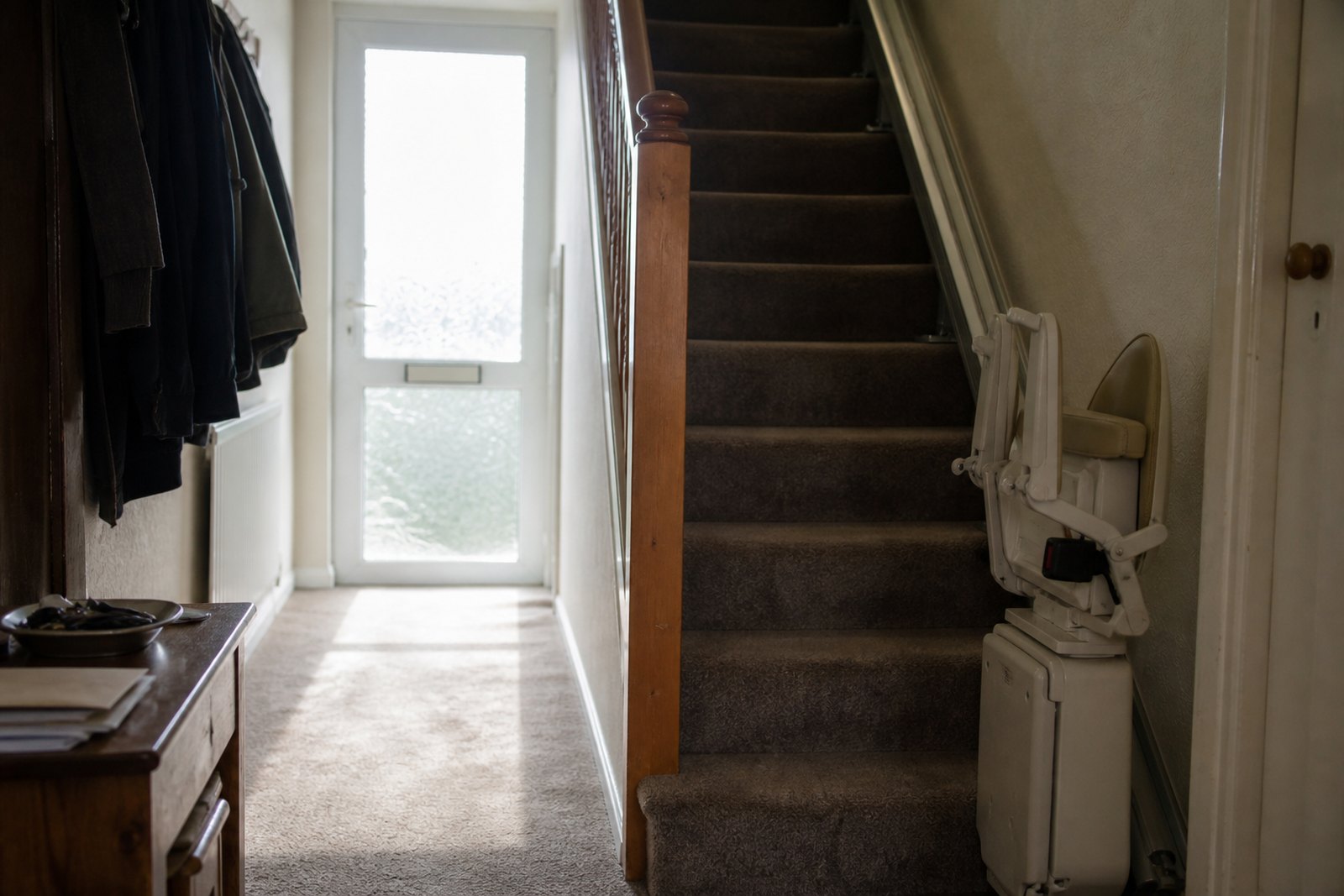
You do not legally need an occupational therapy assessment to buy a stairlift. Any company will sell you one, most will survey your staircase within a few days, and many will fit it inside a fortnight.
Whether you should get an assessment first is a different question, and worth a few minutes of thought - because a stairlift is typically a two-to-five-thousand-pound purchase, it is fitted to your staircase, and the person surveying it works for the company selling it.
To be clear: stairlifts are excellent, and for a great many people they are exactly the right answer. This article is not an argument against them. It is about the smaller number of cases where the money would have achieved more somewhere else, and how to tell which you are.
What a stairlift solves, and what it does not
A stairlift solves one problem precisely: getting up and down the stairs.
It does not solve getting to the top of the stairs, getting off at the top and walking to the bathroom, getting on and off the lift itself, or managing anything else upstairs once you are there.
That distinction matters because the stairs are frequently the most visible difficulty rather than the most limiting one. A common pattern: a stairlift is fitted, and six weeks later the person is still not going upstairs, because the actual barrier was standing up from the lift at the top and walking the six unaided steps to the bathroom.
What an occupational therapist looks at
An assessment considers the whole journey rather than the staircase:
- Can they transfer on and off safely? Getting onto a stairlift seat and off again at the top is itself a movement requiring balance and leg strength. If that is the difficulty, the lift may not be usable.
- What happens at the top? Distance to the bathroom and bedroom, whether there is anything to hold, whether the landing turn is manageable.
- Is upstairs still workable? If the bathroom upstairs cannot be used safely, a stairlift may deliver someone to a floor they cannot manage.
- Is the condition progressive? The important question is not "does this work today" but "will this still work in eighteen months". For some progressive conditions a stairlift is a short-lived solution and a downstairs reorganisation lasts longer.
- Cognition and memory. A stairlift needs to be operated correctly and consistently. Where there is dementia, this needs specific thought - including whether it could be used unsafely when nobody is there.
- Who else lives there? A stairlift narrows the staircase for everyone else, which matters if another resident is also unsteady.
When a stairlift is often not the answer
Patterns that come up repeatedly in assessments:
- The bathroom is the real problem. Someone struggling with stairs is very often also struggling with the bath. Converting a downstairs room, or making the upstairs bathroom usable, sometimes achieves more than the lift.
- Living downstairs is genuinely better. Where there is a downstairs toilet and a room that can become a bedroom, moving downstairs can restore more independence than a lift, at lower cost. People resist this - understandably, it feels like a loss - but it is worth putting on the table honestly.
- The stairs are not actually the limiting factor. Sometimes the person has stopped going upstairs because of fatigue, breathlessness or fear of falling, and the stairs are where that shows up rather than what causes it.
- A rail would do. Occasionally a well-positioned second banister rail is what was needed, at a fraction of the cost. Not often - but often enough to check first.
Curved staircases, and why the cost jumps
Straight stairlifts run on a standard rail and are relatively inexpensive. A curved staircase needs a rail manufactured for that specific staircase, which is why quotes jump substantially and lead times lengthen.
That also means a curved stairlift has almost no resale value, and removal costs money. If a condition is progressing, the whole-life cost of a bespoke curved lift is worth weighing against alternatives before committing.
Funding, and why the order matters
If you may be eligible for help with the cost, the order of events is important. A Disabled Facilities Grant can contribute to a stairlift, but it is means-tested and normally requires an occupational therapy assessment as part of the application - and work already carried out is not usually funded retrospectively.
So if there is any chance of a grant, get the assessment before you buy, not after. People do lose eligibility simply by arranging the work themselves first. Our guide to the Disabled Facilities Grant covers the process.
You can request a free needs assessment from your council yourself. Waiting times vary, which is one reason people go private - but if you are paying anyway, an assessment from someone with nothing to sell is a small fraction of the cost of the lift.
Questions worth asking any supplier
- What happens in a power cut - and how many trips will the battery do?
- What is the ongoing servicing cost, and is the first year included?
- What does removal cost, and does the rail damage the staircase?
- Is this reconditioned or new, and what warranty applies to each?
- How much usable stair width is left once it is fitted and folded?
- Can I see the actual seat height and try the transfer before ordering?
That last one matters most and is asked least. Getting on and off is the part that most often turns out to be the problem, and it is much easier to discover before installation.
Frequently asked questions
Do I need an occupational therapy assessment to get a stairlift?
Not to buy one privately - any supplier will sell and fit one without it. You normally do need one if you are applying for a Disabled Facilities Grant towards the cost. Even paying privately, an independent assessment is worth it on a purchase this size, because the surveyor who visits works for the company selling the lift.
When is a stairlift not the right answer?
When the difficulty is getting on and off rather than travelling up and down; when upstairs cannot be used safely once you arrive; when the condition is progressing fast enough that the lift will not last; and when living downstairs would restore more independence for less money. An assessment looks at the whole journey, not just the staircase.
Will the council pay for a stairlift?
It may contribute through a means-tested Disabled Facilities Grant, which normally requires an occupational therapy assessment. Crucially, work already done is not usually funded retrospectively - so if there is any chance of a grant, get assessed before you buy rather than after.
Should I get a stairlift or move downstairs?
It depends on whether there is a downstairs toilet and a room that could become a bedroom, and on whether the condition is progressive. Living downstairs is often cheaper and more durable, but it feels like a loss and people understandably resist it. It is worth considering honestly rather than dismissing - an independent assessment will put both options on the table.
Are curved stairlifts more expensive?
Considerably, because the rail is manufactured for your specific staircase. That also means almost no resale value, and removal costs money. If a condition is progressing, weigh the whole-life cost against the alternatives before committing.
Next steps
If a stairlift is under consideration, an independent assessment costs a small fraction of the lift and occasionally changes the answer entirely - and if you may qualify for a grant, it needs to happen first. An occupational therapist can look at the whole journey, not just the staircase. See the areas we cover, our guide to how home adaptation assessments work, or current guide pricing.
Talk to an occupational therapist near you
This guide is general information. For advice about your own situation - or someone you look after - a local occupational therapist can visit you at home and see it for themselves.
Choose your area: