

Polymyalgia Rheumatica: Morning Stiffness and Everyday Tasks
By Mobile Occupational Therapist • 31 October 2026 • 14 min read
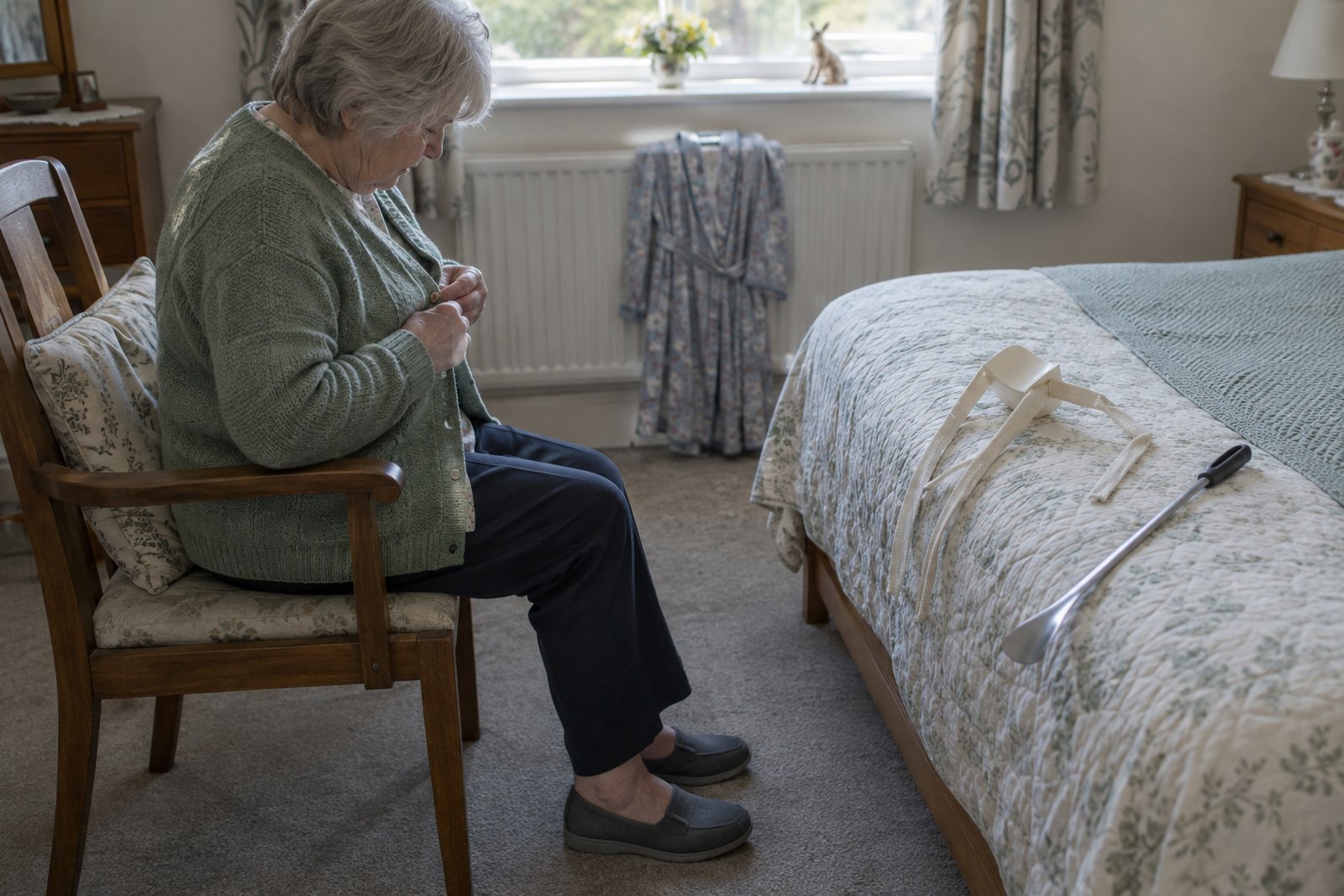
Polymyalgia rheumatica, usually shortened to PMR, is an inflammatory condition that causes pain and stiffness around the shoulders, neck, upper arms, hips and thighs, due to inflammation in and around the joints and surrounding tissues rather than the muscles themselves. It almost always affects people over 50, and the stiffness is at its worst first thing in the morning. Many people say getting out of bed is the hardest part of the day. Arms will not lift, hips will not bend, and it takes a long, slow while before anything loosens.
PMR is often diagnosed and started on treatment by a GP, sometimes with input from a rheumatologist or another specialist, and it is usually treated with steroid tablets taken for a long time with the dose brought down slowly. Steroids often help quickly. But the mornings, the getting dressed, the getting up from chairs and the tiredness while the dose comes down are what you actually live with, and that is what this guide is about. First, though, there is one warning everyone with PMR needs to know.
Warning signs that need help the same day
PMR is linked to a condition called giant cell arteritis (GCA), where blood vessels in the head become inflamed. GCA can cause permanent sight loss if it is not treated quickly. It can develop in people with PMR, whether they have just been diagnosed or have been on treatment for a while.
Get medical help the same day - ring your GP practice and say it is urgent, or call NHS 111 - if you have:
- a new headache, or one that feels different from your usual headaches, often around the temples
- tenderness of the scalp, for example when brushing your hair or lying on a pillow
- pain in your jaw when chewing that eases when you stop
- any change in your vision, such as blurring or double vision, even if it comes and goes
If you suddenly lose sight in one or both eyes, call 999 or go to A&E straight away. Do not wait to see if it settles, and do not drive yourself.
See your GP promptly, too, if you notice unexplained weight loss, fevers or night sweats, or if your pain and stiffness are not improving the way your doctor expected. These need checking rather than putting up with.
What PMR is, in plain terms
PMR is one of the inflammatory rheumatic conditions. The body's immune system causes inflammation in and around the large joints, mainly the shoulders and hips, and in surrounding tissues such as bursae and tendons. Nobody fully knows why it starts. It is more common as people get older and more common in women.
The typical picture is:
- pain and stiffness on both sides of the body, in the shoulders, neck, upper arms, hips, buttocks or thighs
- stiffness that is worst in the morning or after sitting still, and eases as you move about
- symptoms that came on fairly quickly, over days or a few weeks
- tiredness, feeling generally unwell, low mood or a poor appetite
It can make ordinary things suddenly hard. Lifting your arms to wash your hair, reaching behind to fasten a bra, rolling over in bed, getting off the toilet or out of a car. People who were fit and busy a month ago can find themselves needing help with their socks, and that is a shock.
Steroids: what to know in general terms
Your GP or a specialist will decide your treatment and dose. This is general information so you know what to ask about, not advice on your medicine.
- Never stop steroids suddenly or change the dose yourself. After a few weeks on steroids your body makes less of its own, and stopping abruptly can make you seriously unwell. The dose is reduced slowly, usually over many months, and your doctor will tell you how.
- Carry a steroid card. You should be given one when you start, and your GP or pharmacist will explain which card you need. Show it to any doctor, nurse, dentist or pharmacist who treats you, and to paramedics in an emergency.
- If you are ill and cannot keep your tablets down, for example with vomiting, seek urgent medical help the same day by contacting your GP practice or NHS 111, and if you feel very unwell call 999, because you may need steroid cover.
- Bone protection. Long-term steroids can thin the bones. A doctor may talk to you about protecting your bones, which can include supplements, a medicine, or a bone density scan. Our guide to living with osteoporosis at home covers the practical side of protecting your bones from falls.
- Tell your GP about side effects such as trouble sleeping, mood changes, increased appetite, thirst or needing to wee more often. Do not just stop the tablets.
- If stiffness comes back as the dose is reduced, tell your GP. That is common and they may adjust the plan. Do not go back up a dose on your own.
Easier mornings
The morning is where small changes make the biggest difference. The aim is to stop fighting your body at its stiffest moment.
Before you get out of bed
- Give yourself time. If you have to be somewhere, set the alarm earlier rather than rushing a stiff body.
- Do a few gentle movements lying down: circle your ankles, open and close your hands, slide your arms up and down the sheet, gently bend and straighten your knees one at a time.
- If your GP or pharmacist has told you to take your tablet at a particular time, keep it, your water and your glasses within reach of the bed so you are not getting up just for that.
- Warm the bedroom. Setting the heating to come on before you wake makes a real difference to how stiff you feel.
Use warmth
Many people find a warm shower is the quickest way to loosen up. If standing for long is tiring, a shower stool or chair lets you sit while the warm water works on your shoulders. Check the temperature before you get in, especially if your skin feels less sensitive. A dressing gown warmed on a radiator, or clothes laid nearby, helps too, but do not leave clothes on an electric heater or where they could overheat, and check they are not too hot before putting them on.
Getting dressed
- Sit down to dress. A firm chair with arms is better than the edge of a soft bed. It saves balancing on one leg for trousers and socks.
- Choose front-fastening clothes. Cardigans, shirts and front-opening tops are far easier than anything pulled over your head when your shoulders will not lift. Front-fastening or soft stretchy bras save reaching behind.
- Dress the stiffer side first and undress it last, so you do not have to bend it as far.
- Loose waistbands and elasticated trousers are easier than tight buttons and zips if your hands are slow in the morning.
- Slip-on shoes with a firm back, or shoes with elastic laces or touch-close straps, avoid bending down to tie laces. Avoid backless slippers, which are a common cause of trips.
- Lay clothes out the night before, at waist height, so you are not reaching into high wardrobes or low drawers at your worst moment.
Simple equipment helps when hips will not bend: a sock aid (a flexible shaped trough with long cords you pull to draw the sock on), a long-handled shoe horn, and a dressing stick for pulling clothes up or off your shoulders. Our guide to dressing aids and easier ways to get dressed explains each one and how to use it.
Washing and hair
Washing your back, feet and hair are usually the hard bits. A long-handled sponge or brush helps with feet and back. Washing hair in the shower while seated is often easier than leaning over a basin. If lifting your arms to your head is the problem, a long-handled comb or brush, and resting your elbows on a table while you do your hair, can take the strain off your shoulders.
Getting out of bed and up from chairs
Out of bed
Rather than sitting straight up, which asks a lot of stiff hips and stomach muscles, try this:
- Bend your knees and roll onto your side, facing the edge of the bed.
- Let your lower legs slide over the edge.
- As your legs go down, push up through your lower elbow and then your hand, so you come up to sitting in one movement.
- Sit for a moment before standing, to make sure you feel steady.
If that is still a struggle, a bed lever (a frame that slides under the mattress and gives you a firm handle to push on) or a leg lifter can help. Our guide to leg lifters and bed levers explains who they suit and how to fit them safely. Bed height matters too. If your bed is low, standing up is much harder.
Up from a chair
Low, soft chairs and sofas are the enemy of stiff hips. Some things that help:
- Shuffle to the front of the seat first.
- Put your feet slightly back, under your knees.
- Lean forward so your nose comes over your toes, then push up with both hands on the chair arms.
- Use a chair that is high enough and firm, with arms you can push on.
A chair that is slightly too low can often be raised rather than replaced. See our guide to chair raisers, bed raisers and furniture raisers for what is safe and what is not. The same logic applies to the toilet, where a raised seat or toilet frame can make a big difference during the stiffest weeks.
In and out of the car
Sit down on the seat sideways first, with your back to the car, then bring your legs in together. A swivel cushion on the seat can make turning easier. Reverse it to get out.
Around the house
Shoulder stiffness makes anything above shoulder height difficult, and hip stiffness makes anything near the floor difficult. So for now:
- Move the things you use every day to between waist and shoulder height: mugs, plates, everyday food, toiletries.
- Use a long-handled reacher for things that fall on the floor, rather than bending.
- Fill the kettle with only as much water as you need, or use a jug to fill it.
- Carry less at once. Use a kitchen trolley or a bag on each side rather than one heavy load.
- Split housework into short pieces across the week. Changing a bed and hoovering the whole house on the same morning is a recipe for a bad afternoon.
- Consider online shopping or help with heavy jobs while you are at your worst. It does not have to be forever.
Pacing while the dose comes down
Here is the trap. The steroids start working, you feel better than you have in weeks, and you catch up on everything you could not do. Then you pay for it. And as the dose is reduced over the following months, some stiffness and tiredness may creep back, which can be demoralising.
Pacing means spreading your effort out so you can keep going steadily rather than in bursts followed by crashes. In practice:
- Stop a task before you are exhausted or in more pain, not after.
- Break big jobs into smaller ones and spread them across the day or week.
- Do the harder things when you are at your best, which for most people with PMR is later in the morning or early afternoon, not first thing.
- Plan rest as part of the day, not as a failure.
- Decide what actually matters to you this week and let some of the rest go.
It helps to keep a simple diary of your dose, your stiffness and what you did each day. It shows you your own patterns and gives your GP useful information when you discuss the next reduction. Our practical guide to fatigue management and pacing goes into this in more detail.
Keeping moving
When everything hurts, it is tempting to sit still. But gentle, regular movement helps keep joints moving, keeps muscles from weakening and is good for bones while you are on steroids. A short walk most days, getting up and moving about regularly rather than sitting for hours, and gentle shoulder and hip movements within comfort are all worth doing.
Go gently, build up slowly, and do not push through sharp pain. If you are not sure what exercise is right, ask your GP about seeing a physiotherapist. Exercise and stretching programmes are their area, and they can tailor one to you.
Where an occupational therapist fits
To be honest about it: your GP, and sometimes a rheumatologist, lead on diagnosing and treating PMR, and a physiotherapist leads on exercise. Many people respond well to treatment and need little else.
An occupational therapist helps with the everyday part. They look at how you actually manage getting out of bed, dressing, washing, using the toilet, cooking and getting about, and help you find easier ways to do it. That can mean:
- watching you do the tasks you find hard and suggesting different techniques
- recommending equipment, and checking it is the right type and height for you and your home
- helping you set up routines and pacing that fit your life while the dose is reduced
- looking at falls risk, which matters more when you are stiff and on long-term steroids
An occupational therapist is most useful in the early weeks before treatment takes full effect, when symptoms return during a reduction, or when PMR sits alongside other conditions such as arthritis, frailty or a recent fall. Your council's adult social care team can arrange an assessment, which may include an occupational therapist, though waits vary. A private occupational therapist visiting at home can usually see you sooner. See our equipment and daily living aids page for what that involves.
Frequently asked questions
Is polymyalgia rheumatica a type of arthritis?
It is grouped with the inflammatory rheumatic conditions, and arthritis charities support people with it. But it mainly affects the joints and the tissues around the shoulders and hips (such as bursae and tendons) rather than causing the joint damage seen in some types of arthritis.
How long does PMR last?
Treatment usually goes on for a long time, often a year or two and sometimes longer, with the steroid dose slowly reduced. Symptoms can come back during or after the reduction. Your GP will guide you through it, so ask them what to expect in your case.
Should I rest or keep moving?
Both, in balance. Rest when you need it and pace your day, but keep gently moving. Long spells of sitting still usually make stiffness worse.
Can I drive with PMR?
Only if you can drive safely, which means being able to turn your head, check over your shoulder, steer and brake without difficulty. If stiffness stops you doing that, do not drive. If you have any change in your vision, do not drive and get medical help the same day. For whether you need to tell the DVLA about any condition, check the driving and medical conditions guidance on GOV.UK and ask your GP.
Why am I so tired?
Tiredness and feeling generally unwell are common with PMR itself, and steroids can disturb sleep. Pacing helps. But if tiredness is severe or getting worse, or you feel low in mood, tell your GP.
Will I need equipment forever?
Usually not. Many people use a few simple aids during the stiffest weeks and put them away as treatment works. Borrowing or buying inexpensive items for now is sensible, rather than making big changes to your home.
Next steps
If mornings, dressing or getting up are a daily struggle with PMR, an occupational therapist can help you find easier ways through. See our home assessment and independence for older people pages, or current guide prices, and choose your area below.

Talk to an occupational therapist near you
This guide is general information. For advice about your own situation - or someone you look after - a local occupational therapist can visit you at home and see it for themselves.
Choose your area: