

Memory Aids for Dementia: What Actually Helps at Home
By Mobile Occupational Therapist • 11 October 2026 • 12 min read
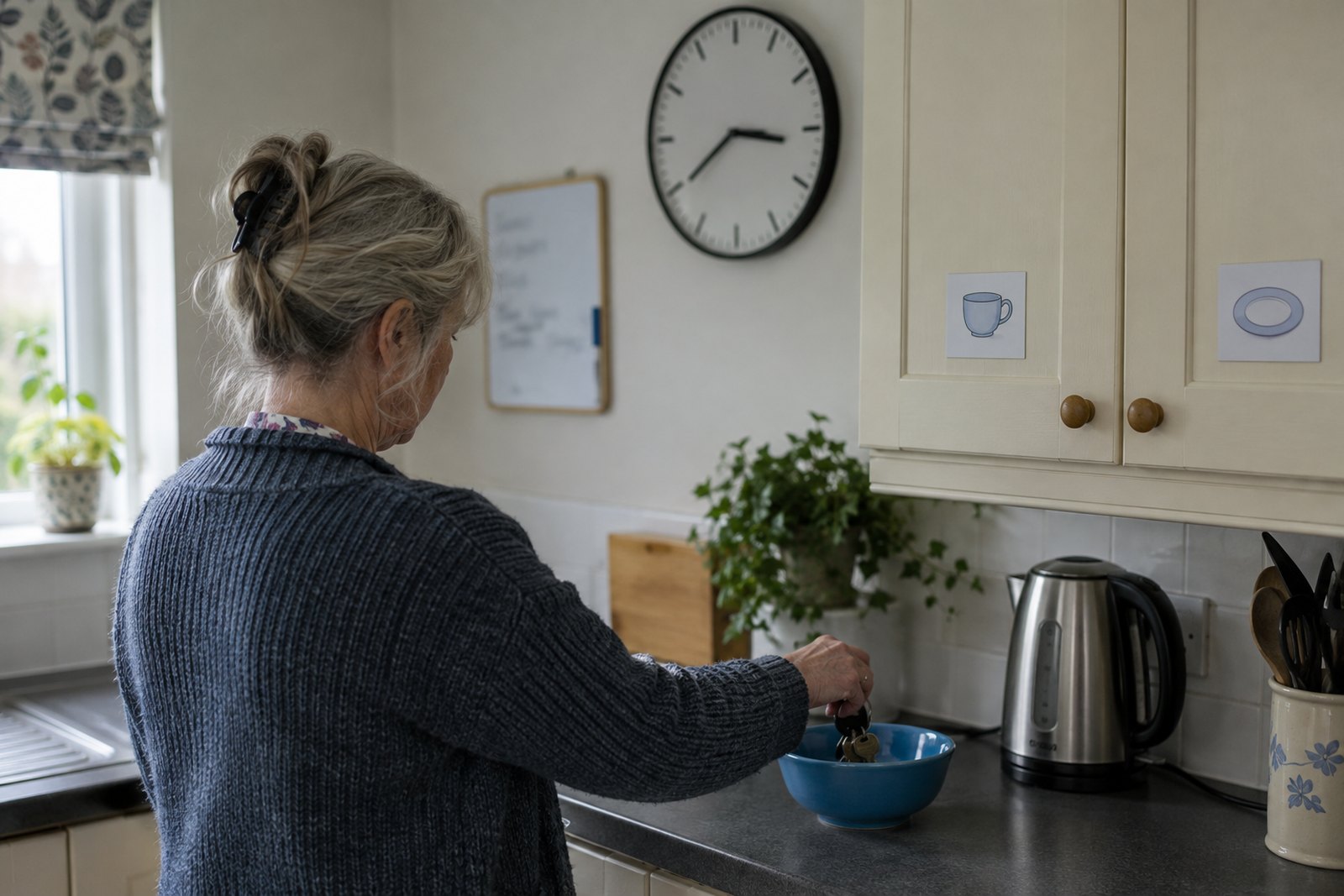
The memory aids that help most people with dementia at home are usually the simplest. One whiteboard in a spot they pass every day. A clear clock and calendar. Labels or pictures on the cupboards that cause trouble. One fixed place for keys and glasses. A steady daily routine. Gadgets such as medication dispensers, sensors and smart speakers can add a lot, but they work best on top of those basics, not instead of them.
What matters more than any product is fit. A memory aid only helps if the person can use it, wants to use it and still recognises what it is for. That changes as dementia progresses, so what works this year may need rethinking next year. This guide goes from low-tech upwards, covers what to avoid and how consent fits in, and explains where an occupational therapist can help.
Start with the person, not the shop
Before buying anything, spend a few days noticing exactly where things go wrong. Is it the morning tablets? Getting up at 3am thinking it is time for the shops? Losing keys and blaming the neighbour? Missing appointments? Each has a different answer, and a general "memory aid" will not solve any of them.
Then ask the person. It is their home and their memory. Many people in the earlier stages have firm views about what feels helpful and what feels patronising, and an aid they chose is far more likely to be used than one that appeared on the kitchen wall overnight.
The law backs this up. In England and Wales, the Mental Capacity Act 2005 says a person is assumed able to make their own decisions unless it is shown they cannot make a particular decision at a particular time. A dementia diagnosis alone does not mean someone cannot decide whether they want a sensor in their hallway. Where they genuinely cannot decide, any choice made for them should be in their best interests and the least restrictive option that works. Scotland and Northern Ireland have their own laws built on similar principles.
Low-tech aids that do most of the work
One whiteboard, in one place
A whiteboard is cheap, flexible and never needs charging. Put it where the person naturally looks: by the kettle, on the back of the front door, or beside their usual chair. Keep it to a few lines in large, dark print: the day and date, who is visiting, and one or two things happening. Wipe yesterday off every evening. Old notes are worse than none. If several people help, agree that one person updates it, because conflicting notes in three handwritings confuse anyone.
Labels and pictures
Labels on kitchen cupboards and on the toilet and bedroom doors cut down hunting and frustration. Words work while reading is easy; a picture alongside the word lasts longer as reading gets harder. Sometimes it works better still to take the door off one cupboard so the mugs and tea are simply visible. For the toilet, a sign at eye level, the door left ajar and a light on at night can prevent a lot of distress. There are more ideas in our guide to a dementia-friendly home, room by room.
Be selective. A house where every drawer is labelled starts to feel like an institution, and too many signs become background noise. Label what causes problems.
A home for keys, glasses and phone
Pick one place near the front door or their chair and make it obvious: a tray in a contrasting colour with a hook above for keys. Then everyone, including visitors, puts things back there. The shared habit is what makes it work. A spare set of keys and glasses kept elsewhere takes the panic out of the days it fails.
Notebooks and memory books
A single notebook kept in the same place, used as a running diary of who rang, what the doctor said and what happened today, suits many people in the earlier stages. It gives them something to check rather than having to ask again. One book, not scraps of paper.
A life story book is different: photos and short captions about the person's life, family and interests. It supports identity and conversation, and it is very useful for new carers, respite workers or hospital staff.
Routine is a memory aid too
A steady pattern does a lot of the remembering. Getting up at a similar time, washing and dressing in the same order, lunch at the same time. When the body knows what comes next, less has to be held in the head. Tie new tasks to old habits: tablets with breakfast, not "whenever".
Clocks and calendars
Losing track of time is common and unsettling: dressing at midnight, ringing family at 5am, insisting it is Sunday. Ordinary clocks can be hard to read when the face is busy. Dementia clocks show the day, date and often whether it is morning, afternoon, evening or night in large plain words. For some people they settle a lot of anxious questions; for others, especially later on, the extra information is just noise. Our guide to dementia clocks explains the types and who tends to get on with them.
A day-to-a-page calendar or a simple week planner is often easier than a full month. Cross off each day at the same time, perhaps with the morning cup of tea. Put the clock, calendar and whiteboard together, so there is one information point in the house.
Medication reminders
Medicines are where memory problems carry the most risk. Forgetting a dose is a problem. Taking it twice can be dangerous.
Start with the pharmacist. They can look at whether doses could be lined up with meals or reduced in number, and whether medicines could come in a pharmacy blister pack sorted by day and time. Not every pharmacy offers these and policies vary, so ask yours. The GP can review the full list too, which is worth doing if it has grown over the years.
At home, options run from a simple pill organiser with compartments for each day and time, to boxes with alarms, to locked automatic dispensers that open one compartment at the right time and can alert family if a dose is not taken. The locked kind matters if someone might take extra. We cover the choices in dosette boxes, blister packs and managing medicines at home.
Be realistic. A reminder tells someone it is time; it does not make sure they take the right tablets. Tablets on the floor, an untouched box or one emptied too fast mean it is time to involve the GP, pharmacist or council adult social care about more support, not another alarm.
Telecare, sensors and alarms
Telecare is equipment that raises an alert to a monitoring centre or a family member's phone. Useful types for memory problems include:
- Door sensors that alert someone if the front door opens at night.
- Bed or chair sensors that notice if someone gets up and does not return within a set time.
- Activity sensors that learn the usual daily pattern and flag a day when something is different.
- Smoke, heat, gas, flood and temperature detectors linked to a monitoring service, for when cooking or taps left running have become a risk.
- Pendant alarms and falls detectors, with a caveat: a person with dementia may forget to wear one, or what the button is for.
Many councils run or arrange telecare, often after a social care assessment, and charges vary by area, so ask your council's adult social care team. Our guide to personal alarms, telecare and falls detectors explains what each type does well and badly.
Sensors raise real privacy questions. A door alert at 3am can keep someone safe and at home for longer. It can also feel like being watched. Explain what it does and who gets the alert, and revisit the decision as things change.
Smart speakers, video calls and cameras
A smart speaker can announce reminders out loud, answer "What day is it?" as often as it is asked without a sigh, play favourite music and make hands-free calls. For people who already liked technology it can be genuinely helpful. For others, a voice from nowhere in the kitchen is confusing or frightening. Try it, watch how they respond, and be ready to unplug it.
Video calling devices that answer automatically let family check in without the person working a phone. Lovely when welcome. Set up auto-answer only with the person's agreement, and agree regular call times so it does not feel like a surprise inspection.
Cameras need the most care, and should never go in a bedroom or bathroom without very careful thought. If the person can understand and agree, ask them. If they cannot, it should be a genuine best-interests decision involving others who know them, limited to what is actually needed. A door sensor often answers the worry with far less intrusion. And someone needs to own the tech: Wi-Fi drops and changed passwords quietly stop these systems working. For a wider view, see our assistive technology guide.
What to avoid
- Too much at once. Introduce one thing, give it a couple of weeks, then decide.
- Aids that need new learning. Something built on familiar habits usually beats a new app or touchscreen.
- Wall clutter. Out-of-date notes and three calendars confuse more than they help.
- Quizzing. "What day is it? Look at the board." feels humiliating. Aids are there to help, not test.
- Gadgets instead of people. Reminders support care; they do not replace company, meals or someone checking in.
Matching aids to the stage of dementia
Earlier stages
Diaries, phone alarms and calendars often work well, and people can set them up themselves. It is a good time to build habits like the key tray, and to talk about what they would want later, including how they feel about sensors.
Middle stages
Simpler and more visual works better: pictures with words, fewer buttons, aids that act automatically. Locked dispensers and door sensors often come in here.
Later stages
Reminders that rely on reading or responding usually stop helping. Familiar people, familiar objects, a calm routine and someone present matter more. Some aids become a source of distress and are better removed. That is not failure. It is the plan changing as the person changes.
Where an occupational therapist fits
An occupational therapist looks at how someone manages everyday life at home and what gets in the way. Rather than a memory test, a visit usually means watching real tasks in their own kitchen: making a drink, finding things, taking tablets, getting dressed. They notice which steps break down, what the person still does well, and what the home makes harder, such as poor lighting, low contrast or clutter. From that they can suggest aids and strategies matched to that person, show family how to set them up, advise on risks like cooking or going out at night, and write findings that can support a council care assessment.
NHS and council occupational therapists are free; ask your GP or council adult social care about local access. A private occupational therapist visiting at home is another option if you want help sooner.
An occupational therapist does not diagnose dementia or manage medicines. If memory is worsening and there has been no assessment, start with the GP, who can refer to a memory service. The pharmacist and GP lead on medicines, and a speech and language therapist helps with communication or swallowing. If confusion comes on suddenly over hours or days, it may be delirium, often linked to infection: contact the GP the same day or call NHS 111, and call 999 if the person is very unwell.
Frequently asked questions
What is the single best memory aid for someone with dementia?
There is not one. For many people a whiteboard by the kettle plus a clear clock does the most good for the least money. The best aid is the one that solves their biggest daily problem and that they will actually use.
Can we get memory aids for free?
Some equipment and telecare can come through the council after a needs assessment, though charges vary by area. You may also not have to pay VAT on some equipment designed for disabled people or people with a long-term illness; check the rules on GOV.UK before buying.
Mum refuses to use the aids we bought. What now?
Ask her what feels wrong. It may be how it looks, where it sits, or feeling managed. Remove most of it, keep the one thing she tolerates, and let her choose where it goes. Help that is resisted rarely works.
Are GPS trackers a good idea?
They can help find someone who gets lost, but they do not stop it happening and are only useful if worn and charged. Discuss them openly while the person can take part in the decision. Many police forces also run a scheme called the Herbert Protocol, which records key details in advance; ask your local force.
Do reminder alarms on a mobile phone work?
In the earlier stages, often yes, especially for people already used to their phone. They tend to stop working once the person cannot remember what the alarm means, so pair them with a routine rather than relying on them alone.
Next steps
If you would like someone to look at what would genuinely help at home, see our older people's independence page, or current guide prices, and choose your area below.

Talk to an occupational therapist near you
This guide is general information. For advice about your own situation - or someone you look after - a local occupational therapist can visit you at home and see it for themselves.
Choose your area: