

Personal Alarms, Telecare and Falls Detectors: What Actually Helps
By Mobile Occupational Therapist • 17 September 2026 • 7 min read
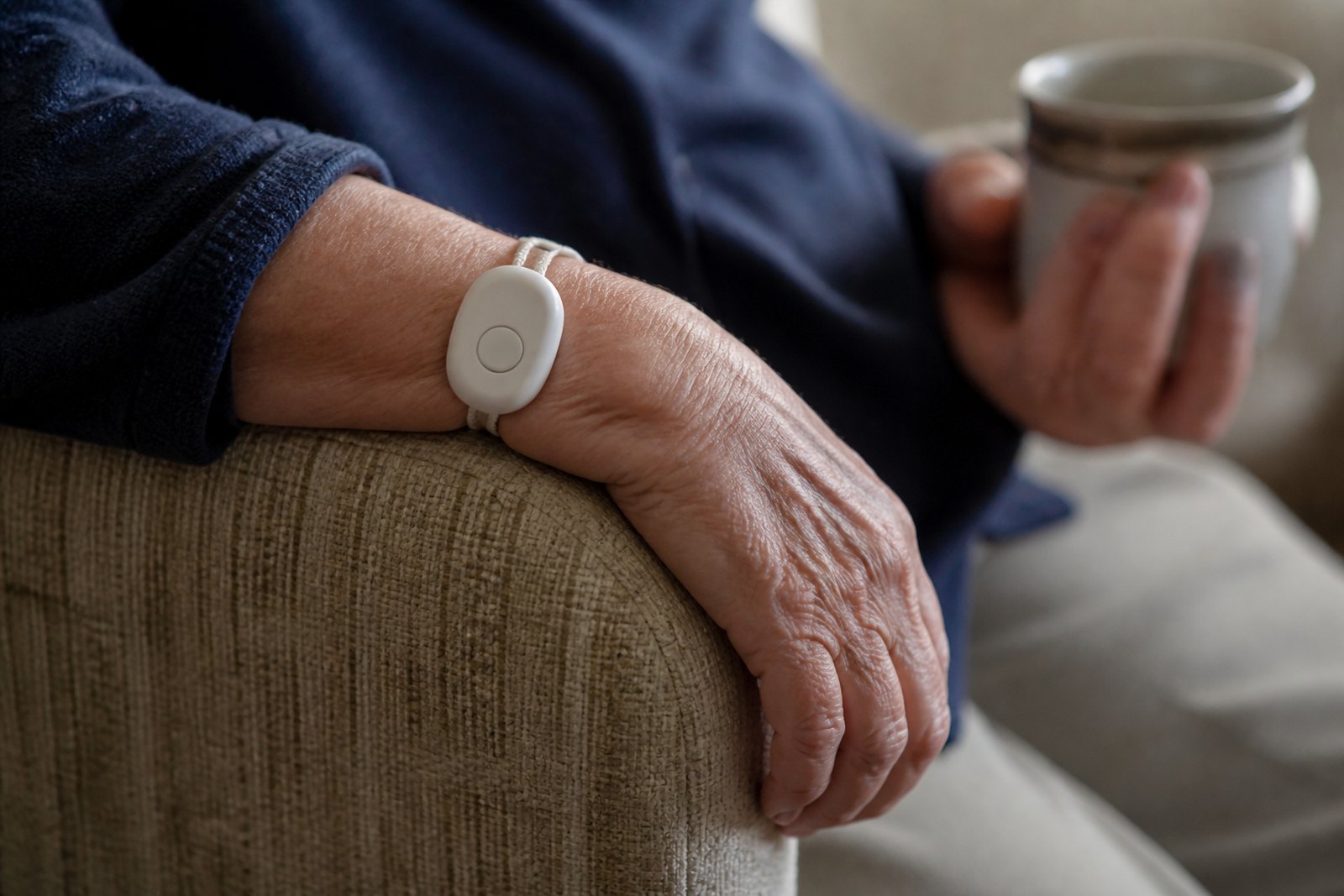
A personal alarm is one of the most useful things you can put in an older person's home, and one of the most commonly wasted. The reason is simple and worth saying at the top: an alarm only works if it is worn. Far more often than anyone admits, an alarm is found on the bedside table or in a kitchen drawer after a fall, because the person took it off at night - which is exactly when a great many falls happen. So an honest guide to personal alarms, telecare and falls detectors starts not with which device to buy, but with whether it will actually be on the person when they need it.
How a personal alarm and monitoring centre work
The basic setup is a pendant or wristband with a button, paired with a base unit plugged in at home. Pressing the button opens a two-way voice call to a monitoring centre staffed around the clock. The operator speaks through the base unit - usually loudly enough to be heard from another room - finds out what has happened and follows an agreed plan: call a named responder, call a neighbour, or call an ambulance. This kind of service is often described as a careline alarm or community alarm.
Setting it up properly matters more than the hardware. The monitoring centre needs an up-to-date contact list and a realistic idea of who can actually attend: naming a son who lives two hours away as the first responder sounds reassuring and helps nobody at three in the morning. Check the pendant works from the whole home, including the garden and the bathroom, and test the pendant battery and base unit every few months.
The wearing problem, honestly
Every experienced occupational therapist has stood in a hallway looking at an alarm pendant hanging on a hook while the person who needed it was on the floor. The reasons people stop wearing them are ordinary and human:
- It comes off at night. People take the pendant off with their glasses and their watch. Night-time trips to the bathroom are among the riskiest journeys in the house, so this is the worst moment to be without it.
- It feels like a label. A pendant round the neck says "I am frail" to visitors, and plenty of people would rather risk the fall. A wristband version often solves this outright.
- It gets in the way. Cords catch on things, and some people worry about the cord itself. Ask the provider about wrist straps and clip options.
- It is saved for emergencies. Many people decide their fall was "not bad enough" to bother anyone. Saying plainly that the button is for any time they cannot get up removes that hesitation.
The fix is nearly always a conversation rather than a device: which style would you actually wear, and would you wear it in bed? Pair it with practical work on how to get up from the floor after a fall, and with the wider approach in our guide to falls prevention at home.
Automatic falls detectors and their real limits
A falls detector is a pendant with motion sensors that tries to recognise a fall and raise the alarm without the button being pressed. It is genuinely valuable for someone who might be knocked out, or too shocked or confused to press anything. But it needs an honest description, because the marketing rarely gives one.
Falls detectors detect many falls, not all of them. A slow slide down a wall or onto a bed, or a fall that ends with the person propped against furniture, may not register. They also raise false alarms - a pendant dropped on a hard floor, or a heavy sit-down, can trigger a call. Neither of these makes them useless; both mean a detector is a backstop, not a guarantee. The button remains the primary way of calling for help, and the detector covers the times someone cannot use it. Anyone told a detector means they will always be found quickly has been sold something that does not exist.
GPS alarms for people who go out
Standard alarms only work within range of the home base unit. For someone who walks to the shops, gardens at an allotment, or is living with early dementia and sometimes becomes disorientated, a GPS alarm works over the mobile network and lets a responder see roughly where they are. These are useful, and they raise questions worth talking through openly: who can see the location, when, and whether the person is comfortable with it. A device used with someone's agreement supports independence. A device used to keep tabs on them without discussion damages trust and usually ends up switched off. Our dementia page covers the wider picture.
Key safes - the other half of the system
An alarm brings help to the door. A key safe gets that help through it. A key safe is a small combination lock box fixed to an outside wall holding a door key, with the code held by the monitoring centre and named responders. Without one, a genuine emergency call can end with the fire service forcing a door.
A few practicalities: fit it out of obvious sight but where a responder can find it in the dark, make sure the key inside actually opens the door being used, and change the code if it has been shared widely. In a leasehold flat or a building with a communal entrance, check what is permitted before drilling.
Sensors beyond alarms - and where the line sits
Telecare extends well past the pendant. Door sensors can tell a family member when someone has gone out at night. Bed occupancy sensors can raise an alert if a person gets up and does not return. There are flood and heat sensors for kitchens and bathrooms, and medication reminder dispensers that prompt at the right time and flag missed doses. Used well, this equipment lets someone stay in their own home considerably longer than they otherwise could.
Used badly, it turns a home into a place where someone is watched. The test we apply is whether the person understands and agrees to what is being installed, and whether the alert is proportionate to a real risk. A bed sensor for someone at genuine risk of night-time falls is sensible. Movement sensors in every room reporting to a family group chat is surveillance, and it corrodes dignity. Where someone cannot make that decision themselves, the least intrusive option that manages the actual risk is the right one.
Frequently asked questions
How do I get a personal alarm for an elderly parent?
There are two routes. Many councils run or commission a telecare service, usually reached through adult social care and often following an assessment of need at home. There are also private providers who supply equipment and monitoring directly, which can be quicker. Ask any provider how the monitoring centre is staffed, what happens out of hours, and how the equipment is tested.
Do falls detectors really work?
They work well enough to be worth having, and not well enough to rely on. They pick up many falls automatically and can summon help for someone who is unconscious, but they miss some falls and occasionally raise false alarms. Treat a detector as a second layer behind a button the person will genuinely press, not as a replacement for it.
What is the difference between a personal alarm and telecare?
A personal alarm is one device - the button and the monitoring centre behind it. Telecare is the broader category, covering that alarm plus the sensors, detectors and reminder equipment that alert either a monitoring centre or a family member. Most people start with an alarm and add other pieces only if a specific risk appears.
Next steps
If you are thinking about an alarm for yourself or a relative, start with the honest question of what will be worn, day and night, then add a key safe so help can get in. If falls are the worry, an occupational therapist can look at the whole picture at home - the alarm, the flooring, the lighting, the chair, the route to the bathroom - through a home assessment or our independence for older people service. To arrange a visit, see the areas we cover and our prices.
Talk to an occupational therapist near you
This guide is general information. For advice about your own situation - or someone you look after - a local occupational therapist can visit you at home and see it for themselves.
Choose your area: