

Dementia Clocks: What They Are, Who They Help and How to Choose One
By Mobile Occupational Therapist • 17 September 2026 • 9 min read
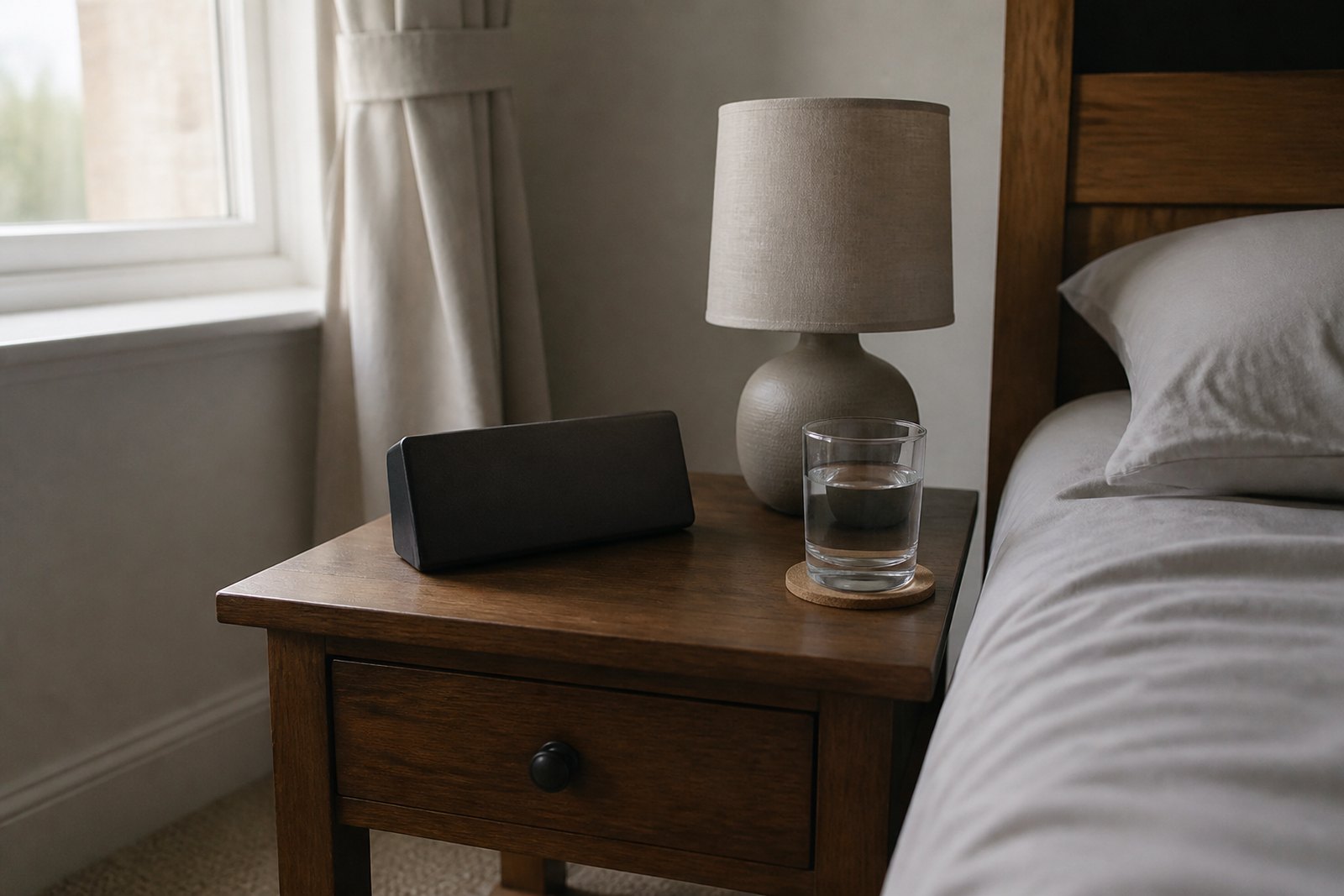
A dementia clock is a clock built to be read at a glance by somebody whose sense of time has become unreliable. Instead of two hands and twelve numbers it spells the answer out in words: Thursday, morning, 21 March. The better ones give the day and the part of the day more room than the hour, because the question being asked is rarely "what time is it?" and almost always "where am I in the day?" You will see them sold as day clocks, day and night clocks, calendar clocks and memory clocks. They are the same idea under different names.
A clock for dementia helps a great many people and is quietly oversold to others. It works best in the early and middle stages, while reading and reasoning still do their job, and does little once written words have stopped carrying meaning. This guide covers the types, what to look for, where to put one and the cheaper things worth trying first. We assess rather than sell, so we will also say when the answer is to buy nothing.
The problem a dementia clock solves
Time disorientation is one of the earliest and most disruptive changes in dementia, and it causes trouble out of all proportion to how it sounds. Someone wakes at three in the morning, sees darkness that could equally be a winter evening, and gets dressed for the day. Meals get missed because lunch never announced itself, or eaten twice because nothing recorded the first one.
Underneath it sits a constant unease at not knowing where you are in the day. A clock that answers the question without anybody being asked hands back a small piece of independence. Our page on occupational therapy for dementia covers the wider picture it sits inside.
The types of dementia clock
- Digital day clocks. A screen showing a full sentence in large letters: it is Thursday morning. Usually the easiest to read, because there is nothing to interpret. Many show morning, afternoon, evening and night instead of a numeric time.
- A day and night clock for dementia. The same idea narrowed to the distinction that matters most: should I be up, or should I be in bed. Some change the display from light to dark as evening comes. Worth considering where getting up at night is the main difficulty.
- Analogue clocks with day and date. A plain face with clear numbers and small windows for the day and date. Good for somebody who has read one all their life, and a poor choice once the hands cause hesitation.
- Calendar clocks. Day, date and month given the largest share of the display. Useful where appointments and the shape of the week are the problem rather than the hour.
- Talking clocks. Press a button and it says the time and day aloud. Valuable for somebody with poor sight, or who has stopped reading.
- Clocks with reminders. Recorded prompts for tablets, meals or a carer's visit. A prompt only helps somebody who can still act on it, so these work for a while and then stop. Set two or three at most.
How to choose a dementia wall clock or bedside clock
- One obvious reading. The display should say one thing at a time. Time, day, date, temperature, humidity and an alarm symbol give the reader six things to sort through, and sorting is exactly what has become hard.
- Words, not abbreviations. Thursday, not THU. Afternoon, not PM. An abbreviation is an extra decoding step, and it is the first to fail.
- Contrast, and no glare. Large plain lettering and a matt screen. A glossy face opposite a window goes unreadable at exactly the hours it is needed.
- Brightness that behaves at night. A screen bright enough to read across a room in daylight is often far too bright at two in the morning. Look for automatic dimming or a night setting.
- Mains or battery. A battery operated dementia clock goes anywhere and has no flex to trip over, but somebody has to notice the display fading, and that job needs a named owner. A mains clock stays lit but ties you to a socket. Many take both, with the battery as backup.
- Size, measured rather than guessed. Measure from the pillow and from the armchair to where the clock will stand, then check the stated character height. Digits 25mm high will not be read from four metres.
Where to put it, and the other clocks in the house
Placement decides whether a clock earns its keep. It needs to sit in the line of sight from two places: the bed, at the height a head actually rests on the pillow, and the chair the person uses most of the day. Check it lying down as well as standing up: a clock on a high shelf vanishes from a pillow.
Then deal with every other clock in the house. A kitchen clock ten minutes fast, a stopped clock in the hall, a microwave flashing and a heating timer still on summer time all contradict the new one, and somebody already unsure which answer to trust now has five. Correcting or removing the clocks that disagree costs nothing and often does as much good as the purchase. It belongs with the other small changes in our guide to a dementia-friendly home, room by room.
When a sudden change is not the dementia
This matters more than anything else on this page. If somebody becomes suddenly more confused, more agitated, sleepier or far more wakeful than usual, over hours or a day or two rather than over months, that is not simply the dementia moving on. It is very often delirium, and delirium usually has a cause that can be treated: a urine or chest infection, pain, constipation, dehydration, or a new or changed medicine. No clock will touch it. Ring the GP the same day, or NHS 111 if the surgery is closed. Families notice this first, and "this came on suddenly and it is not how she was last week" is exactly the right thing to say on the phone.
What a dementia clock cannot do
It cannot stop night-time waking by itself. Being told it is three in the morning does not make anybody sleepy, and if the reason for getting up is pain, the toilet, hunger or four hours asleep in the armchair after lunch, the clock addresses none of it. What moves the needle is the shape of the day: daylight and activity in the morning, a limited afternoon rest, and a lit, obvious route to the toilet at night, which our guide to night-time safety for older adults covers in detail.
Nor can it help somebody who no longer takes meaning from written words. Buy one early, while it can still become habit, and give a named person the job of keeping it right.
Cheaper things worth trying first
Before spending anything, try a large plain wall calendar with the days crossed off each morning, or a whiteboard by the kettle carrying today's date and the one or two things happening today. For some people the crossing-off is itself the thing that helps, and if it is not enough you now know precisely what a clock needs to do.
What one costs, and how to get one without buying it
Expect roughly £20 to £30 for a simple battery digital day clock, and £50 to £80 for a large mains model with reminders or speech. Age UK and the dementia charities can point you to suppliers, and high street retailers and catalogues stock them. Paying more mostly buys size and a better screen.
Ask before you buy. Community equipment services and local telecare teams sometimes supply memory aids of this kind after an assessment, and a memory clinic or a community mental health team for older people may provide or recommend one. Our guide to community equipment services explains how borrowing instead of buying works. Say plainly at the memory clinic that time disorientation is causing trouble at home, because it is the sort of practical detail an appointment misses.
Frequently asked questions
Do dementia clocks actually work?
For the right person at the right stage, yes, and the effect can be immediate. They help most where somebody can still read and still reason from what they read, least once written words have lost their meaning, and they do nothing about the causes of night-time waking. A clock that is well chosen, well placed and kept accurate is a genuinely good thirty pounds; one bought too late and left on a shelf is not.
What is a day and night clock for dementia?
It is a clock that puts the part of the day, rather than the hour, at the centre of the display: morning, afternoon, evening or night, usually alongside the day of the week. It suits somebody who is getting up and dressed at three in the morning, because the answer they need is not the time but whether the day has started.
Is a battery operated dementia clock better than a mains one?
Neither is better in itself. A battery clock goes exactly where it is needed with no cable, but the batteries need changing and a fading display is easy to miss. A mains clock is always lit, but it needs a socket nearby and resetting after a power cut. Mains with battery backup avoids most of the argument.
Where can I buy a dementia clock?
High street retailers, catalogues and the usual online shops carry a range, and Age UK and the dementia charities can point you to reputable suppliers. Before you order, ask the memory clinic, the community occupational therapy team or adult social care whether one can be supplied, and check what the person can actually read before choosing the size and type.
Next steps
A clock is a small part of a bigger question: how the whole day is working and where it is going wrong. An occupational therapist can look at that at home, with the person rather than around them, and will happily tell you no purchase is needed. Find your local occupational therapist via our areas we cover page, or see our prices page for current guide pricing.
Talk to an occupational therapist near you
This guide is general information. For advice about your own situation - or someone you look after - a local occupational therapist can visit you at home and see it for themselves.
Choose your area: