

A Dementia-Friendly Home, Room by Room
By Mobile Occupational Therapist • 4 September 2026 • 8 min read
Most people living with dementia live in ordinary houses - not care homes, not specially built flats, but the same home they have lived in for years. That home can either work with them or quietly against them. A dark hallway becomes a place of hesitation. A patterned carpet becomes something to step over. A white toilet in a white bathroom effectively disappears. None of this is anyone's fault, and almost all of it can be improved with changes that are small, cheap and reversible.
This guide goes room by room through the changes occupational therapists most often recommend. Two principles run through all of it. First, the aim is not to childproof the house but to keep the person doing things - a home stripped of every risk is usually also stripped of every activity, and staying active is part of staying well. Second, change gently and one thing at a time. A familiar home is itself a memory aid, and a sudden wholesale rearrangement can take away the very familiarity that was helping. For the wider picture of how occupational therapy helps after a diagnosis, see our page on occupational therapy for dementia.
Everywhere: light, contrast and clutter
Three things matter in every room before any gadget does.
- More light, fewer shadows. An older eye needs far more light than a younger one, and dementia makes it harder to interpret what a shadowed corner or a pool of darkness actually is. Brighter bulbs, opened curtains and lamps that kill dark corners are the cheapest improvement available.
- Contrast makes things visible. A person with dementia may see well but struggle to pick objects out. A dark toilet seat against a white pan, a coloured plate on a plain table, a bannister painted a different colour from the wall - contrast does quiet, constant work.
- Patterns and shine can deceive. Bold patterned carpets can read as objects on the floor; a shiny floor can read as wet; a very dark mat can read as a hole. Plain, matt, mid-tone floor coverings are the dementia-friendly choice, and a rug that keeps being stepped around is better gone.
The hallway and stairs
The hallway is travelled more often than any room, usually while carrying something, often in the dark. Keep the route wide and clear of shoes, bags and post. Light it properly, including at night - a plug-in night light or a motion-sensor light between bedroom and bathroom prevents both falls and disorientation. On the stairs, ensure the light switch is reachable at both ends, mark the step edges if they blend together, and make sure the handrail runs the full flight. If the stairs - or the house more widely - feel like an accident waiting to happen, our room-by-room guide to practical falls prevention at home pairs well with this one.
The kitchen
The kitchen is where independence and risk sit closest together, and the instinct to remove someone from it entirely is usually wrong - making a cup of tea is often one of the last, most treasured routines. Aim to simplify rather than exclude.
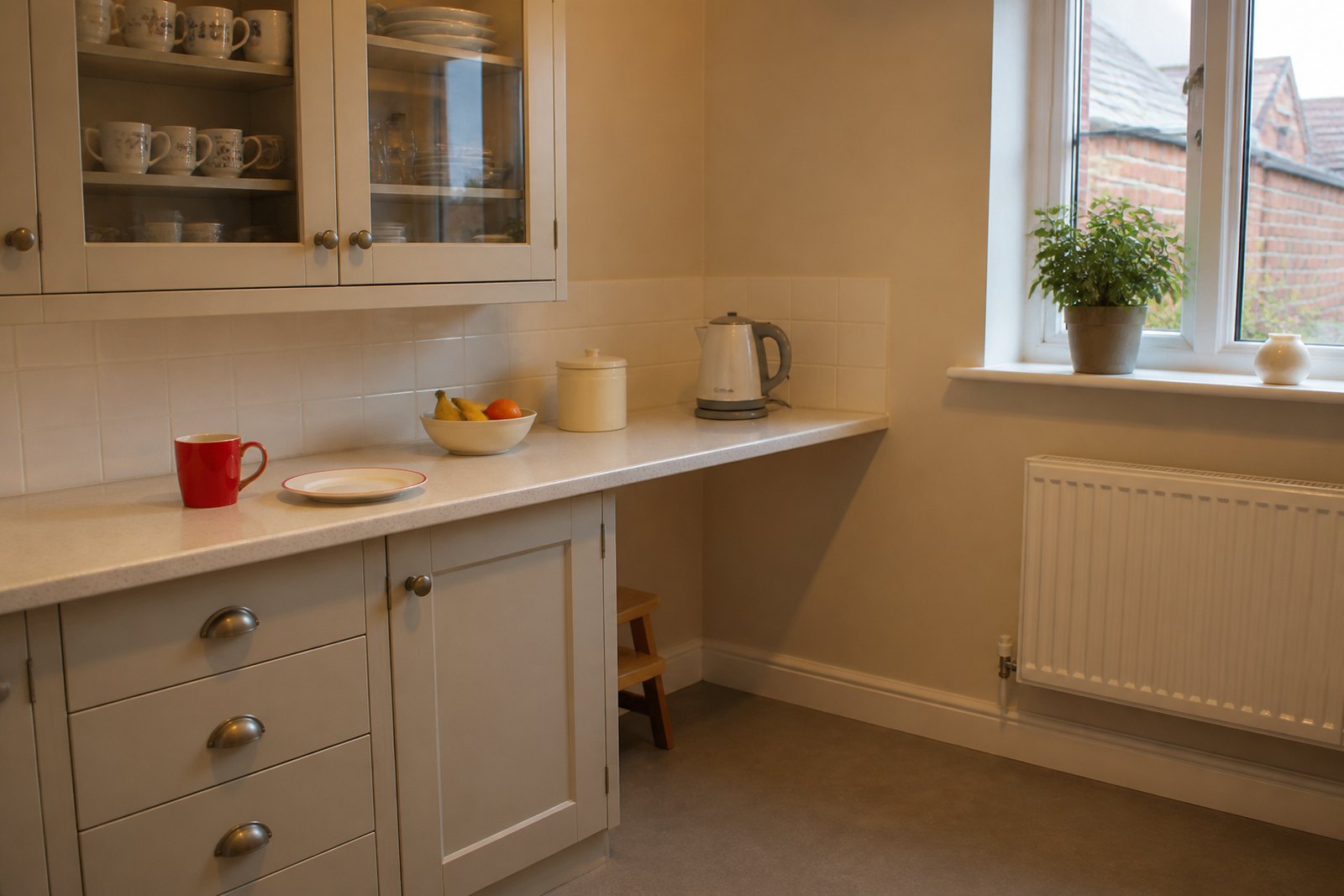
- Keep everyday things visible. Cupboard doors hide things from a person who no longer builds a mental map of what is behind them. Glass-fronted doors, open shelves for the most-used items, or simple picture-and-word labels on cupboards all help.
- Reduce choice. One kettle, one teapot, the mugs they actually use. A drawer of twelve gadgets is harder to use than a drawer of three.
- Manage heat sensibly. A kettle that switches itself off, a whistling kettle swapped for an automatic one, an isolation valve or induction hob if pans get forgotten. Devices that cut power to a cooker after a set time exist, and a smoke alarm - checked and working - is non-negotiable.
- Date-check together. Fridge contents quietly age when labels stop being read. A weekly clear-out done together keeps it routine rather than an inspection.
The bathroom
Bathrooms combine water, hard surfaces, locks and privacy - the most difficult mix in the house. A contrasting toilet seat is the single best-value change in the whole guide: it makes the toilet findable, day and night. Beyond that: a raised seat or rail if getting up is hard, a non-slip mat in the bath or shower, and taps that are clearly marked hot and cold - traditional crosshead taps with red and blue indicators are often easier to recognise than sleek modern levers. Set the water temperature so scalding is impossible, remove the lock or fit one that opens from outside, and never underestimate the value of simply leaving the bathroom door open with the light on, so the toilet is visible from the landing at night.
The bedroom
Night is when disorientation peaks. A clock that shows day or night alongside the time earns its place on the bedside table, as does a lamp within easy reach. A clear, lit route to the toilet matters more than almost anything else in the house, because that journey happens half-asleep in the dark. Keep the floor clear of trailing flexes and slippers-left-in-the-middle, and think about whether wardrobe doors left open with tomorrow's clothes visible would remove a morning battle. If someone is falling from bed or struggling to get in and out, get advice before buying bed rails - they help some people and endanger others, as our guide to bed rails explains.
Memory aids, labels and technology
Signs and labels work best when they arrive early enough to become habit, and when they use both a word and a picture. A sign on the toilet door, labels on cupboards, a large-print list of phone numbers by the phone, a whiteboard for today's plan. Beyond paper, a growing range of technology helps quietly in the background: automatic pill dispensers, calendar clocks, locator buttons for keys, sensors that alert a family member if the front door opens at 3am. Our guide to assistive technology at home walks through the options from simplest to smartest. Introduce one thing at a time, and introduce it while it can still be learned.
What to leave alone
Familiarity is a working part of this home. The armchair that has always faced the window, the ornaments in their long-standing places, the route to the kitchen worn in over decades - these are navigation aids as real as any sign. Resist the urge to declutter someone else's memories wholesale, move furniture only with good reason, and when something must change, change it while involving the person rather than around them. The goal is their home, slightly easier - not a new home to learn.
When to involve an occupational therapist
A generic checklist - including this one - cannot see how one particular person uses one particular house. An occupational therapist watching someone make tea, climb their stairs and find their bathroom will spot the two or three changes that matter most, and just as importantly will say what not to bother with. That assessment also opens doors to equipment and, where bigger adaptations are needed, to funding routes - the local authority route is explained in our guide to the Care Act needs assessment. If the person is over State Pension age and needs supervision or help with daily living, it is also worth reading our plain-English guide to Attendance Allowance - dementia is exactly the kind of condition it exists for, and it is heavily under-claimed.
Who benefits most from these changes
- People recently diagnosed, while new layouts and labels can still become habit
- Anyone with dementia who is starting to hesitate at stairs, avoid the kitchen or get lost at night
- Family carers trying to make visits between care calls count
- Families weighing up whether staying at home remains realistic - often it is, with the right changes
Frequently asked questions
What colours are best for dementia?
There is no magic colour - what matters is contrast. Doors that contrast with walls are easier to find; a toilet seat that contrasts with the pan is easier to see; crockery that contrasts with the table makes food more visible. Avoid bold patterns on floors and stark black mats, which can be misread as objects or holes, and prefer matt finishes over shiny ones.
Should I move furniture around for someone with dementia?
Only with a clear reason, such as widening a walking route or bringing a chair nearer a window. Long-standing furniture positions are part of how a person with dementia navigates, and a rearranged room can be genuinely disorienting. When change is needed, make it one item at a time and involve the person in doing it.
How do I stop someone with dementia falling at night?
Light the route: a motion-sensor night light between bed and toilet, a lamp in reach of the bed, and a toilet made visible - door open, light on, contrasting seat. Clear the floor of flexes and clutter, and consider a sensor that alerts a carer when the person gets up. If falls are already happening, ask for professional advice rather than adding equipment piecemeal.
Next steps
If you would like a professional eye on the house - what to change, what to leave, and in what order - an occupational therapy home visit does exactly that, with the person and their routines at the centre. Find your local occupational therapist via our areas we cover page, or see our prices page for current guide pricing.
Talk to an occupational therapist near you
This guide is general information. For advice about your own situation - or someone you look after - a local occupational therapist can visit you at home and see it for themselves.
Choose your area: