

Living Alone After a Fall: What to Set Up at Home
By Mobile Occupational Therapist • 22 October 2026 • 13 min read
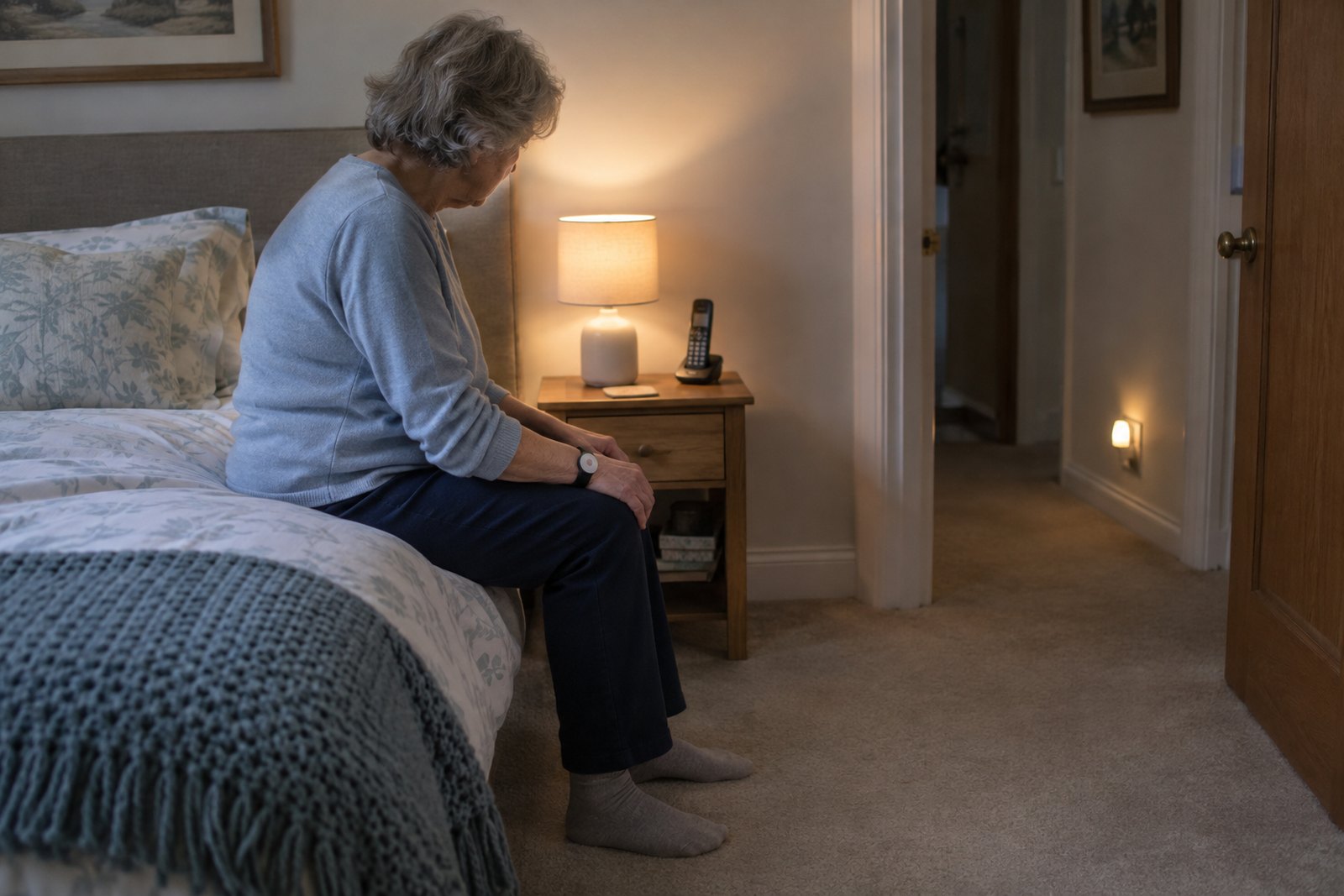
If you live alone and you have had a fall, or your mum or dad has, the real worry is rarely the fall itself. It is the thought of falling again with nobody there, and lying on the floor for hours waiting for someone to notice. That worry is reasonable, and it is also very fixable.
Living alone after a fall usually works fine if a few things are in place: a proper check-up to find out why it happened, a reliable way to call for help from the floor, someone who notices if you go quiet, a way for helpers to get in, and a home that is easier to move around. Add a simple written plan and most of the fear has somewhere to go. This guide takes each in turn.
First: get the fall checked, even if nobody was hurt
Many older people pick themselves up, dust off, and tell nobody. Families often only hear about it weeks later, from a bruise or a slip of the tongue. Please do not skip this step. A fall is information. It can be the first sign of something treatable: a blood pressure drop when standing, an infection, a heart rhythm problem, a change in eyesight, or a side effect of a medicine.
Book a GP appointment and say plainly that you have had a fall. It helps to go with answers to these questions:
- What were you doing at the time? Walking, standing up, turning, reaching, getting out of bed at night?
- Did you trip on something, or did your legs give way, or did you feel dizzy or faint first?
- Did you black out, even briefly, or can you not remember the moment you fell?
- Have you fallen, or nearly fallen, before?
- Could you get up on your own, and how long were you on the floor?
A fall where you blacked out or cannot explain what happened needs to be taken seriously and mentioned clearly. Ask whether there is a local falls service or falls clinic you could be referred to. Many areas have one, often run by a team that can look at balance, strength, blood pressure, medicines and home safety together. How they work and how you get referred varies by area, so ask your GP practice.
When it is not a GP appointment
Call 999 if someone has hit their head and is drowsy, confused or being sick, has lost consciousness, has chest pain or trouble breathing, cannot move a leg or arm, is in severe pain (especially in the hip), or cannot get up. If someone has hit their head and takes a blood-thinning medicine, get urgent medical advice even if they seem fine. If you are not sure how serious it is, call NHS 111.
Know what to do if it happens again
The single most useful thing you can do this week is learn, calmly and in advance, what to do on the floor. People who have practised it are much less likely to panic.
The short version is: do not rush. Stay still for a moment and check for pain. If you feel able, roll onto your side, get onto your hands and knees, crawl to a sturdy chair or the bed, and use it to come up slowly. If you are hurt or cannot get up, the job changes to staying safe while you wait: call for help, keep warm, and move a little every so often if you can so you are not lying in one position for hours. Lying on a cold floor for a long time causes problems of its own, including getting chilled, dehydrated and sore.
Our step-by-step guide to how to get up from the floor after a fall goes through both options in detail. One practical tip for people living alone: keep a throw or blanket somewhere low in the rooms you use most, such as over the arm of a chair or on the end of the bed, so you can pull it down if you end up on the floor.
A way to call for help from the floor
This is where most falls plans quietly fail. There is a phone in the house. It is on the kitchen worktop, charging. The pendant alarm exists too. It is on the bedside table.
Keep a phone on you, not near you
If you have a mobile, carry it on your body: a trouser or cardigan pocket, a small pouch on a belt, or a lanyard. Get into the habit of charging it overnight next to the bed, within arm's reach. Set up the emergency contacts and learn how to call someone without having to read the screen, which is not easy from the floor without your glasses.
If you rely on a landline, a cordless set with extra handsets placed at low level in the bedroom and living room is helpful. Some people also use a voice-activated speaker or phone so they can call out a name and be connected. These can be genuinely useful, though they depend on a good connection and on the device hearing you from where you have fallen, so do not rely on one alone.
Personal alarms and fall detectors
A personal alarm is a button worn on a pendant or wristband. Pressing it connects you to a response centre or a list of family contacts, who speak to you through a base unit and send help. Some include an automatic fall detector that raises an alarm if it senses a fall.
Things worth knowing before you choose one:
- It only works if it is worn. In the bath, at night, in the garden. Check whether it is waterproof and whether it works outside the house.
- Fall detectors are useful but not perfect. They can miss a slow slide to the floor, and can sometimes go off when nothing has happened. Press the button anyway.
- Decide who responds. A family member who lives an hour away is not a quick responder. Some services offer their own response team; others rely on the contacts you give them.
- Ask the council. Many councils run or arrange telecare, sometimes for a charge. Contact adult social care to ask what is available locally.
Our guide to personal alarms, telecare and falls detectors covers the different types honestly, including when they help and when they do not.
Someone who notices if you go quiet
Alarms rely on you being able to raise the alarm. A daily check-in covers the times you cannot, for example if you are confused or unconscious. It is cheap, kind and often overlooked.
Ideas that work:
- A fixed-time phone call or message every morning, and ideally evening too, from a family member or friend. Agree in advance what happens if you do not answer: who tries again, who goes round, and how soon.
- A signal for neighbours. Curtains open by a certain time, or a light on in a particular window. Simple, and a neighbour who knows to look is worth a lot.
- Telephone befriending or check-in services run by local charities and some councils. Your local Age UK or council can tell you what exists in your area.
- Regular visitors such as carers, a cleaner, a friend from church or a club. Make sure they know to raise the alarm if something seems wrong.
The important part is the agreed plan for a missed check-in. A call that goes unanswered, with nobody sure whose job it is to follow up, is not a safety net.
A way for helpers to get in
If you fall and press your alarm, the ambulance crew or your responder needs to get through the door. If they cannot, they may have to force entry, which wastes time and leaves you with a broken door.
A key safe is a small locked box fixed to the outside wall that holds a door key, opened with a code. You give the code to your alarm service, trusted family and regular carers. Choose a sturdy, police-approved type, fix it somewhere discreet but reachable, and change the code if too many people know it. Our guide to key safes and where to fit one covers fitting and security.
Also think about the door itself. If you use a door chain or leave the key in the lock on the inside, a responder may not get in even with a key. And a door that opens inwards can be blocked by someone who has fallen behind it, which is worth mentioning to an occupational therapist, particularly for the bathroom.
Make the home easier to live in alone
You will have seen general falls prevention advice. When you live alone, focus on the places and times when nobody is around to help: the night, the bathroom, the stairs, and carrying things.
- Night lighting. Light the route from bed to toilet. Plug-in night lights or motion-sensor lights mean you are not fumbling for a switch while half asleep. Keep a lamp you can reach from bed.
- Rugs and trailing cables. Take loose rugs up, or fix them down firmly. Run cables along walls, not across walkways.
- Stairs. A rail on both sides makes a real difference, as does good lighting with switches at top and bottom. See our guide to stair rails and second banisters.
- Things within reach. Move everyday items to between waist and shoulder height so you are not climbing on step stools or bending to the floor.
- Carrying. Carrying a cup of tea or a plate while walking leaves no hand free to steady yourself. A kitchen trolley can help.
- The bathroom. Grab rails, a raised toilet seat or a seat in the shower can make it much safer. Consider not locking the bathroom door when you are alone in the house.
- Footwear. Well-fitting slippers or shoes with a back and a grippy sole, not loose mules or socks.
Ask for a medicines review
Some medicines, and some combinations of them, can make people dizzy, drowsy or light-headed when standing up. This is more likely as you get older or take more tablets. Ask your GP or a pharmacist for a review of everything you take, including anything bought over the counter. Do not stop or change any medicine yourself; that needs to be a conversation with whoever prescribes it.
While you are at it, book an eye test, mention any hearing changes, and get any foot pain or numbness looked at. All of these affect balance.
Dealing with the fear of falling
After a fall, many people start doing less: staying in one chair, not going upstairs, not going out. It feels safe. Unfortunately, moving less weakens muscles and balance, which makes another fall more likely, and living alone can become lonely very quickly.
Fear of falling is common and it is worth taking seriously, not brushing off. Strength and balance exercise, ideally guided by a physiotherapist or falls service, plus knowing you have a plan if it happens, both help. Our guide to fear of falling and rebuilding confidence has practical steps.
Write the plan down
It is surprising how much of this lives only in people's heads. Put it on one sheet of paper, keep a copy near the phone or on the fridge, and give copies to family and your alarm service. Include:
- What to do if you fall: try to get up, or stay warm and call for help.
- How to call for help: your alarm, your mobile, who to ring first.
- Your daily check-in arrangement and what happens if you miss it.
- Who has the key safe code.
- Your GP practice details, a list of your medicines, any allergies and main health conditions.
- Who to contact in an emergency, and anyone who depends on you, such as a pet or a person you care for.
Review it every few months, or after any change in health.
Where an occupational therapist fits
An occupational therapist looks at how you actually manage everyday life in your own home: getting in and out of bed, on and off the toilet, washing, cooking, managing the stairs, getting to the door. They watch how you do these things, not just ask, and spot risks that are easy to miss when you live with them every day.
After a fall, an occupational therapist can suggest practical changes, recommend equipment such as rails, raised seats or bathroom aids, advise on alarms and lighting, help you practise getting up from the floor safely, and write recommendations for adaptations. A home assessment is often the quickest way to pull all of this together. You can ask your council's adult social care team for an assessment, which is free but may involve a wait, or arrange a private occupational therapist to visit.
An occupational therapist does not replace your GP. The medical side of why you fell, including blackouts, dizziness, heart or blood pressure problems and medicines, is for your GP or a falls clinic. A physiotherapist is usually the right person for structured strength and balance exercise. An optician deals with eyesight, and a pharmacist can help with medicine questions.
Frequently asked questions
Should an elderly person still live alone after a fall?
Often, yes. One fall is not a reason on its own to move into a care home or in with family. What matters is why it happened, whether the person can call for help, and whether the home and daily routine can be made safer. If falls keep happening despite all this, it is time for a fuller conversation with the GP and adult social care about what support is needed.
Does my mum need to see a GP if she wasn't hurt?
Yes, it is still worth it. The fall may have a cause that can be treated, and a GP can refer her to a falls service if there is one locally. If she blacked out or cannot explain why she fell, make sure the GP knows that.
Do fall detectors actually work?
They can be very helpful, particularly if someone might be knocked out or too confused to press a button. But they do not catch every fall and can sometimes go off by mistake. Treat the automatic detection as a backup and still press the button.
What if my dad refuses to wear his alarm pendant?
This is very common. Ask why: it might be how it looks, discomfort, or feeling it makes him seem old. A wristband rather than a pendant, a different style, or a mobile phone he already carries might be more acceptable. Agreeing a daily check-in alongside can help too.
Can I get a personal alarm from the council?
Many councils provide or arrange telecare, sometimes after a needs assessment and sometimes for a weekly charge. What is available varies, so contact your council's adult social care team to ask.
Is a key safe a security risk?
A well-fitted, police-approved key safe with a code that only a few trusted people know is generally considered a sensible trade-off. Fit it out of direct view from the street, and change the code if you think it has been shared too widely.
Next steps
If you want help pulling this together, an occupational therapist can visit and look at how you manage at home. See our home assessment and older people's independence pages, or current guide prices, and choose your area below.
Talk to an occupational therapist near you
This guide is general information. For advice about your own situation - or someone you look after - a local occupational therapist can visit you at home and see it for themselves.
Choose your area: