

Fear of Falling: Rebuilding Confidence After a Fall
By Mobile Occupational Therapist • 11 September 2026 • 8 min read
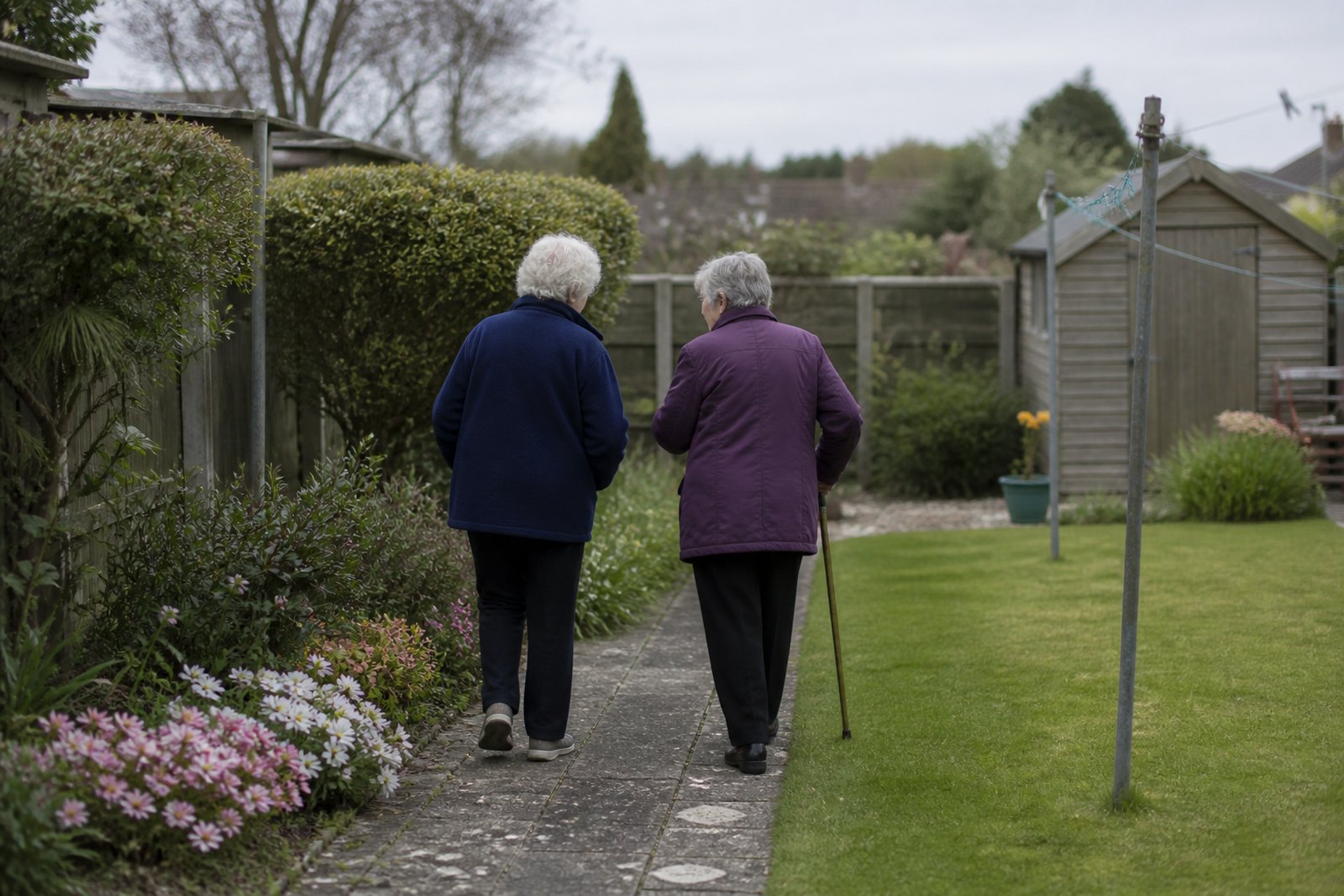
Fear of falling after a fall is normal, common and entirely rational - your body has just been shown, forcefully, that the ground is closer than you thought. The problem is what fear does next. Most people respond by doing less: fewer trips out, fewer stairs, less standing at the worktop. Doing less weakens legs and dulls balance, and weaker legs and duller balance genuinely do make a fall more likely. Confidence comes back the same way it left - gradually, through activity built up in small, achievable steps, in a home that has been made honestly safer, with strength and balance work alongside. This guide covers how.
One thing before anything else: if you have fallen, tell your GP, even if you were not hurt. A fall can have a treatable cause - a medication side effect, blood pressure that drops on standing, an eyesight change, an infection - and no amount of confidence-building fixes those. Get that appointment booked, then read on.
Your fear is not silly - it is information
People who have become scared of falling are often told, kindly, not to worry. This is well meant and unhelpful. The fear is doing a job: it is telling you that something about the fall has not been dealt with. Perhaps you still do not know why you fell. Perhaps the rug that caught your foot is still there. Perhaps getting up took twenty minutes and you have no plan for next time. Perhaps your legs simply do not feel as reliable as they used to - and perhaps they are not.
Clinicians sometimes call the pattern that follows a fall "post fall syndrome" - a loss of confidence out of proportion to any injury, with hesitant walking, gripping at furniture, and a shrinking range of activity. It is common, recognised and treatable. The useful response is not to argue with the fear but to answer it, point by point, until it has nothing left to say.
The spiral: how fear quietly raises the real risk
The trap works like this, and it is worth seeing it laid out plainly.
- Fear leads to avoidance. The stairs get used once a day instead of six times. The walk to the shop stops. Standing to cook becomes sitting to wait for a delivery.
- Avoidance leads to deconditioning. Muscle strength fades quickly when it is not used, and balance is a skill that gets rusty without practice.
- Deconditioning raises the real risk. Weaker legs, stiffer joints and slower reactions mean the next trip or wobble is harder to recover from. The fear has, step by step, manufactured the thing it was afraid of.
The spiral also runs through mood: a shrinking world is a lonelier, flatter one, and low mood saps the motivation to stay active. None of this is weakness - it is a predictable pattern that catches capable, sensible people, which is exactly why it is worth naming.
Rebuilding activity in graded steps
Confidence is not rebuilt by pep talks. It is rebuilt by evidence - by your own body demonstrating, repeatedly and safely, that it can do slightly more than the fear says it can. Occupational therapists call this graded activity.
- Start where you actually are, not where you used to be. If walking to the corner feels safe and walking to the shop does not, the corner is the starting point, and there is no shame in it.
- Make each step small enough to succeed. Every completed activity is evidence against the fear; a step you fail at feeds it instead, so err on the side of too easy.
- Repeat before you progress. Do the new step several times until it feels ordinary, then stretch it slightly - a few doors further, one more stair, a minute longer standing.
- Attach activity to things you care about. Walking practice sticks better when it ends at a friend's house, a garden or a decent bakery.
- Expect wobbles, especially after a bad day or a near miss. A setback is a pause on the ladder, not a fall off it - drop back a rung, steady, and climb again.
If your fall happened during a hospital stay or soon after coming home, this rebuilding is exactly what good recovery looks like - see our page on recovering after a hospital stay.
Making the home earn your trust
There are two kinds of confidence: the kind you talk yourself into, and the kind that is justified because the risks have actually been dealt with. The second kind lasts. Walking past the spot where you fell is a different experience when the loose mat has gone, the light is brighter and there is a solid rail exactly where your hand wants one.
A practical home review looks at lighting, floor coverings, trailing flexes, footwear, bed and chair heights, and the routes you use at night - our guide to practical falls prevention at home goes through it room by room. Well-placed rails deserve particular attention, because a rail in the right spot turns a frightening movement into a routine one; see our guide to where grab rails go and what they hold. And if part of the fear is "what if I fall and cannot get up", answer it directly: a pendant alarm or falls detector, a phone kept in a pocket rather than on a shelf, and a practised way of getting up from the floor all shrink that fear to a manageable size.
Strength and balance work: the other half
Home changes remove hazards; strength and balance work rebuilds the body's own margin for error. The evidence for this is strong, and it is the reason NHS falls services put exercise at the centre of what they offer. Programmes such as strength and balance classes, or the NHS's own home strength exercises, target exactly the abilities that catch a stumble before it becomes a fall - leg power, ankle control, the ability to stand from a chair without using your arms.
This is where occupational therapy and physiotherapy fit together well: the strength work makes you more capable, and the OT work makes sure that capability is used - on real stairs, real pavements and real bathrooms, doing the things you actually want to do. If a walking aid would help in the meantime, it needs to be the right one at the right height; a badly fitted stick undermines confidence rather than building it, as our guide to getting walking aids properly fitted explains. Using an aid for a season while strength returns is not a defeat - it is scaffolding.
When to bring in an occupational therapist
You do not need professional help to walk a little further each week. It is worth involving an OT when the fear is winning - when your world has noticeably shrunk, when family are quietly doing more and more for you, or when you cannot tell which of your worries are realistic and which are the fear talking. An OT home visit looks at you, your home and your daily activities together, and produces a plan that is specific rather than generic: this rail, here; this routine, changed; this activity, rebuilt first. Repeated falls or unsteadiness may also point to something that needs assessing in its own right - see our page on falls and frailty for how that side is approached.
Who benefits most from this approach
- Anyone who has fallen and noticed themselves quietly giving up activities since
- People recently home from hospital after a fall, fracture or long admission
- Older adults who have become scared of falling without a specific fall - the spiral works the same way
- Family members watching a parent's world shrink and unsure how to help without taking over
Frequently asked questions
Is fear of falling common in elderly people?
Very - it is one of the most common worries reported by older adults, including many who have never fallen. That matters because it means the loss of confidence is a recognised problem with recognised treatments, not a personal failing. The pattern of fear leading to inactivity, and inactivity leading to genuine weakness, responds well to graded activity, home changes and strength and balance work.
How do I get my confidence back after a fall?
In three strands at once: get the fall itself explained by your GP so any medical cause is treated; make the home genuinely safer so your confidence is justified rather than forced; and rebuild activity in small, repeated, achievable steps, ideally alongside strength and balance exercises. Confidence follows evidence - each safe repetition of an activity is proof the fear cannot argue with.
What is post fall syndrome?
It is a term some clinicians use for the loss of confidence that can follow a fall - hesitant, stiff walking, grabbing at furniture, and avoiding activity out of proportion to any physical injury. It is not a diagnosis you can give yourself, but if the description fits, it is worth raising with your GP or an occupational therapist, because the pattern is well understood and responds to the graded approach described above.
Next steps
If a fall has knocked your confidence, or you are watching it happen to someone you love, an occupational therapy home visit is a practical place to start - one visit covers the home, the daily routine and a realistic plan for rebuilding. Find your local occupational therapist via our areas we cover page, or see our prices page for current guide pricing.
Ready to find your local occupational therapist?
See the areas we currently cover, or check current guide pricing.