

Key Safes: How They Work and Where to Fit One
By Mobile Occupational Therapist • 1 September 2026 • 8 min read
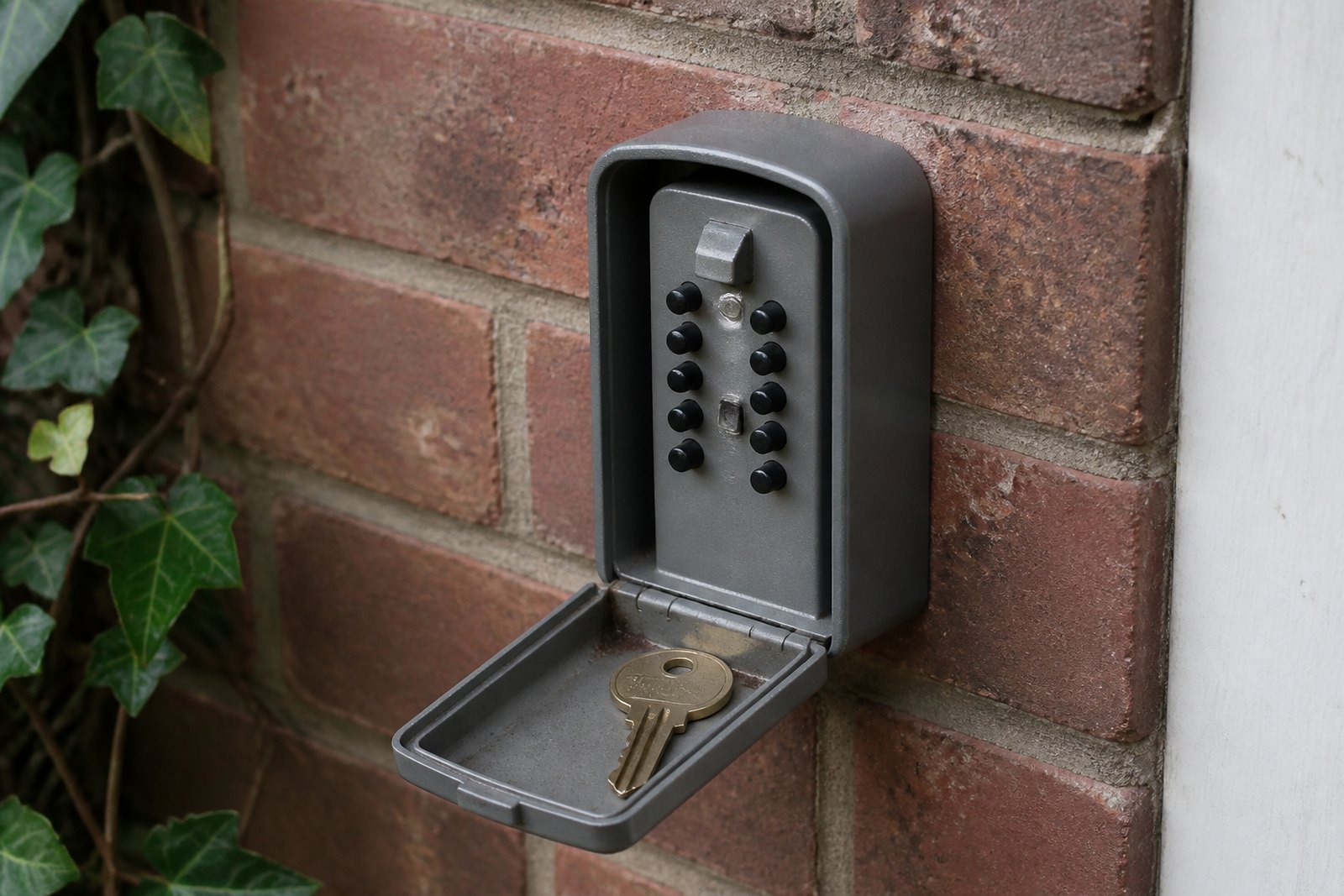
A key safe is a small metal box, fixed to an outside wall, that holds a front door key behind a combination lock. It exists to solve one specific problem: someone needs to be able to get into the house when the person inside cannot come to the door. Carers arriving for a morning call, a family member checking in, an ambulance crew responding to an alarm - all of them need a way in that does not involve breaking a door down or leaving a key under a plant pot. This guide covers how key safes work, where to fit one, and the questions that matter more than which model you buy.
It is worth being honest about the trade-off straight away, because people worry about it and they are right to think it through. Fitting a key safe does put a key outside your house, and that is a small reduction in security. What you get in return is usually much larger: carers who can arrive reliably, a family member who does not need to be phoned to let people in, and - the one that matters most - emergency services who can reach you in minutes rather than forcing entry. For most people in this situation the maths is clear, but it is your decision, and it should be made deliberately rather than by default.
How a key safe works
The mechanism is simple. A key safe is bolted to the wall, usually with fixings that cannot be reached once the door of the safe is closed. You set a combination - typically four or more digits or buttons - and the key sits inside. Anyone who knows the code can open it, take the key, let themselves in, and put the key back.
The important variation is quality. Key safes range from very cheap boxes that can be forced open with hand tools in seconds, up to units independently tested and certified against attack. If a key safe is protecting a home, it is worth choosing one that has been tested to a recognised security standard and is described as police-approved - and worth telling your home insurer that you have fitted one, because some policies have conditions about how keys are kept. Ask your insurer rather than assume; the answer is usually straightforward, but it is better heard from them than guessed.
Where to fit one - the part people get wrong
Where a key safe goes matters as much as which one you buy, and the common mistakes are easy to avoid.
- Out of sight from the street. A key safe on the front wall beside the door, visible from the pavement, advertises both that there is a key and that somebody vulnerable may live there. Around a corner, in a porch, or on a side wall is better.
- Not immediately next to the door it opens. Sensible separation means that somebody who does see the safe cannot simply stand at the door working on it unobserved.
- Into solid brick, not mortar or render. The fixings need to bite into something substantial. Screwed into soft mortar joints, into rendering, or into a wooden frame, even a good key safe can be pulled off the wall - and then the security rating of the box is irrelevant.
- At a height that actually works. A safe fitted high up is more discreet but useless to a carer who is short, or to anyone using a wheelchair. Somewhere around chest height for the people who will really use it is the sensible compromise.
- Sheltered, if possible. Key safes live outdoors in British weather for years. One under a porch or an overhang stays workable far longer than one taking horizontal rain.
Who should know the code, and how to manage it
A key safe is only as secure as the list of people who know its combination, and that list has a habit of growing quietly. A care agency changes staff, a neighbour is told during an emergency, a relative passes it on to a cleaner. None of that is anyone behaving badly; it is simply what happens over a couple of years.
Two habits keep it manageable. First, write down who knows the code and keep that list current - it takes a minute and it turns a vague worry into a fact you can check. Second, change the code when the circumstances change: when a care agency is replaced, when a carer leaves, when a family arrangement ends, or simply once a year as routine. Changing the combination is usually a small job you can do yourself with the safe open, and the instructions come with the unit. Never write the code on or near the safe, never use an obvious number such as the house number or a birth year, and be careful about sending it in a text or email that stays on somebody's phone indefinitely.
It is also worth telling the ambulance service the code exists. If the person has a personal alarm, the monitoring centre will hold the code and pass it on when they send help - which is exactly the situation key safes were invented for, and the reason the two so often go in together.
How to get one fitted
You can buy a key safe from any hardware retailer and fit it yourself if you are comfortable drilling into brick and confident of hitting solid masonry. If you are not, it is worth paying a competent tradesperson, because a badly fixed key safe gives you the disadvantage without the benefit.
There is also a route many people do not know about. Councils and NHS telecare or community equipment services frequently supply and fit key safes, often as part of setting up a personal alarm, and sometimes free or at a subsidised cost after an assessment. Local charities and some fire and rescue services run similar schemes alongside home safety visits. If you are already in contact with adult social care about anything else, ask - our guide to the occupational therapy home visit explains how these assessments work and what else they can unlock at the same time.
When a key safe is part of a bigger picture
A key safe rarely arrives on its own. It usually turns up at the point where somebody is starting to need help at home, and it is worth using that moment to look at the whole picture rather than solving one door. If getting to the door is the difficulty, that is a mobility and layout question. If the worry is falling and not being found, the key safe is only half the answer and a personal alarm is the other half. If carers are starting to come in, the home may need equipment to make that care safe for everybody involved - our guide to daily living equipment covers the range, and our page on falls and frailty covers when the pattern itself needs assessing.
Frequently asked questions
Are key safes safe to use?
A good key safe, properly fitted, is a sensible and widely used solution - it is standard practice across home care in the UK. The security depends on three things: choosing a unit tested to a recognised standard rather than the cheapest box available, fixing it into solid brickwork out of sight of the street, and managing the code so that only the people who currently need it know what it is. Cheap safes fitted into mortar in full view of the pavement are where the risk actually lies.
Where is the best place to fit a key safe?
On solid brickwork, out of sight from the street, not immediately beside the door it opens, at a height that works for the people who will use it, and ideally somewhere sheltered from the weather. Around a side wall or inside a porch usually beats the obvious spot next to the front door.
Can I get a key safe fitted through the council?
Often, yes. Many councils and NHS telecare services supply and fit key safes, frequently alongside a personal alarm, sometimes free or subsidised following an assessment of need. Some fire and rescue services and local charities run similar schemes. It is always worth asking adult social care rather than assuming you have to arrange it privately.
Next steps
If a key safe is being considered because things are getting harder at home, it is worth having the whole situation looked at rather than solving the front door alone. An occupational therapy home visit covers access, safety and the daily routine together. Find your local occupational therapist via our areas we cover page, or see our prices page for current guide pricing.
Talk to an occupational therapist near you
This guide is general information. For advice about your own situation - or someone you look after - a local occupational therapist can visit you at home and see it for themselves.
Choose your area: