

Hospital at Home and Virtual Wards: What They Actually Mean
By Mobile Occupational Therapist • 17 September 2026 • 6 min read
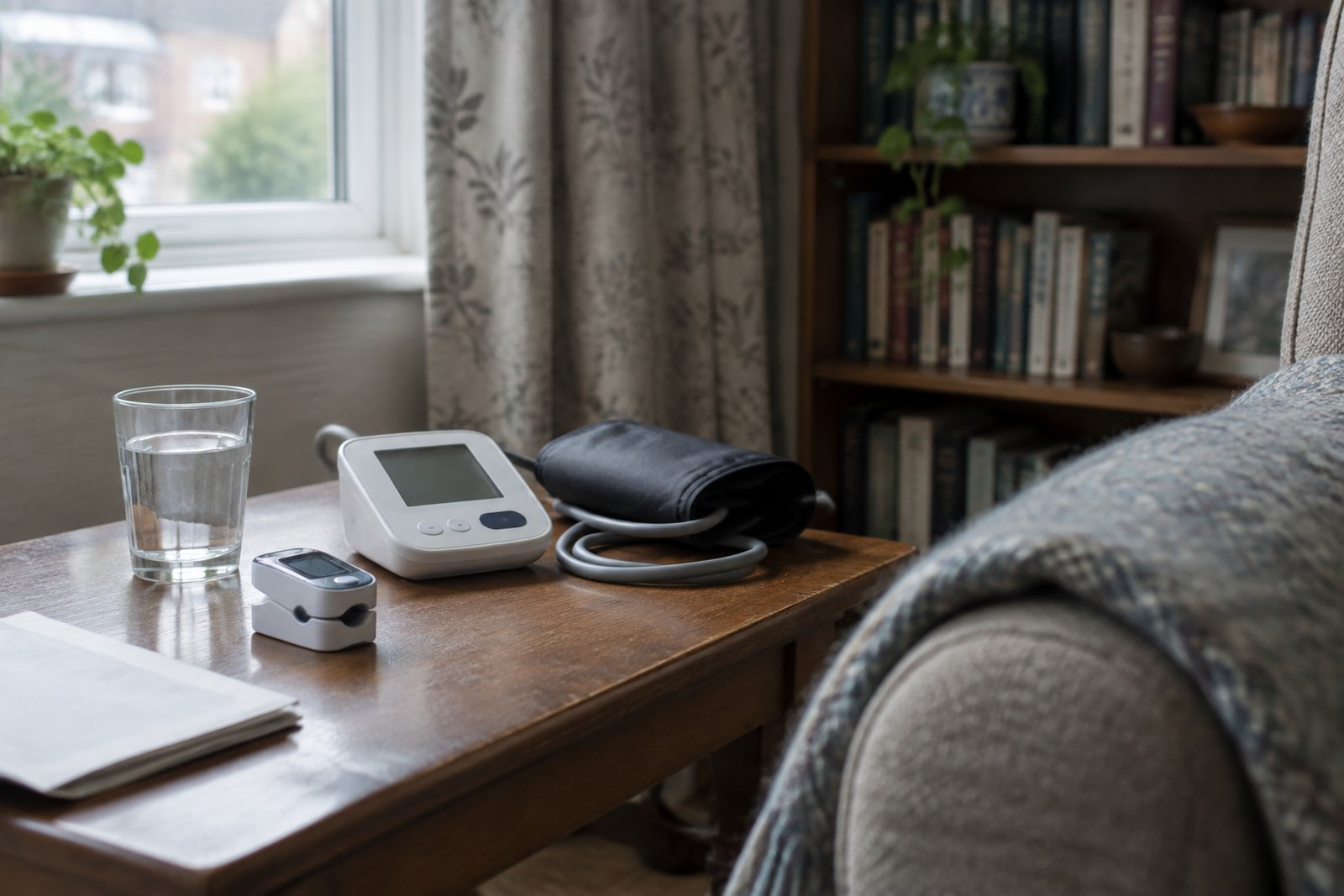
You are told your father is being admitted to a virtual ward. He is, at the same time, sitting in his own armchair and going nowhere. It is a phrase that needs unpacking, and the unpacking rarely happens properly at the time.
A virtual ward - also called hospital at home - means someone receives the level of care they would have had as an inpatient, but in their own home. They are formally admitted. A consultant or senior clinician is responsible for them. There are daily reviews, visits, and usually some monitoring equipment. The bed is simply their own bed.
What it is not
Worth clearing up first, because this is where the anxiety usually sits.
It is not being sent home to get on with it. It is not a care package. It is not the same as being assessed at home after discharge - that is Discharge to Assess, which is a different thing and happens at a different point. And it is not a cost-saving fiction: people on virtual wards are genuinely under acute care, and if they deteriorate they are meant to be brought in.
Who it tends to be used for
Commonly for conditions that need watching and treating but not a building - chest infections, heart failure, cellulitis, some cases of COVID, frailty-related illness, and sometimes people who need intravenous antibiotics that can be given at home.
It is also used to prevent an admission, not only to shorten one. A frail person who would previously have spent a week on a ward may now be picked up at home and never attend at all.
The case for it is reasonable and largely the same as the case for getting people out of hospital promptly: wards cause deconditioning, poor sleep, confusion and infections, and older people lose muscle strength quickly at rest. For the right person, home is clinically better as well as pleasanter.
What it involves day to day
It varies by area and by condition, but usually some combination of:
- Monitoring equipment left in the house - typically a pulse oximeter, blood pressure monitor and thermometer, sometimes a tablet that uploads readings
- Readings taken at set times, by the person, a relative, or a visiting practitioner
- A daily review, by phone, video or visit
- Visits from nurses, therapists or paramedics as needed
- Treatment at home, which can include intravenous antibiotics or fluids
- A number to ring 24 hours a day, and a clear plan for what happens if things get worse
The questions worth asking before you agree
Virtual wards are usually offered rather than imposed, and it is entirely reasonable to interrogate the offer. The useful questions:
- Who is clinically responsible, and how do we reach them at 3am? A named team and a 24-hour number, not a daytime line
- What happens if he gets worse? There should be a clear escalation route back into hospital, and you should know what triggers it
- Who is taking the readings? If the answer is "the family", be honest about whether that is realistic, particularly if there is any confusion or memory difficulty
- How often will somebody actually be in the house? Daily contact by phone is not the same as daily attendance
- What about everything else? Meals, washing, getting to the toilet. Acute care at home does not automatically come with help for daily living, and this is the gap families fall into
- How long is this expected to last, and what happens at the end of it?
That fifth point is the one to press. A virtual ward treats the illness. It does not necessarily do anything about the fact that the bathroom is upstairs.
When home is not suitable
It is not right for everyone, and saying so is not obstruction. Reasonable grounds for doubt include no reliable phone or internet signal where monitoring depends on it, a home that is genuinely unsafe or unheated, someone living alone with significant confusion, nobody able to take readings where the model requires it, or a family carer already at the end of their resources - see carer burnout.
Say it plainly and early, and ask for the concern to be recorded. The decision should be a shared one.
Where an occupational therapist fits
Not in the acute treatment - that is the virtual ward team's job, and they have a consultant on it.
Where OT matters is the bit the virtual ward does not cover: whether the house works for someone who is currently ill, weak and at higher risk of falling. Acute illness at home means somebody is moving around a house at their least steady, often at night, often alone.
Practical things that come up constantly:
- Getting to the toilet safely when the only one is upstairs - see commodes and night-time safety
- Getting out of a bed or chair that was manageable before the illness and is not now
- Washing without a bath or shower that can currently be used - strip washing
- Reducing fall risk while someone is weaker than usual, and while decline is expected to be temporary
- Afterwards, when the illness has cleared but the strength has not come back - which is usually where reablement or a private assessment comes in
Ask the virtual ward team whether they have an OT attached - many do. If not, and someone is unsafe on the stairs tonight, that is worth sorting now rather than after the fall.
Frequently asked questions
Is a virtual ward the same as being an inpatient?
Clinically, that is the intention - formally admitted, consultant-led, daily review. The obvious differences are that nobody is there overnight and daily living is not automatically covered.
Can we refuse it?
Yes. It should be offered and discussed, not imposed. If you refuse, expect a conversation about the alternative, which may be a longer stay.
Is it free?
The virtual ward itself is NHS care and free. Any help with daily living, and anything you arrange privately, is separate.
What if there is no one at home?
Some models work for people living alone and some do not, depending on who needs to take readings and how often someone attends. Make sure the team knows there is nobody in the house.
Do we have to use the technology?
Say so if it is beyond you or your relative. Plenty of virtual wards run on visits and phone calls rather than apps, and pretending to manage a tablet you cannot use is worse than declining it.
What happens at the end?
Formal discharge from the virtual ward, as from any ward. Ask what follow-up is arranged, because being over the illness is not the same as being back to normal - that gap is what intermediate care and reablement exist for.
Next steps
If someone is being treated at home and the house is not set up for how unsteady they are right now, an occupational therapy visit can usually be arranged within days. See our home assessment and hospital discharge support pages, or current guide prices, and choose your area below.
Talk to an occupational therapist near you
This guide is general information. For advice about your own situation - or someone you look after - a local occupational therapist can visit you at home and see it for themselves.
Choose your area: