

Living With Heart Failure: Breathlessness and Everyday Tasks
By Mobile Occupational Therapist • 21 October 2026 • 13 min read
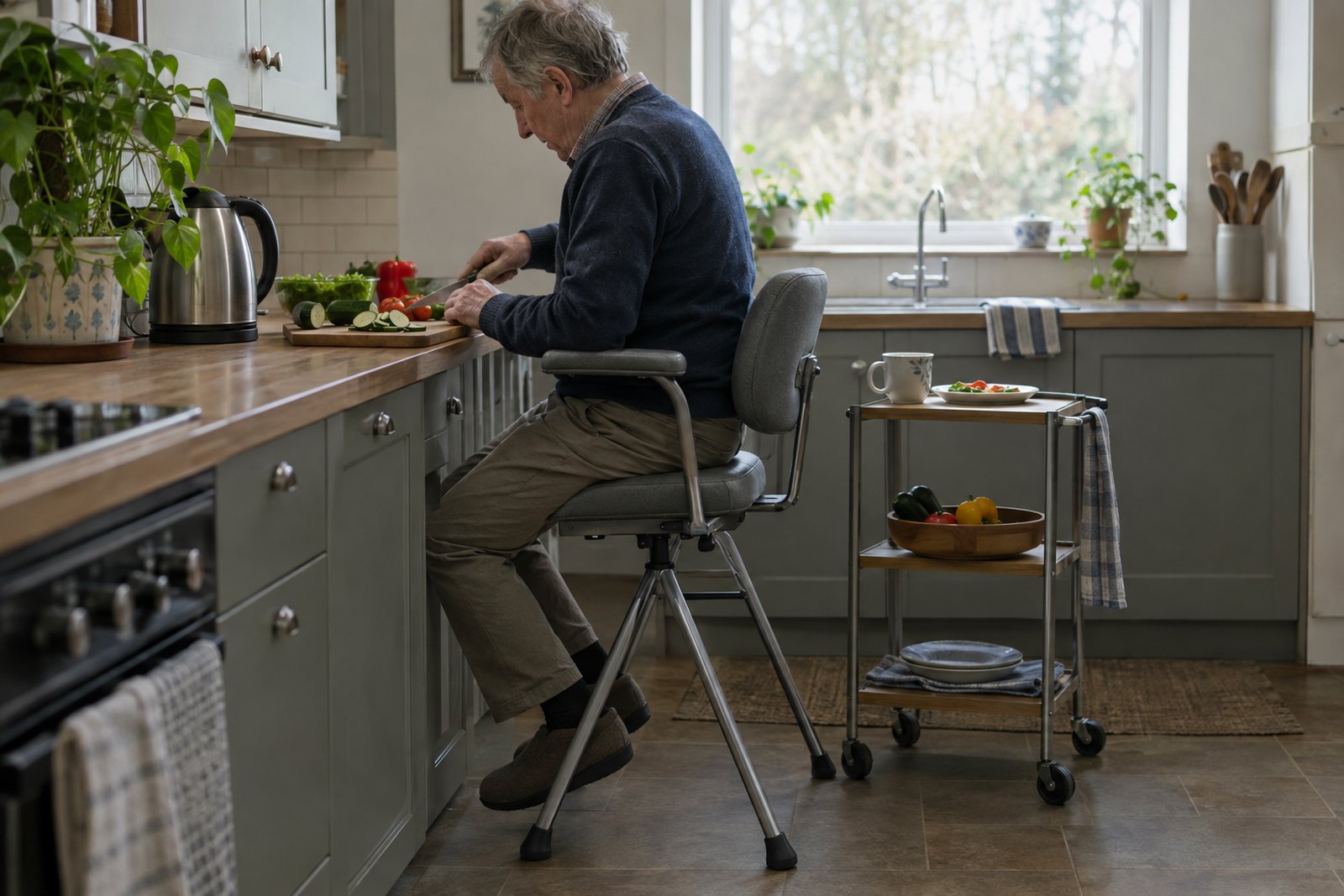
Living with heart failure usually means learning to do the same day with less energy and less breath. The medical side is led by your heart failure team: your cardiologist, heart failure specialist nurse and GP. They look after your medicines, tests and check-ups. The day-to-day part - washing, dressing, cooking, stairs, sleeping, getting out - is mostly down to you and the people around you. That part can be made a lot easier.
The short answer to managing breathlessness at home is this. Spread your effort out, sit down for anything you can, find positions that let you breathe more easily, sleep propped up if you need to, weigh yourself every morning as your team asks, and know exactly which changes mean a same-day phone call and which mean 999. The rest of this page goes through each of those in practical detail.
Why everyday tasks feel so hard
When the heart is not pumping as well as it should, your muscles get less oxygen and fluid can build up in the lungs, legs or tummy. The result is breathlessness, tiredness that sleep does not fix, and swollen ankles. Tasks that use your arms above shoulder height, bending down, carrying, and anything done standing up for a long time tend to be the worst. So the bathroom, the kitchen and the stairs are usually where people struggle first.
None of this means you should stop doing things. Staying active is part of treatment for most people with heart failure. The trick is doing things in a way that costs less.
Pacing: spreading your energy across the day
Pacing sounds like advice to slow down. It is more like budgeting. You have a certain amount of energy each day, and the aim is to spend it on the things that matter to you rather than run out by eleven in the morning.
- Plan the day and the week. Do not put a shower, a shopping trip and a visit from the grandchildren on the same morning. Spread the heavy jobs out.
- Break tasks into chunks. Change the bed in two goes. Do half the ironing, sit for twenty minutes, then do the rest. Or stop ironing altogether.
- Rest before you need to. Stopping when you first feel the effort works better than pushing on until you are gasping and then needing an hour to recover.
- Use your best time of day. Many people feel worse first thing. If that is you, there is no rule that says you must wash at 7am.
- Drop or delegate. Ask honestly which jobs need doing, which need doing by you, and which need doing at all.
If you want a fuller method, our guide to fatigue management and pacing explains activity diaries and planning in more detail. Much of it applies directly to heart failure.
Positions that help when you are breathless
Many people with heart failure find certain positions make breathlessness easier to recover from. These are the same positions often taught for lung conditions, and our article on COPD and breathlessness during everyday tasks has more on them.
- Sitting and leaning forward: feet flat, forearms resting on your thighs, or forearms resting on a table with a pillow under them.
- Standing and leaning forward: hands or forearms on a worktop, windowsill or the back of a sturdy chair.
- Standing with your back against a wall: feet a little way out, shoulders relaxed, arms loose.
Once you are in position, let your shoulders drop and breathe in gently through your nose and out slowly through your mouth. Try not to talk until your breathing settles. If a nurse or physiotherapist has taught you a specific breathing technique, use theirs.
A handheld fan blowing cool air towards your face helps some people feel less breathless. An open window can do the same.
Sleeping propped up
Lying flat can make breathing harder when you have heart failure, so many people sleep on extra pillows. That is fine, but it is also information your team needs. If you are needing more pillows than usual, or waking up suddenly breathless in the night, tell your heart failure nurse or GP, because it can mean fluid is building up.
A stack of ordinary pillows tends to slide, leaving you folded at the waist with your head pushed forward. Options that support you better include a V-shaped pillow, a foam wedge, a pillow backrest that props your whole back, or an adjustable bed with a raising backrest. Raising the head of the bed on securely fitted blocks is sometimes suggested, but get advice first so the bed stays stable.
Lots of people end up sleeping in the armchair because it is the only place they can breathe. It is understandable, but sitting up all night with your legs hanging down can make ankle swelling worse and puts pressure on the same areas of skin for hours. Our article on sleeping in a chair at night explains the risks and the alternatives. If the chair is the only place you can sleep, mention it to your team as well.
Daily weighing and fluid advice
Your heart failure team will very likely ask you to weigh yourself every day. This is not about dieting. A quick rise in weight is often the earliest sign that fluid is building up, sometimes before you notice swelling or breathlessness.
- Weigh yourself first thing in the morning, after going to the toilet and before eating or drinking.
- Use the same scales, in the same place on a hard floor, wearing the same amount of clothing.
- Write it down every day in a notebook or on the chart your team gives you, and take it to appointments.
- Ask your team exactly how much weight gain over how many days should prompt you to call them, and write that number on the front of your record.
If standing on the scales is wobbly, put them next to a firm surface or a rail you can hold. If reading the numbers is hard, ask about scales with a larger display or a spoken readout.
Some people are given a daily fluid limit, some are not. Follow the advice you have been given, not a neighbour's or a website's. The NHS generally advises people with heart failure to cut down on salt, and your team or a dietitian can explain what that means for you. Do not change your fluid intake or water tablets on your own; call your team if you are unsure.
Water tablets can mean frequent, urgent trips to the toilet for a few hours after you take them. Planning outings around that is sensible. If you would like to take them at a different time, ask your GP, nurse or pharmacist rather than moving them yourself.
Swollen ankles and raising your legs
Swelling in the feet, ankles and legs is common. Raising your legs when you sit can make you more comfortable, and a footstool or leg rest is often enough. Our guide to leg elevation pillows covers the options.
Ask your nurse how high to raise them. For some people with heart failure, lying back with legs raised a long way moves fluid around in a way that makes breathing harder. Compression stockings should only be used if a health professional has recommended them for you. Swollen skin is fragile, so check feet and legs for redness, weeping or broken skin and report it.
New or worsening swelling, especially with weight gain, is a reason to call the same day.
Equipment that saves energy
The right small pieces of equipment can take a surprising amount of effort out of a day. Most work on one of three ideas: sit instead of stand, reach less, carry less.
Washing and dressing
- A shower stool or shower chair so you can sit to wash.
- A long-handled sponge so you do not have to bend or reach behind you.
- A towelling dressing gown to put on after a shower, instead of drying yourself all over while you are already puffed out.
- Sitting on the bed or a firm chair to dress, lower half first, with clothes laid out the night before.
- Slip-on shoes, a long-handled shoe horn, and loose clothes with front fastenings.
- A raised toilet seat or toilet frame if getting up from a low toilet is hard work.
Kitchen and around the house
- A perching stool so you can prepare food or wash up half-sitting.
- A sturdy kitchen trolley to move plates, drinks and laundry without carrying them.
- A kettle tipper, or filling the kettle with just one or two cups' worth.
- A grabber for things on the floor.
- Chair or bed raisers so getting up costs less effort.
Equipment is only useful if it fits you and your home. A badly chosen shower chair or a stool at the wrong height can be worse than nothing. The equipment and aids page explains how an occupational therapist assesses for this, and some items may be available on loan through your council's community equipment service.
Setting up the home to suit you
- Keep everyday things between waist and shoulder height. Move the mugs, tins and toiletries you use most so you are not stretching up or crouching down.
- Create resting points. A chair in the hall, on the landing or in the bedroom gives you somewhere to stop.
- Think about stairs. Take them slowly, rest halfway, and breathe out on the effort. A second banister helps. Plan the day so you go up and down less, and keep a basket at the bottom and top for things to carry later.
- Consider the night. If getting to the toilet at night leaves you breathless, a commode or urinal by the bed can be a sensible temporary answer.
- Keep the bedroom comfortably cool and the route to the toilet well lit and clear.
If a whole floor of the house has become hard to use, that is a bigger conversation about adaptations or living downstairs, and worth having with an occupational therapist rather than working it out alone.
The emotional side
Breathlessness is frightening. Fear makes you breathe faster, which makes you more breathless, which makes you more frightened. Knowing your recovery positions and having a plan for bad moments helps break that loop.
Low mood and anxiety are common with heart failure, and they are not a sign of weakness. Losing your job, your driving, your garden or your role in the family can feel like grief. Tell your GP or heart failure nurse if you are feeling low for more than a couple of weeks, are not sleeping, or have stopped enjoying things. Ask whether a cardiac rehabilitation programme is available to you, as these can help with both fitness and confidence. Family carers are often worn out too and are entitled to ask the council for a carer's assessment.
Warning signs: when to get help
Contact your heart failure nurse or GP the same day if you notice:
- Sudden weight gain, or weight gain above the amount your team told you to watch for.
- Breathlessness that is getting worse, or coming on with less activity than before.
- Needing more pillows, or waking at night short of breath.
- More swelling in your legs, ankles or tummy.
- Feeling dizzy, unusually tired, or a new cough that will not settle.
If you cannot reach them, call NHS 111.
Call 999 if you have chest pain, severe breathlessness that does not ease with rest, are struggling to speak in sentences, collapse or faint, or become suddenly confused. Do not wait to see if it passes.
Where an occupational therapist fits
An occupational therapist does not treat your heart. Your medicines, tests, fluid advice and decisions about treatment belong to your heart failure team and GP. A physiotherapist or cardiac rehabilitation team usually leads on exercise and fitness. A dietitian advises on salt and food, and a palliative care team may become involved later to help with symptoms.
What an occupational therapist can do is look at your real day in your real home. On a home visit they can watch how you wash, dress, cook and manage the stairs, work out where your energy is going, and suggest different ways of doing things. They can recommend and fit equipment at the right height, advise on rails and layout, plan larger adaptations if needed, and help a carer support you without either of you wearing out. On the NHS, ask your heart failure nurse or GP for a referral, or contact your council's adult social care team. A private occupational therapist visiting at home can usually see you sooner and write a report you can share with your team.
Frequently asked questions
Is it safe to keep doing things when I am breathless?
Some breathlessness with effort is expected, and staying active is usually encouraged. Stop, sit and recover if you cannot talk. If breathlessness is new, getting worse, or happening at rest, contact your heart failure nurse or GP the same day, and call 999 if it is severe.
How many pillows should I sleep on?
Whatever lets you sleep comfortably, but keep track. If you find you need more pillows than before, or you wake up gasping, tell your team, because it can be a sign of fluid build-up.
Should I weigh myself every day even if I feel fine?
If your team has asked you to, yes. Weight can rise before you feel any different, which is exactly why daily weighing is useful.
Can I have a bath?
Many people can, but getting out of a bath is hard work and warm water can make some people light-headed. A shower sitting on a stool is often easier. If you love baths, ask an occupational therapist about safe ways to get in and out.
Will I be able to get equipment free?
Some equipment may be loaned free after an assessment through your council's community equipment service. Smaller items are often bought privately. Ask your council's adult social care team about what is available where you live.
Can I still go out and travel?
Usually, with planning. Check with your team about flying and long journeys, plan toilet stops around water tablets, take your medicines list, and build rest into the trip.
Next steps
If daily tasks with heart failure are wearing you out, an occupational therapist can help. See our home assessment and independence for older people pages, or current guide prices, and choose your area below.
Talk to an occupational therapist near you
This guide is general information. For advice about your own situation - or someone you look after - a local occupational therapist can visit you at home and see it for themselves.
Choose your area: