

Sleeping in a Chair All Night: Why Older People Do It and What Helps
By Mobile Occupational Therapist • 4 November 2026 • 14 min read
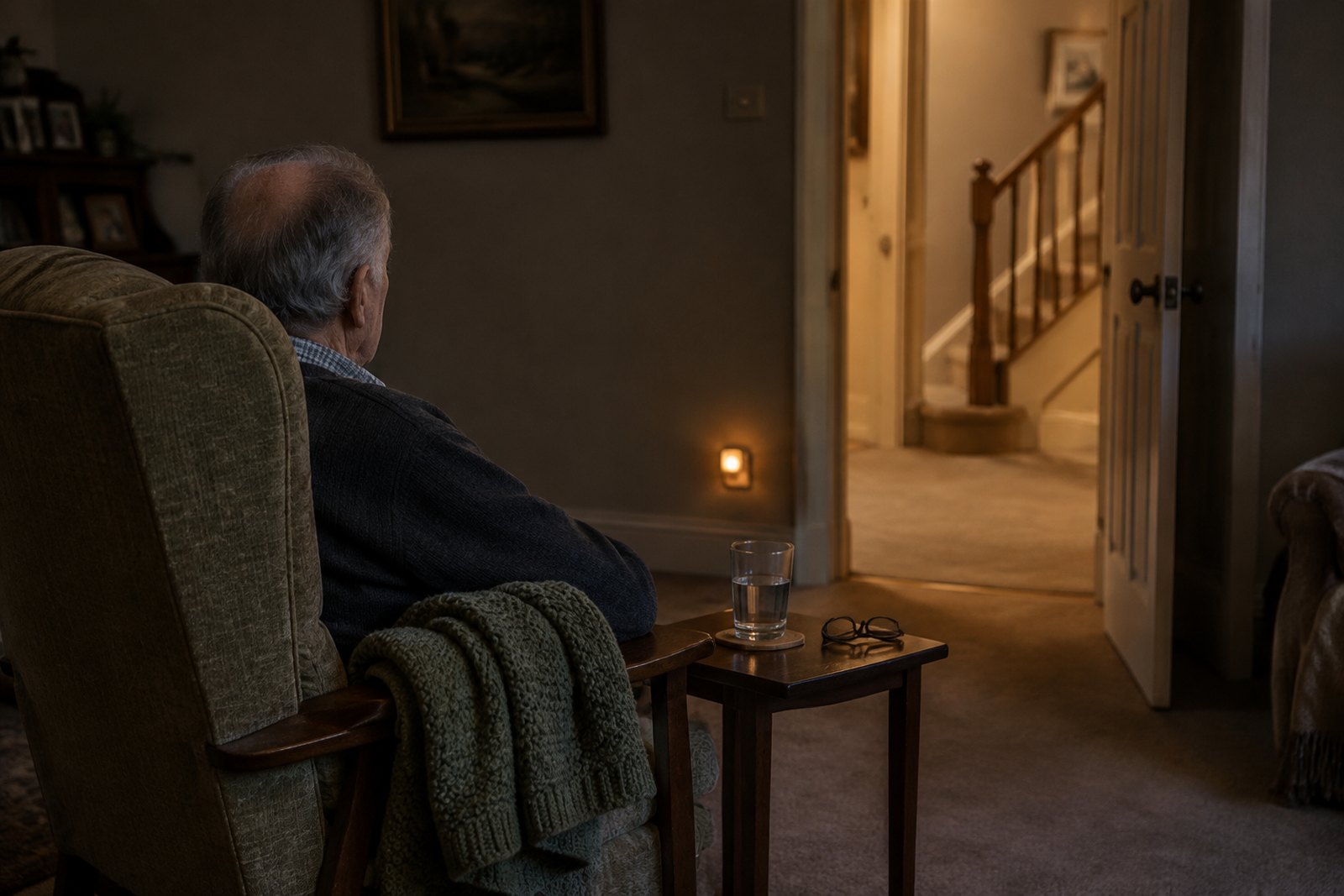
If your mum or dad has started sleeping in their armchair every night, you are not alone, and they are rarely doing it for no reason. Most older people who sleep in a chair all night have found that the chair is easier than the bed in some way. They can breathe better sitting up. It hurts less. They are frightened they will not be able to get out of bed. Or the bed is upstairs and the stairs have become a nightly battle.
The short answer for worried families is this. An occasional night in the chair is not a crisis. Doing it every night for weeks carries real risks: swollen legs, pressure sores, stiff joints, poor sleep and falls in the dark. The reason behind it usually matters more than the chair itself, because needing to sit up to breathe can be a sign of a heart or lung problem that a GP needs to know about. The useful job is to find out why, then deal with that.
Why older people end up sleeping in a chair
Ask gently, and listen properly, because the first answer is often not the real one. 'I just nod off watching the telly' can turn out to mean 'I can't lift my legs into bed any more'. These are the most common reasons.
Breathlessness when lying flat
Some people find they cannot get their breath when they lie down, and sitting upright eases it. This can happen with heart failure, COPD and other lung conditions, and with some other health problems. People often do not mention it. They just quietly move to the chair, or creep up from two pillows to four. Either way it is a sign worth taking to the GP, not something to solve with a new bed alone.
Pain
Arthritic hips and knees, a bad back or a painful shoulder can make lying flat, rolling over or getting comfortable in bed miserable. A chair holds the body in one position, with arms to lean on, and for some people that simply hurts less.
Fear of not getting out of bed
This is a big one, and people are often embarrassed to say it. If getting out of bed has become a struggle, lying down can feel like a trap, especially if they need the toilet urgently in the night. A chair with firm arms feels like a guaranteed way back to standing. After a fall, or a near miss, the fear can grow quickly.
Reflux and heartburn
Acid coming up when lying flat is unpleasant and wakes people. Sitting up stops it. It is worth raising with the GP or a pharmacist, because there are things that can help.
The bed is the wrong height or the wrong sort
A bed that is too high means feet do not reach the floor when sitting on the edge, so getting in and out becomes a hitch and a scramble. A bed that is too low is hard to stand up from. Soft mattresses with sagging edges, divan bases with no space for the feet, and double beds pushed against a wall all make things harder than they need to be.
Stairs
If the bedroom is upstairs and the stairs have become frightening or exhausting, the armchair downstairs wins by default. Some people manage the stairs once in the morning and once at night for a while, then quietly stop going up at all.
Habit, grief and the long evening
After a partner dies, the bed can feel very empty and the television in the front room feels like company. Some people have always dozed in front of the evening programmes and simply stop bothering to move. In dementia, a sense of time and routine can slip, and the chair becomes where they are when tiredness wins.
The risks of sleeping in a chair every night
Swollen legs and feet
Sitting for hours with the feet down lets fluid pool in the lower legs. Ankles puff up, skin becomes tight and shiny, shoes stop fitting, and the skin can become fragile, weep or break down into leg ulcers. Swelling can also be a symptom of the same heart problem that is causing the breathlessness, so the two together definitely need a GP.
Get help the same day (GP or NHS 111) if one leg suddenly becomes swollen, red, warm or painful, as this can be a blood clot. Call 999 for chest pain, severe breathlessness, or breathlessness that comes on suddenly.
Pressure sores
In a chair, the body's weight rests on a small area: the bottom, the base of the spine and, if the feet are up, the heels. Most ordinary armchair cushions are not designed to spread that weight for eight hours. Look out for red, purple or darker patches that do not fade when pressed, sore spots, blisters or broken skin. If you see these, ask the GP practice to arrange a district nurse to check. Our guide to pressure relief cushions and mattresses explains what helps.
Stiffness
Spending the night with hips and knees bent means they spend most of the day and night bent too. Over weeks, standing up straight and walking can become harder, and joints and muscles can tighten. A physiotherapist can help if this is happening.
Falls at night
Getting up from a chair at 3am, stiff, half asleep, in the dark, with swollen feet and a full bladder, is a recipe for a fall. Feeling dizzy on first standing makes it worse. Low, soft chairs that need a rock and a heave to get out of add to the risk.
Poor sleep
The head drops forward or sideways, the neck aches, and people wake repeatedly. That leads to dozing through the day, which makes the night even more broken. Tiredness then makes everything, including the stairs, feel harder.
What helps
Start with the GP
Book an appointment if there is any breathlessness lying down, new or worsening swelling, pain that stops sleep, reflux, or a lot of trips to the toilet at night. Before you go, jot down what you have noticed: how long they have been sleeping in the chair, how many pillows they used to need, whether they get breathless doing everyday things. It is also reasonable to ask the GP or pharmacist for a medicines review if your parent seems drowsy, dizzy or up a lot at night. Do not stop or change any medicine yourself.
Make the bed work again
Often the bed itself is the problem, and fixing it is surprisingly achievable.
- Height. As a rough guide, when sitting on the edge of the bed with feet flat on the floor, the knees should be roughly level with the hips or a little lower. Bed raisers can lift a bed that is too low; a thinner mattress or a different base can help one that is too high. Get the height checked if you are unsure, as raisers need to be the right type for the bed.
- Something to hold. A bed lever or bed handle that fits under the mattress gives a firm handhold for sitting up and standing. It must suit the bed and mattress and be fitted exactly as the maker says, as badly fitted levers can trap a head, neck or limb. Get advice from an occupational therapist before using one for someone who is confused, very frail or restless at night.
- Help with the legs. A leg lifter, a simple strap with a loop for the foot, helps people who cannot swing their legs up onto the bed.
- A firmer edge. A mattress that sags at the edge makes sitting and standing harder. Turning it or replacing it can help.
- A profiling bed. This is an adjustable bed with an electric backrest, knee section and height control. It lets someone sleep propped up in bed, which suits people who are breathless or have reflux, and it can be raised and lowered to make getting in and out easier. See our guide to profiling beds and getting comfortable at night. Where there is a clinical need, the NHS or council can sometimes lend one through the local community equipment service after an assessment.
Bring the bed downstairs
If stairs are the reason, a bed in the front room or dining room can be the quickest way to stop the chair nights. It is not always welcome, and it raises questions about toileting and washing at night. A commode or urinal nearby can solve the toilet problem. It is worth thinking about the longer term too, as there may be other ways to manage the stairs.
If the chair is staying, make it a safer chair
Some people will not go back to bed, and some genuinely breathe better in a chair. A riser recliner can be a reasonable compromise. It lets someone recline, raise their legs and then rise to standing with the motor's help. But it is not a pressure care solution in itself. Reclining spreads weight a little more than sitting bolt upright, but a person who sleeps in one every night still needs their skin checked and may need a pressure relieving cushion or a chair designed for pressure care.
Size matters a great deal. A chair that is too deep, too wide or too low causes slumping, sliding and extra pressure. Try before buying, and ideally have the person measured. Our guide to choosing the right chair and riser recliners covers what to check. Be aware that the moving parts of powered chairs can trap feet, fingers, pets and small children, and that someone who is confused may struggle to use the controls safely.
Raise the legs properly
Putting feet up on a stool is better than nothing, but a lower stool does little for swelling. NHS advice on swollen legs generally suggests raising them where possible, and lying in bed does this far better than any chair. If raising legs in a chair, support the whole length of the leg rather than resting the weight on the heels. Ask the GP or nurse how high is right for your parent, particularly if they have heart failure or problems with circulation in their legs.
A night routine that makes bed appealing
- Pick a regular time to go up, and switch off the living room television and lights then.
- Make the bedroom warm and the bed comfortable before they get there.
- Light the route to the toilet with plug-in night lights or motion-sensor lights.
- Keep a phone or personal alarm, a drink and glasses within reach of the bed.
- Have a last toilet trip just before bed.
- Keep a sturdy chair beside the bed, so sitting on the edge to get dressed or gather breath is easy.
Try not to turn it into a fight. Someone who has chosen the chair because they are frightened will not be argued out of it. Fix the reason and the bed often wins on its own.
When sleeping in a chair is a sign of a bigger problem
Sometimes the chair is the first visible sign that someone is not coping. Take it seriously, and talk to the GP or the council's adult social care team, if you also notice:
- breathlessness that is new or getting worse, or swelling that keeps increasing
- they can no longer get upstairs, into bed or onto the toilet
- new confusion, or confusion that is getting worse
- not changing clothes, not washing, not eating properly, or the house going downhill
- low mood, withdrawal or saying there is no point
- hiding wet clothes or bedding, which may mean continence problems they are embarrassed about
- a recent fall, or bruises they cannot explain
Sudden confusion, chest pain, severe breathlessness or blue or grey lips need 999. If you are not sure how urgent something is, call NHS 111.
Where an occupational therapist fits
An occupational therapist looks at the practical side: what exactly is stopping your parent using their bed, and what would make it possible again. On a home visit they will usually watch how the person gets in and out of bed and the chair, check the heights of both, look at the route to the toilet at night, the stairs and the lighting, and think about pressure and skin risk.
From that they can recommend specific solutions: the right bed height, a bed lever or leg lifter, a profiling bed, a chair of the right dimensions, a pressure cushion, a commode, or a different layout of rooms. They can teach easier ways of getting in and out of bed and help someone rebuild confidence after a fall. If adaptations or council funding are needed, a written report can support that. See our equipment and aids page for how this works.
Be clear about what an occupational therapist does not do. They do not diagnose why someone is breathless or swollen; that is the GP, and sometimes a heart failure or respiratory nurse. Pressure sores are assessed and treated by district nurses. Strength, stiffness and walking are physiotherapy territory. A good occupational therapist will tell you if something needs one of these people first.
You can ask for an NHS or council occupational therapy assessment through adult social care or the GP. It is free, though waiting times vary by area. A private occupational therapist visiting at home is an option if you want help sooner or want a detailed report.
Frequently asked questions
Is it bad for an elderly person to sleep in a chair?
An occasional night does no harm. Every night for weeks raises the risk of swollen legs, pressure sores, stiffness, falls and poor sleep. The bigger concern is often the reason behind it, which may need a GP to look at.
Why does my mum sleep in her chair all night?
The usual reasons are breathlessness lying flat, pain, fear of not being able to get out of bed, reflux, a bed that is the wrong height, difficulty with the stairs, or simple habit and loneliness. Ask her gently what makes the chair easier. The answer tells you what to fix.
Can sleeping in a chair cause swollen legs?
Yes. Sitting with the feet down for hours lets fluid collect in the lower legs. Swelling can also come from heart, kidney or circulation problems, so mention it to the GP. One leg suddenly swollen, red, hot or painful needs same-day advice from a GP or NHS 111.
Is it OK to sleep in a riser recliner?
It can be a reasonable compromise for someone who breathes better upright or will not go to bed. It needs to fit the person properly, and their skin should be checked, as a riser recliner does not prevent pressure sores on its own. A pressure relieving cushion or chair may be needed.
My parent won't go to bed. Should I make them?
Forcing the issue rarely works and can damage trust. Work out why, deal with that reason, and make bed as easy and appealing as possible. If they still refuse, focus on making the chair as safe as it can be, and keep an eye out for signs of a bigger problem.
Can we get a profiling bed on the NHS?
Sometimes. Where there is a clinical need, community equipment services can lend profiling beds, usually after an assessment by an occupational therapist, district nurse or other professional. Ask the GP or your council's adult social care team about the route in your area.
Next steps
If your parent is sleeping in a chair and you want someone to look at the bed, the chair and the night-time routine together, see our home assessment page, or current guide prices, and choose your area below.
Talk to an occupational therapist near you
This guide is general information. For advice about your own situation - or someone you look after - a local occupational therapist can visit you at home and see it for themselves.
Choose your area: