

Living With Fibromyalgia: Daily Life Tips That Actually Help
By Mobile Occupational Therapist • 13 October 2026 • 12 min read
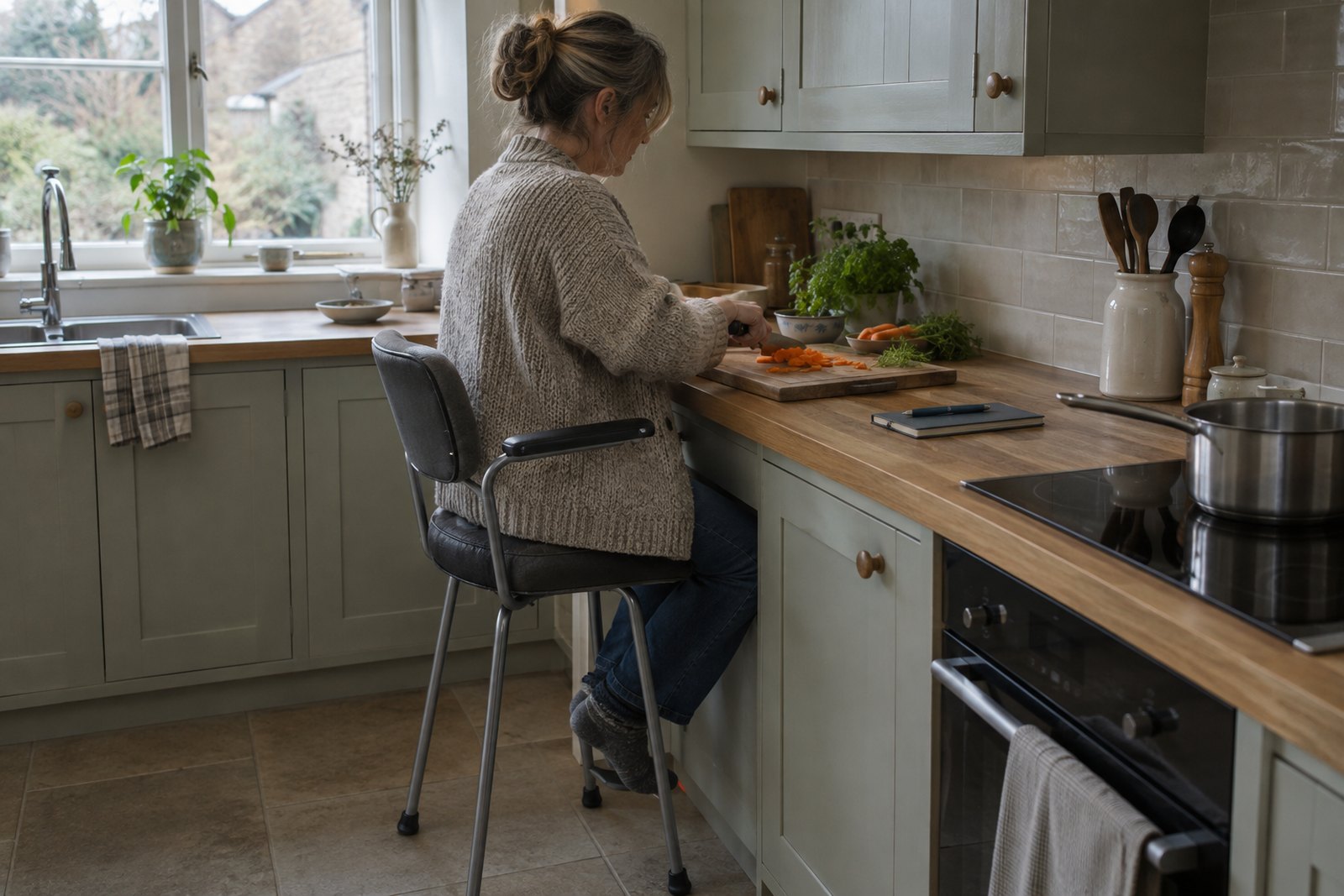
Living with fibromyalgia day to day mostly comes down to a handful of things done consistently. Pace your energy so good days do not turn into bad weeks. Keep a sleep routine your body can rely on. Start exercise small and build slowly. Get things out of your foggy head and onto paper. Cut physical effort out of chores wherever you can. Add a written plan for flares and some support for the emotional side, and most people find their days become more predictable, even if the pain does not disappear.
None of this is a cure. Fibromyalgia is a long-term condition that causes widespread pain, tiredness, poor sleep and problems with memory and concentration. But there is a real difference between a life organised around it and a life constantly ambushed by it. This guide covers the practical end: what to try at home, at work and in the bad weeks, and who helps with which part.
Pacing: the skill that makes everything else work
You probably know the pattern. You wake up feeling better than usual, so you clean the kitchen, do a big shop and catch up on washing. Then you spend three days paying for it. This boom and bust cycle is exhausting partly because it feels like the condition is in charge.
Pacing means deciding in advance how much you will do, and stopping there even when you feel able to carry on. It sounds like doing less. Over time it usually means doing more, because you stop losing whole days to recovery.
- Find your baseline. For a week or two, note what you do and how you feel afterwards. Your baseline is what you can manage on a bad day as well as a good one.
- Break tasks up. Change the sheets one day, hoover the bedroom the next.
- Rest before you need it. A planned ten-minute sit-down halfway through a job beats collapsing at the end.
- Mix it up. Alternate physical tasks with sitting ones, and busy days with quiet ones.
- Increase slowly. Once your baseline feels steady, add a little and hold it before adding more.
Our guide to fatigue management and pacing goes through this step by step, including how to plan a week.
Sleep: a routine your body can rely on
Poor sleep and fibromyalgia feed each other. Pain makes it hard to sleep, and a bad night makes the next day's pain and fog worse. You cannot force sleep, but you can make it more likely.
- Get up at the same time every day, weekends included. A fixed wake time steadies your body clock more than a fixed bedtime.
- Give yourself a wind-down hour. Dim lights, a warm shower, something quiet. Leave screens and difficult conversations earlier in the evening.
- Keep naps short and early. A rest after lunch is better than sleeping late into the afternoon.
- Support sore spots. A pillow between your knees if you sleep on your side, or under them if you lie on your back, can ease hips and lower back.
- Do not lie there fighting it. If you have been awake a long time, get up, sit somewhere dim and calm, and go back when sleepy.
Tell your GP if someone notices you snoring heavily or stopping breathing at night, or if an urge to move your legs keeps you awake. These are separate problems that can be checked.
Exercise that builds gradually
When everything hurts, exercise sounds like the last thing that would help. But staying active is one of the better-supported approaches. NICE guidance on chronic primary pain, which includes fibromyalgia, recommends offering supervised group exercise programmes. The key word is gradual.
- Start below what you think you can do. If you can walk for ten minutes, start with five, and do it on bad days too.
- Choose gentle, regular activity. Walking, exercise in a warm pool, gentle stretching, tai chi or a static bike are common starting points.
- Build up in small steps, holding each level for a week or two.
- Expect some aching. Mild soreness when you start something new is normal. A flare lasting days means too much too soon. Drop back rather than give up.
A physiotherapist is the right person to plan and lead an exercise programme. Ask your GP about a referral. In some parts of the UK you can refer yourself to NHS physiotherapy, so check your local NHS website. Some areas also run pain management programmes that combine exercise, pacing and psychological approaches.
Fibro fog: get things out of your head
Fibro fog is the forgetfulness, slow thinking and losing words mid-sentence that many people describe. It is usually worse when you are tired or sore. The trick is to stop relying on memory for anything that can live somewhere else.
- One place for everything written. A single notebook or one notes app, not scraps in three bags.
- Phone alarms and calendar reminders for appointments, bills and bin day. Set them as you make the plan, not later.
- A fixed home for keys, glasses and phone, such as a bowl by the door.
- Do thinking tasks at your clearest time of day. Save forms and phone calls for then.
- Write before appointments. Note the three things you want to say to the GP, and write down the answers or take someone with you.
Hand-friendly tools and household shortcuts
Gripping, lifting, twisting and standing for long periods cause a lot of everyday pain. Small changes add up, and many tools are cheap.
In the kitchen
- Sit to prepare food, at the table or on a perching stool at the worktop.
- Use frozen or ready-chopped vegetables on harder days. It is not cheating.
- Batch cook on a good day and freeze portions for bad ones.
- Try a jar opener, an electric tin opener, chunky-handled utensils and lightweight pans with two handles.
- A kettle tipper saves lifting a full kettle. Or boil only what you need.
- Slide heavy things along the worktop instead of lifting them.
Cleaning and laundry
- One room a day rather than a whole-house blitz.
- Long-handled dustpans and lightweight cordless cleaners save bending and pushing.
- Wash smaller loads so baskets are lighter, and dry on a waist-height airer.
- Question the ironing. Hanging clothes straight from the machine cuts much of it out.
Washing and dressing
- A shower stool lets you sit for part or all of your shower.
- A long-handled sponge helps with feet and back, and a towelling robe saves drying effort.
- Sit to dress. Soft fabrics, front fastenings, elasticated waists and slip-on shoes help when buttons and laces hurt.
Our guide to aids around the home that actually help was written for arthritis, but most of it applies to sore, tired hands of any cause.
Temperature sensitivity
Many people with fibromyalgia find cold, damp weather or sudden temperature changes make pain worse, and some struggle in the heat too.
- Wear thin layers you can add and remove, and keep a spare in your bag.
- A warm shower first thing can ease morning stiffness.
- Avoid sitting in draughts. If heating costs are a worry, keeping one room properly warm can be better than the whole house lukewarm.
- In hot weather, use a fan, close curtains in the day and keep a cool drink close.
- Heat packs and hot water bottles help many people. Use a cover, follow the instructions and never fall asleep with one against your skin.
Work: adjustments worth asking for
Fibromyalgia can count as a disability under the Equality Act 2010 if it has a substantial, long-term effect on your normal daily activities. It is not automatic, but if it applies, your employer must make reasonable adjustments. ACAS and GOV.UK explain the rules. Useful adjustments often include:
- flexible hours or a later start, so you are not commuting at your stiffest;
- working from home some days;
- regular short breaks, agreed in advance;
- a supportive chair, a better desk set-up or a headset for phone work;
- written instructions and agreed deadlines to help with fog;
- a phased return after sickness absence.
Our guide to reasonable adjustments at work covers how to ask and what to put in writing. An occupational therapist can carry out a workplace and ergonomic assessment and recommend specific changes. The government's Access to Work scheme may help pay for equipment or support; check eligibility on GOV.UK.
Make a flare plan before you need one
A flare is not the moment to make decisions. Write a plan on a good day, keep it somewhere obvious and share it with whoever you live with.
- Your early warning signs. More pain, worse sleep, more fog, shorter temper. Spotting a flare early gives you more options.
- What you drop. List what can stop for a few days and what must carry on.
- Who you tell. A message ready for work, a friend who can do the school run, someone who can bring shopping.
- Easy food and essentials. Freezer meals, snacks and your usual supplies.
- What comforts you. Warmth, audiobooks, a quiet room, and small amounts of gentle movement rather than days in bed.
- How you come back. Restart at around half your usual level and build up over several days, rather than catching up all at once.
When it might not be a flare
Do not assume every new symptom is fibromyalgia. See your GP about new or different symptoms, such as swollen or red joints, fever, unexplained weight loss, new numbness or weakness, or pain unlike your usual. Call 999 for chest pain, sudden weakness on one side or difficulty breathing. If you feel hopeless or have thoughts of harming yourself, contact your GP or NHS 111 urgently, or call Samaritans free on 116 123. If you might act on these thoughts or are in immediate danger, call 999 or go to A&E.
Talking therapies and the emotional side
Being offered talking therapy for pain can feel like being told it is all in your head. It is not. Constant pain affects mood, sleep and stress, and those in turn affect pain. Psychological approaches give you tools for that loop.
NICE recommends offering cognitive behavioural therapy (CBT) or acceptance and commitment therapy (ACT) for chronic primary pain. In England you can usually refer yourself to NHS Talking Therapies; elsewhere in the UK, ask your GP what is available. Fibromyalgia Action UK, the national charity, offers information and support, and many people find it a relief to talk to others who simply get it. For more on pain and routines generally, see our guide to living with chronic pain.
Where an occupational therapist fits
An occupational therapist looks at how you actually get through your day and helps you do it with less pain and less energy. For fibromyalgia, that can mean:
- working through your week with you to set a realistic baseline and pacing plan;
- watching how you do tasks that hurt, such as cooking, showering or laundry, and finding easier ways;
- recommending equipment and small changes to your home;
- planning a return to work or changes to your workstation;
- writing a report on how fibromyalgia affects your daily life, which can help with your employer or a benefit claim.
An occupational therapist does not diagnose fibromyalgia or advise on medication; that is your GP or a specialist such as a rheumatologist. A physiotherapist leads exercise programmes, and psychological therapy comes from a trained therapist or psychologist. An OT helps you fit all that advice into a real week.
NHS occupational therapy for fibromyalgia varies by area and may come through a pain service or community team, so ask your GP. A private occupational therapist visiting at home can see your home as it is and look at the exact tasks that cause you trouble.
Frequently asked questions
Can an occupational therapist help with fibromyalgia?
Yes, with the practical side: pacing, routines, easier ways to do everyday tasks, equipment and work. They do not treat the pain directly or replace your GP, physiotherapist or pain team.
Is fibromyalgia classed as a disability in the UK?
It can be. Under the Equality Act 2010 it counts if it has a substantial, long-term effect on your normal daily activities. That depends on how it affects you, not the diagnosis alone. ACAS and GOV.UK have guidance.
Should I rest completely during a flare?
Short rests help, but days in bed tend to leave you stiffer and weaker. Most people do better cutting back hard while keeping some gentle movement, then building back up slowly.
What exercise is best for fibromyalgia?
The one you can do regularly without triggering a flare. Walking, warm-water exercise, stretching and tai chi are common starting points, and a physiotherapist can help you build up safely.
Can I get equipment for free?
Some equipment may be loaned through your council's community equipment service after an adult social care assessment. Contact your local council to ask. Small items such as jar openers are usually cheap to buy.
How do I explain fibro fog to family or my manager?
Be specific. Rather than saying your memory is bad, say you may need things in writing and a moment to find words when tired. Concrete requests are easier for people to act on.
Next steps
If everyday tasks are taking more out of you than they should, an occupational therapist can look at your routine and home with you. See our home assessment page, or current guide prices, and choose your area below.

Talk to an occupational therapist near you
This guide is general information. For advice about your own situation - or someone you look after - a local occupational therapist can visit you at home and see it for themselves.
Choose your area: