

Emotionally Based School Avoidance: What It Is and What Helps
By Mobile Occupational Therapist • 2 November 2026 • 12 min read
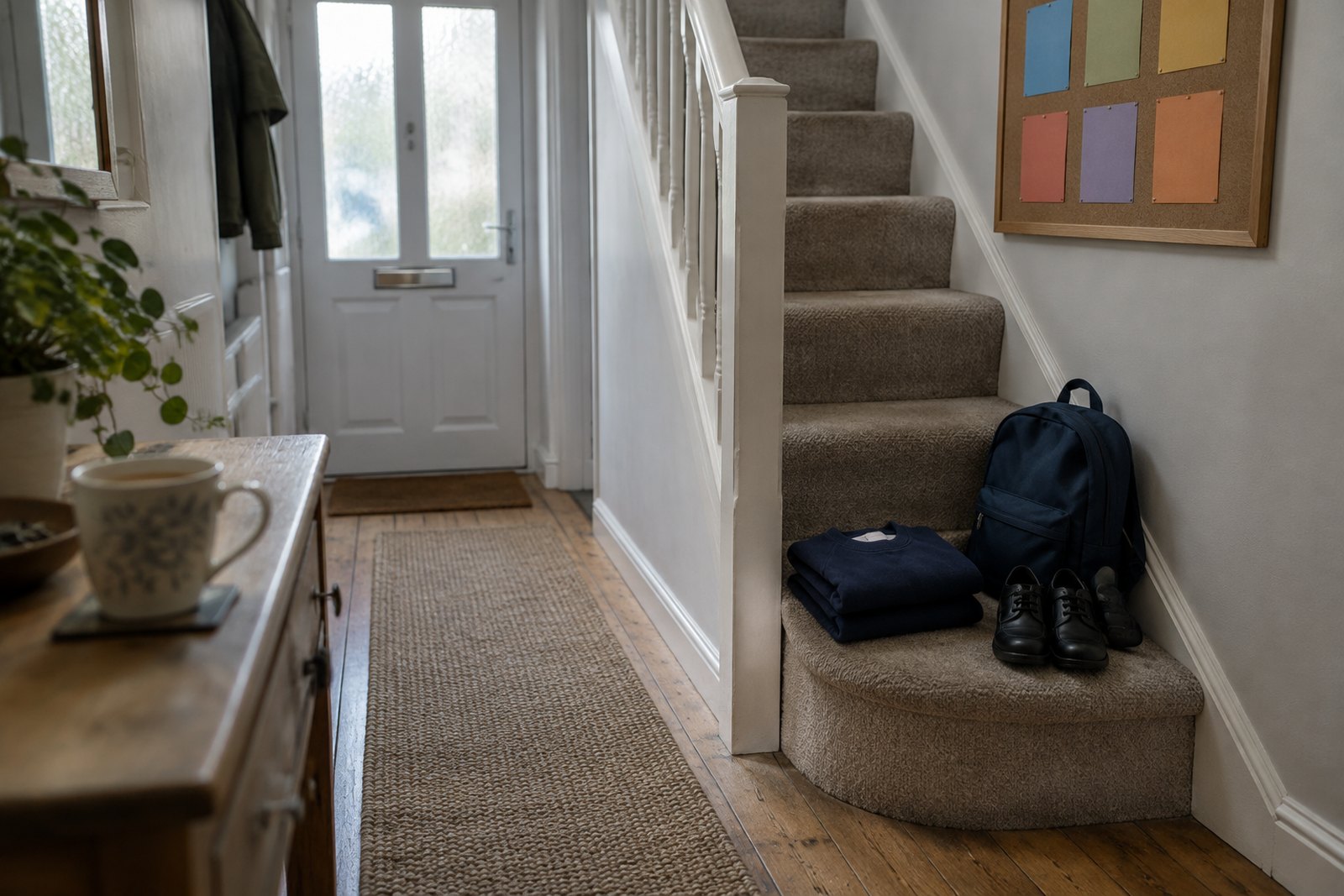
Emotionally based school avoidance, usually shortened to EBSA, is the term schools and councils use for a child or teenager who finds it very hard, sometimes impossible, to go to school because of anxiety or emotional distress. You may also hear it called school refusal. Many parents and professionals have moved away from that phrase because it sounds like a choice, and for most children it is not one. They want to go, or at least they want to want to go, and their body and mind will not let them.
If you are reading this on a weekday morning with a child crying on the stairs, here is the short answer. This is not naughtiness and it is not bad parenting. It is a sign that something about school, or getting there, feels unmanageable. What helps is working out what that something is, getting school to make changes with you rather than to you, keeping a gentle thread of connection with school going, and involving the right professionals early. Pressure alone rarely fixes it. Understanding usually starts to.
What EBSA looks like
It rarely begins with a flat refusal. More often it creeps in.
- Stomach aches, headaches or feeling sick on school mornings, often easing by mid-morning or at weekends.
- Poor sleep on Sunday nights or at the end of the holidays.
- Getting ready takes longer and longer, then stalls completely.
- Panic, tears, anger or shutting down at the front door, in the car or at the gate.
- Asking to be collected, or spending long stretches in the medical room or toilets.
- Missing particular days or lessons, such as PE, assemblies or one teacher's class.
- Holding it together all day and falling apart the moment they get home.
That last one matters. Many children, especially autistic children and girls, mask their distress at school. Teachers may honestly tell you your child seems fine. Both things can be true: they look fine in class and they are not coping.
Physical symptoms are real even when anxiety is driving them. If your child has new or persistent pain, weight loss, or symptoms that do not follow the school pattern, see your GP to rule out other causes.
Why it happens: the common drivers
There is rarely a single cause. It is usually a build-up, and the final trigger can look small from the outside. It helps to think about what is pushing your child away from school, and what is making home feel like the only safe place.
Anxiety
General worry, social anxiety, separation anxiety, fear of getting things wrong, tests, or being told off in front of others. Staying home brings instant relief, which makes the next morning harder. That is how the cycle tightens, and why long gaps tend to make returning more difficult rather than easier.
Sensory overload
School is loud, bright, crowded and unpredictable. Corridors at lesson changeover, echoing dinner halls, scratchy uniform, canteen smells, the hand dryer in the toilets. For a child who processes sensory information differently, an ordinary school day can feel like a day spent inside an alarm. Our guide to sensory processing difficulties in children explains the signs, and noise sensitivity in children covers one of the most common problems.
Unmet special educational needs
A child who cannot keep up with reading, finds handwriting exhausting, or loses track of long spoken instructions spends the day feeling behind and on edge. Learning differences that have not been spotted or supported sit behind a lot of school avoidance.
Autism and ADHD
Many families dealing with EBSA find that autism, ADHD or both are part of the picture, sometimes diagnosed, sometimes not yet. The mix of noise, social demands, constant transitions, unwritten rules and pressure to sit still can be relentless. Girls in particular are often missed because they cope quietly in school and collapse at home; our article on autism in girls describes what that can look like.
Bullying and friendships
Bullying, including online, falling out with a friendship group or simply having no one to sit with at lunch. Children do not always say this straight away, especially if they feel embarrassed.
Change and worry about home
Moving to secondary school, a new teacher, a bereavement, illness in the family or parents separating. Some children stay home because they are worried about a parent, not about school.
What you can do at home, starting now
- Stay calm and name it. Something like "I can see this feels really hard" lowers the temperature more than an argument about whether they are really ill.
- Go easy on "why". Many children genuinely do not know. Try a 1 to 10 worry scale, drawing a map of the school day and colouring the hard bits, or talking side by side in the car rather than face to face.
- Keep a simple diary. Note which days and lessons are hardest, sleep, what happened the day before, and what helped. This is the most useful thing you can bring to a school meeting.
- Make mornings predictable. Bag packed and clothes out the night before, a picture or written checklist, fewer decisions, more time. Rushing adds fuel.
- Keep the school-day shape on days at home. Up and dressed, some learning, meals at normal times. This is not punishment. It simply stops home becoming a holiday that makes school feel even worse by comparison.
- Protect the basics. Sleep, food, daylight and movement all affect how much a child can cope with.
- Keep a thread to school. Collecting work, a short visit after hours to see a trusted adult, or walking past the gates can all keep school from becoming a no-go zone.
Working with school
Ask for a meeting early, ideally with the SENCo (the special educational needs co-ordinator) and whoever leads on pastoral care or wellbeing. Bring your diary. Aim to leave with a written plan, who is doing what, and a date to review it. Ask whether your child can contribute, even if it is through a note or a drawing.
A key adult
One named person your child trusts, who meets them at the start of the day, checks in, and is the person to go to when things wobble. Consistency matters more than seniority.
A safe space
A quiet room or corner your child can go to without having to explain themselves, with a simple agreed signal or pass, and a plan for getting back to class.
Sensory adjustments
These are often cheap and quick to put in place:
- Leaving lessons a few minutes early to avoid crowded corridors.
- Flexibility on uniform fabrics, labels or ties.
- Ear defenders or a quieter place to eat lunch.
- A seat near the door or away from busy areas.
- Movement breaks, or a job that involves moving around.
- Warning before fire drills, cover teachers and room changes where possible.
A gradual return, and reduced timetables
A step-by-step return, starting with what your child can manage and building up, usually works better than an all-or-nothing push. A reduced or part-time timetable can be part of this, but only as a short-term step. Government guidance in England says part-time timetables should be temporary, agreed with parents and reviewed, with a plan to increase. If one drifts on for months with no review, ask for a meeting.
If your child is, or is likely to be, out of school for 15 school days or more because of health needs, ask the school and your council about alternative education provision while they are off. Councils in England have duties here; your council's website should explain how it works locally.
Attendance rules in general terms
In England, parents are legally responsible for making sure a child of compulsory school age gets a suitable full-time education. Schools must record absence, and the Department for Education's attendance guidance expects schools and councils to understand and work on the barriers to attendance, particularly for pupils with special educational needs or mental health difficulties. Formal measures such as penalty notices do exist, and how they are applied depends on the circumstances and local policy. Wales, Scotland and Northern Ireland have their own rules.
Practically: tell school every day your child is off and why, keep copies of emails, and get the GP involved so there is a health record. Check the current guidance on GOV.UK or with your council if you are worried about formal action.
Involving the GP or CAMHS
Book a GP appointment, with your child if they can manage it. The GP can check for physical causes, talk through anxiety and low mood, and refer to CAMHS (children and young people's mental health services) or other local support. Some areas accept self-referrals, and many schools now have links with mental health support teams, so ask school what exists locally. Waits can be long, so do not put school changes on hold while you wait.
Get help the same day if your child talks about wanting to die, is harming themselves, or has stopped eating or drinking. Contact your GP urgently or call NHS 111. If they are in immediate danger, call 999 or go to A&E.
When needs are higher: an EHCP
If support from school's own resources is not enough, in England you can ask the council for an education, health and care (EHC) needs assessment, which may lead to an education, health and care plan (EHCP). Parents can request this directly; you do not need the school to do it for you. A plan can set out specific provision, including therapy and sensory adjustments, and once that provision is written into the EHCP it must be secured by the local authority and, where relevant, the NHS. Our guide to EHCPs and what an occupational therapy report adds walks through the process.
The other UK nations have their own systems: individual development plans in Wales, co-ordinated support plans in Scotland and statements of special educational needs in Northern Ireland. Your council or education authority can explain how to ask.
Looking after yourself
Parents in the middle of this are often juggling work, phone calls from school, judgement from other people and a fair amount of guilt. Most advice tells you to look after yourself. Fair enough, but here is what that can actually mean.
- Talk to your employer early. You may be able to request flexible working; GOV.UK explains the current rules.
- Ask your council for a parent carer needs assessment if your child has additional needs.
- Find other parents who have been through it. Local parent carer forums and online groups can be a lifeline, and practical too.
- See your own GP if you are not sleeping or not coping. Your health counts.
- Stop measuring progress in full weeks. Getting to the gate is progress.
Where an occupational therapist fits
To be clear about roles: an occupational therapist may be part of the team supporting anxiety or low mood, but specialist mental health assessment and psychological therapy are usually led by CAMHS or other mental health professionals such as clinical psychologists. That is the job of CAMHS, a clinical psychologist or other mental health professionals. An educational psychologist assesses learning and how school can support it, and a speech and language therapist is the right person if communication or understanding language is part of the difficulty.
Where an occupational therapist helps is with the practical and sensory side of getting through a day. They can:
- Assess how your child processes sensory information and how that plays out at home and in school.
- Look at the school environment, with the school's agreement, and suggest specific changes.
- Help untangle the morning routine, dressing, uniform and getting out of the door.
- Build calming and regulation strategies your child can use in class and at home.
- Look at handwriting, fine motor skills or tiredness if those are making lessons harder.
- Write a report with clear recommendations that school can act on, and that can be used as evidence for an EHCP.
NHS children's occupational therapy is accessed through local referral routes which vary by area, often via your GP, school, health visitor or paediatrician, and some services also accept self-referral. A private occupational therapist can visit at home and, where agreed, at school. See our sensory needs page for how this works.
Frequently asked questions
Is school refusal the same as EBSA?
They are often used to describe the same difficulty. EBSA is the term many councils and schools now prefer, because "refusal" suggests a deliberate choice, when the child is usually overwhelmed rather than defiant.
Should I physically make my child go to school?
Forcing a distressed child into school tends to increase fear and damage trust, and can make the next morning harder. Gentle, planned steps, agreed with school, usually work better. That is different from giving up: keep expectations, just make them achievable.
Can I be fined if my child will not go because of anxiety?
Penalty notices exist in England, and decisions depend on the circumstances and local policy. Guidance expects support to come first, particularly where there are health or special educational needs. Keep in touch with school, involve your GP, keep records, and check GOV.UK or your council if you are concerned.
Does my child need a diagnosis to get support?
No. Schools should respond to needs, not labels. A diagnosis can help explain what is going on, but adjustments, a key adult and a support plan can all happen without one.
Is a reduced timetable a good idea?
It can be, as a short, reviewed step with a clear plan to build back up. It becomes a problem when it is open-ended and nobody is checking whether it is working.
Should we think about home education?
Some families do choose it, and it is legal. Taking a child off the school roll changes what the school and council are responsible for, including support for special educational needs, so get independent advice before deciding.
Next steps
If sensory needs or daily routines seem to be part of the picture, an occupational therapy assessment can help everyone understand what school feels like for your child. See our children's occupational therapy page, or current guide prices, and choose your area below.
Talk to an occupational therapist near you
This guide is general information. For advice about your own situation - or someone you look after - a local occupational therapist can visit you at home and see it for themselves.
Choose your area: